
Prime Minister: We will consider raising salaries sooner.
The Prime Minister stated that, according to the plan, the salary increase will be implemented in July 2026. Based on the opinions of the National Assembly, the Government will consider and deliberate on increasing salaries sooner.
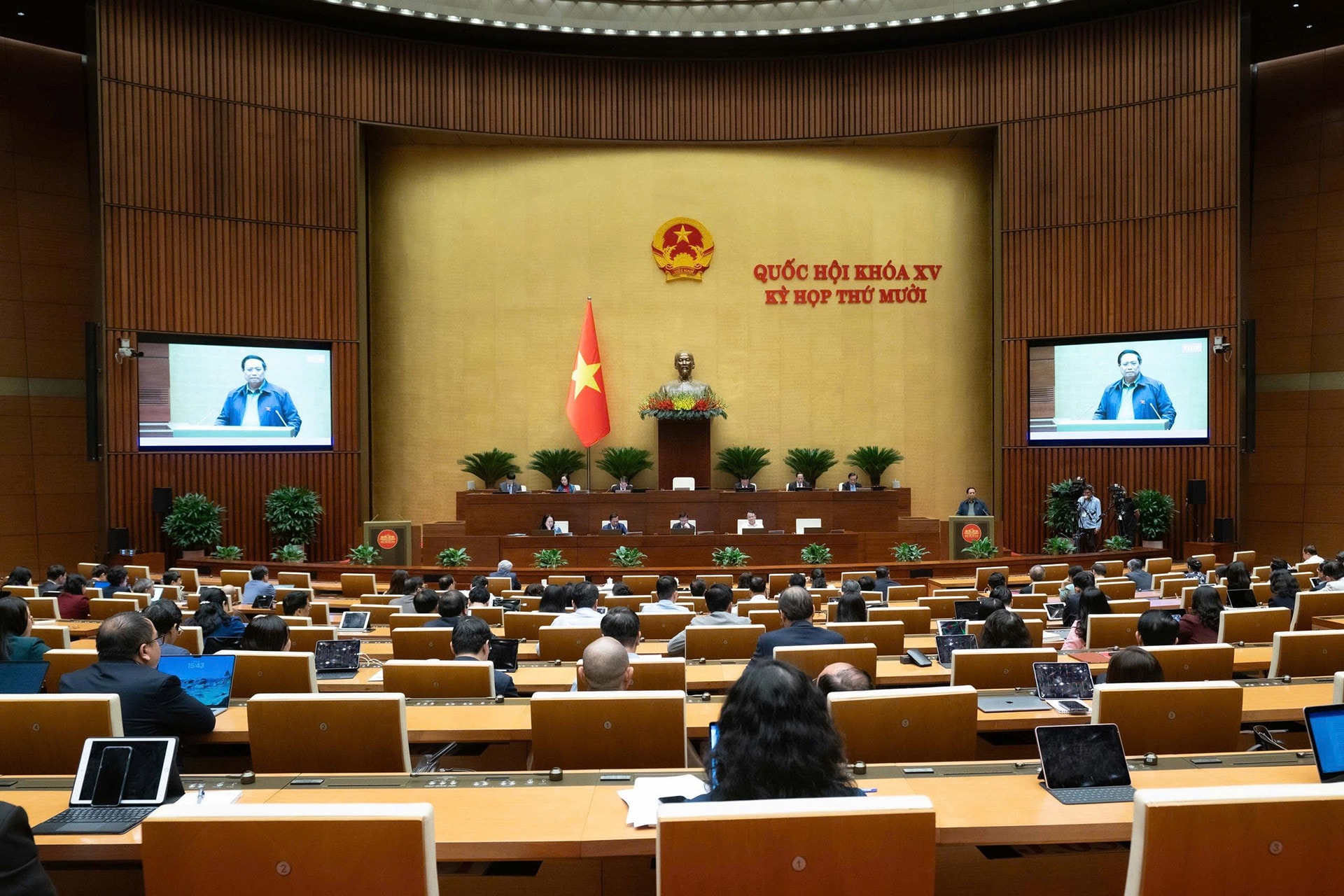
After more than a day of National Assembly discussions on socio-economic issues and the State budget estimate, as well as the plan for allocating the central budget for 2026, on the afternoon of October 30, Prime Minister Pham Minh Chinh delivered a speech clarifying many issues of concern to the delegates.
Proud achievements during the term
The Prime Minister said that after listening to the delegates' speeches over the past two days, he noticed their dedication and sense of responsibility.
The economy has been able to withstand major external shocks. Therefore, macroeconomic stability has been achieved, inflation is under control, growth is being promoted, and major balances are being maintained.
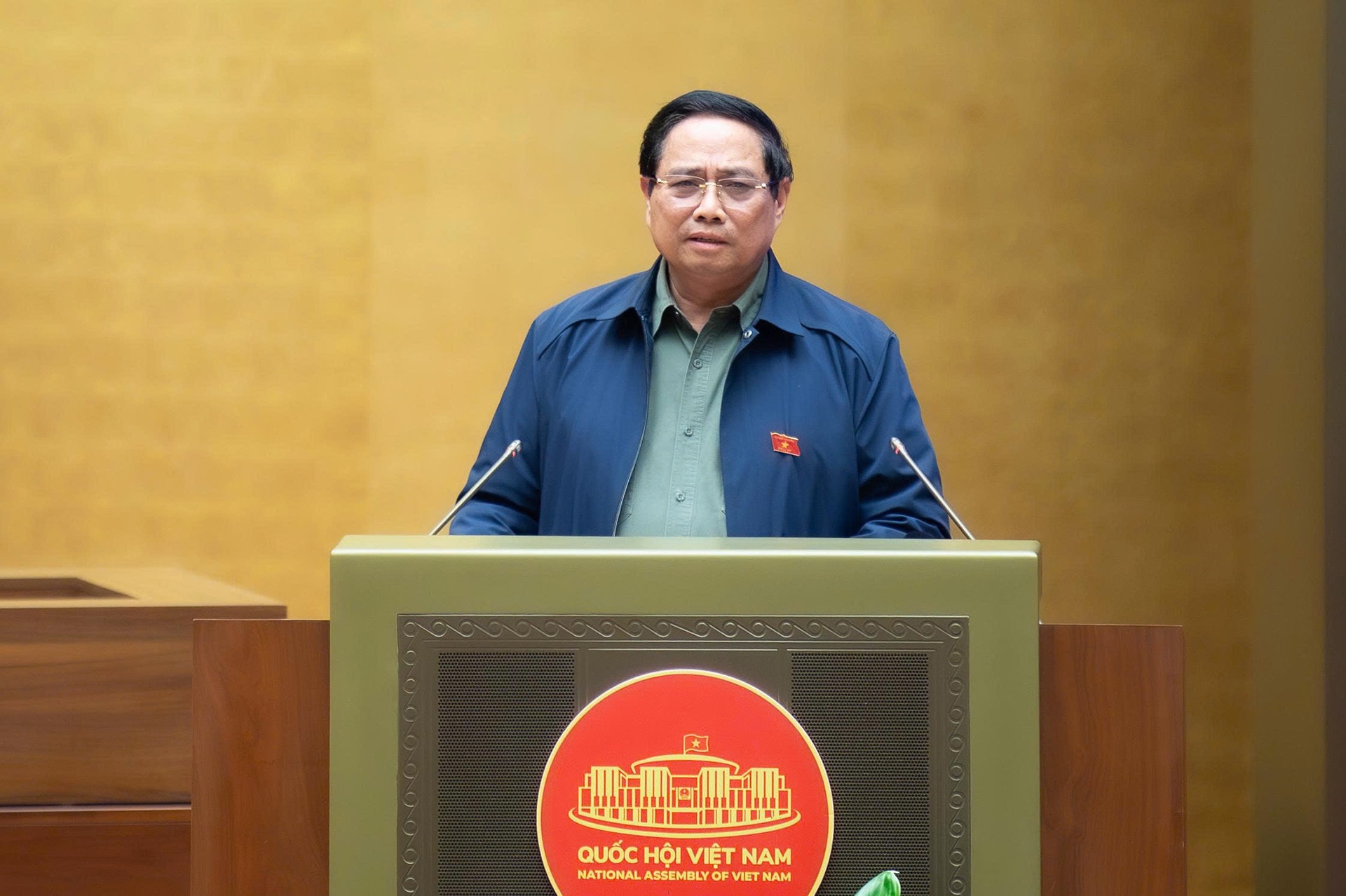
According to the Prime Minister, public debt, foreign debt, and government debt have all decreased, people's living standards have improved, and the happiness index has risen 39 places compared to the beginning of the term.
National defense and security capabilities have been strengthened. The clearest evidence is the historic parade on September 2nd, featuring many types of weapons bearing Vietnamese brands, some of which only 4-5 countries can produce. "We are shortening the timeframe to build a revolutionary, regular force that is moving straight towards modernization," the Prime Minister said.
Regarding social welfare, the Prime Minister stated, "never before has there been such significant investment." During the Covid-19 pandemic, 68 million people benefited from social welfare policies, with the budget allocating 1.1 trillion VND to these policies. These achievements are truly commendable.
Vietnam has demonstrated self-reliance, self-sufficiency, self-strength, and self-confidence to create momentum, strength, and belief in entering a new era.
In particular, according to the Prime Minister, this term has to address many outstanding issues, including 12 loss-making projects that have lasted for decades but have now been basically resolved, with many projects starting to become profitable. The Prime Minister also mentioned the positive results in handling the four weak banks and SCB Bank.
With nearly 3,000 outstanding projects needing resolution, the Prime Minister stated that the Government has categorized them, with over 2,000 projects falling under the jurisdiction of the Government, ministries, and localities; while 500-600 projects require reporting to higher authorities.
Regarding infrastructure, the Prime Minister emphasized the need to adhere closely to the targets set by the Party Congress: 3,000km of expressways, which have already been exceeded; and 1,700km of coastal roads, which have been completed and will be surpassed by the end of the year.
You can only spend it if you have the money.
Regarding the disbursement of public investment funds, the Prime Minister expressed that this is a persistent issue and a concern for everyone in the political system. "But why is it that we know about it but can't do anything, or we do it but slowly?" the Prime Minister questioned, pointing out several reasons.
First, he stated that this term has spent 3.4 million billion VND on public investment, a 55% increase compared to the previous term. The previous term submitted over 10,000 projects, but at the government's request, these projects were reduced, and now only over 4,700 remain.
"Reducing the number of new projects will focus on building a highway system in the Mekong Delta. At the beginning of my term, we only discussed the determination, but the first problem was where the money would come from. But then we managed to arrange it," the Prime Minister said.
In addition, he stated that the expressway system to the northern mountainous provinces is being implemented, and the expressways in the central region are being planned for expansion. Simultaneously with these policies are investments in expanding ports and airports, clearing land for the construction of high-speed rail and the Lao Cai - Hanoi - Hai Phong railway line…
The head of government emphasized the goal of ensuring national financial security, increasing investment for development, guaranteeing social welfare, and having a reserve fund for unforeseen issues such as pandemics and natural disasters.
The Prime Minister stated that the budget for the term must be appropriate, focusing on three main areas. Firstly, spending on personnel and organizational structure; secondly, spending to ensure national defense, security, and social order; and thirdly, ensuring social welfare with the guiding principle of "not sacrificing progress and social justice for the sake of mere growth."
With a series of problems arising such as storms, floods, natural disasters, and epidemics, the Prime Minister emphasized that "we can only spend if we have money." We must calculate how to ensure that revenue is sufficient to cover expenses; if revenue is insufficient, there will be a shortfall in spending, leading to an imbalance between revenue and expenditure, and a significant budget deficit.
After listening to numerous opinions from National Assembly deputies reflecting on the inaccurate budget estimates, the head of the government acknowledged this and stated that it is a shortcoming that needs to be addressed.
However, the Prime Minister affirmed that all revenue increases and expenditure reductions were approved by the National Assembly, and that this process has been "on the right track" so far.
"National Assembly deputies proposed a salary increase at the beginning of 2026. According to the plan, the salary increase will be implemented in July 2026. Based on the National Assembly's opinion, we will consider and seek opinions from competent authorities, including the National Assembly, and we will increase salaries sooner," the Prime Minister said.


