
The Prime Minister visits and encourages people in Hoa Thinh, the "epicenter of the floods," Dak Lak province.
Chiều 29/11, Thủ tướng Phạm Minh Chính đã tới thăm, kiểm tra công tác khắc phục hậu quả mưa lũ, ổn định đời sống nhân dân, khôi phục sản xuất kinh doanh và tặng quà, động viên bà con nhân dân bị ảnh hưởng, thiệt hại do mưa lũ tại xã Hòa Thịnh, tỉnh Đắk Lắk.
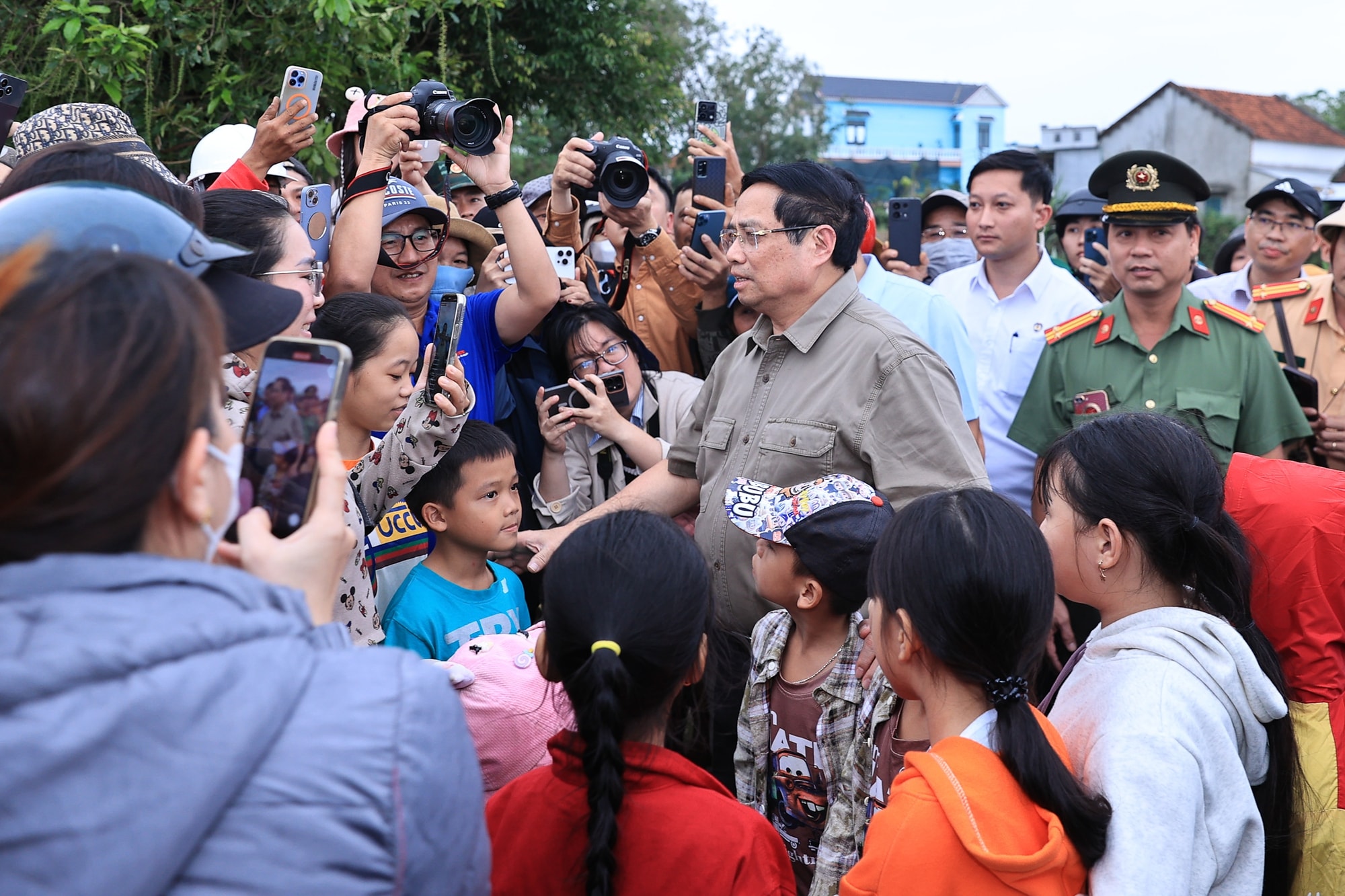
Cùng đi với Thủ tướng có Bộ trưởng Bộ Nông nghiệp và Môi trường Trần Đức Thắng; Bộ trưởng Bộ Y tế Đào Hồng Lan; Đại tướng Nguyễn Tân Cương, Tổng Tham mưu trưởng Quân đội nhân dân Việt Nam, Thứ trưởng Bộ Quốc phòng; lãnh đạo các bộ, ngành, địa phương.
Từ đầu tháng 11 đến nay, các tỉnh, thành phố khu vực miền Trung liên tiếp chống chịu với cơn bão số 13 và mưa lớn kéo dài chưa từng có, vượt mức lịch sử, nhất là tại: Đắk Lắk, Khánh Hòa, Lâm Đồng, Gia Lai, TP. Huế, Quảng Ngãi... Đây là một trong những đợt thiên tai nghiêm trọng, khốc liệt, gây thiệt hại lớn về người, tài sản, đảo lộn và đình trệ hoạt động sản xuất kinh doanh.
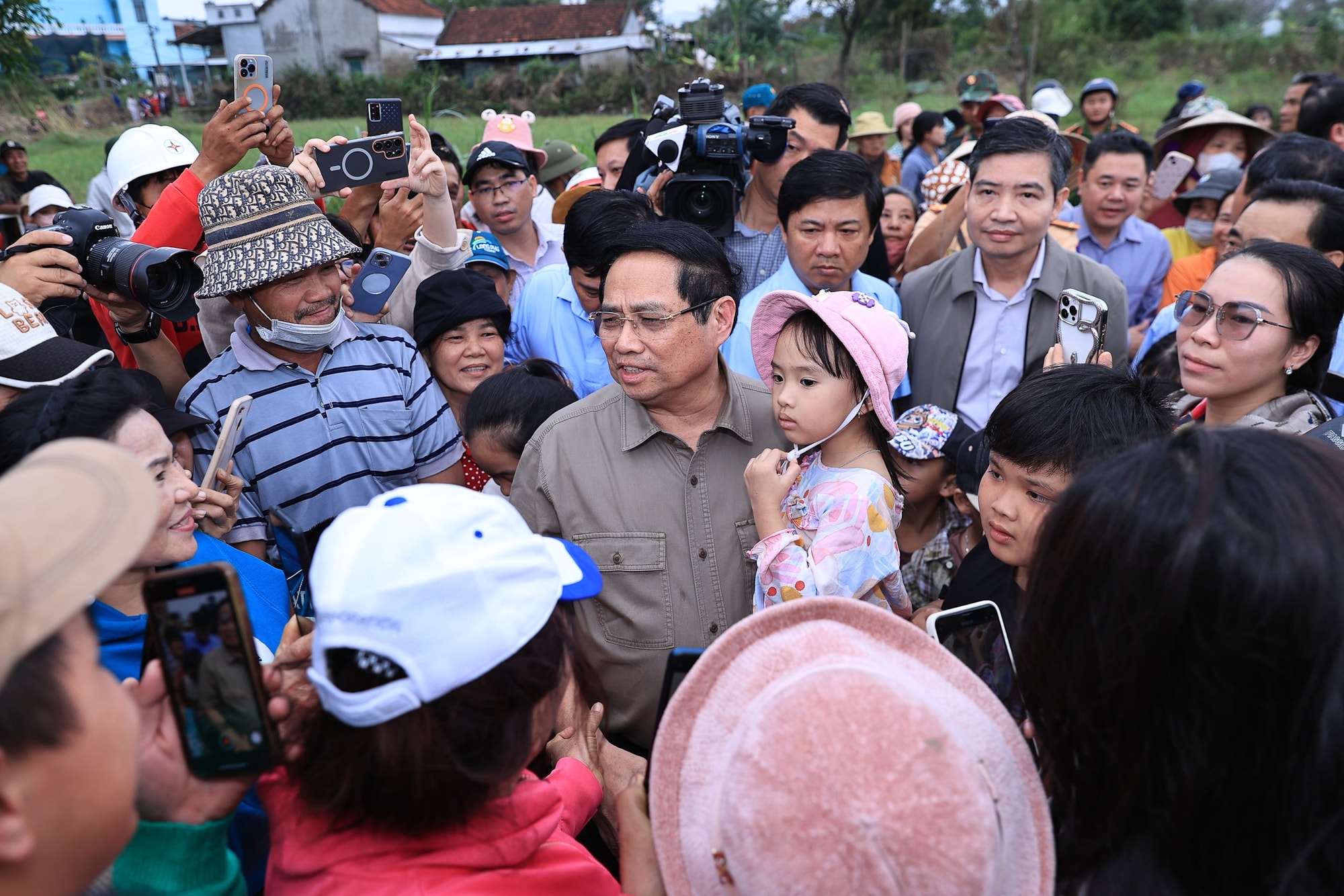
Theo thống kê, đã có 90 người chết, 12 người mất tích; hơn 308 nhà bị sập, đổ, cuốn trôi; 981 nhà bị hư hỏng; trên 82.000 ha lúa, hoa màu bị hư hại; hơn 3,3 triệu con gia súc, gia cầm bị chết, cuốn trôi; trên 1.100 ha nuôi trồng thủy sản bị thiệt hại; nhiều công trình hạ tầng (trường học, trạm y tế, đường sá, điện, viễn thông…) bị hư hại nặng nề. Tổng thiệt hại ban đầu ước tính trên 13.200 tỷ đồng. Ngoài ra, thiệt hại về tài sản của người dân bị ngập, hư hại rất nhiều, khó có thể thống kê đầy đủ.
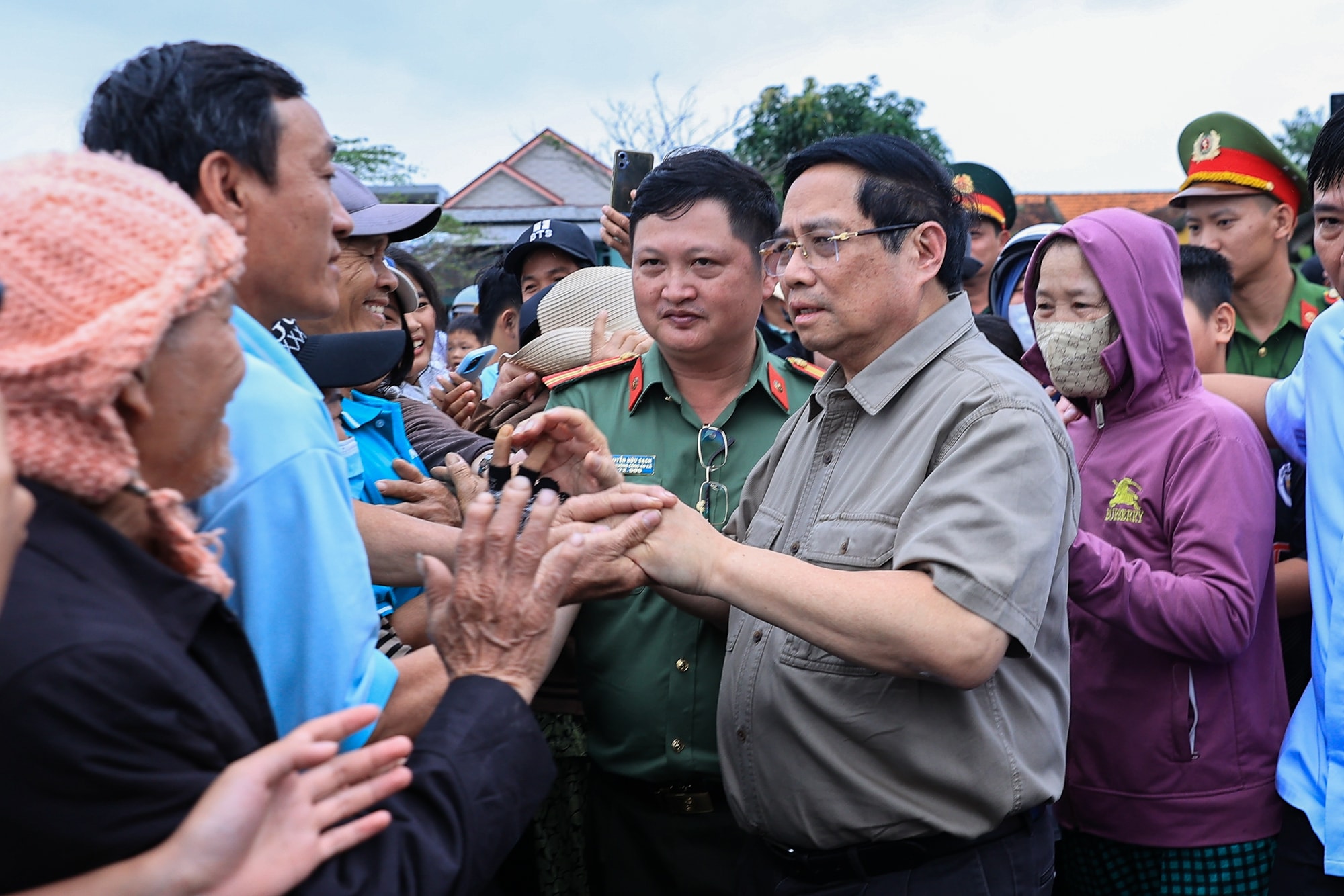
Hòa Thịnh là một trong những xã bị ngập nặng nhất, thiệt hại nặng nhất trong đợt mưa lũ vừa qua tại tỉnh Đắk Lắk và các tỉnh Nam Trung Bộ, trong đó Phú Hữu là thôn bị ảnh hưởng nặng nề nhất. Xã Hòa Thịnh có 25 người chết, 67 nhà bị sập hoàn toàn do mưa lũ.
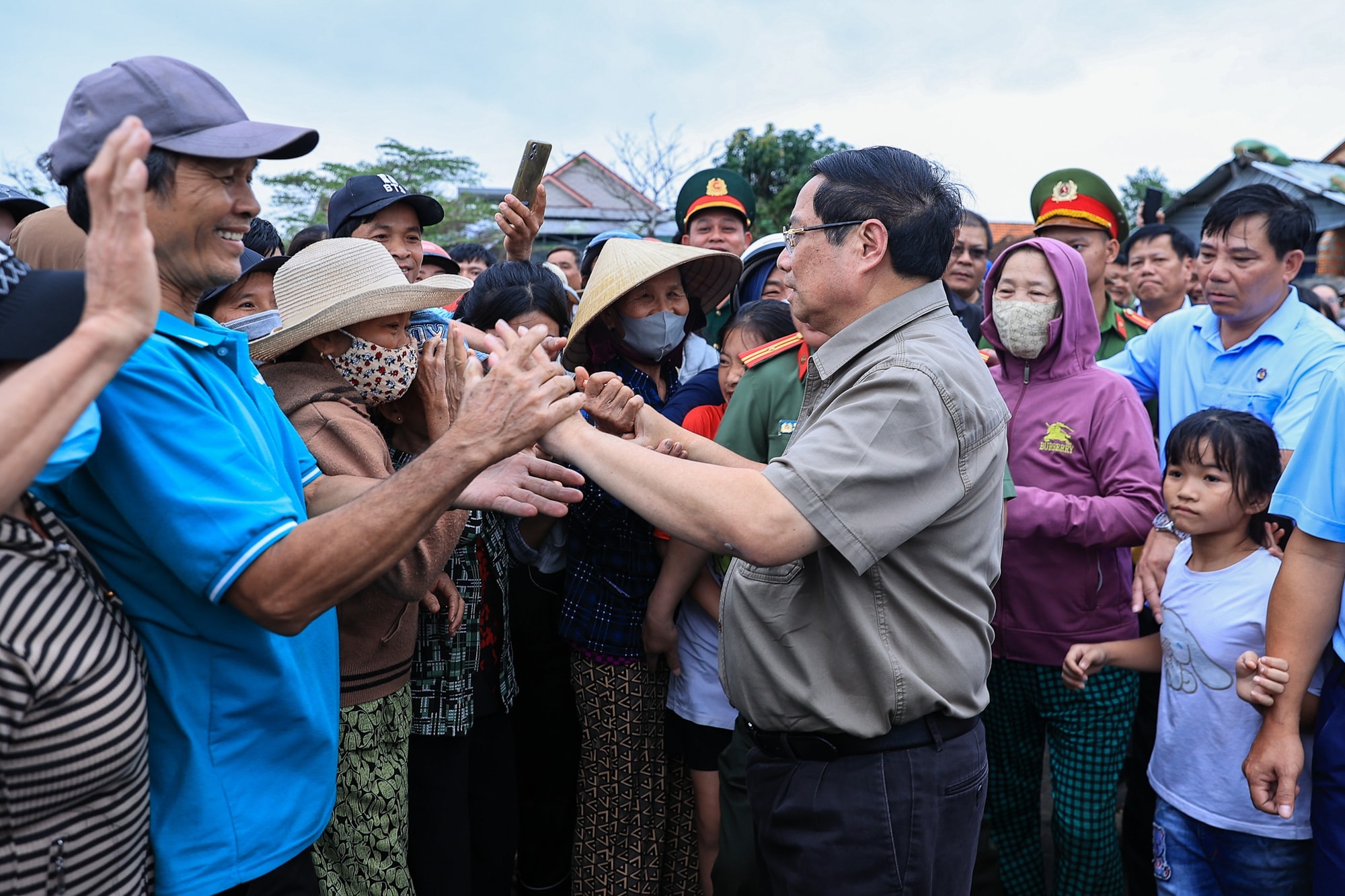
Thủ tướng Phạm Minh Chính đã đến thăm khu vực bị ngập nước hoàn toàn tại thôn Phú Hữu, xã Hòa Thịnh và nghe báo cáo về phương án xây dựng nhà tránh lũ cho nhân dân vùng lũ; thăm, động viên một số hộ gia đình có nhà bị sập hoàn toàn tại thôn Phú Hữu; thắp hương tưởng nhớ người đã khuất, thăm, động viên thân nhân gia đình có người bị thiệt mạng do mưa lũ.
Next, according to the program, the Prime Minister and the delegation will hold online working sessions with four provinces: Gia Lai, Dak Lak, Khanh Hoa, and Lam Dong, on the work of preventing, combating, and mitigating damage caused by natural disasters.
On behalf of the Party and State leaders, Prime Minister Pham Minh Chinh expressed his deepest condolences to the people and local authorities affected by the floods, especially to the families of those who died, went missing, or were injured.
The Prime Minister affirmed that the Party and the State deeply understand and share the losses and difficulties of the people in disaster-stricken areas across the country, and have directed the urgent implementation of necessary solutions to quickly overcome the consequences of storms and floods and stabilize people's lives.
The Prime Minister requested that Party committees and local authorities in the affected areas continue to focus on urgently addressing the consequences of the floods, quickly stabilizing people's lives; ensuring housing, food, and essential supplies for the people, absolutely ensuring that no one goes hungry, cold, homeless, or without clean water; supporting people in repairing houses, rebuilding, and relocating those whose houses have collapsed or been severely damaged, completing this before the Lunar New Year; urgently cleaning up the environment and repairing schools; ensuring medical examination and treatment services, preventing outbreaks of disease; focusing on restoring transportation, irrigation, water supply, electricity, and telecommunications infrastructure; restoring production and business activities, especially agricultural production…


