
5G subscribers surpass 3 billion globally.
In just over 7 years since its commercialization, 5G technology has surpassed 3 billion subscribers globally, solidifying its position as the dominant connectivity platform of the digital age.
The growth in subscribers and data traffic confirms the leading role of 5G technology.
According to the latest edition of Ericsson's Mobile Report, the number of 5G subscribers globally reached approximately 3.1 billion in Q1 2026, after adding 162 million subscribers in the first three months of the year.
This growth rate is comparable to the development rate in 2025, when the world will see around 660 million new 5G subscribers, demonstrating that the technology's expansion remains stable.
Ericsson forecasts that approximately 1.2 billion new 5G subscribers will be added between now and the end of 2027, equivalent to an average of 150 million subscribers per quarter. At this growth rate, 5G is expected to surpass 4G to become the dominant mobile access technology globally within just nine years of its commercialization. The Swedish telecommunications equipment provider also maintains its forecast that the number of global 5G subscribers will reach 6.4 billion by 2031.
Alongside the increase in subscribers, the role of 5G in transporting mobile data traffic is also becoming increasingly evident. By the end of 2025, 5G networks will have handled approximately 48% of total global mobile data traffic, and this percentage is projected to increase to 85% by 2031.
One notable trend noted by Ericsson is that the growth rate of uplink traffic is outpacing the growth rate of downlink traffic across many mobile networks.
Data analysis from 55 telecommunications operators globally revealed that 43 operators experienced higher uplink traffic growth than downlink traffic growth, with 17 operators recording uplink growth rates at least 1.5 times higher.
According to Ericsson, this is a sign that network usage patterns are changing significantly. While traditional mobile networks were primarily designed to handle download traffic such as video streaming or online content access, the explosion of AI applications, user-generated content, and real-time interactive services is rapidly increasing the need to transmit data from devices to the network.
The report notes that uplink bandwidth is gradually becoming the new "bottleneck" of mobile infrastructure. In markets with high 5G usage rates, pressure on uplink capacity could increase significantly in the coming years.
To address this challenge, Ericsson suggests that carriers will need to increase investment in 5G hardware and software upgrades in the short term, while also developing technologies to optimize uplink transmission in future 6G systems.
Erik Ekudden, Chief Technology Officer of Ericsson, believes that the development of physical AI will continue to change the structure of network traffic. According to him, as autonomous AI agents are deployed in transportation, robots, smart city systems, and connected devices, data traffic will no longer be concentrated primarily in data centers but will be widely distributed across telecommunications networks.
Standalone 5G networks and network sharding technology are entering the widespread commercialization phase.
5G Standalone (5G SA) is a mobile network standard that operates completely independently based on 5G infrastructure, including both base stations and the 5G core network. It does not rely on the infrastructure of previous generation mobile networks like 4G, which provides higher performance, flexibility, and better scalability.
With current trends, mobile networks are transforming from mere connectivity infrastructure into intelligent digital platforms capable of supporting a wide range of services and applications. A clear manifestation of this trend is the rapid development of network slicing-based services and the increasing number of operators deploying independent 5G architectures.
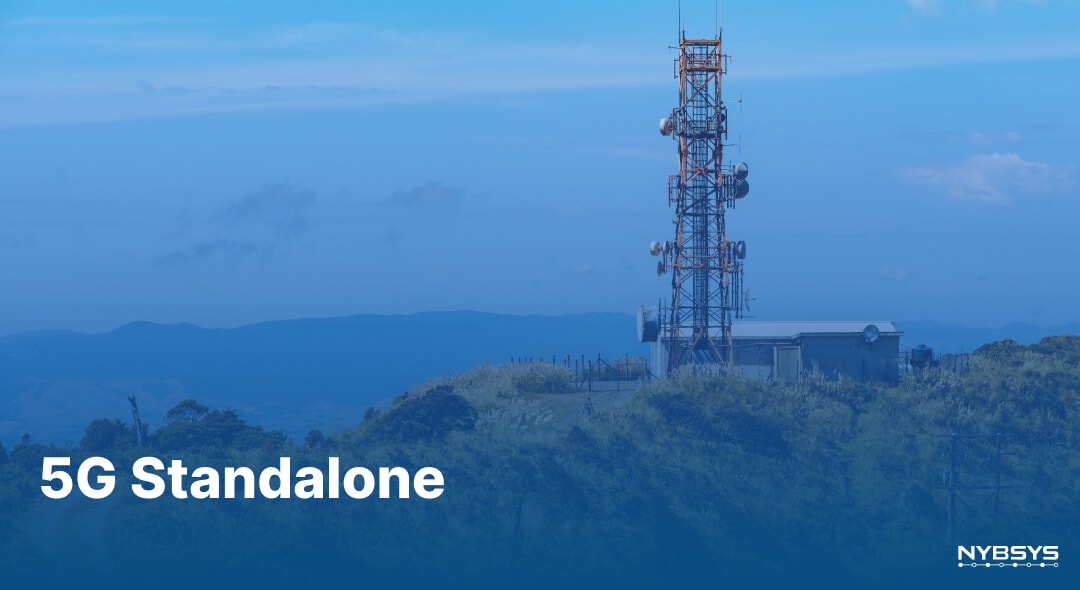
Photo: Internet
Network slicing is a key technology in 5G networks, allowing carriers to divide their physical infrastructure into multiple virtual "slices," each functioning as a separate network.
On a physical 5G network, these virtual slices can be customized to serve the specific needs of each service or application. For example, one slice could be optimized for bandwidth, while another could be tuned for high speeds, serving two different customers without compromising service quality. This is something that previous generations of mobile networks could not achieve.
According to Ericsson, approximately 390 service providers worldwide have deployed commercial 5G networks, with over 90 carriers already operating 5G SA. Simultaneously, the number of commercial services based on 5G SA network sharding technology has increased from 65 to 84 in just a few months, indicating that the market is moving from the initial testing and deployment phase to a broader commercialization phase.
In Vietnam, Viettel is currently the only network operator deploying 5G SA network. This approach by Viettel allows the network operator to fully utilize the features of 5G technology such as ultra-low latency, the ability to connect a large number of devices, and support for next-generation digital services.
These developments indicate that 5G SA network architecture is gradually becoming the core foundation of the next-generation 5G ecosystem. As the global telecommunications industry begins researching and shaping the development roadmap for 6G, the widespread adoption of 5G SA is expected to lay the groundwork for intelligent network services, large-scale AI applications, and new digital business models in the coming decade.


