
Standards for Party secretaries and Party organizations in villages and residential areas under restructuring.
The Central Organizing Committee recently issued guidelines on several aspects of the arrangement and establishment of Party organizations in villages and residential areas subject to restructuring according to the Central Committee's policies and conclusions.
According to the guidelines, the arrangement and establishment of Party organizations must be synchronized, unified, and corresponding to the arrangement and establishment of villages and residential areas, ensuring compatibility with the two-tiered local government model and the practical realities of each locality.
The Central Organizing Committee emphasized the importance of promoting democracy while upholding the responsibility of Party committees, branches, and cadres and Party members on the basis of objectivity, transparency, solidarity, unity, and consensus after the restructuring; resolutely overcoming individualism, parochialism, localism, "group interests," and a lack of constructive thinking.
Personnel work must be carried out in strict accordance with the regulations of the Party and the State, ensuring a reasonable age structure, harmonizing continuity with the requirement of rejuvenating the cadre. Selected personnel must fully meet the standards, with particular emphasis on political qualities, moral conduct, reputation, health, sense of responsibility, qualifications, leadership capacity, ability to unite and mobilize the people, and the ability to meet the requirements of the tasks in the new period...
The names of the newly established village and neighborhood Party branches will be taken from the names in the resolution of the People's Council of the commune or ward, or the decision of the People's Committee of the special administrative region regarding the rearrangement and establishment of villages and neighborhoods. For villages and neighborhoods not subject to rearrangement but with name changes, a decision to rename the Party branch will be issued.

In terms of criteria, Party committee members need to possess strong political conviction; good moral character and lifestyle; exemplary adherence to the Party's guidelines and policies, and the State's laws and regulations; and prestige among cadres, Party members, and the people.
This personnel needs to possess leadership and organizational skills; a sense of responsibility, the ability to unite, gather, and mobilize the people; a thorough understanding of the local community situation; knowledge of Party building work; and the ability to organize community activities and promptly address emerging issues in the area.
Party committee members must have a high school diploma or higher and a level of political theory appropriate to the practical situation; be able to apply information technology and use digital platforms to serve their work; and be in good health.
Personnel participating in the Party committee of village and neighborhood branches must not be over 65 years old at the time of appointment.
In areas with limited human resources, such as remote and disadvantaged regions, the Standing Committee of the provincial Party Committee directs the Standing Committee of the commune-level Party Committee to consider and make decisions based on ensuring standards regarding political qualities, ethics, lifestyle, reputation, competence, health, leadership and mobilization abilities, and job requirements.
Encourage the Party branch secretary to also serve as the village head.
Essentially, the Party branch committee consists of a secretary, a deputy secretary, and committee members. The Party branch committees at the village and neighborhood levels are structured to ensure they meet the requirements for carrying out political tasks in the residential area; priority is given to selecting personnel currently holding key positions in the village, neighborhood, the Fatherland Front working committee, and other political and social organizations who meet the standards and conditions to participate in the Party committee.
The structuring of Party committees must be based on the requirements of the tasks, the scale and characteristics of the locality, the number of Party members, and the quality of the cadres and Party members of each Party branch; ensuring the selection of outstanding individuals in terms of character, ability, prestige, leadership skills, organizational capacity, and ability to mobilize the people; and not lowering the standards of Party committee members for the sake of structural considerations.
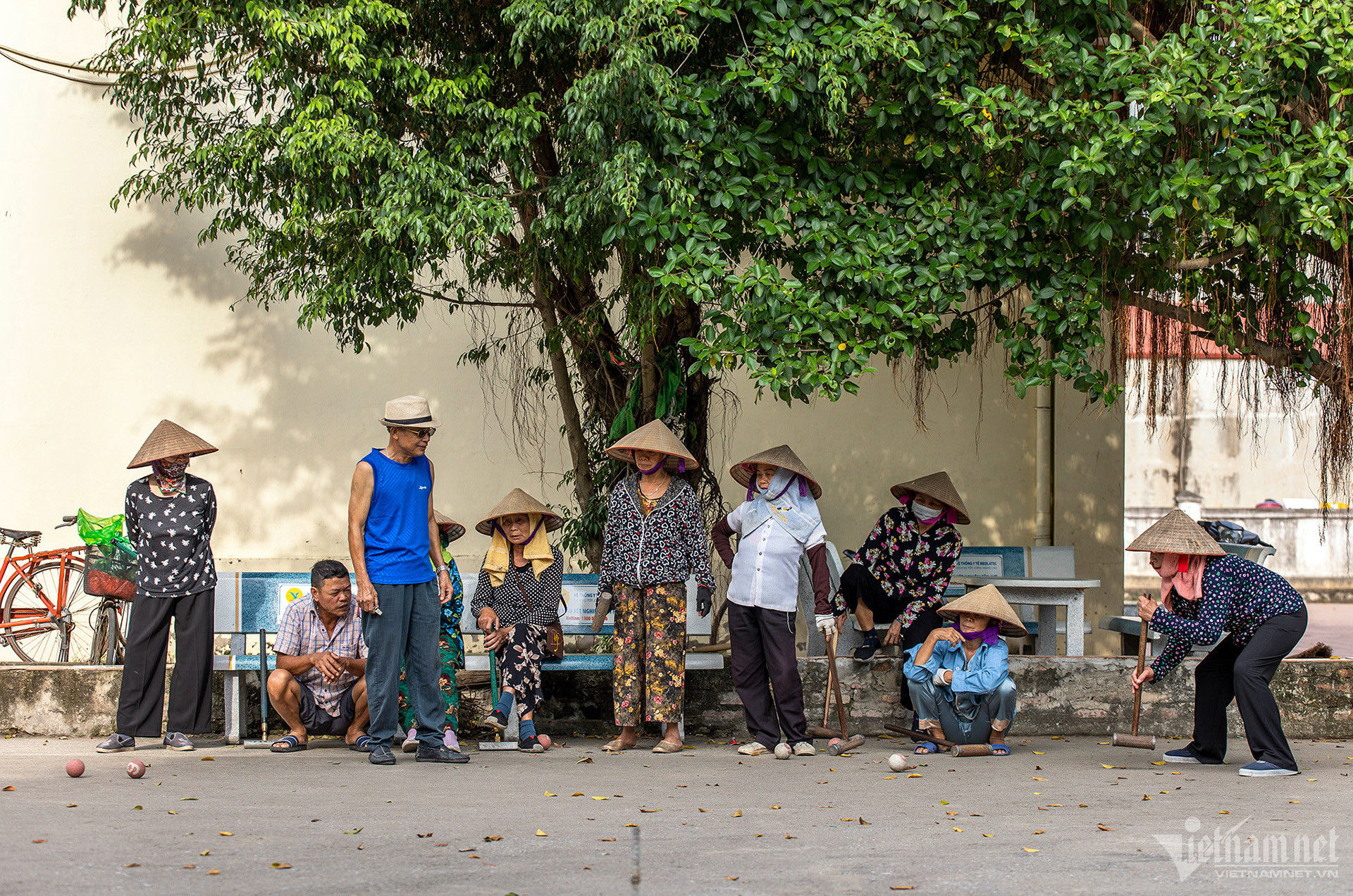
The Central Organizing Committee encourages the implementation of a model where the Party branch secretary also serves as the village head, neighborhood group leader, or head of the Fatherland Front working committee; paying attention to the structure of young cadres, female cadres, and cadres with qualifications, capabilities, prestige, and development prospects to participate in Party committees in places where conditions permit, ensuring continuity and development...
Party branches with fewer than 9 full members shall appoint a secretary and one deputy secretary (if necessary). Party branches with 9 or more full members shall appoint a secretary, one deputy secretary, and a branch committee member. Party branches with a large number of members shall appoint no more than 7 branch committee members, including the secretary and one deputy secretary.
The Central Organization Department's guidelines for appointing Party committee members, secretaries, and deputy secretaries consist of four steps.
Step 1: Based on the regulations and guidelines of the Central Committee and the actual situation of the cadre team, the Standing Committee of the commune-level Party Committee directs the Party Building Committee to advise on the development of a personnel plan, clearly defining the number, structure, and projected personnel for the Party branch committee, secretary, and deputy secretary of the newly established Party branches after the reorganization; report and seek the opinion of the Standing Committee of the commune-level Party Committee.
Step 2: After the personnel plan and the proposed list of personnel are approved, the Standing Committee of the commune-level Party Committee presides over a conference to disseminate and explain the plan for establishing new village/neighborhood Party branches and to discuss and gather opinions on the personnel plan.
Step 3: The Standing Committee of the commune-level Party Committee assigns the assigned commune-level Party Committee member or the representative of the Party building committee of the commune-level Party Committee to preside over working meetings with the Party branch committees (for places without a Party branch committee, the participants include the secretary and deputy secretary (if any) subject to restructuring or merger) to discuss, provide feedback, and vote on the personnel of the new Party branch after restructuring according to the approved personnel plan in accordance with regulations.
Step 4: Based on the results from Step 3, the Standing Committee of the commune-level Party Committee discusses and votes on personnel and decides on the appointment of the Party branch committee, secretary, and deputy secretary for the 2025-2030 term according to their authority.
Based on the prescribed standards, conditions, structure, number, and procedures, as well as the actual situation of the cadre, the Standing Committee of the provincial Party Committee will lead and direct the concretization of the appointment of Party branch committees, secretaries, and deputy secretaries for the 2025-2030 term. The Central Organization Department notes that it is necessary to ensure that the regulations on standards, number, and structure of Party committee members are in a harmonious and reasonable manner among villages and residential areas; and to avoid mechanically distributing members evenly among the old Party branches before the reorganization.
In cases where multiple individuals meet the criteria for participation in the Party Committee, priority should be given to considering and selecting those who meet the age requirements to serve a full term in the Party Committee, with particular attention paid to young individuals with qualifications, capabilities, and prestige.
The Central Organizing Committee suggested encouraging personnel with intermediate-level political theory qualifications (especially secretaries and deputy secretaries); the ability to apply information technology and implement digital transformation; practical work experience, management and organizational skills; and a good understanding of the local community...


