
Small traders in Nghe An share tips on how to distinguish authentic smoked meat.
Faced with the problem of counterfeit dried buffalo meat, traders in the western part of Nghe An province reveal the authentic, high-quality dried buffalo meat specialty of Nghe An.
Recently, public opinion has been stirred by reports that in a village in Phu Tho province, Indian buffalo meat was imported and then "transformed" into smoked buffalo meat from Ha Giang, a place more than 200 km away. These products have been criticized for their poor quality, causing consumers further confusion and anxiety about the safety and authenticity of this popular local delicacy.
Many small traders and long-standing smoked meat producers in western Nghe An province confidently assert that their products maintain high quality, meet OCOP standards, and are trusted by customers.
Ms. Bui Thi Que, from Muong Xen commune, Ky Son district, shared: "Despite information about fake smoked meat in some places, our product has always been trusted by customers because it meets OCOP standards. The meat is sourced directly from the slaughterhouse, without intermediaries, so it's always fresh and delicious. Authentic smoked meat retains its bright red color and strong aroma even after being smoked. If the meat isn't fresh, it will turn dark and lose its flavor after smoking."
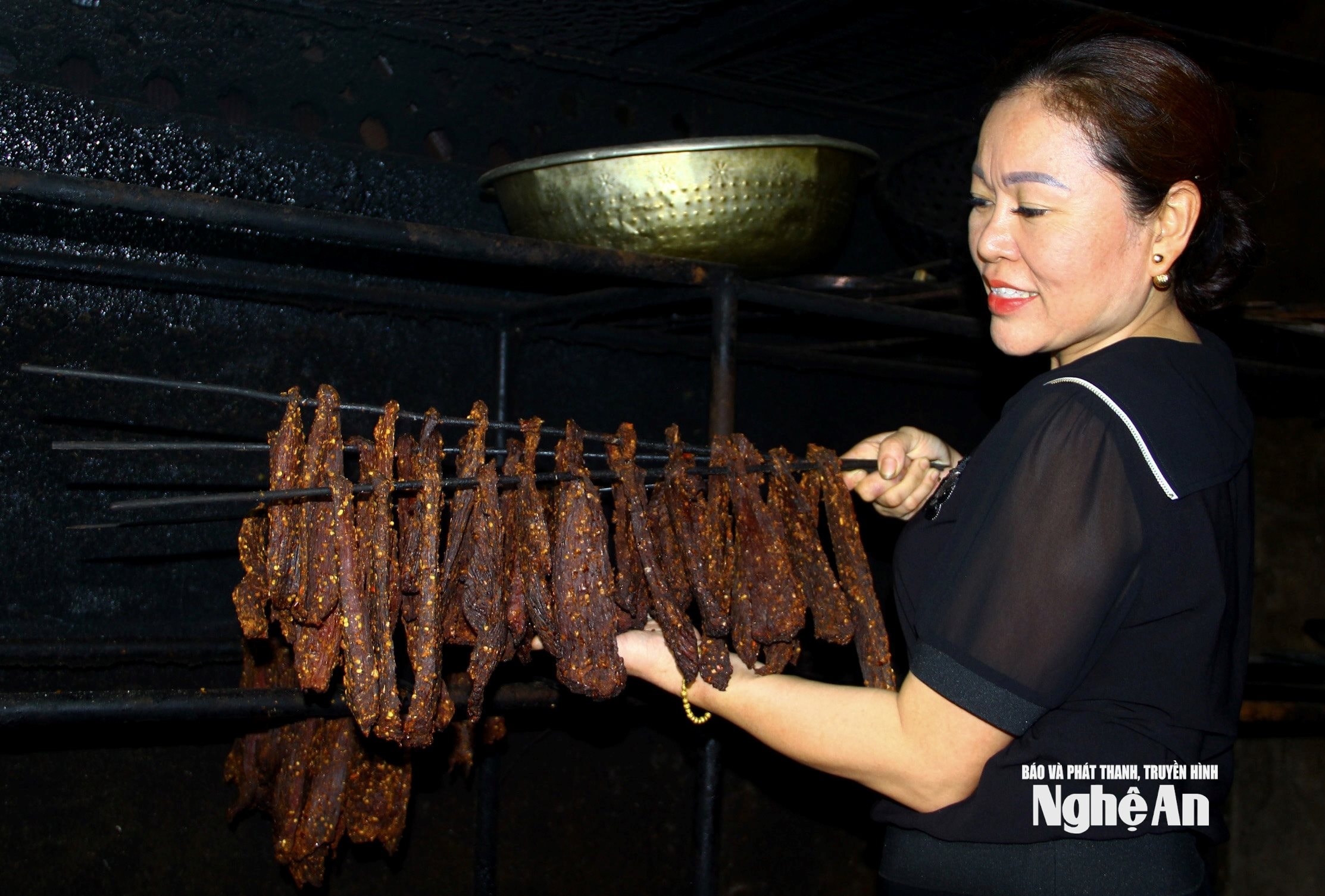
Not only are the ingredients different, but the way smoked meat is prepared in Western Nghe An also bears its own unique mark. Many places dry meat using electricity or sun-drying to save time, but this lacks the characteristic smoky aroma. In contrast, smoked meat from Nghe An is smoked over forest wood fires, marinated with mắc khén (a type of wild pepper), wild chili, and traditional spices of the local people, creating a smoky aroma and a spicy, tingling sensation on the tongue—a feeling that meat from other places can hardly match.
According to producers, the raw materials for making smoked meat are usually lean, firm cuts of buffalo, cattle, or pigs raised free-range in the fields. The meat is trimmed of fat and tendons, sliced into long strips, and marinated with salt, chili, mắc khén (a type of spice), hạt dổi (a type of spice), lemongrass, ginger, and many other traditional spices. After marinating for several hours, sometimes overnight, the meat is hung above the kitchen hearth to be smoked using forest wood. The smoking process lasts from several days to a week, allowing the meat to cook slowly, dry out, and retain its original flavor.
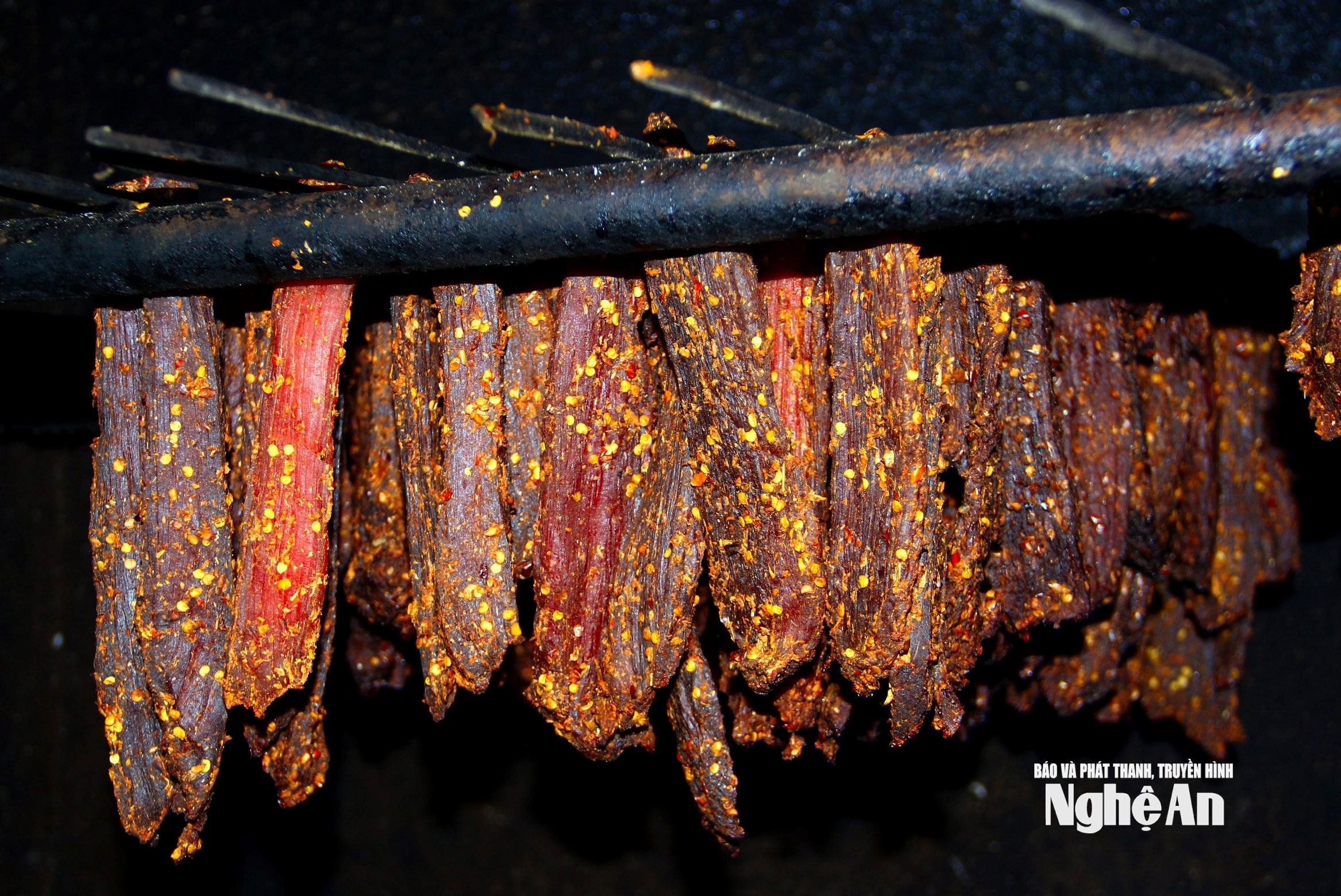
To reassure consumers, Ms. Vi Thi Huong, a long-time smoked meat producer in Tuong Duong commune, shared how to distinguish between real and fake meat. According to her, real smoked buffalo and beef have long, distinct fibers; when cut crosswise, they appear thin and chewy. The natural color is dark brown or reddish-brown, not shiny or intensely red. It has a characteristic smoky aroma blended with spices, and a naturally sweet, rich flavor. Conversely, fake meat is usually made from low-quality ingredients, has an intensely red color due to dyeing, and a pungent smell due to the use of flavorings. The meat fibers are short, crumbly, and when chewed, it feels powdery or has a salty taste, lacking the inherent deliciousness.
Smoked meat is not just a dish, but also a part of the culture of the people in western Nghe An province. People in western Nghe An, in communes such as Tuong Duong, Ky Son, Muong Long, and Que Phong, still maintain the tradition of preparing smoked beef, smoked buffalo, and smoked pork during festivals and holidays. Its rich, easy-to-eat flavor, especially suitable for the cool weather, has made this dish a favorite specialty for tourists from both within and outside the province.
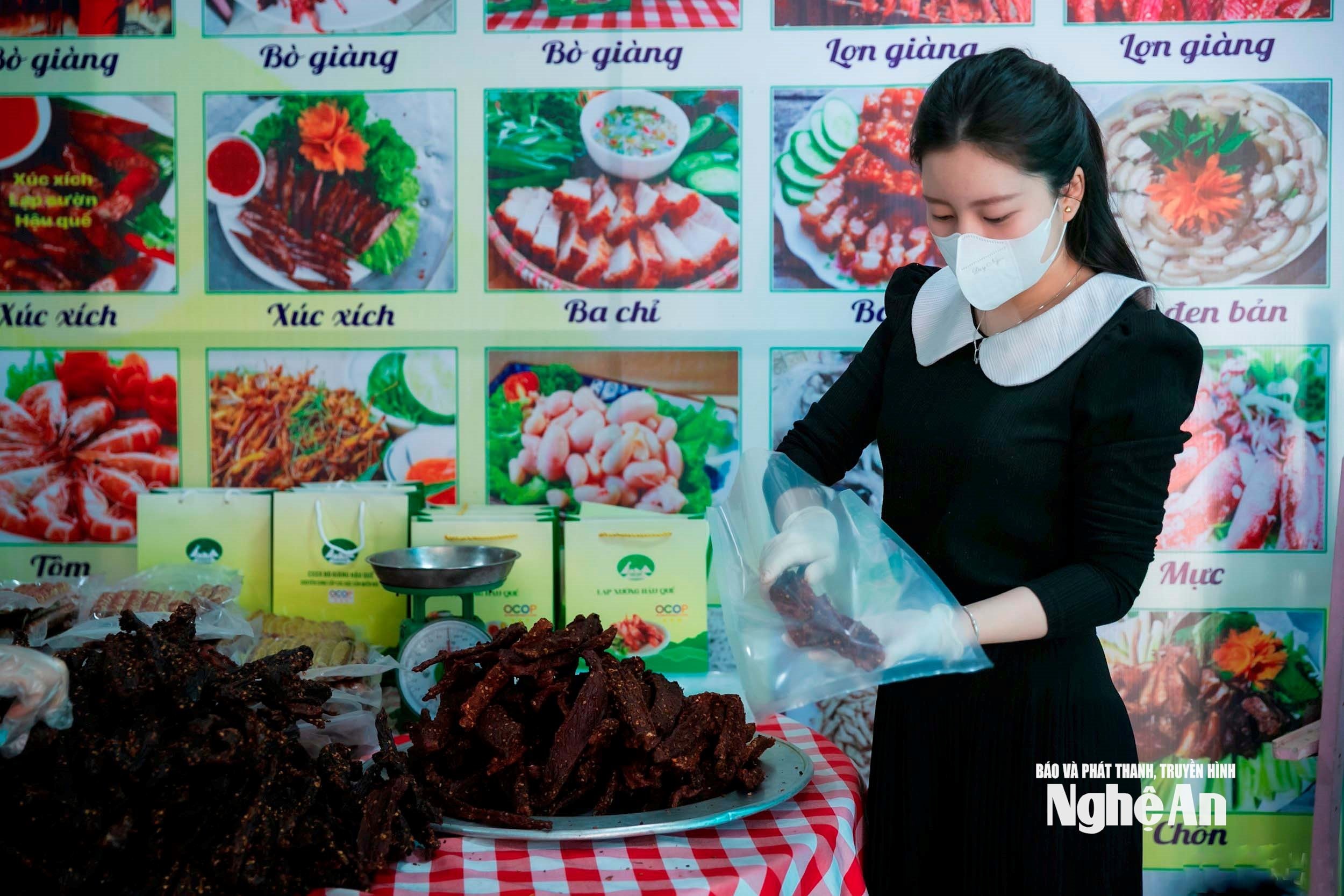
Amidst the recent "storm" of information about counterfeit food, consumers should choose products with clear origins and OCOP certification. This is not only a way to ensure health safety, but also helps protect their rights and contributes to preserving the brand and true value of local specialties.


