
Weapons news 1.12: Ukraine counters KAB, Kizilelma fires BVR.
Ukraine tests new KAB glide bomb countermeasures system, reports shooting down around 100; Kizilelma destroys BVR target for the first time; USS Gerald R. Ford conducts Caribbean exercises.
Three notable developments: Ukraine intensifies its countermeasures against KAB guided glide bombs; Türkiye deploys its Bayraktar Kizilelma unmanned aerial vehicle (UAV) for the first time to destroy beyond-visual-range targets; and the USS Gerald R. Ford aircraft carrier conducts flight operations in the Caribbean in November. This article focuses on the technical aspects and tactical deployment based on the published data.
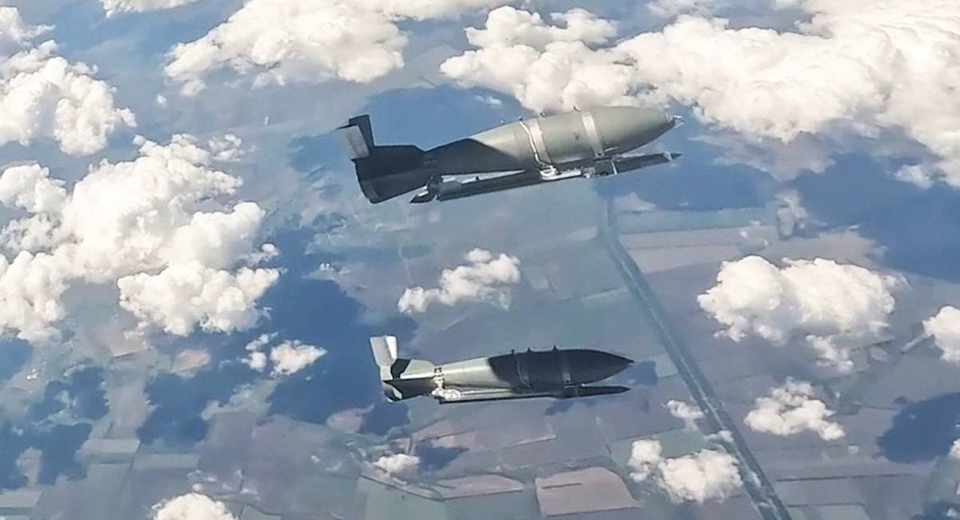
Ukraine intensifies its response to KAB glide bombs.
The Ukrainian General Staff announced that the armed forces are testing new systems to enhance defenses against airstrikes, including the KAB guided glide bomb. Between September and November, Ukrainian air defenses reported shooting down approximately 100 KABs, indicating that efforts to minimize damage are beginning to yield results.
Ukrainian military intelligence assesses that Russia is seeking to increase the effectiveness of its attacks with new weaponry. According to reports, Russia has launched 138 Geran-equipped jet-powered UAVs recently, but most were intercepted by Ukrainian air defenses.
At the monthly meeting on combat capability development, leaders of the Ukrainian General Staff discussed integrating new technologies into the modern battlefield. The focus revolved around increasing mobility, reducing risks for soldiers, and shortening response times.
- Interceptor UAVs are used to neutralize enemy drones.
- Ground robotic platform for combat missions.
- The combat module is mounted on the robot chassis.
According to Brigadier General Oleksiy Shevchenko, Deputy Chief of the General Staff of Ukraine, technological innovation is only effective when overall capabilities are simultaneously enhanced. In the context of ongoing fighting, Ukraine expects that the deployment of new weapons and strengthened air defenses will limit the impact of KAB glide bombs and high-speed UAVs.
Kizilelma jet drone successfully shot down a BVR target for the first time.
On November 30th over the Black Sea, the Bayraktar Kizilelma successfully destroyed a beyond-visual-range target using an air-to-air missile. According to the manufacturer, Bayraktar, the UAV used the MURAD electronically scanned array radar to detect, lock onto, and launch the Gokdogan missile, achieving a direct hit. This event is considered the first time in the world that a jet UAV has achieved beyond-visual-range air combat capability.
The test involved a combination of manned and unmanned aircraft. Five F-16s from Merzifon Air Base flew in formation with the Kizilelma, simulating a "mixed squadron" scenario. Another UAV recorded the entire process; when the target was launched, the Kizilelma automatically detected, locked onto, and fired.
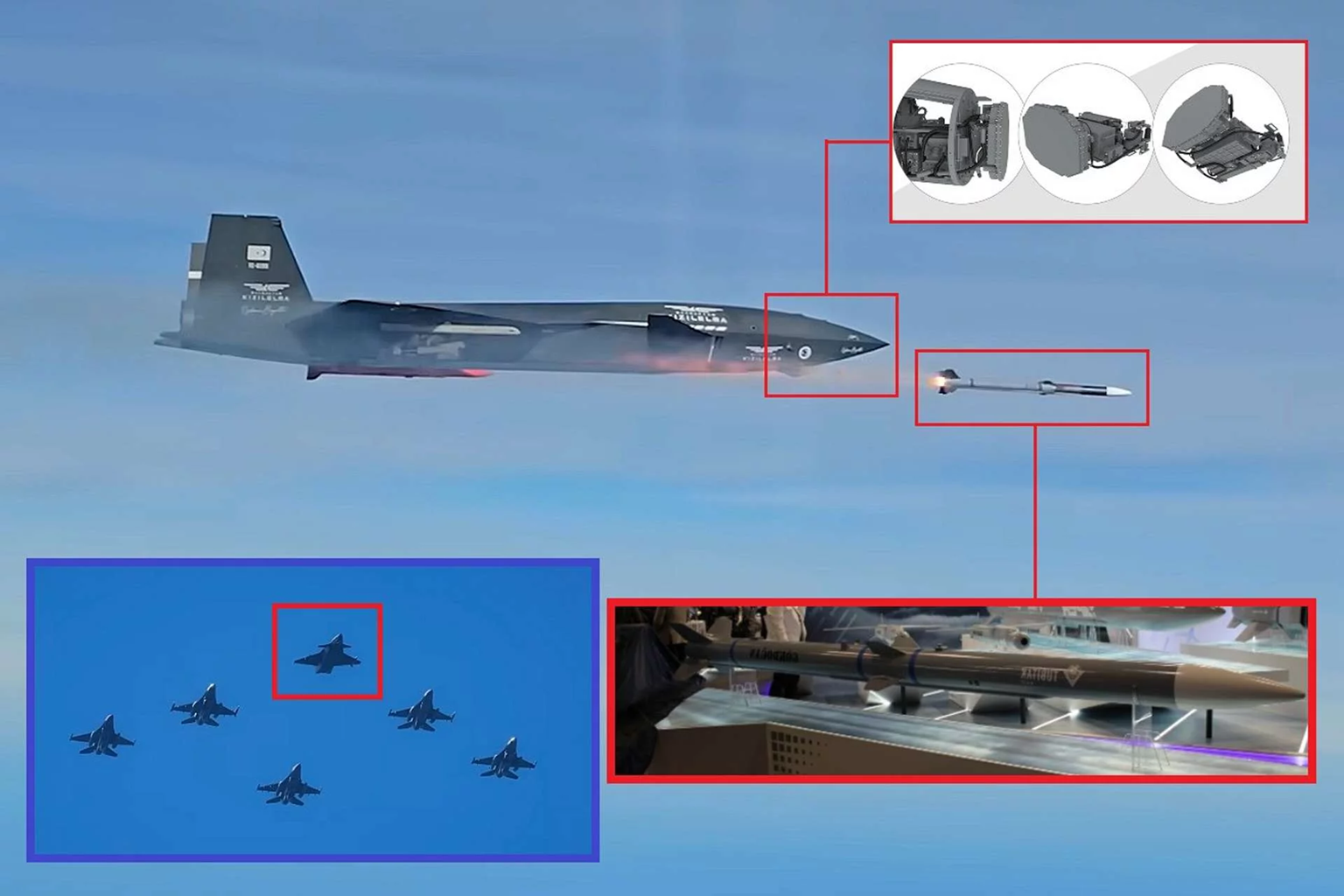
Key specifications have been published.
| Category | Parameter |
|---|---|
| Maximum takeoff weight | Approximately 8.5 tons |
| Weapon load | 1.5 tons |
| Operational radius | Approximately 500 nautical miles (926 km) |
| Speed | Nearly Mach 0.9 (1,100 km/h) |
| Radar | MURAD (AESA), multi-target tracking, BVR guidance |
| Experimental weapons | The Gokdogan missile, with post-launch locking and flight path updates via data link (equivalent to the AIM-120 series). |
This success follows a series of developments from the first flight in 2022, radar testing, simulated shooting down of F-16s, to actual firing. This event paves the way for a model of coordinated combat operations between manned fighters and stealth UAVs in airspace control.
USS Gerald R. Ford conducts flight exercises over the Caribbean Sea.
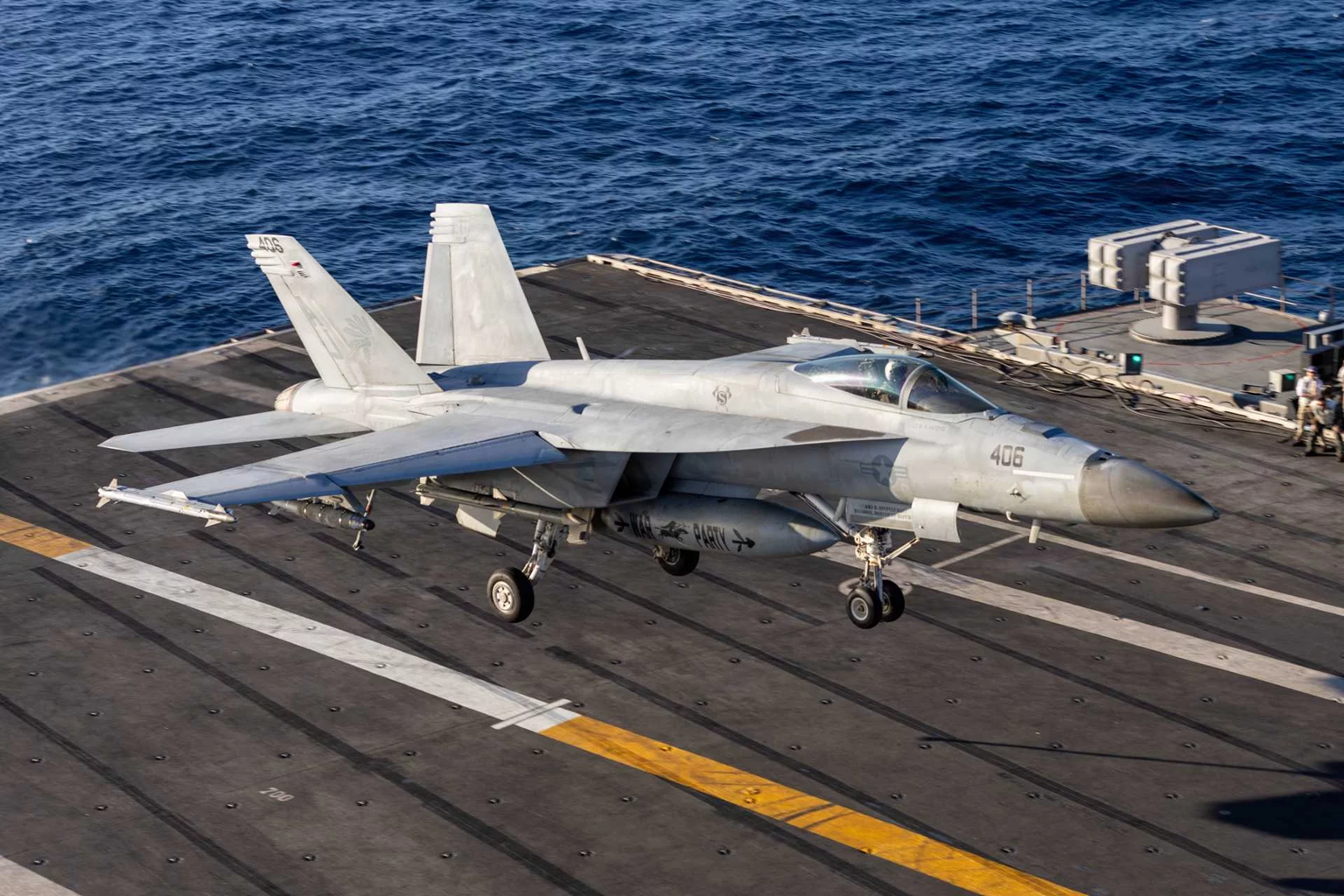
Newly released images show the aircraft carrier USS Gerald R. Ford conducting flight operations in the Caribbean in November. This move is part of an effort to increase its presence to deter illegal maritime activity in the Western Hemisphere and send a deterrent signal amid strained relations with Venezuela.
The Pentagon did not detail the mission; officials familiar with the region said the frequency of the exercises was increased to counter smuggling networks on key shipping lanes. The flight operations included launch and recovery, coordination checks, and maintaining combat readiness with scenarios for reconnaissance, maritime control, attack support, and ensuring air superiority.
Images from November 17th show a high level of activity on deck with F/A-18E/F Super Hornet and E-2D Advanced Hawkeye aircraft. The accompanying strike group includes three Arleigh Burke-class destroyers, forming a flexible multi-domain interception and attack formation. According to the US Department of Defense, the Ford's presence supports surveillance operations, drug trafficking suppression, and maritime security as directed by the President.
The deployment of the USS Gerald R. Ford demonstrates a priority on countering non-traditional threats near the territory. If tensions with Venezuela escalate, the 8th Air Wing on the Ford could conduct long-range strikes, jamming, electronic warfare, and maintain airspace control, thanks to EMALS and AAG which help maintain high takeoff and landing frequencies.
Overall, the three updates reveal a trajectory of technological priorities: Ukraine investing in air defense and automation platforms; Türkiye promoting long-range air combat capabilities with its jet UAVs; and the US maintaining combat readiness and naval and air presence to deter and ensure regional maritime security.


