
Weapons news 21.12: Shahed UAV equipped with optics, FF(X) vessel, German Puma.
Russia used Shahed-136 suicide drones equipped with electro-optical systems to attack Odesa; the US accelerated the development of FF(X) frigates in the Golden Fleet initiative; and Germany ordered and upgraded hundreds of Puma infantry fighting vehicles.
The December 21st arms news highlights three main developments: Russia deployed the Shahed-136/Geran 2 suicide drone variant equipped with an integrated optical system during an attack on Odesa; the US Navy accelerated the FF(X) frigate program as a cornerstone of the “Golden Fleet” initiative; and the German military simultaneously purchased new and underwent a large-scale overhaul of the Puma infantry fighting vehicle.
The Shahed-136 UAV, equipped with optics, was used in the Odesa air raids.
In recent attacks on the Odesa region, Russia used a new variant of the Shahed-136/Geran 2 suicide drone, equipped with an integrated optical system. This information emerged after a video of the downed drone was posted on the social media platform X by military observer Oleksandr Kovalenko.
Examination of the UAV's wreckage revealed a camera cluster mounted directly on the nose, integrated into the fuselage instead of being externally mounted as before. This system is a stable, rotatable electro-optical array, comprising a daytime camera and thermal imaging sensors.
Compared to variants that temporarily mount cameras externally with screws, primarily used for civilian security cameras, the new integrated configuration has several notable changes:
- Improved aerodynamics due to the removal of the exposed camera module.
- Increased durability, reduced risk of damage due to vibration or environmental impact.
- Enhance reconnaissance capabilities and adjust flight paths during the approach to the target.
Equipped with day-night and thermal imaging cameras, the new Shahed-136 can be used for flight path adjustments in the final stages, selecting higher-value targets, or providing real-time combat support. This aligns with previous claims by Russian media that the Shahed has been upgraded to have "self-targeting" capabilities instead of simply flying along pre-programmed coordinates.
In September 2024, Ukrainian forces detected a Starlink terminal on a downed Shahed drone, raising concerns about the advanced communication and navigation capabilities of this UAV. Along with the integration of optical systems into the fuselage, these modifications indicate that Russia continues to improve the Shahed-136 based on combat experience, transforming a low-cost UAV platform into an increasingly difficult threat to Ukrainian air defenses.
FF(X) frigates in the US "Golden Fleet" initiative.
The U.S. Navy is accelerating the FF(X) frigate program as a key part of President Donald Trump's "Golden Fleet" initiative. The goal is to rapidly deploy additional combat power at sea, based on proven designs and maximizing domestic shipbuilding capabilities.
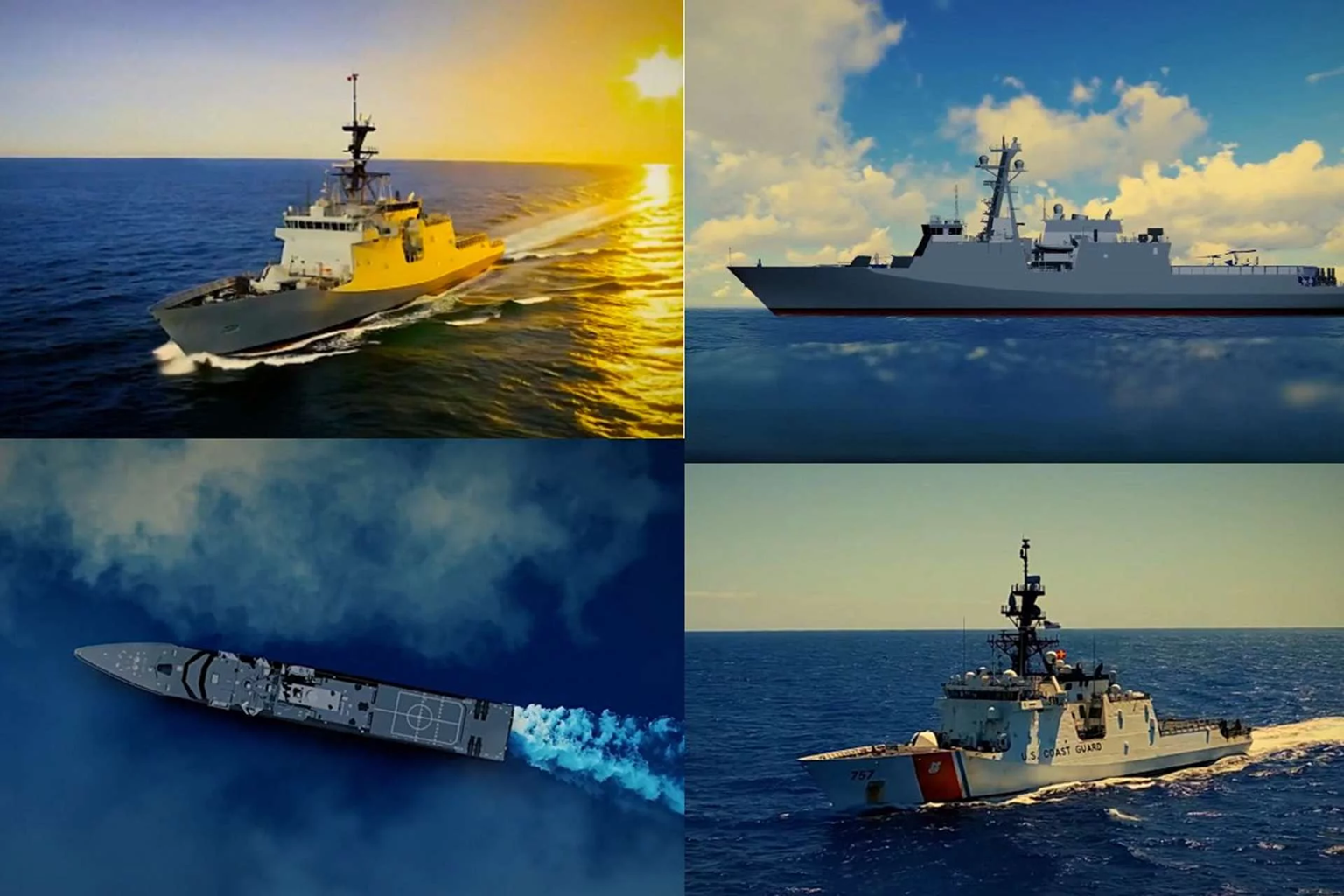
On December 19, U.S. Navy Secretary John C. Phelan confirmed that the U.S. will develop a new class of smaller, more flexible frigates, built entirely in domestic shipyards and utilizing a domestic supply chain. The FF(X) is not an entirely new design but is based on the hull of the U.S. Coast Guard's Legend-class patrol vessel – a model that has been in service for many years and has proven its reliability.
This move comes after the U.S. Navy significantly scaled back the Constellation-class destroyer program due to design changes, delays, and cost overruns. The Constellation program, which had aimed for 20 ships at a total cost of approximately $22 billion, has now stalled at just the first two, nearly three years behind schedule. The FF(X) is therefore seen as a way to “reboot” the smaller surface fleet, prioritizing faster progress and lower technical risks.
Huntington Ingalls Industries' (HII) Ingalls Shipbuilding in Mississippi will play a central role, at least with the first FF(X) vessel. The U.S. Navy plans to leverage the lines, personnel, and processes used to build the Legend-class ships to shorten the design-to-launch time, aiming to put the first FF(X) vessel into service by 2028. After this initial lead, the Navy may open a competitive bidding process to other shipyards to accelerate and scale up construction.
The basic design parameters of FF(X) have been released, including:
| Parameter | Value (according to original design) |
|---|---|
| Hull length | Approximately 127 m |
| Displacement | 4,000 - 4,500 tons |
| Maximum speed | Approximately 28 knots (51.8 km/h) |
| Time of continuous operation at sea | 2-3 months |
The initial design of the FF(X) prioritized durability, long range, and flexible deployment capabilities. While the weapon and sensor configurations have not been released in detail, sketches suggest the ship will carry missile launchers, close-in defense systems, and the ability to coordinate with unmanned vehicles. This approach allows the U.S. Navy to quickly add a class of multi-purpose frigates using a proven hull design.
Germany is expanding and upgrading its Puma infantry fighting vehicle fleet.
The German Army is entering a major phase of expansion and modernization of its mechanized infantry forces, with a program to increase the number of Puma infantry fighting vehicles to around 200 new units, while also implementing a long-term upgrade plan for its existing fleet.
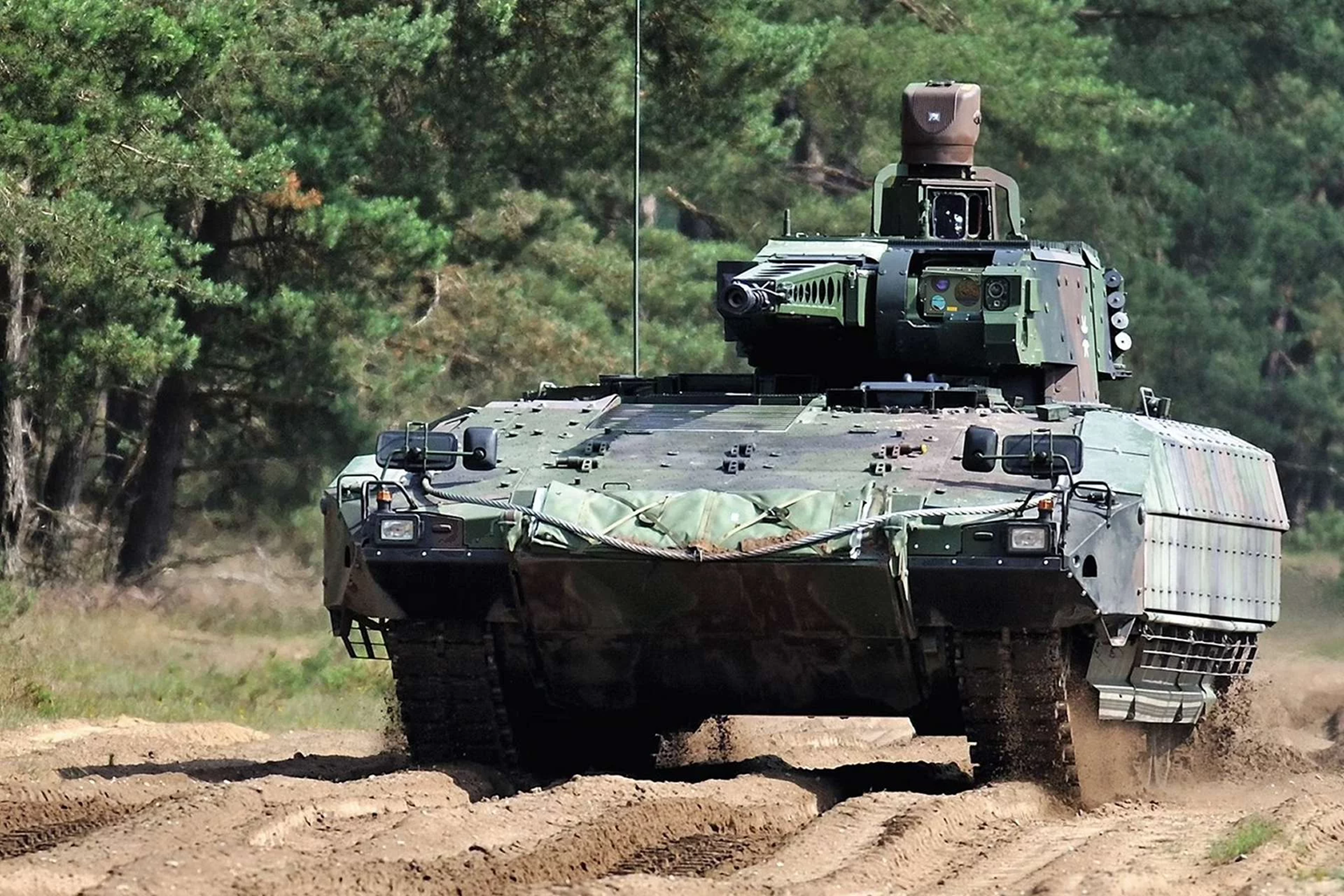
The defense technology group Rheinmetall announced that the German military has signed an amendment to the framework contract for the Puma program through PSM – a joint venture between Rheinmetall and KNDS Deutschland. The agreement, signed at the BAAINBw defense procurement agency in Koblenz, is expected to take legal effect from January 2026. The first new Puma vehicles are expected to be delivered from mid-2028.
Under the contract, PSM will supply 200 Puma infantry fighting vehicles worth approximately 4.2 billion euros (4.9 billion USD), split equally between the two industrial partners, each receiving around 2.1 billion euros (2.45 billion USD). The procurement package includes not only the combat vehicles but also protective modules and storage containers, demonstrating Germany's comprehensive investment in combat readiness and operational sustainability, rather than simply increasing the number of vehicles.
The expansion program inherits the contract framework from May 2023, when the German army ordered the first batch of 50 Puma vehicles. In terms of combat, the Puma is positioned as the mainstay of the German mechanized infantry, with a crew of 3 and an infantry team of 6 soldiers. The design emphasizes modular protection and networked combat capabilities, allowing for effective coordination with other units in environments with high-precision anti-tank fire and continuous aerial reconnaissance.
Alongside the new purchases, Germany is implementing a comprehensive upgrade program for its 297 existing Puma vehicles, expected to be completed by 2029. The upgrade package includes high-resolution day-night sensors, integration of MELLS anti-tank missiles, and a digitized communications system.
| Category | Scale/Duration |
|---|---|
| Buy a new Puma | 200 vehicles, with a total value of approximately 4.2 billion euros. |
| New car handover | From mid-2028 |
| Upgrade the existing fleet. | 297 Puma cars, expected to be completed in 2029. |
| Major upgrade | Day-night sensors, MELLS missiles, digital communications |
The combination of new purchases and upgrades shows Germany's choice to rapidly increase the size of its mechanized infantry forces, while simultaneously extending the lifespan and improving the quality of its existing fleet, in order to meet new threats on the modern battlefield.


