
Weapons news 3.12: North Korean Su-25, Indian S-500, WJ-700 UAV
North Korea displays Storm Shadow-type missiles under the wings of its Su-25; India discusses S-500 amid delays in S-400 development; China's WJ-700 UAV appears at EDEX; Egypt is reportedly interested but has not confirmed.
The December 3rd arms news highlights three notable developments: North Korea for the first time displayed a cruise missile with a shape similar to the Storm Shadow on its Su-25; India included the S-500 on its agenda with Russia amidst delays in the S-400; and China's WJ-700 jet drone appeared at EDEX in Cairo, sparking speculation about Egyptian interest, although this has not been confirmed.
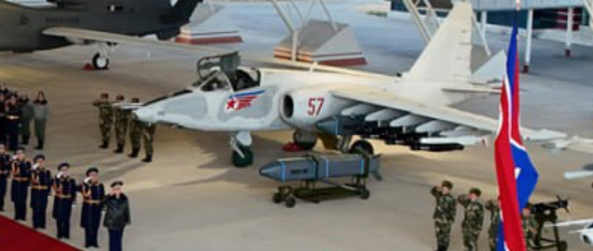
North Korea displays Storm Shadow-type missiles on Su-25 aircraft.
During the 80th anniversary celebration of its air force, North Korea held a parade and displayed various military equipment, from fighter jets and UAVs to air defense systems. In the display area, a prototype cruise missile appeared under the wing of a Su-25 and in the static area, bearing significant similarities to the French-British Storm Shadow/SCALP-EG, while also reminiscent of some details of the German Taurus.
This is the first time North Korea has publicly unveiled such a design. It is unclear whether this is a model, a prototype, or has reached a certain stage of production. Prior to this, there was no indication that North Korea possessed a long-range, air-launched cruise missile program; therefore, the technical parameters and actual capabilities of this model are currently undetermined.
Some analysts note the possibility of North Korea referencing technologies from outside sources as a hypothesis to be considered (including access to technical assistance or missile debris from the Ukraine conflict). However, they emphasize that recreating the shape is only the first step; the guidance system, sensors, and internal electronics are the major challenges. Therefore, the ability to achieve a level comparable to Storm Shadow or Taurus is currently considered limited. The overall picture suggests that North Korea continues to expand its missile arsenal, but claims about production capabilities need to be carefully verified.
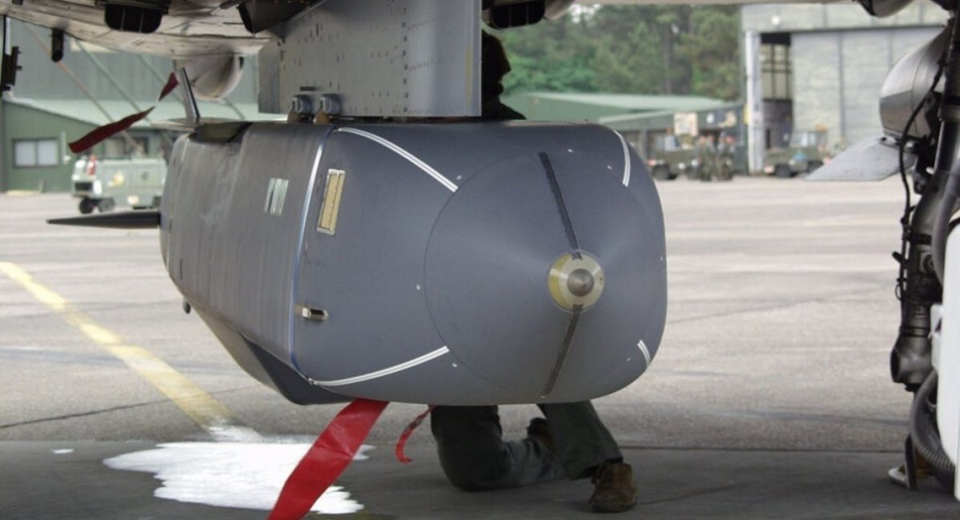
Storm Shadow/SCALP-EG: reference parameter
The Storm Shadow, manufactured by MBDA, is approximately 5.1 meters long, weighs 1,300 kg, and carries a 450 kg BROACH-type warhead capable of penetrating concrete before detonation. Its range exceeds 560 km (export versions typically have a range of around 250 km). The guidance system combines GPS/INS and infrared sensors, maintaining high accuracy in complex combat environments. The missile flies at high subsonic speeds, Mach 0.8-0.95 (980-1,190 km/h), and is integrated into the Tornado, Rafale, Typhoon, and Mirage 2000; it is also used by Ukraine on the Su-24. Deployed since 2002, the Storm Shadow saw combat in Libya (2011) and will continue to be used in Ukraine from 2023-2025.
India puts S-500 on agenda amid delays in S-400 development.
According to the Times of India and Bloomberg, India and Russia are expected to begin formal discussions on the S-500 during a meeting on December 4th in New Delhi between Indian Defence Minister Rajnath Singh and his Russian counterpart Andrey Belousov. The agenda will also include reviewing the progress of S-400 deliveries and considering the possibility of New Delhi purchasing Su-57 fighter jets.
India has ordered additional S-400 missiles but has expressed concerns about delivery delays. Russia stated that the remaining systems will be delivered before November 2026. The inclusion of the S-500 in the meeting suggests New Delhi wants to explore high-altitude defense options in light of Pakistan's continued ballistic missile development. This is seen as the initial step in an evaluation process, focusing on technical requirements, delivery schedules, financial capacity, and industrial cooperation, and is not yet aimed at immediate signing of an agreement.
The S-500 (Triumfator-M/Prometheus) was launched by Russia in 2002 to counter ballistic missiles, aerodynamic targets, and some near-space objects. Between 2003 and 2013, Russia finalized the configuration, radar, seekers, and interceptor missile variants. In 2021, the first system was commissioned in the Moscow region; official images were released at the Army exhibition in 2024.
According to Russian announcements, the S-500 can intercept ballistic missiles at a range of up to 600 km, intercept aerodynamic targets at long distances, and operate at altitudes up to 200 km depending on the type of missile. The system uses 91N6A/M and 96L6-1 radars for surveillance, along with 76T6 and 77T6 radars for fire control; the components are mounted on heavy, mobile, and rapidly dispersal wheeled chassis. In terms of firepower, the S-500 includes the 9M96, 48N6DM, 40N6, and especially the 77N6-N/N1 variants with a range of 500-600 km, serving as an additional layer of defense in a multi-layered air defense network alongside the S-300, S-350, S-400, and Pantsir-S.

The WJ-700 jet drone and Egypt's surveillance challenge.
At the EDEX exhibition in Cairo, China showcased the WJ-700 armed UAV, attracting attention amid reports that Egypt may have evaluated or considered purchasing a small number. However, there has been no official statement from Egypt or the manufacturer to date.
The Egyptian Air Force currently operates approximately 484 UAVs, including nearly 100 reconnaissance-attack aircraft and 378 surveillance aircraft; many models are supplied by China, such as the ASN-209, CH-5, Wing Loong, and Wing Loong II. Some unconfirmed sources suggest Cairo was once interested in the J-10C fighter jet, but budget constraints, procurement risks, and political factors may have led them to focus more on UAVs, which are subject to less political scrutiny than manned aircraft. All information regarding the possibility of ordering the WJ-700 remains unverified.
The WJ-700, developed by CASIC, began development around 2012, finalized its design in 2016, and made its first test flight on January 11, 2021. It is a long-range, high-altitude, high-speed reconnaissance and combat platform powered by jet engines; its design reduces radar reflectivity thanks to air intakes located on the dorsal and V-shaped tails.
Published specifications: maximum takeoff weight approximately 3.8 tons, payload 840 kg, service ceiling 12,000 - 15,000 m, maximum speed approximately 700 km/h, operating time 20 - 26 hours depending on configuration. The system is capable of automatic takeoff/landing, self-checking, and reducing the workload of the control crew.
The integrated armament includes C-701 and C-705 anti-ship missiles, SM-102 anti-radar missiles, CM-502KG precision-guided munitions, and 50-100 kg glide bombs. The WJ-700 can carry synthetic aperture radar, electro-optical sensors, and an electronic reconnaissance package, serving long-range surveillance, beyond-air defense attack, or radar suppression. Its presence at EDEX shows Egypt's continued interest in solutions to enhance surveillance and long-range attack capabilities, although there are no signs of a signed contract.



