
US intelligence predicts the number of missiles capable of striking US territory will increase fivefold by 2035.
A report from Director of National Intelligence Tulsi Gabbard estimates that the number of missiles threatening the US will increase from 3,000 to 16,000 units, with the strong rise of China.
The number of missiles capable of striking U.S. territory is projected to increase sharply from the current 3,000 to 16,000 by 2035. According to a report by Director of National Intelligence Tulsi Gabbard, this increase stems from weapons development programs in China, Russia, North Korea, Iran, and Pakistan, including systems carrying both nuclear and conventional warheads.
Assessment of emerging threats
The intelligence report specifically highlighted countries expanding their long-range strike capabilities, including Pakistan. Gabbard suggested that Islamabad's development of long-range ballistic missiles could lead to the creation of intercontinental ballistic missiles (ICBMs) capable of reaching the United States. However, military experts questioned the practicality of this assessment. Pakistan's most advanced Shaheen-III missile has a range of only about 2,750 km, primarily serving as a deterrent against India, while the distance to the United States is over 11,200 km.
For Iran, the report suggests that Operation Epic Fury has limited its power projection capabilities. While none of Iran's missiles currently exceed a range of 2,500km, space-launched vehicles (SLVs) could be utilized to develop ICBMs by 2035.
China and Russia's offensive capabilities
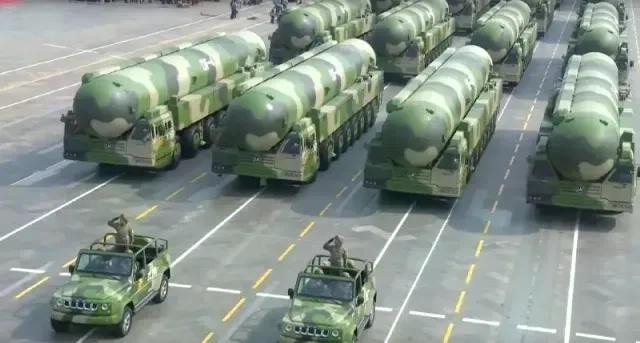
The U.S. intelligence community has identified China as the primary driver of a new nuclear era. By December 2025, Beijing's nuclear arsenal will have exceeded 600 warheads and is projected to reach 1,000 by the end of the decade. In western China, more than 100 silos for solid-fuel DF-31 missiles have been loaded, enabling immediate retaliation.
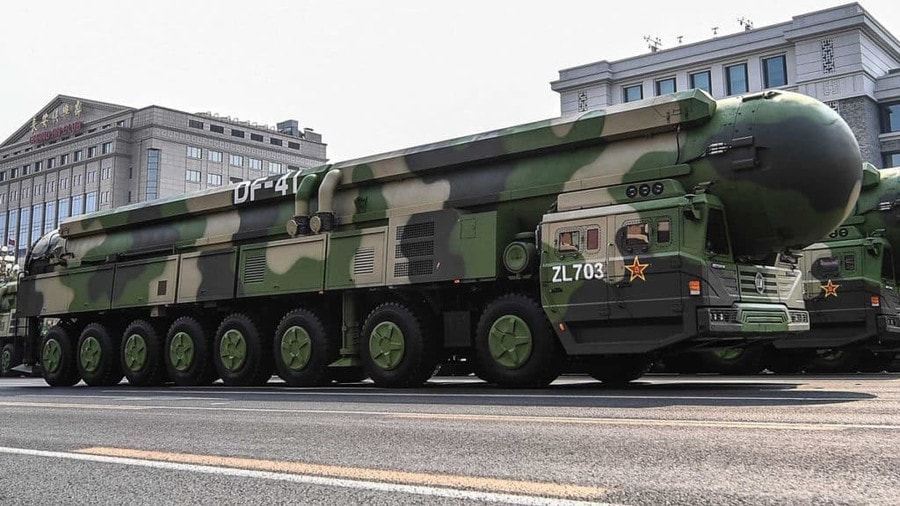
China's weapons systems are diversifying, including the DF-41 multiple-revolution guided missile (MIRV), and the hypersonic DF-17 and DF-27 missiles with a range of 8,000 km. It is projected that by 2035, China will possess approximately 4,000 hypersonic weapon systems and increase its number of submarine-launched ballistic missiles (SLBMs) from 72 to 132.
Meanwhile, Russia has completed the modernization of its nuclear triad with systems capable of penetrating current missile defense systems. Notably, this includes the heavy RS-28 Sarmat ICBM, capable of striking through the South Pole, and the Poseidon unmanned submarine with unlimited range. The combination of Borei-A class submarines and Bulava missiles is significantly shortening the US early warning time to just a few minutes.
Debate on the objectivity and system of the Golden Dome
This report has faced some backlash for not including India on the list of countries capable of striking the US, despite New Delhi developing the Agni VI with a range of 12,000km. Pakistani officials argue that this is a political bias aimed at drawing India into an alliance to contain China.
Overall, the release of figures on the increasing missile threat is seen as a stepping stone for the US administration to convince voters of the need for funding for a new missile defense system called "Yellow Dome." However, experts warn that even such an advanced system would struggle to guarantee absolute safety against the enormous number of missiles expected by 2035.


