Society

Exquisite and unique: a centuries-old eight-sided palanquin in Nghe An.

Huy Thu March 26, 2025 17:02

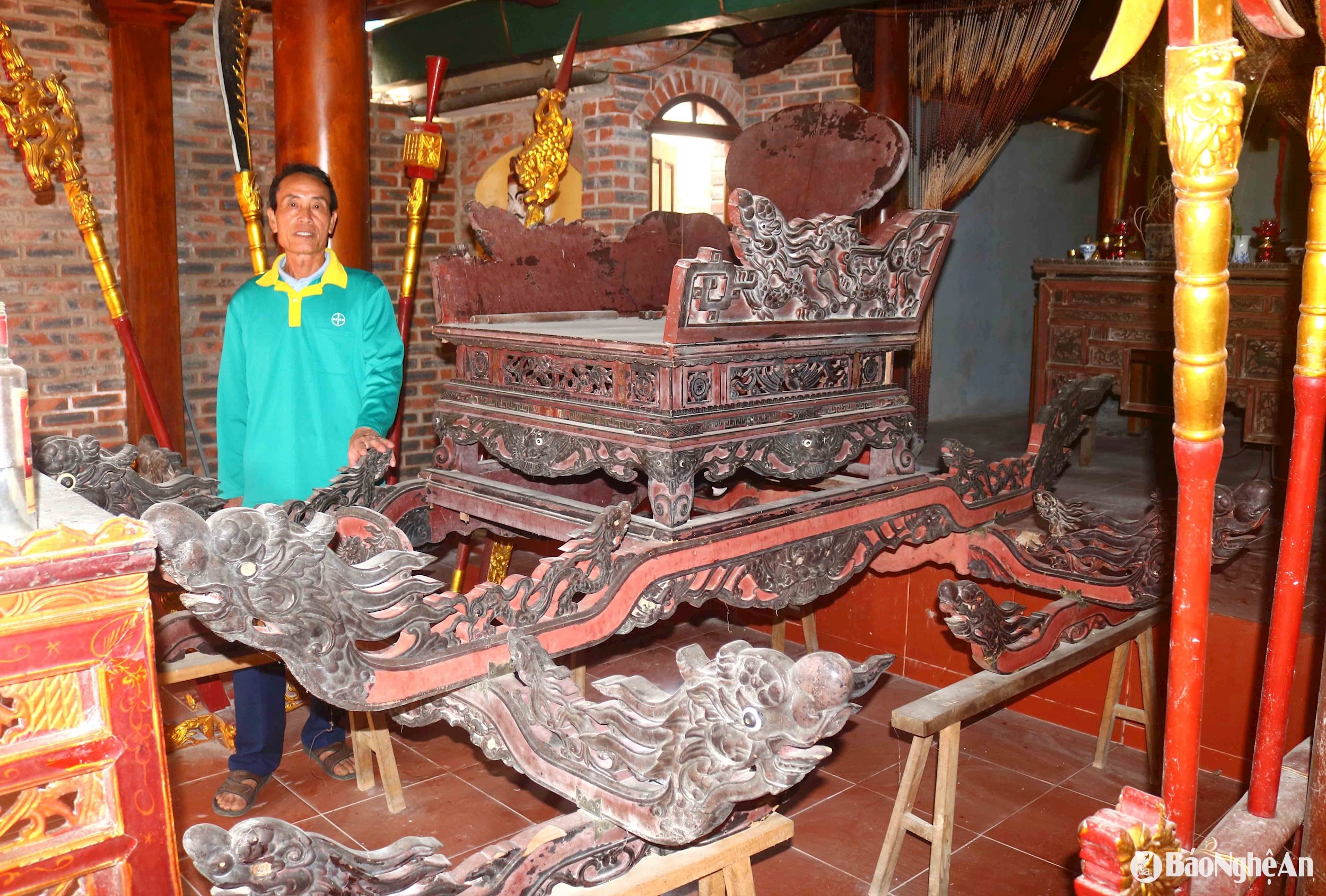
Long-standing, Cao Son Temple in Minh Tien commune (Thanh Chuong district, Nghe An province) preserves an ancient palanquin with exquisite carvings, possessing multifaceted cultural, historical, and artistic value.
a
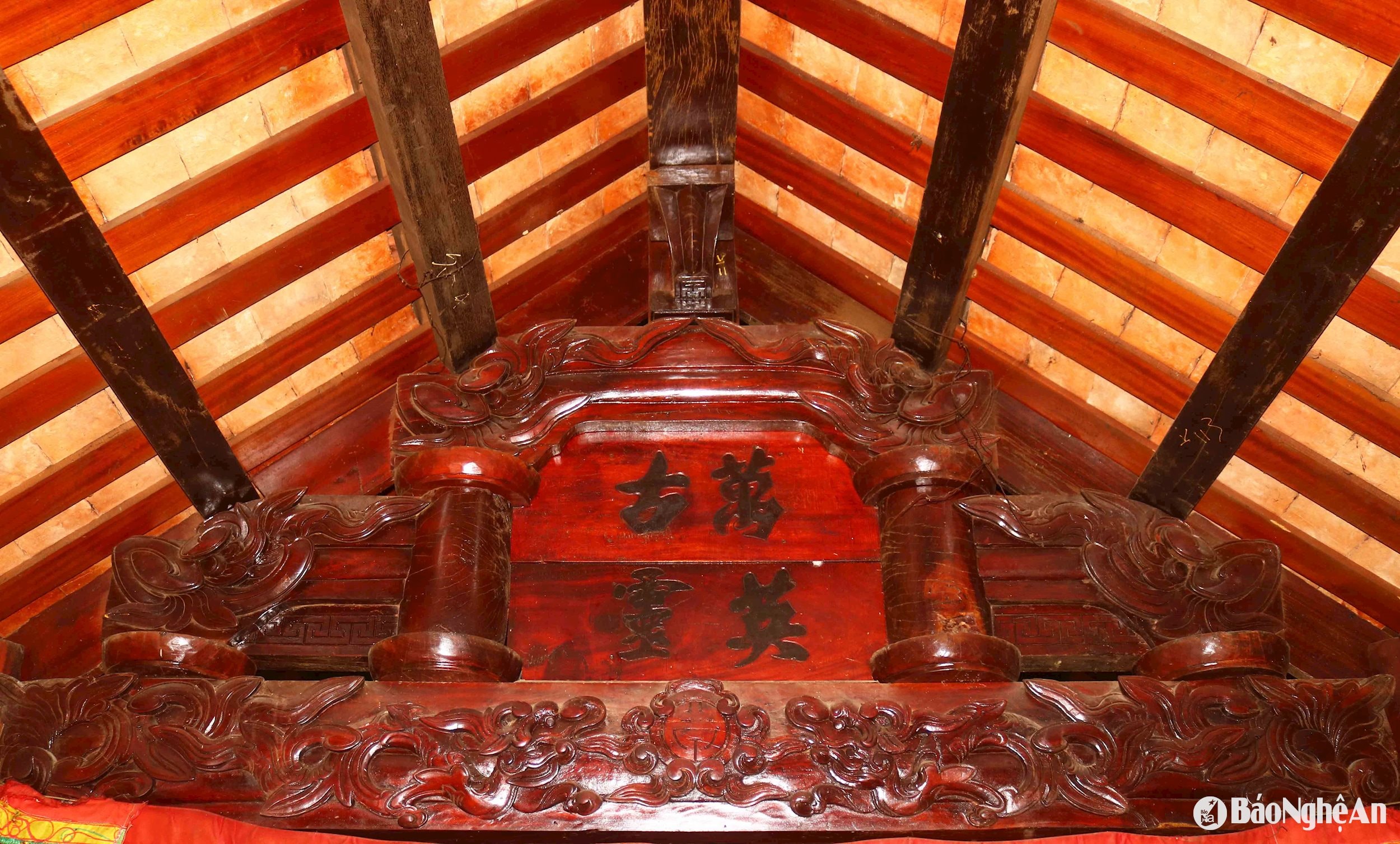
The Cao Son Temple, located next to Linh O Pagoda in Hamlet 3, Minh Tien Commune (formerly Chua Hamlet, Thanh Luong Commune), was built by local people long ago to worship the god Cao Son. The temple consists of a lower and upper hall. The wooden frame of the upper hall is beautifully carved. Every year on the 10th day of the first lunar month, local people hold a large ceremony at the temple to pray for health, peace, and a bountiful harvest. Photo: Huy Thu
bna_1..jpg
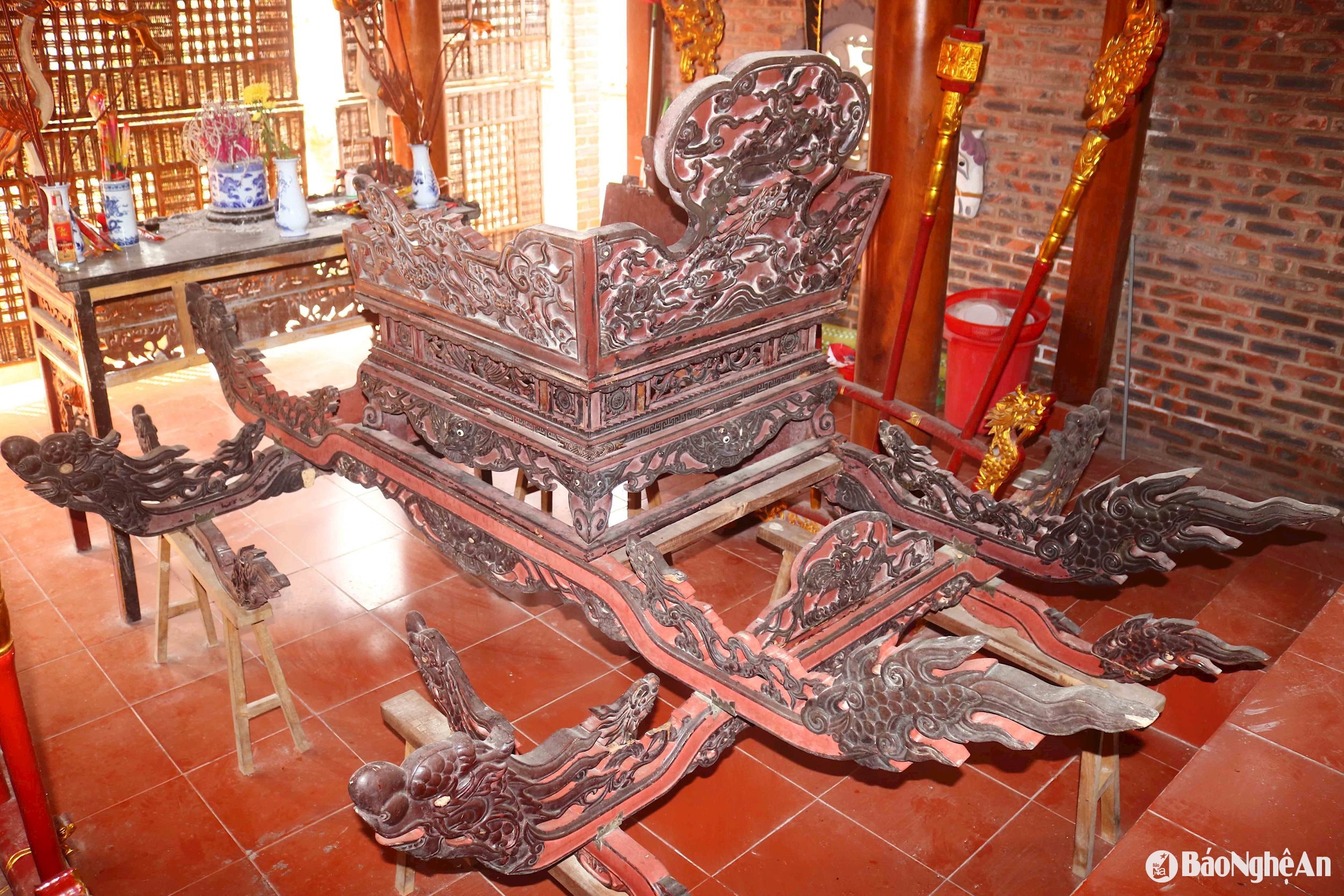
When visiting Cao Son Temple, tourists are inevitably impressed by the unique ancient palanquin, worshipped in the center of the temple as a sacred object. Photo: Huy Thu
bna_2..jpg
Mr. Nguyen Chi Tu, head of Hamlet 3, Minh Tien Commune, said: "The ancient palanquin possesses a majestic and rare beauty. Previously, during the war, when Cao Son Temple was dismantled for public works, the palanquin was temporarily stored at the Bui family's ancestral temple in the hamlet, before being moved to Linh O Pagoda. When Cao Son Temple was restored (2013), the main hall was returned to its original location, and the ancient palanquin was worshipped right in the middle of the temple." (Photo: Huy Thu)
bna_3(1).jpg
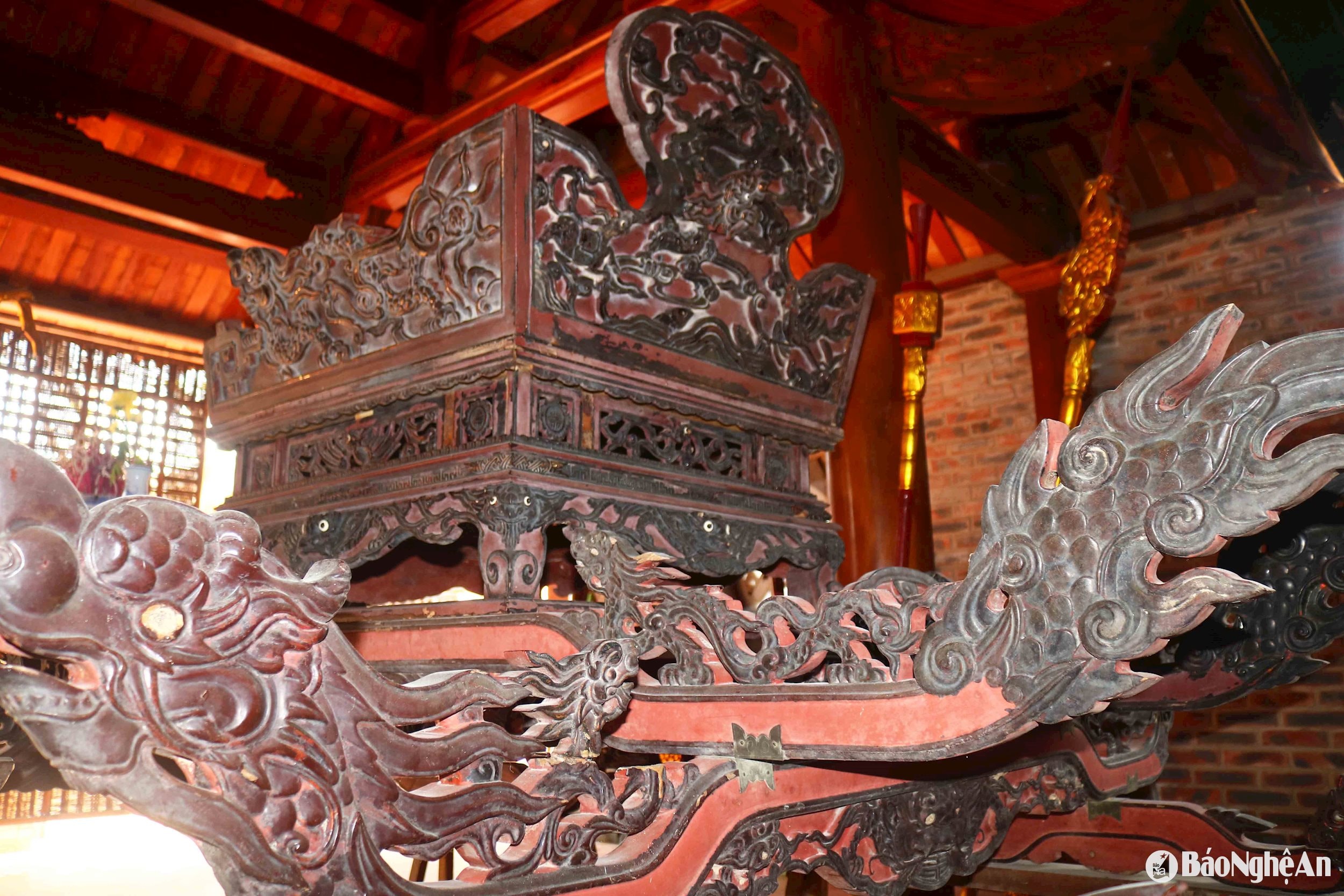
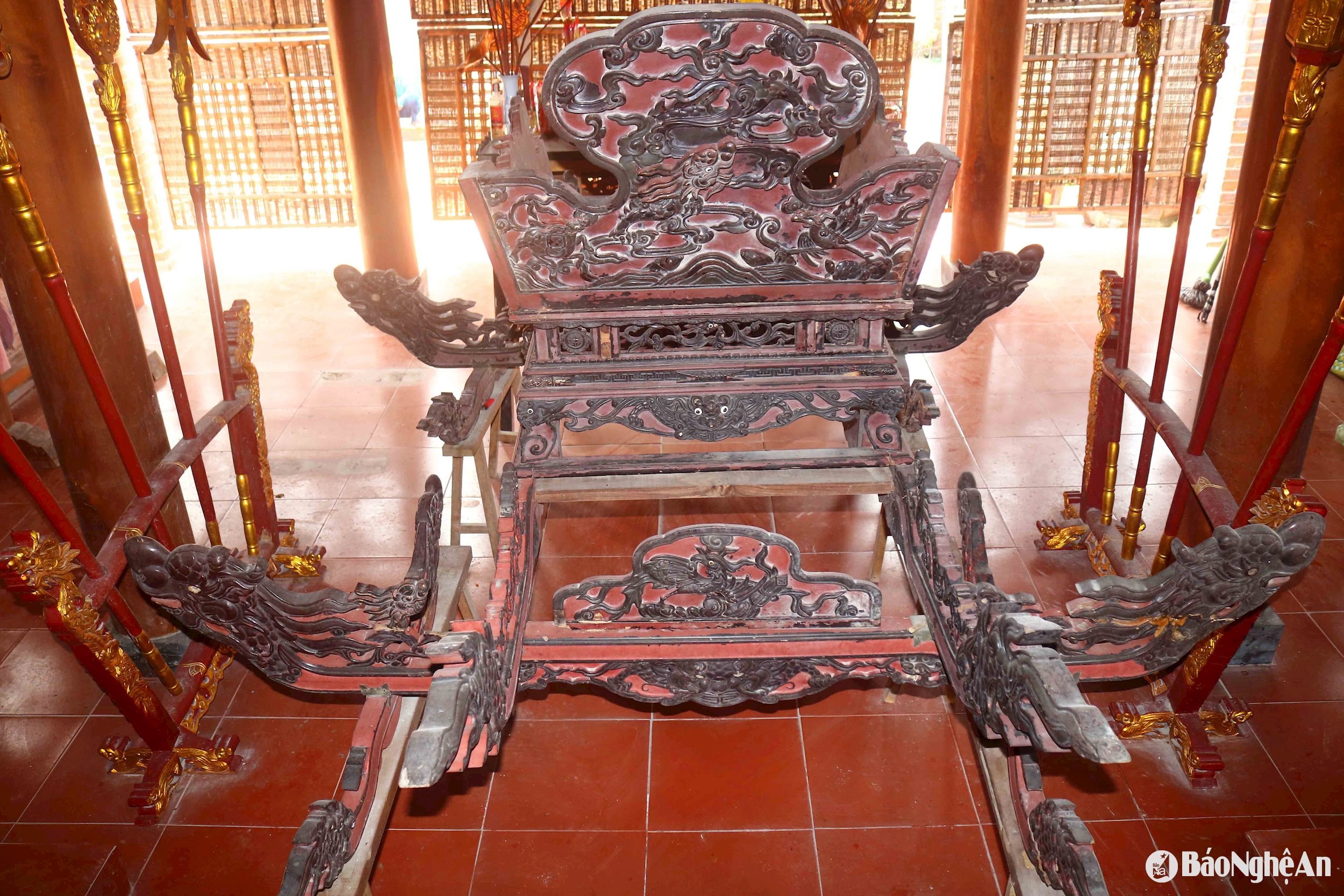
The palanquin is designed like a special throne, placed on top of the palanquin's poles, with a backrest and armrests, intricately carved with traditional motifs such as dragons, lions, turtles, phoenixes, and tiger faces... On both sides, the armrests are decorated with intricately coiled dragons. Below are decorations of dancing phoenixes and tiger faces. The four corners of the palanquin's legs are carved with four dragon heads facing in four directions. Photo: Huy Thu
bna_4(1).jpg
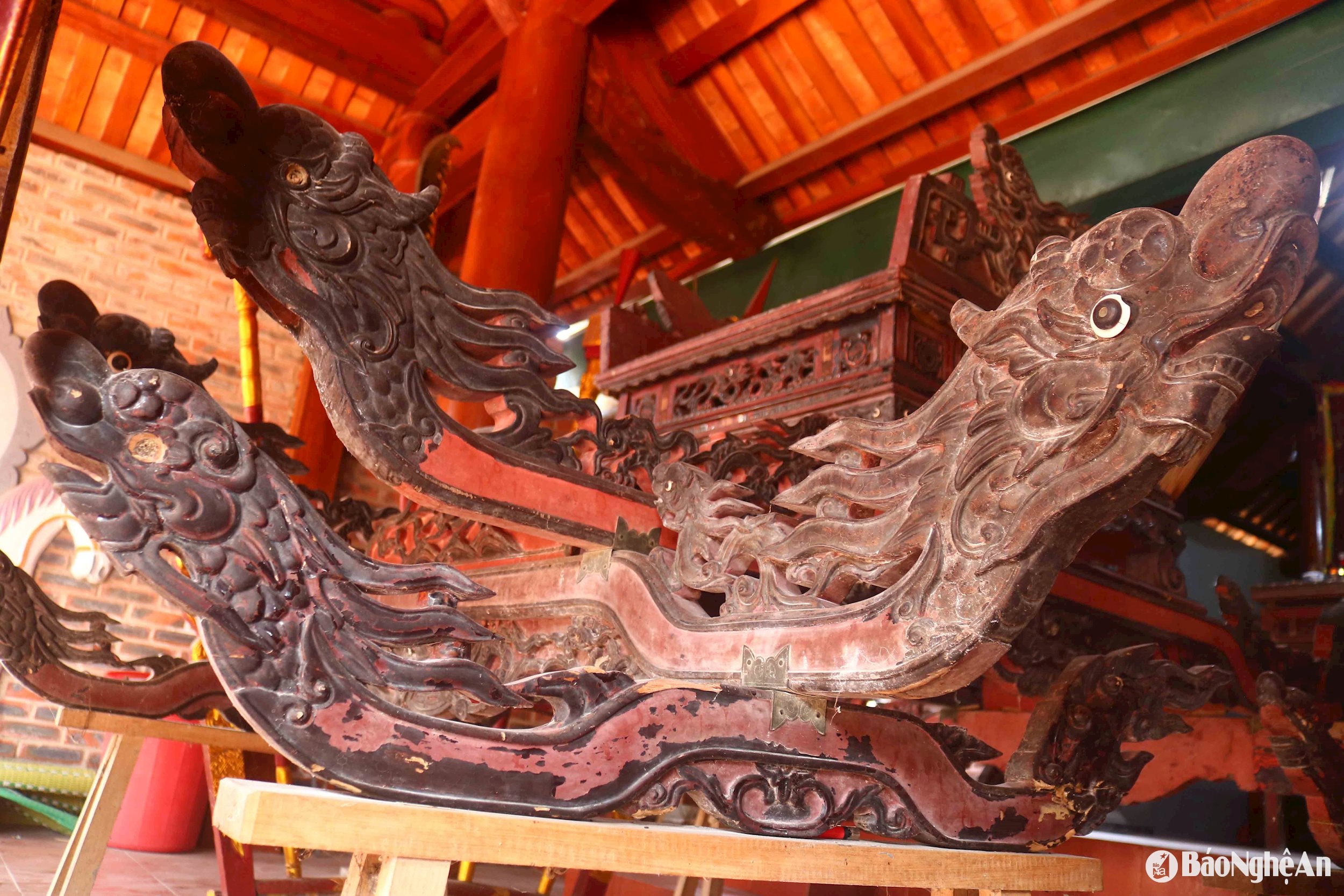
On this eight-sided palanquin, dragon motifs are decorated everywhere, from the carrying poles to the seat, with each position featuring a different dragon style (dragon face, dragon head, full-body dragon). The dragon image on the palanquin's armrests is the most striking, with the dragon's head raised high and its mouth "holding a pearl". Photo: Huy Thu
bna_5..jpg
Mr. Bui Van Suu (87 years old), an elderly resident of Hamlet 3, Minh Tien Commune, said: "The ancient palanquin was once used to carry the deity during the village festival. In the past, every three years, the villagers (formerly Xuan Bang village) would organize a traditional festival with a procession carrying the deity, complete with an eight-sided palanquin, elephant and horse statues, flags, and parasols, moving from Cao Son Temple through O Pond to O Temple. Young men from the village were selected, dressed in 'sĩ lại' (a type of traditional costume), and carried the palanquin very majestically." (Photo: Huy Thu)
bna_6..jpg
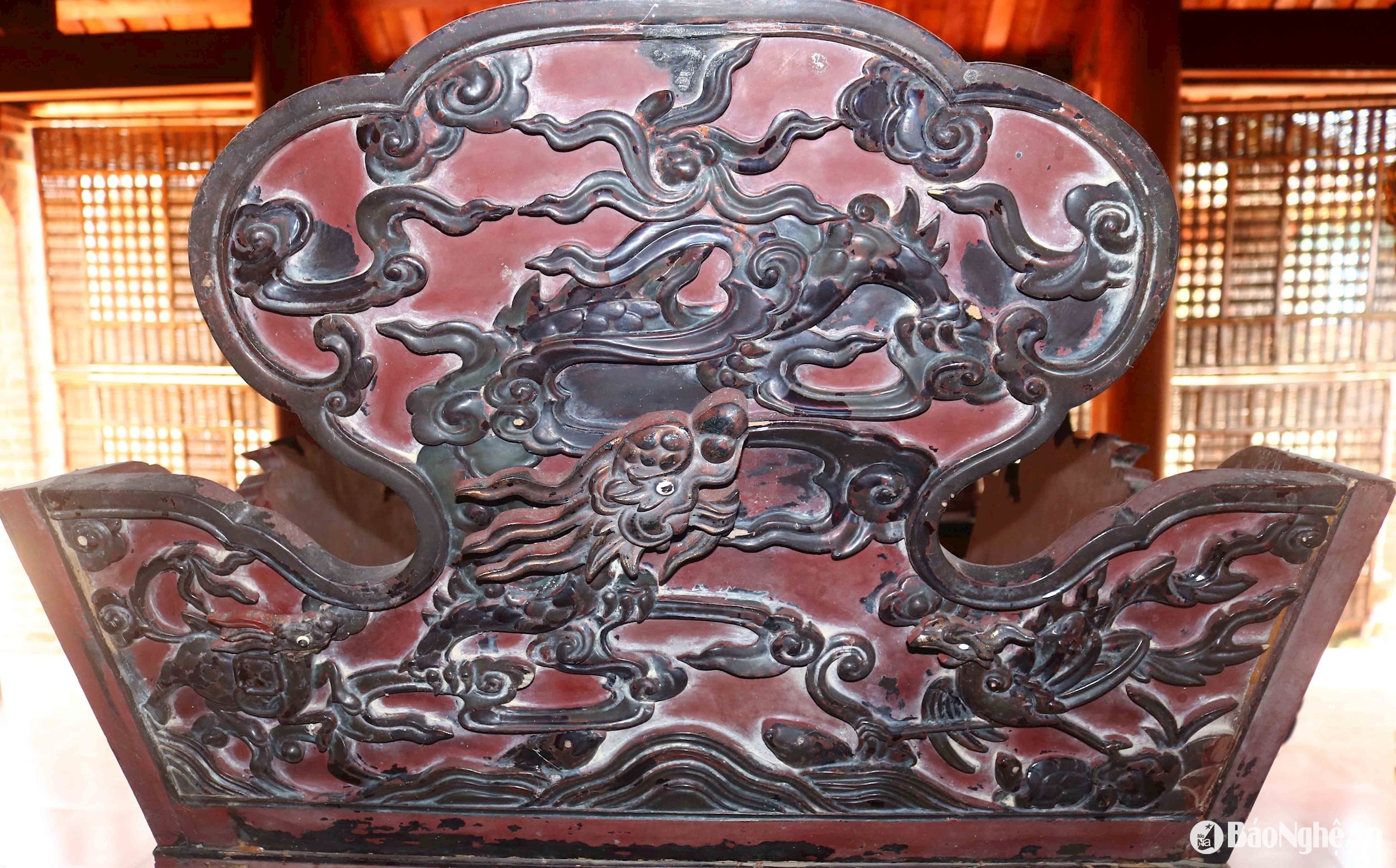
The back of the decorative panel features the most prominent imagery of the "Four Sacred Animals." The upper part depicts a dragon coiled in clouds, its head protruding from the center. The dragon's head is intricately carved in relief. On either side are images of a unicorn and a phoenix bowing towards the center. Below are images of a turtle and a carp swimming in the water. These exquisite carvings create a vibrant and distinctive picture. (Photo: Huy Thư)
bna_7..jpg
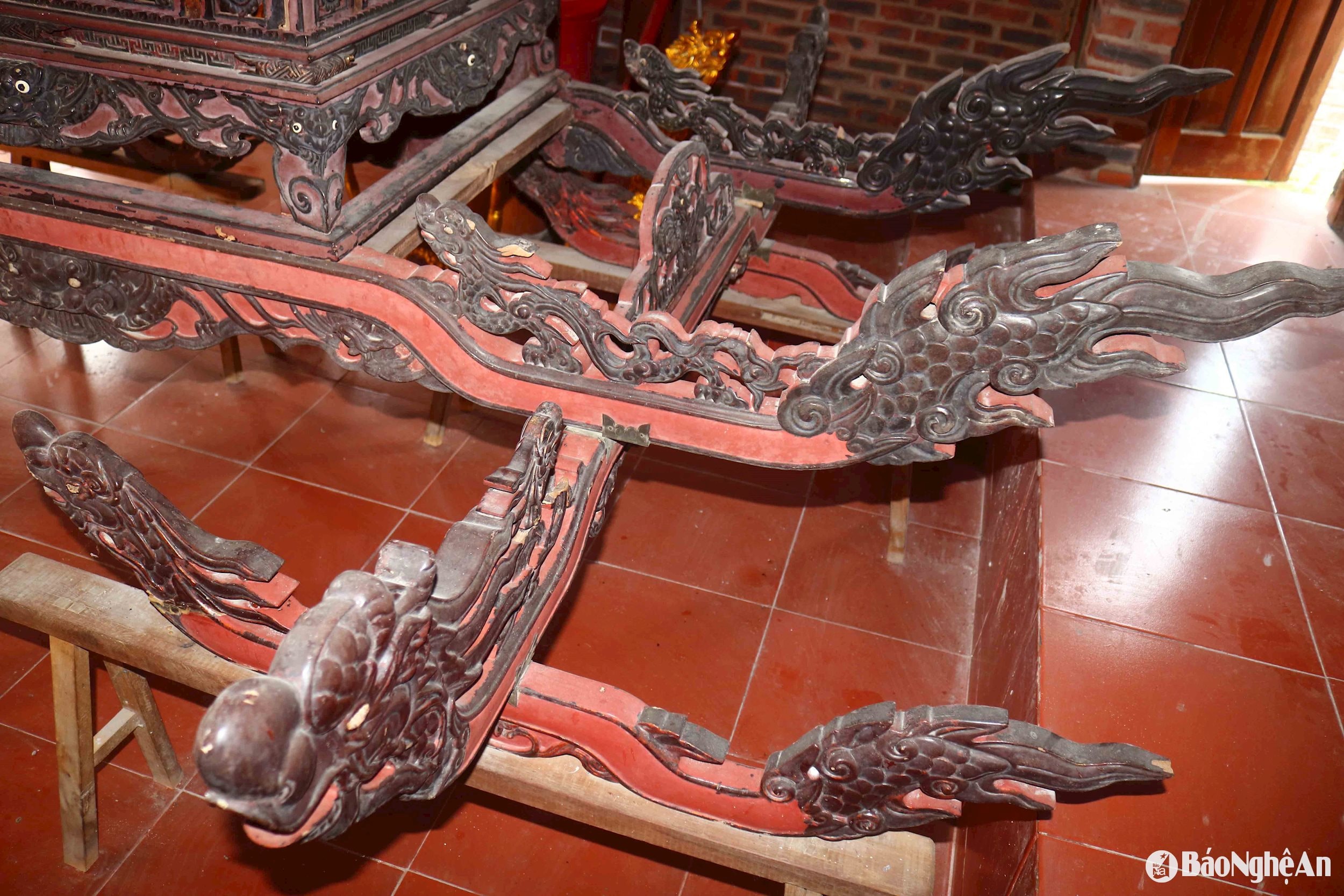
The palanquin's carrying poles consist of vertical poles, horizontal poles, and carrying poles. The vertical poles consist of two bars, with the ends shaped like dragon heads and the tails like dragon tails. The horizontal poles also have two bars, each forming a dragon head placed perpendicular to the ends of the two vertical poles. The carrying poles consist of four bars placed at the four corners of the palanquin, with dragon heads also shaped beneath the horizontal poles. The front of the palanquin features ten dragon heads of varying sizes. (Photo: Huy Thư)
bna_8.jpg
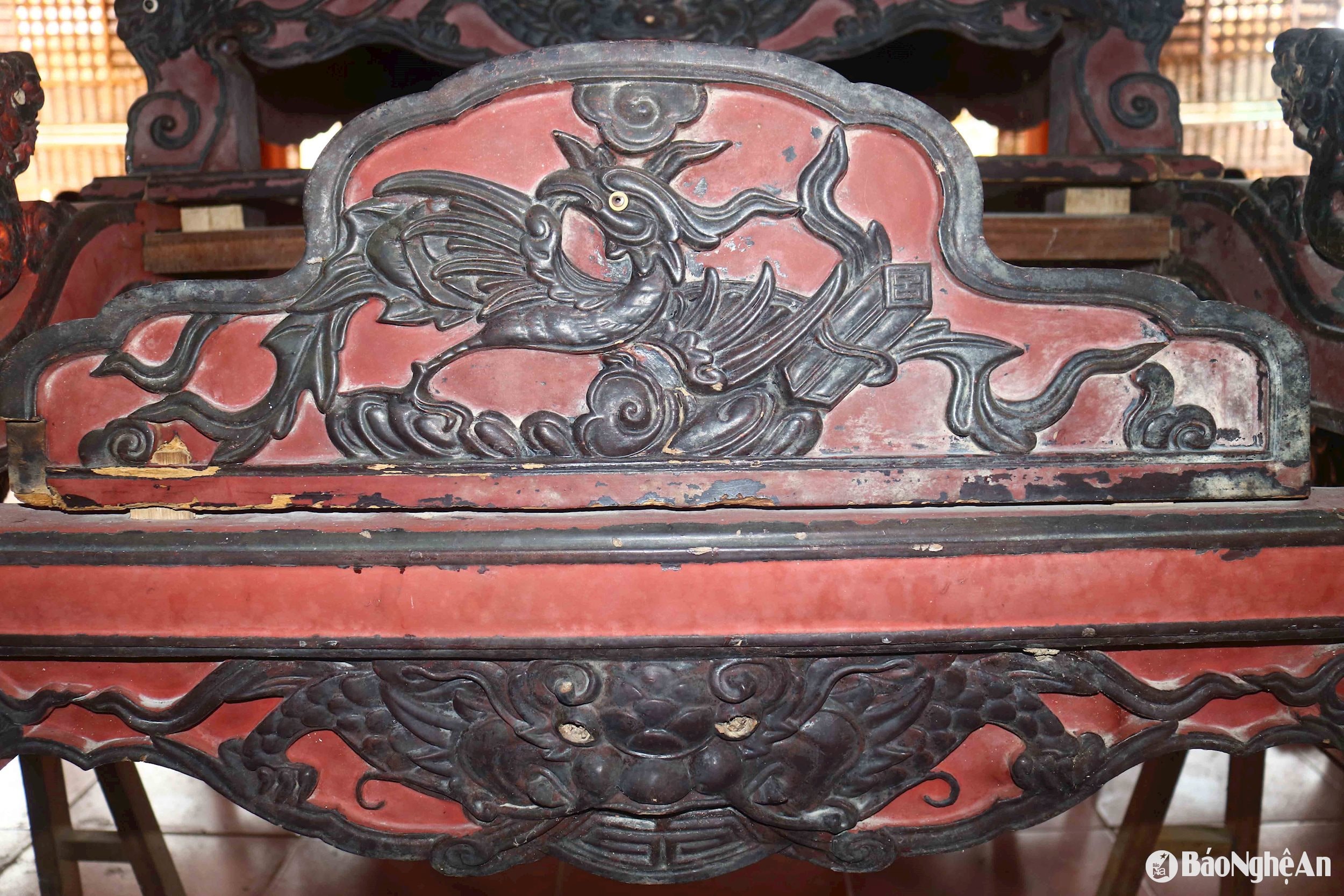
Between the front and rear crossbeams, on the widened wooden section, are carved tiger faces, phoenixes, and unicorns, painted black to stand out against a red background. Photo: Huy Thu
bna_9.jpg
The rear sections of the palanquin, including the vertical and carrying poles, form dragon tails. In total, the rear of the palanquin features eight dragon heads facing forward and to the sides. Photo: Huy Thư
bna_10.jpg
Having existed for a long time, closely linked to the ups and downs of the ancient temple and the traditions of Xuan Bang village, the eight-sided palanquin has suffered some paint chipping, cracks, and breaks in several places. Although its exact date of origin has not been determined, locals affirm that the palanquin has existed for hundreds of years. Over time, the palanquin has been regarded by the local people as a precious heritage left by their ancestors and is carefully preserved. Photo: Huy Thu
The unique beauty of the ancient eight-sided palanquin. Video: Huy Thu
0 0 0
x
Exquisite and unique: a centuries-old eight-sided palanquin in Nghe An.
Google News
POWERED BYFREECMS- A PRODUCT OFNEKO