
Organizing experiential activities for students: A perspective from the general education curriculum.
(Baonghean.vn) - For the past few days, public opinion in Nghe An has been abuzz about some schools collecting money and arranging for students to participate in experiential activities.
There are many differing opinions on this issue, but basically, they can be grouped into two categories: those who oppose it and those who defend and justify it. The critics mainly argue that schools are exploiting experiential learning activities to overcharge, or that these activities are unnecessary, costly, wasteful, and potentially risky. In particular, a recent tragic incident occurred at a school in Hanoi where a student drowned during an experiential learning activity.
So, is this experiential activity necessary or not?
According to the Vietnamese dictionary, "experience" is defined as "going through, experiencing" (Center for Lexicography, "Vietnamese Dictionary", Da Nang Publishing House, 2007, p. 1577), meaning the subject's involvement in a certain matter. However, this definition seems insufficient to fully grasp the concept. In reality, according to the most common understanding, experience is the process of going through and accumulating certain knowledge, skills, and experiences from that "going through, experiencing." Therefore, experiential activities are extremely necessary for every person's life, especially practical experiences in the chaotic, complex, and constantly changing life of modern times.
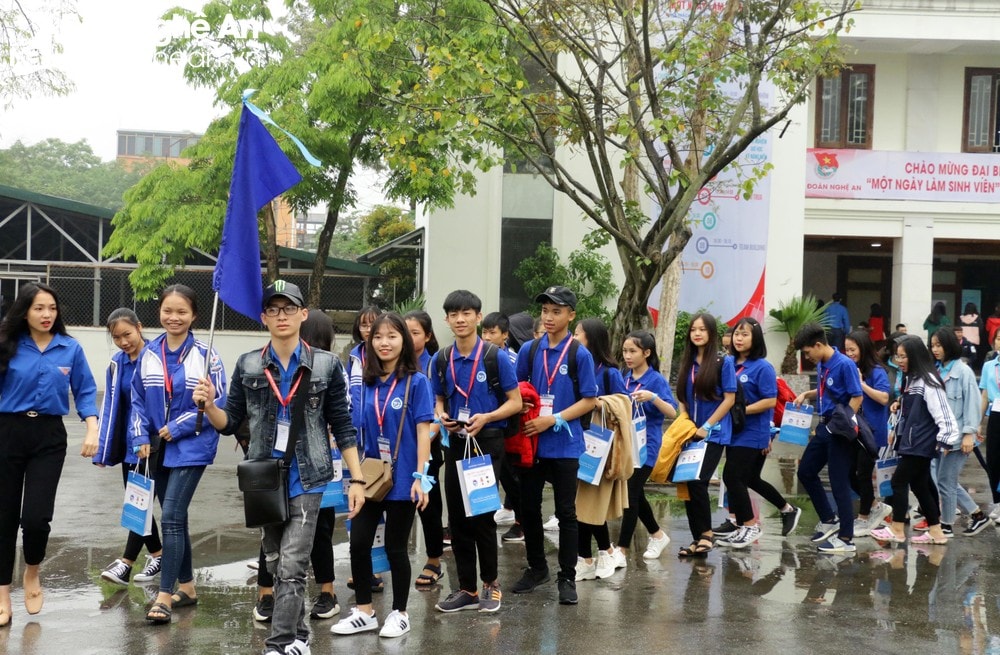 |
Students participate in a field trip. (Photo: Archival image) |
1. It is undeniable that, since the advent of family planning and the rapid development of the economy, science, and technology, children have been increasingly pampered and cared for in highly safe but extremely cramped spaces. On the other hand, the pressure for achievement, even from parents alone, has pushed children into a life of poverty in terms of both their souls and their understanding of the outside world, and this obviously has negative impacts on the formation of their character. A child growing up in the countryside, when they go to the city, feels like they are thrown into a strange land; a child growing up in the city sees a buffalo and doesn't know what it is – this is not just a joke. And parents, always wanting their children to live forever in that safe space, rush to extra classes to achieve high academic results without realizing, or unwilling to realize, that children, like people in general, are born primarily to live deeply in the ever-changing world, full of promises but also full of pitfalls and dangers. For example, a child up to four or five years old, if they play in the dirt, their grandparents are afraid of them getting dirty; if they go outside, their parents are afraid of the sun and wind… not a few of these children grow up naive in the thoughtless loving embrace of their parents. A child cuts their hand playing with a knife because they haven't been taught how to use a knife, or at least how to stay away from it when their hands aren't strong enough or skillful enough to cut; drowning incidents have been quite frequent lately, and the fault isn't entirely due to children not knowing how to swim, but also because they haven't had the experiences to learn how to stay away from rivers and lakes… Experience is the opportunity for children to grow up.
2. Although there are still dissenting and opposing opinions regarding the program and especially the textbooks, the program has nevertheless been implemented. Accordingly, “experiential learning (primary school level), experiential learning and career guidance (junior high and high school levels) are compulsory educational activities implemented from grade 1 to grade 12. Experiential learning and experiential learning and career guidance are educational activities designed and guided by educators, creating opportunities for students to access reality, experience positive emotions, utilize existing experiences, and mobilize a synthesis of knowledge and skills from various subjects to perform assigned tasks or solve problems in real-life situations at school, family, and society appropriate to their age. Through this, they transform their experiences into new knowledge, understanding, and skills, contributing to the discovery of creative potential and the ability to adapt to life and future professional environments.” The practical and humanistic nature of experiential learning is evident. Therefore, there is no longer any debate about whether or not to organize experiential activities for students.
3. The question is how to organize experiential learning activities? For a long time, before the 2018 education program was implemented and experiential learning hadn't become a compulsory subject, many schools, especially primary schools in urban areas, organized these activities regularly or irregularly. Parents didn't complain, because these activities were organized within a relatively safe scope with very limited, even almost zero, financial resources mobilized from parents. However, these activities were quite monotonous and often focused more on political education than on life skills, creative skills, and adaptability, and paid little attention to the holistic development of character and abilities (such as visiting the Military Region 4 Museum, visiting model schools, pilgrimages to President Ho Chi Minh's birthplace, visiting the Truong Bon Historical Site...). This activity is very practical and significant in educating the qualities of the new Vietnamese socialist person, but it is not yet truly comprehensive and does not truly contribute to developing the capacity for activity and creativity in practical life and career orientation, nor does it aim at comprehensively educating students in the qualities and abilities of global citizens. It should be noted that in some countries with advanced education systems, organizing experiential activities for learners is often highly practical. For example, the "Open Horizons" program in the UK focuses on adventurous experiential activities with the program organizers stating: "We believe that every child has the opportunity to experience knowledge about adventure as part of their education in life" (Do Ngoc Thong, "Creative Experiential Activities from International Educational Experiences and the Issue of Vietnam"). Meanwhile, in France (where my nephew attends middle school), the school organizes trips into the forest, encouraging the children to find their own paths and guiding them on how to remember and mark routes to return to their starting point or to the countryside to participate in production and farming alongside sightseeing. Interestingly, my nephew, who is in 7th grade and returned from France, couldn't solve a 5th-grade math problem designed for Vietnamese students, but he can handle household electrical problems, screw things in, and drill holes in walls to hang items very well.
4. The most frequently complained-about issue is the cost. 1.4 million, 1.5 million, or a few hundred thousand. As a parent myself, I believe that besides charging excessively high fees compared to the actual expenses, it's impossible to determine whether that amount is too much or too little. It needs to be commensurate with the experiential learning and personal growth that students receive. Of course, when experiential learning is fully understood, I believe there will be fewer complaints and fewer attacks on the education sector. A small suggestion is that if the cost exceeds a family's means, it can be socialized. Naturally, to socialize this aspect, each educational institution needs long-term strategies.


