
US court suspends $600 million White House project.
A U.S. appeals court has ruled to halt construction on a large-scale ballroom project at the White House. This decision has drawn strong opposition from President Donald Trump and is expected to spark a new legal battle in the Supreme Court over the limits of presidential power.
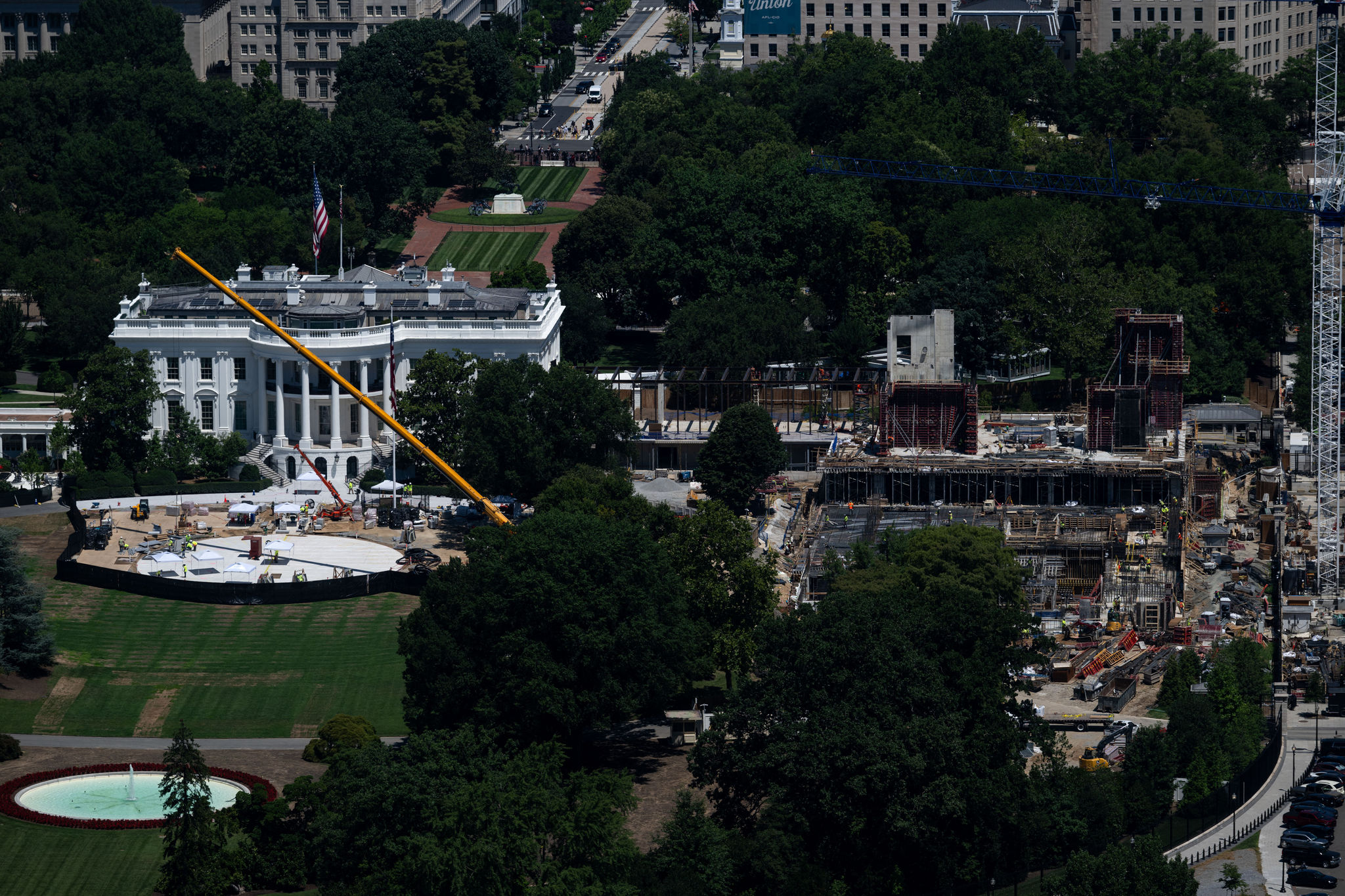
On August 7th (local time), the Washington D.C. District Court of Appeals upheld the lower court's ruling, affirming that a White House overhaul project of this scale requires explicit congressional approval. However, the court granted a two-week stay of execution to allow President Donald Trump time to file an appeal.
The ruling was passed by a 2-1 vote, with the two judges who voted in favor being appointed by Democratic presidents, and the judge who voted against being nominated by Trump himself.
Immediately after the ruling, Trump reacted strongly on the Truth Social platform, calling it a "terrible, politically motivated, and illegal" decision. He declared he would immediately take the case to the Supreme Court, emphasizing that suspending the project when many components were already completed and paid for was "a national security threat of the highest degree" and a "national disgrace."
In terms of design, President Donald Trump initially promoted the project as a space for hosting galas and state dinners. However, he later repeatedly emphasized that the project also included an underground military bunker and other modern security features.
Construction began last year, involving the demolition of the entire historic East Wing of the White House. Currently, many of the concrete basement structures have been erected above ground.
Despite Trump's claims that the project was privately funded, media reports in June indicated that a significant amount of taxpayer money was being poured into the project. The initial estimated cost was $200 million, but it quickly doubled and is now believed to potentially reach $600 million.
The ballroom project is part of Trump's plan to leave his personal mark on Washington, D.C., before his term ends in 2029, alongside other projects such as renovating the Lincoln Memorial Reflecting Pool and building a giant archway. While many projects are facing legal hurdles, the ballroom will be the first case potentially to be taken to the Supreme Court.


