
Full text of the Vietnam-China Joint Statement
We respectfully present the full text of the Joint Statement between Vietnam and China on further deepening and elevating the Comprehensive Strategic Partnership and building a community of shared future.
JOINT STATEMENT
SOCIALIST REPUBLIC OF VIETNAMAND THE PEOPLE'S REPUBLIC OF CHINAON FURTHER DEEPENING AND ELEVATING THE COMPREHENSIVE STRATEGIC PARTNERSHIP AND COMMUNITY BUILDINGSHARING THE FUTURE OF VIETNAM AND CHINA HAS STRATEGIC SIGNIFICANCE
-----
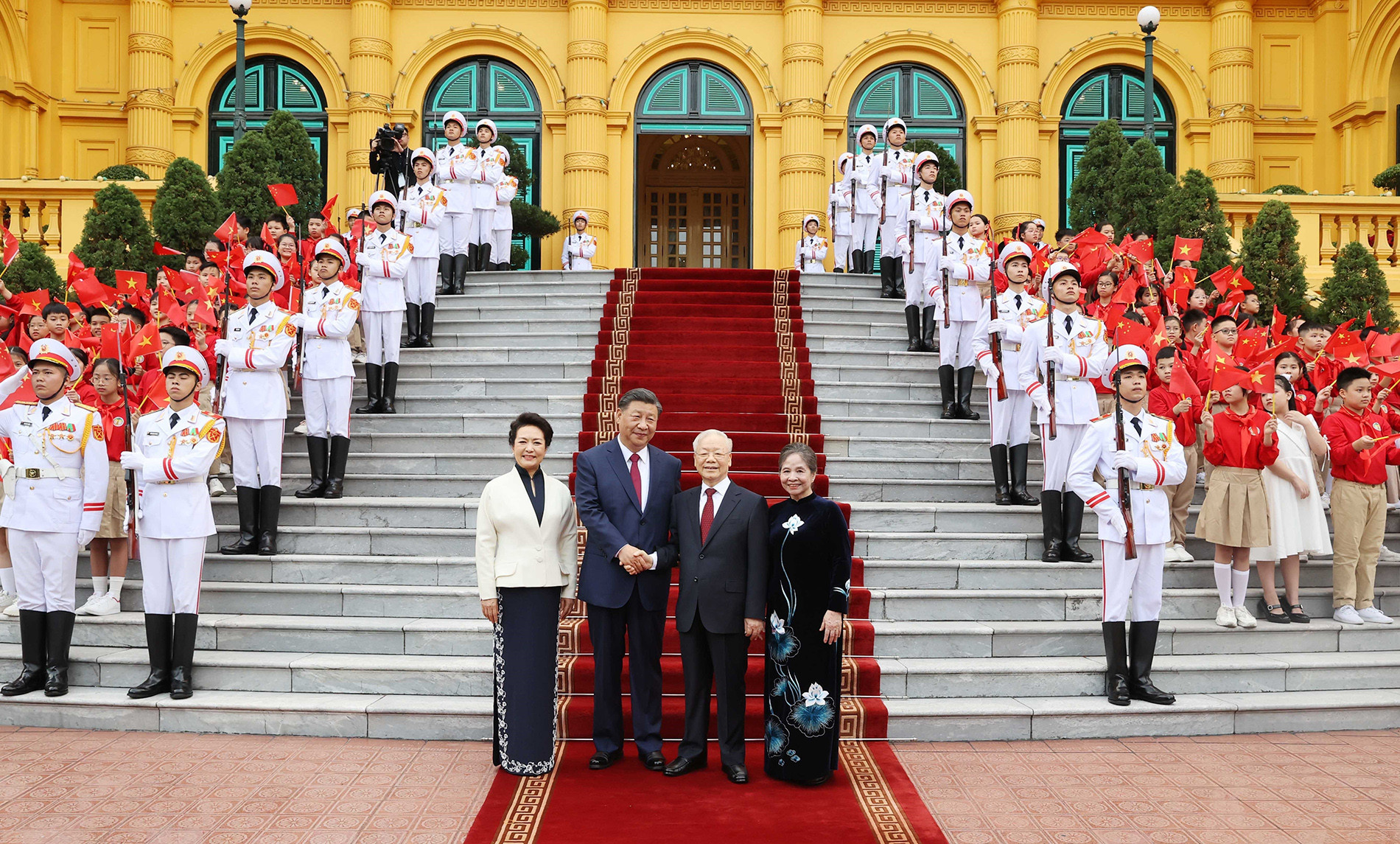
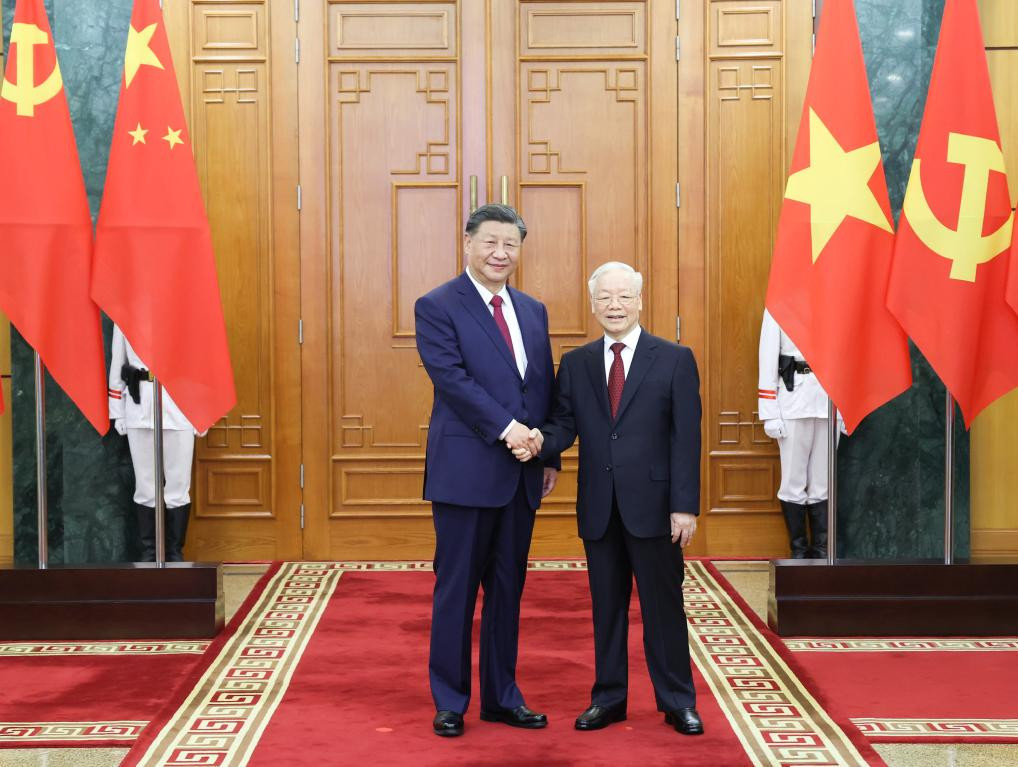
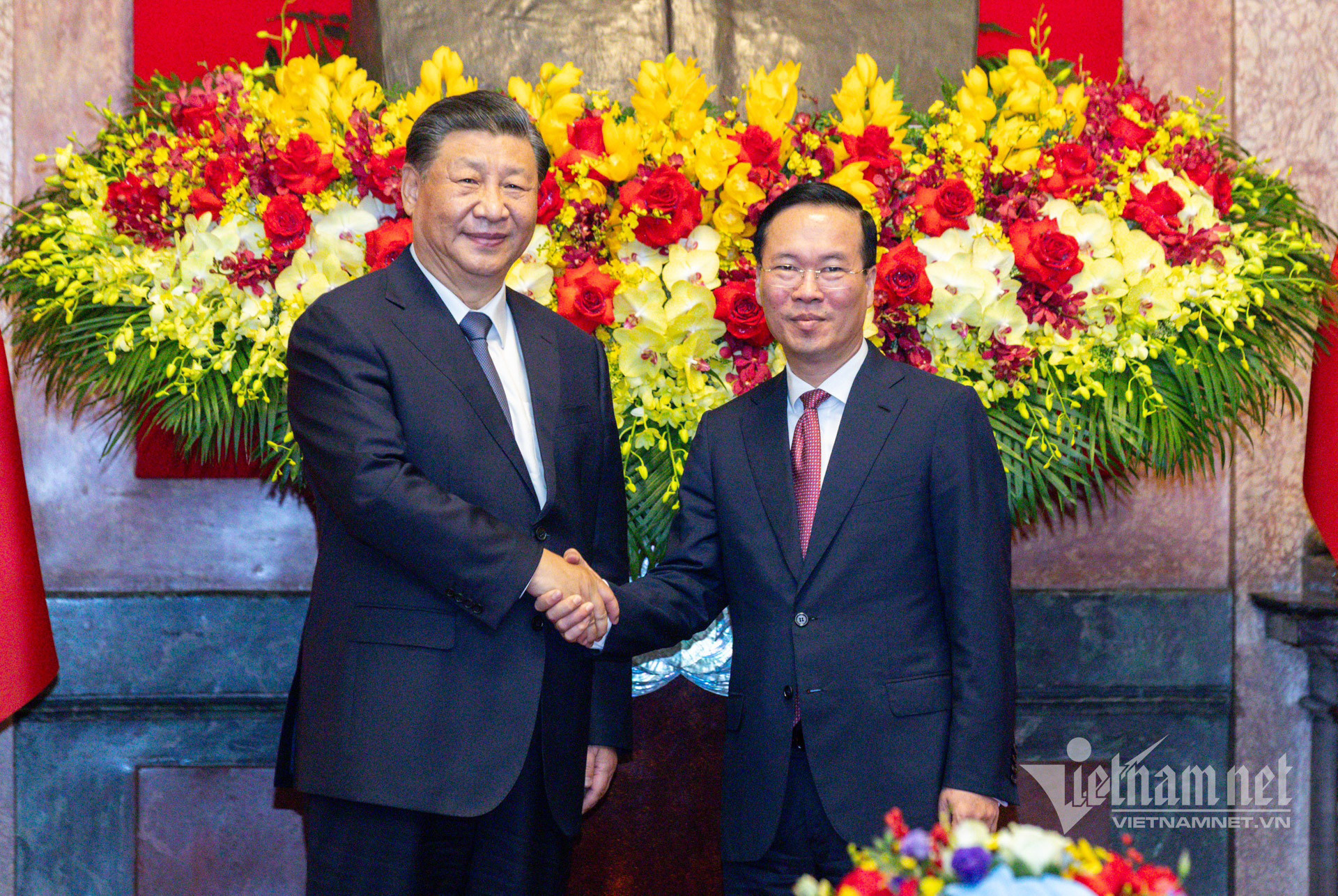
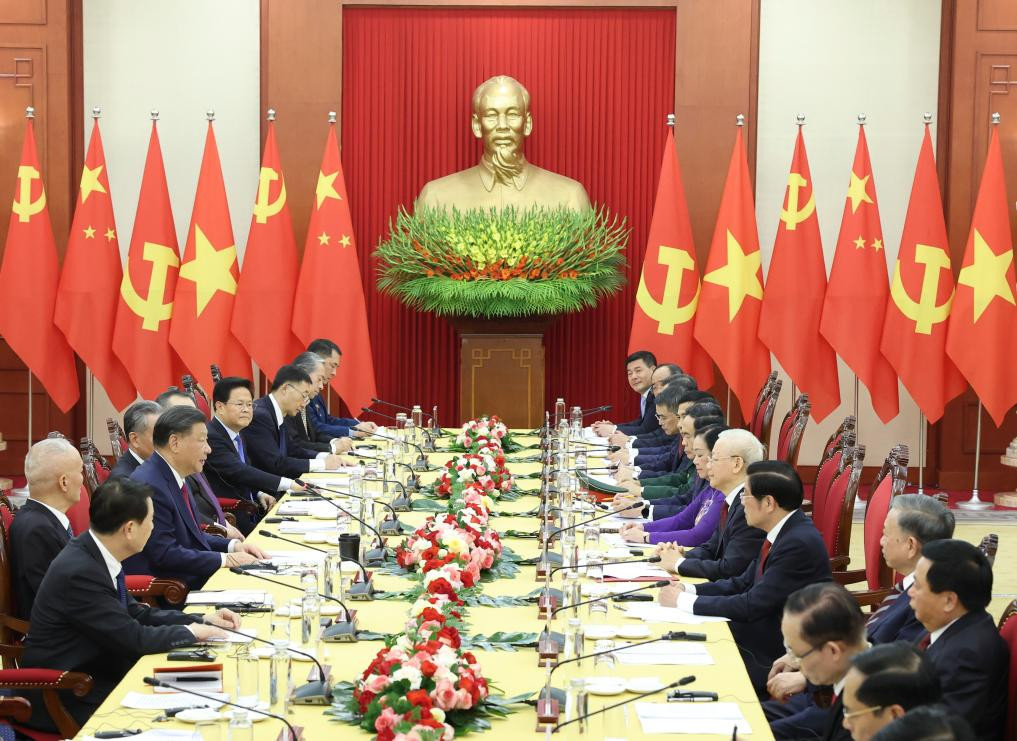
1. At the invitation of General Secretary of the Central Committee of the Communist Party of Vietnam Nguyen Phu Trong and President of the Socialist Republic of Vietnam Vo Van Thuong, General Secretary of the Central Committee of the Communist Party of China and President of the People's Republic of China Xi Jinping paid a State visit to Vietnam from December 12 to 13, 2023.
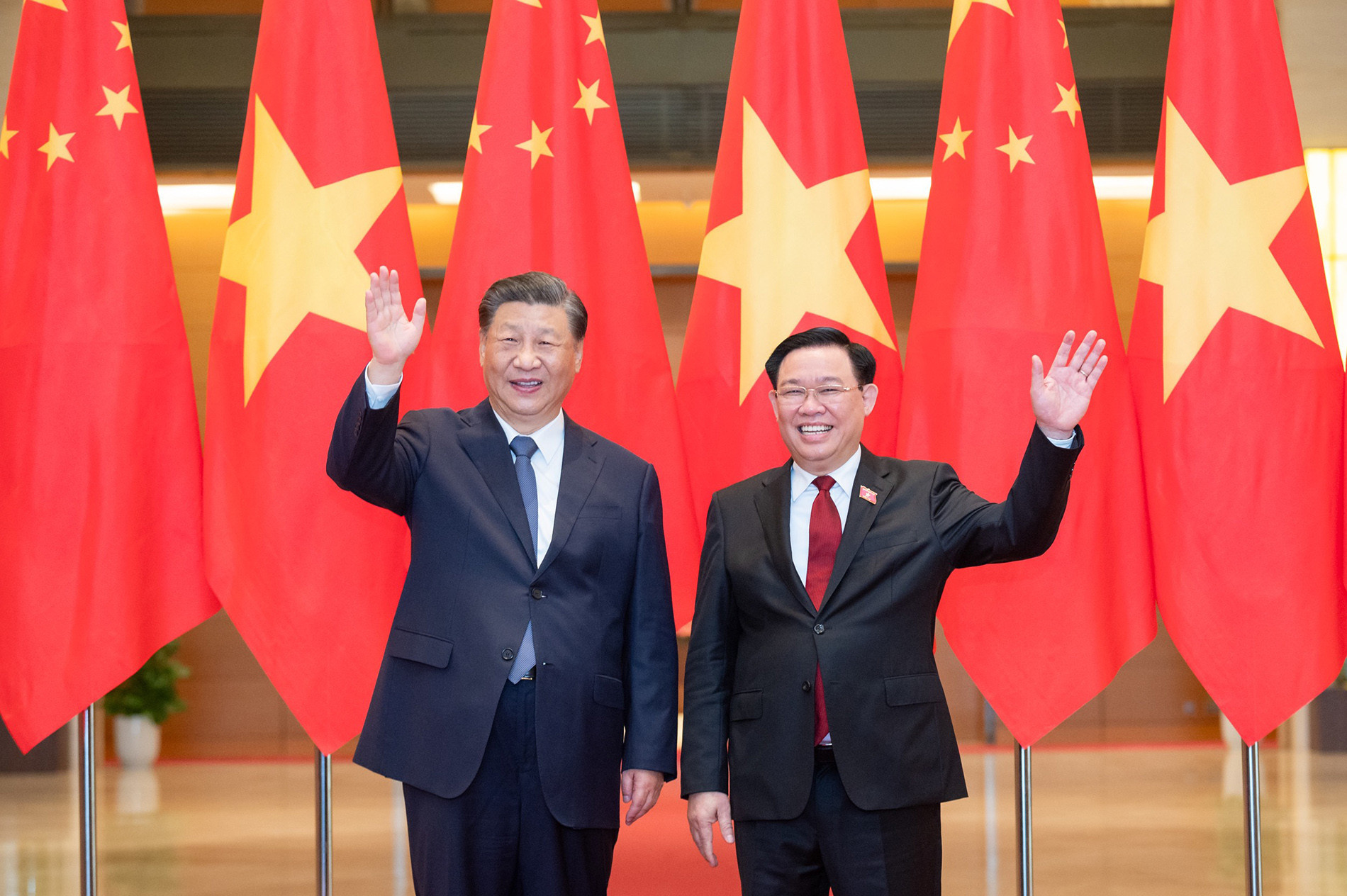
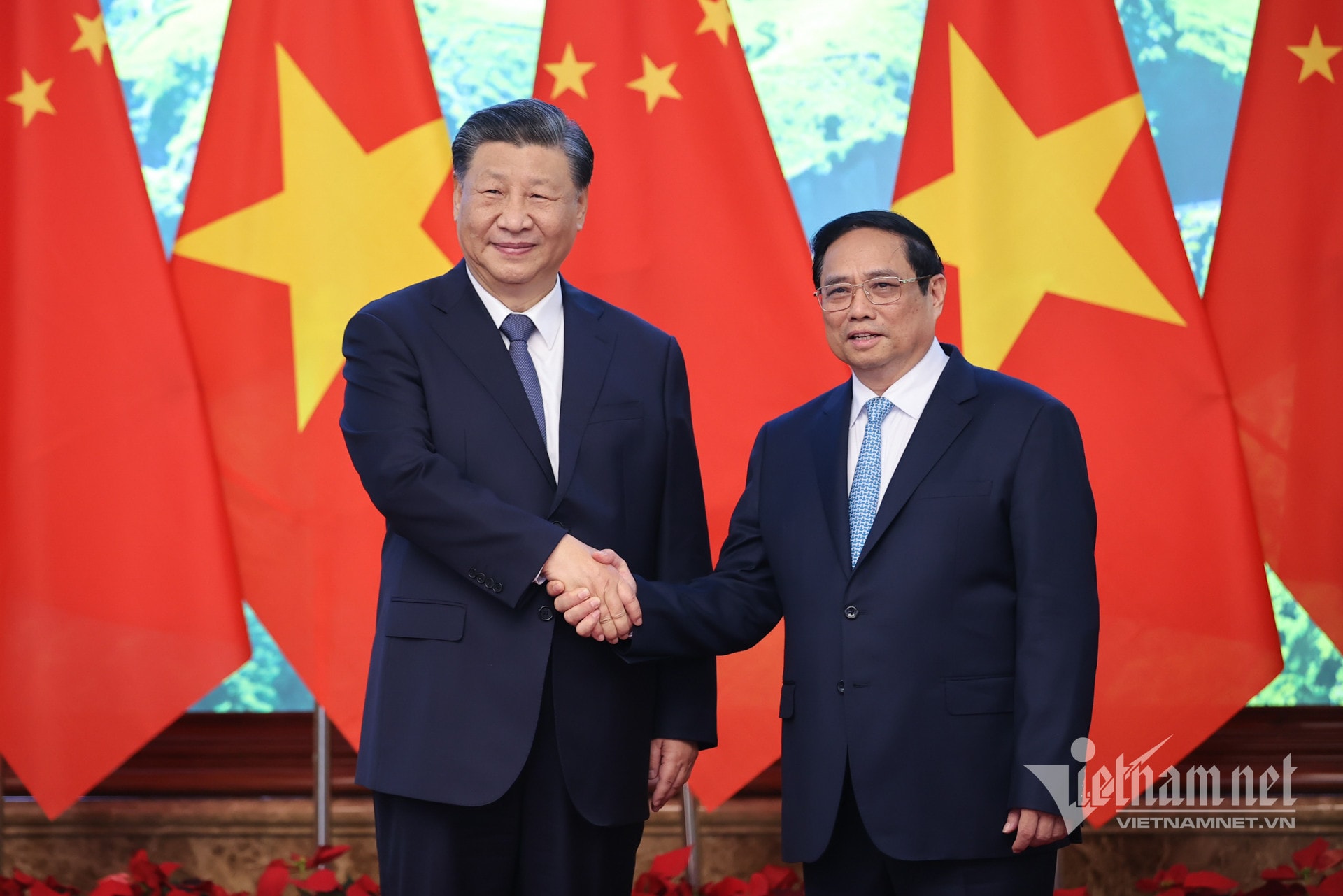
During the visit, General Secretary and President Xi Jinping held talks with General Secretary Nguyen Phu Trong and President Vo Van Thuong, and met with Prime Minister Pham Minh Chinh and National Assembly Chairman Vuong Dinh Hue.
Both sides affirmed that Vietnam and China are good neighbors, good friends, good comrades, and good partners. Both are socialist countries led by the Communist Party, with similar political systems, shared ideals and beliefs, closely aligned development paths, common aspirations, and a shared future. Both strive for the happiness of their people and the prosperity of their nations, and for the noble cause of peace and progress for humanity.
In order to inherit and promote the tradition of friendship between Vietnam and China, a close bond of comradeship and brotherhood, and to further deepen and elevate the comprehensive strategic partnership between Vietnam and China, both sides agreed to build a strategically significant Vietnam-China Community of Shared Future, striving for the happiness of the people of both countries and for the cause of peace and progress of humanity.
Vietnam supports the building of a Community of Shared Futures, the Global Development Initiative, the Global Security Initiative, and the Global Civilization Initiative. These initiatives aim to protect the common interests of all humanity, for the cause of peace, justice, and progress for the people of the world, and to fulfill the aspirations of people worldwide to build a better world.
Both sides agreed that the development of relations between countries should adhere to the United Nations Charter, international law, and the fundamental norms of international relations, persistently upholding mutual respect, equality, mutual benefit, win-win cooperation, respect for each other's sovereignty and territorial integrity, and persistently resolving disagreements through peaceful means.
In line with these guidelines, both sides agreed to promote Vietnam-China relations into a new phase with higher political trust, more substantive defense and security cooperation, deeper substantive cooperation, a more solid social foundation, closer multilateral coordination, better control and resolution of disagreements, and joint efforts to promote the development of world socialism, making positive contributions to the peace and progress of humanity.
2. In a friendly and frank atmosphere, both sides informed each other about the situation of each Party and country, as well as the theory and practice of building socialism; they rejoiced at the great and historic achievements that each Party and country has attained in the cause of national development, modernization, and building socialism in accordance with their respective national circumstances; and they believed that this fully demonstrates the vitality and superiority of the socialist system in Vietnam and China.
The Vietnamese side warmly congratulates and highly appreciates the great achievements that the Party, Government, and people of China have made in the 10 years of the new era and the important achievements made in implementing the spirit of the 20th National Congress of the Communist Party of China. The Vietnamese side wishes and believes that, under the firm leadership of the Central Committee of the Communist Party of China with Comrade Xi Jinping as the core, and under the guidance of Xi Jinping Thought on socialism with Chinese characteristics in the new era, the Party, Government, and people of China will certainly continue to enrich and expand the path of Chinese-style modernization, continuously improve people's democracy throughout the process, vigorously promote the great new work of Party building, complete the goals and tasks set by the 20th National Congress of the Communist Party of China on time, and successfully achieve the second centenary goal of building China into a prosperous, democratic, civilized, harmonious, and beautiful modern socialist power.
China supports and highly appreciates the achievements that Vietnam has made in nearly 40 years of reform, 10 years of implementing the "Program for Building the Country in the Transition Period to Socialism (amended and supplemented in 2011)", especially the important and comprehensive achievements since the 13th National Congress of the Communist Party of Vietnam to date, which have boosted Vietnam's overall strength and international influence to unprecedented levels. The Chinese side expressed its wishes and confidence that, under the correct leadership of the Central Committee of the Communist Party of Vietnam, headed by General Secretary Nguyen Phu Trong, the Party, State, and people of Vietnam will certainly successfully achieve the major goals and tasks set forth by the 13th National Congress of the Communist Party of Vietnam, building Vietnam into a developed country with a high income under the socialist orientation by 2045. The Chinese side affirmed its support for Vietnam's prosperous development, people's happiness, building a strong, independent, and self-reliant economy, promoting the comprehensive process of reform, industrialization, modernization, and international integration, developing broad and friendly foreign relations, and playing an increasingly important role in the peace, stability, development, and prosperity of the region and the world.
3. Both sides reviewed the development of relations between the two Parties and the two countries of Vietnam and China; appreciated the valuable and selfless assistance that the two Parties, the two countries, and the peoples of the two countries have given each other throughout the years; and agreed that the traditional friendship, "both comrades and brothers," personally built and nurtured by President Ho Chi Minh, Chairman Mao Zedong, and other senior leaders, is a precious asset of the peoples of the two countries, which must be well inherited, well protected, and well promoted. The Party, State, and people of Vietnam always highly appreciate and cherish the strong support and great assistance of the Party, State, and people of China in the cause of national independence and liberation, as well as in the construction of socialism and national development.
At the turn of the century, Vietnam and China established the motto "friendly neighborliness, comprehensive cooperation, long-term stability, and a future-oriented approach" and the spirit of "good neighbors, good friends, good comrades, and good partners." Fifteen years have passed since the two countries established a Comprehensive Strategic Partnership in 2008, and cooperation in various fields has achieved positive and comprehensive progress. Entering a new era, Vietnam-China relations continue to expand and deepen, especially after General Secretary and President Xi Jinping, following the closing of the 20th National Congress of the Communist Party of China, invited General Secretary Nguyen Phu Trong to undertake a historic visit to China, elevating Vietnam-China relations to a new level.
Looking to the future, China emphasizes its commitment to a policy of friendship with Vietnam, considering Vietnam a priority in its neighborly diplomacy.
The Vietnamese side affirmed that it has always considered the Vietnam-China relationship a top priority in Vietnam's independent, self-reliant, multilateral, and diversified foreign policy. This is a strategic choice of both sides.
Both sides emphasized their unwavering support for the two Parties, the two countries, and the peoples of the two countries to persevere in strategic autonomy and independently choose development paths appropriate to their respective national circumstances; to persistently handle disagreements appropriately and actively resolve them through peaceful means based on mutual understanding and respect, in accordance with international law, maintaining the positive momentum of Vietnam-China relations, and making even more positive contributions to peace, stability, and development in the region and the world.
Based on the above-mentioned common understandings, in the context of a rapidly changing, complex, unpredictable, and unprecedented global situation, both sides agreed to steadfastly adhere to the political direction of the top leaders of the two Parties and two countries, to view and develop Vietnam-China relations from a strategic perspective and with a long-term vision, following the "16-word" motto and the "four good" spirit, taking the 15th anniversary of the establishment of the Comprehensive Strategic Partnership as an opportunity to build a strategically significant Vietnam-China Community with a shared future, striving for the happiness of the people of both countries and for the cause of peace and progress of humanity.
4. To further deepen and elevate the comprehensive strategic cooperative partnership, and to firmly promote the building of a Vietnam-China community with a shared future, both sides agreed to effectively leverage the overall coordinating role of the Vietnam-China Bilateral Cooperation Steering Committee, actively promote cooperation in the coming period, focusing on the following six major cooperation directions, defining objectives, perfecting mechanisms, proposing measures, and urging implementation:
4.1. Higher political trust
To focus on grasping the direction of development of Vietnam-China relations, both sides agreed to strengthen strategic exchanges, persevere in equal treatment and mutual respect, and further consolidate political trust.
(1) Both sides agreed to further strengthen close exchanges between the high-level leaders of the two Parties and two countries through forms such as bilateral visits, sending special envoys, hotlines, exchanging letters, annual meetings and contacts at multilateral forums, promptly exchanging strategies on important issues in bilateral relations and regional and international situations of mutual interest, and providing strategic direction for the stable and healthy development of relations between the two Parties and two countries in the new period.
(2) Both sides agreed to fully promote the special role of the Party channel, further strengthen the guidance and coordination of the high-level meeting mechanism of the two Parties and the role of promoting and coordinating the foreign affairs agencies of the two Parties; improve the effectiveness of exchanges and cooperation between the corresponding agencies of the two Parties at the central level, local Party organizations of the two countries, especially border provinces (regions); through the mechanism of theoretical seminars between the two Parties, the plan for cooperation in training cadres, exchange of delegations through the Party channel, strengthen exchanges and mutual consultations on Party building and national governance, building socialism and in fields such as organization, propaganda/communication, disciplinary inspection, anti-corruption, judicial reform, mass mobilization/unified front, socio-economic. Further strengthen friendly exchanges and cooperation between the Government of Vietnam and the Government of China, the National Assembly of Vietnam and the National People's Congress of China, the Vietnam Fatherland Front and the National Committee of the Chinese People's Political Consultative Conference.
(3) Both sides agreed to effectively implement the Agreement on further deepening cooperation in the new era between the Ministries of Foreign Affairs of the two countries; maintain regular contact between the leaders of the two Ministries of Foreign Affairs; continue to organize well the annual diplomatic consultations, strengthen exchanges at the corresponding Department (Bureau) level, effectively implement the plan for training cadres, support and facilitate the improvement of office and housing conditions of diplomatic representative offices of the two countries.
(4) The Vietnamese side reaffirms its firm commitment to implementing the "one China" policy, recognizing Taiwan as an inseparable part of China's territory, resolutely opposing any form of secessionist actions aimed at "Taiwan independence," and supporting the principle of non-interference in the internal affairs of other countries, and not developing any state-level relations with Taiwan. The Vietnamese side believes that the issues of Hong Kong, Xinjiang, and Tibet are internal affairs of China, and trusts that under the leadership of the Chinese Communist Party and the Chinese government, these regions will maintain stability and develop prosperously. The Chinese side expresses its appreciation for this. The Chinese side supports Vietnam's efforts in maintaining social stability, ensuring national security, and promoting national unity.
4.2. More substantive defense and security cooperation.
Defense and security cooperation is one of the pillars of Vietnam-China relations, playing an important role in consolidating strategic trust between the two Parties and countries. To protect their own national security and contribute to maintaining peace, security, and stability in the region and the world, both sides agreed to strengthen cooperation mechanisms in defense, public security, the Supreme Court, and the Supreme Procuratorate; to study the development of exchange mechanisms between the respective judicial agencies of the two countries; and to promote the following key areas of cooperation:
(1) Both sides agreed to further strengthen high-level exchanges between the two countries' armed forces; make good use of channels such as Border Defense Friendship Exchanges, Defense Strategic Dialogue and Hotline between the two Ministries of Defense; effectively implement the “Joint Vision Statement on Defense Cooperation to 2025” between the two Ministries of Defense. Strengthen exchanges and cooperation between the two countries' armed forces in areas such as political work, personnel training, and joint research; further strengthen cooperation in defense industry, joint exercises and training, medical logistics, UN peacekeeping and non-traditional security fields. Continue to deepen border defense cooperation, promote the deployment of joint border patrols on land, encourage border guard posts of the two countries to establish friendly relations, and strengthen coordination in border management and protection. Continue to effectively deploy joint patrols in the Gulf of Tonkin and military ship visits; To deepen the mechanisms for exchange and cooperation between the navies and coast guards of the two countries.
(2) Both sides agreed to strengthen high-level exchanges between law enforcement agencies of the two countries; make good use of the Ministerial Conference mechanisms on crime prevention and control, and the Strategic Security Dialogue; establish a Deputy Ministerial Dialogue mechanism on political security and a hotline between the Ministries of Public Security of the two countries. Strengthen cooperation between the Ministry of Public Security of Vietnam and the security and law enforcement agencies of China in the fields of security and intelligence, especially deepening cooperation on protecting government security and regime security; strengthen cooperation in traditional and non-traditional security fields such as counter-terrorism, combating cyber fraud, cybersecurity, immigration management, migration, illegal border crossing, and apprehending criminals who have fled abroad. Deepen cooperation and exchange experiences in the fields of economic security, food security, energy, water resources, and reform and opening up. Strengthening intelligence exchanges between the two sides and coordinating the sharing of experiences and cooperation on issues of counter-interference, counter-separatism, and preventing "peaceful evolution" and "color revolutions" by hostile and reactionary forces. Enhancing cooperation in preventing violations of laws on religion and managing foreign non-governmental organizations; promoting cooperation in personnel training. Strengthening cooperation in protecting the safety of agencies, businesses, and citizens of each country in the other country.
(3) Both sides agreed to strengthen cooperation in the field of law and justice, creating a legal basis for comprehensive cooperation between Vietnam and China in various fields; actively fulfill the obligations of international treaties to which both sides are members. Effectively implement the “Agreement between the Socialist Republic of Vietnam and the People's Republic of China on mutual legal assistance in civil and criminal matters”, the “Extradition Agreement between the Socialist Republic of Vietnam and the People's Republic of China”; promote the “Agreement between the Socialist Republic of Vietnam and the People's Republic of China on the transfer of convicted prisoners” to be effectively implemented; promote the Memorandum of Cooperation between the Ministries of Justice of the two countries to achieve substantive results, and together improve the mechanism of mutual legal assistance between the two sides; study the establishment of methods for resolving civil and commercial border disputes; Promote legal and judicial cooperation at the local level in border areas through appropriate forms.
4.3. Deeper and more substantive cooperation
In order to maintain win-win cooperation, serve the development of both countries, and promote the recovery and sustainable growth of the regional and global economies, both sides will strengthen corresponding cooperation mechanisms in the fields of infrastructure, investment, trade, agriculture, and finance; study the development of cooperation mechanisms between state-owned enterprises and enterprises with state capital, and transportation agencies; and promote the following key areas of cooperation:
(1) Jointly build “Two corridors, one belt” and “Belt and Road”.
Both sides agreed to promote the strategic connectivity of development between the two countries, and to effectively implement the "Cooperation Plan for Connectivity between the Two Corridors, One Belt Framework and the Belt and Road Initiative between the Government of the Socialist Republic of Vietnam and the Government of the People's Republic of China".
Promote the connection of standard-gauge railways across the Vietnam-China border, study the possibility of building a standard-gauge railway from Lao Cai to Hanoi to Hai Phong, and research standard-gauge railway lines from Dong Dang to Hanoi and Mong Cai to Ha Long to Hai Phong at an appropriate time.
Accelerate the promotion of border infrastructure development, including the construction of a road bridge across the Red River in the Bat Xat (Vietnam) - Ba Sai (China) border area. Encourage businesses from both countries to cooperate in the fields of road infrastructure, bridges, railways, clean energy, telecommunications, and logistics; continue to coordinate closely, promote, and facilitate cooperation in road, air, and rail transport, and strengthen logistics cooperation.
(2) Investment
Both sides agreed to effectively implement the economic and trade cooperation zone, focusing on strengthening investment cooperation in areas such as agriculture, infrastructure, energy, digital economy, and green development. They encouraged and supported strong, reputable, and technologically advanced enterprises to invest in each other's countries in sectors consistent with their needs and sustainable development strategies, creating a fair and favorable business environment for these enterprises. They also agreed to expedite the implementation of projects utilizing non-refundable aid from the Chinese government to Vietnam, including the project to build a new facility for the Traditional Medicine Hospital.
Both sides agreed to deepen the exchange of experiences in reforming state-owned enterprises and managing state capital in enterprises, and to cooperate in human resource training between the two countries, especially high-level management personnel of state-owned enterprises; encouraging state capital management agencies in enterprises of both countries to implement exchanges and connections, facilitating enterprises of both countries to strengthen mutually beneficial cooperation. They also agreed to actively explore possibilities for strengthening bilateral and multilateral cooperation in key mineral resources based on market principles and a substantive, sustainable approach, ensuring the security of the energy production and supply chain.
(3) Trade
Both sides agreed to implement practical measures to expand bilateral trade in a balanced and sustainable manner. They agreed to leverage the role of the Regional Comprehensive Economic Partnership (RCEP) and the ASEAN-China Free Trade Area; strengthen cooperation on platforms such as the China International Import Expo (CIIE), the ASEAN-China Expo (CAEXPO), and the Canton Fair; and expand exports of each country's key products to the other. Both sides also agreed to enhance cooperation in the field of standardization, ensuring harmonization of standards for goods and products from Vietnam and China, especially agricultural products, thereby facilitating bilateral trade cooperation. China will actively promote the process of opening its market to Vietnamese agricultural products such as fresh coconuts, frozen fruit products, citrus fruits, avocados, custard apples, rambutan, plant-based traditional medicine, buffalo meat, beef, pork, and products from livestock and poultry. Vietnam will actively promote the import of Chinese sturgeon, strengthen exchanges between industry organizations of both sides, and promote the healthy development of related industries in both countries.
Both sides agreed to implement effective measures to ensure the smooth flow of goods supply chains serving production and consumption between the two countries and in the region. They agreed to improve customs clearance efficiency, promote the pilot construction of smart border gates on the dedicated goods transport route through border markers 1088/2-1089 and the dedicated goods transport route at Tan Thanh - Po Chai border gate (area of border markers 1090-1091) belonging to Huu Nghi International Border Gate (Vietnam) - Huu Nghi Quan (China); and rationally manage import and export goods at border gates, ensuring the smooth operation of key border gates. Both sides agreed to actively promote the role of the Vietnam-China Trade Facilitation Working Group and continue to exploit the potential of bilateral trade. To promote the implementation of the "Memorandum of Understanding between the Ministry of Industry and Trade of Vietnam and the Ministry of Commerce of China on strengthening the Vietnam-China supply chain security," maintaining the safety and stability of production and supply chains between the two countries. Both sides agreed to leverage the role of the Working Group on E-commerce Cooperation to promote e-commerce cooperation between businesses of the two countries.
Both sides agreed to effectively utilize the mechanisms of the Joint Committee on Land Borders and the Vietnam-China Border Gate Management Cooperation Committee; continue to effectively implement the three legal documents on the Vietnam-China land border and related agreements; strengthen security and order management in the border area; and actively promote the opening and upgrading of border gates. They also agreed to continue the effective implementation of the "Agreement on Vessel Traffic in the Free Navigation Zone at the Bac Luan River Estuary." Furthermore, they agreed to explore cooperation in granting each other "AEO (Authorized Economic Operator) Certificates," enhance exchanges and "one-stop shop" cooperation, further deepen cooperation on anti-smuggling law enforcement, and promote the "Mekong Dragon" international law enforcement cooperation to achieve even greater results.
The Chinese side supports the opening of the Vietnamese Consulate General in Chongqing, and the active role played by the Vietnamese Trade Promotion Offices in Chongqing and Hangzhou (China) in economic and trade cooperation between the two countries; and is ready to continue creating favorable conditions for Vietnam to soon open more trade promotion offices in relevant localities of China.
Both sides support local governments in the two countries establishing coordination mechanisms, especially in localities with relatively large economies and populations within their respective countries, to jointly organize trade and investment promotion activities to exploit the potential and strengths of each side, creating new impetus for economic, trade, and investment cooperation between the two countries. They also continue to support railway enterprises in both countries to strengthen cooperation to improve the efficiency of Vietnamese goods transiting through China.
(4) Finance, currency
Both sides agreed to continue strengthening exchanges and cooperation between the State Bank of Vietnam and the People's Bank of China, and between the financial supervisory and regulatory agencies of the two countries. They also agreed to leverage the role of the Working Group on Financial and Monetary Cooperation to promote monetary cooperation between the two countries. Furthermore, they supported both sides in deepening cooperation at the Asian Infrastructure Investment Bank, providing capital support for related projects in accordance with the Bank's strategies, policies, and procedures.
(5) Food security and green development
Both sides agreed to actively promote cooperation in agricultural technology and exchange of agricultural policies, research and development cooperation in areas such as low-carbon agriculture, digital agriculture, green agriculture, soil and water resource protection, promotion of green products, low-carbon emissions, and sustainable development; and to strengthen policy exchange and coordination on ensuring food security.
Both sides agreed to actively participate in and build a global clean energy partnership. They also agreed to deepen cooperation in areas such as biodiversity conservation, climate change response, new energy vehicles, including the management of Asian nature reserves, conservation of migratory wildlife, and control of invasive alien species in border regions. China welcomed Vietnam's participation in relevant activities of the international alliance for green development, the "Belt and Road" initiative.
Both sides agreed to strengthen cooperation in the fields of crop cultivation and agricultural product processing; to implement cooperation in research on integrated management of the marine and island environment; and to cooperate in releasing fish fry and protecting aquatic resources in the Gulf of Tonkin. They also agreed to promptly sign the Agreement on Fisheries Cooperation in the Gulf of Tonkin; and to effectively implement the Agreement on establishing a hotline for sudden incidents arising from fishing activities in the Vietnamese and Chinese seas.
Both sides agreed to exchange hydrological data during the flood season and to cooperate in areas such as integrated water resource management, flood and drought disaster prevention, safe drinking water in rural areas, water-saving irrigation, and water management science and technology. They also agreed to hold high-level policy dialogues on the sustainable use of transboundary water resources; strengthen coordination on drought and flood prevention and ensuring the safety of hydropower dams; and enhance the exchange of meteorological and weather forecast information, including hazardous weather, and to cooperate in developing meteorological services in the Asian region.
4.4. A more solid social foundation
In order to enhance understanding and friendship, promote exchanges and mutual understanding between the people of the two countries, and consolidate the social foundation of the relationship between the two Parties and the two countries, both sides will strengthen exchange mechanisms between the propaganda/information agencies of the two Parties, major media outlets and publishing houses, and between cultural, tourism, youth and local agencies; study the development of cooperation mechanisms between educational, health, traditional medicine, and civil aviation agencies; and promote the following key areas of cooperation:
(1) Propaganda
The propaganda/information agencies of the two Parties are stepping up propaganda and education on the traditional friendship between the two Parties and countries, and the comprehensive strategic cooperation between Vietnam and China. They encourage the two countries to cooperate in media, publishing, radio, film, and television, strengthening mutual understanding and friendship between the people of the two countries, especially the younger generation.
(2) Culture and tourism
The Vietnamese side supports China's construction of a Cultural Center in Vietnam; the Chinese side welcomes Vietnam's establishment of a Cultural Center in China and its successful operation of the Vietnam-China Friendship Palace. The Vietnamese side actively supports the operation of the Chinese Cultural Center in Hanoi.
Both sides support cultural organizations, art troupes, and cultural and art training schools of the two countries in implementing exchanges and cooperation. They will strengthen coordination and exchange of tourism policies between the two countries, cooperate in exploiting tourism routes, and develop tourism products. They will effectively implement the Vietnam-China Cultural and Tourism Cooperation Plan for the period 2023-2027, strengthen exchanges of delegations at all levels in culture and tourism, and promote the rapid recovery and healthy development of the tourism industry. They will ensure the safe and efficient operation of the pilot project for the Ban Gioc Waterfall (Vietnam) - Duc Thien (China) scenic area, creating a foundation for official operation and encouraging tourists from both sides to visit the scenic area. They will support airlines of both countries in increasing flights between Vietnam and China based on market demand.
(3) Education, sports, human resources and science and technology
Both sides agreed to effectively implement the Vietnam-China Education Cooperation Agreement; encourage increased exchanges of students, education administrators, and lecturers from both countries; enhance professional development for Vietnamese teachers through scholarship programs in China; promote exchanges and cooperation between educational institutions in both countries; actively promote the role of the Confucius Institute at Hanoi University; and deepen cooperation in vocational education, digital education, and sports. They also agreed to strengthen exchanges between universities and research institutions in both countries.
Both sides agreed to strengthen cooperation in the labor sector based on the effective implementation of agreements on cross-border labor management between the border provinces/regions of the two countries, ensuring the legitimate rights and interests of workers in the border areas of both countries. They also agreed to promote exchange and cooperation programs to develop human resources and skills, social security, and social insurance to meet the socio-economic development needs of both countries.
Both sides agreed to continue to effectively promote the role of the Vietnam-China Joint Committee on Science and Technology Cooperation; actively strengthen cooperation and connectivity in the fields of nuclear safety regulations, intellectual property, and quality measurement standards; and enhance exchanges of delegations at all levels to deepen cooperation in these areas.
(4) Health and disaster prevention
Both sides agreed to continue implementing cooperation and exchanges in the fields of health and medicine, including health protection and care, prevention and control of infectious diseases, traditional medicine, and disaster prevention and control. They also supported local authorities in both countries in implementing cooperation on information sharing and joint disease prevention and control across borders.
(5) Local, people and youth exchange
Both sides agreed to support the implementation of exchanges and cooperation between localities of the two countries, especially border provinces/regions. They also agreed to enhance the effectiveness of regular exchange mechanisms between Vietnamese and Chinese mass organizations such as trade unions, women's organizations, and youth organizations; to organize activities such as the Vietnam-China Youth Friendship Meeting, the Vietnam-China People's Forum, and the Border People's Festival; and to strengthen exchanges between young leaders, young entrepreneurs, and young volunteers of the two countries.
4.5. Closer multilateral cooperation
To protect fairness, justice, and international common interests, promote peace, stability, and prosperous development in the region, and create a favorable external environment for the development of each country and Vietnam-China relations, both sides agreed to persistently promote multilateralism, strengthen multilateral coordination and cooperation, and jointly safeguard the international system centered on the United Nations and the international order based on international law.
(1) Both sides agreed to strengthen the consultation mechanism on human rights and policies between the two Ministries of Foreign Affairs and irregular exchanges between the Permanent Representative Offices in the two countries, as well as the Missions/Representative Offices of the two countries residing in third countries or international organizations.
(2) The Vietnamese side welcomes the view of building a Community of Shared Future of Humanity that China has put forward to promote common values of peace, development, fairness, justice, democracy, and freedom; supports and is ready to proactively participate in specific cooperation projects within the framework of the Global Development Initiative in accordance with Vietnam's capabilities, conditions, and needs; jointly implement the Sustainable Development Program until 2030; exchange, coordinate policies, support each other, and implement substantive cooperation within the framework of the United Nations Framework Convention on Climate Change (UNFCCC) and the Paris Agreement on climate change.
(3) Both sides affirm their adherence to the United Nations Charter and international law, respect for each other's independence, sovereignty and territorial integrity, equality, mutual benefit, and efforts for peace, stability, cooperation and development. The Vietnamese side welcomes and supports the Global Security Initiative, and both sides will study and implement appropriate cooperation within the framework of the Global Security Initiative. Continue to maintain close exchanges and coordination on regional and global security issues.
(4) Both sides believe that countries have closely related futures and destinies, and different civilizations coexist in tolerance, exchange and learn from each other. Vietnam supports the Global Civilization Initiative, for peace, development, justice, righteousness and progress of humanity, and is ready to study and implement cooperation within the framework of this Initiative.
(5) Both sides advocate that countries carry out exchanges and cooperation on human rights issues on the basis of equality and mutual respect, promote the strengthening of dialogue and international cooperation in the field of human rights, not politicize human rights issues, and not use human rights issues to interfere in the internal affairs of other countries.
(6) Both sides agreed to strengthen cooperation in international and regional organizations and mechanisms such as the United Nations, the Asia-Pacific Economic Cooperation (APEC) Forum, the Asia-Europe Meeting (ASEM), and support each other in running for positions in international organizations.
(7) Both sides support ASEAN maintaining its central role in the constantly evolving and changing Asia-Pacific regional structure. China supports ASEAN in building a united, cohesive, self-reliant and developed ASEAN Community. Accelerate the construction of the China-ASEAN Free Trade Area version 3.0, deepening the comprehensive strategic partnership between ASEAN and China.
(8) Both sides agreed to strengthen Mekong-Lancang cooperation, striving to promote the building of a Community of Shared Future for peace and prosperity among Mekong-Lancang countries. Strengthen cooperation within the framework of the Greater Mekong Subregion (GMS) Economic Cooperation.
(9) Both sides agreed to make efforts to protect the fundamental principles and core values of the World Trade Organization (WTO), promote necessary reforms within the WTO, especially to restore the normal operation of the two-tiered and binding dispute settlement mechanism. By strengthening cooperation within the WTO framework, both sides will protect the legitimate rights and interests of developing members and promote the WTO to play a more effective role.
(10) The Vietnamese side supports China's accession to the Comprehensive and Progressive Trans-Pacific Partnership Agreement (CPTPP) on the basis of compliance with the standards and procedures of the Agreement. Both sides are ready to work together to effectively implement the Regional Comprehensive Economic Partnership Agreement (RCEP), promoting regional economic integration.
4.6. Disagreements are better managed and resolved.
The two sides engaged in in-depth, sincere, and frank exchanges of views on maritime issues, emphasizing the need for better control and proactive resolution of disagreements at sea, and maintaining peace and stability in the South China Sea and the region.
(1) Both sides agreed to continue to abide by the important common understanding between the high-level leaders of the two Parties and two countries, persistently through friendly consultation, strengthen the mechanism of government-level negotiations on the Vietnam-China territorial border and its affiliated working groups; actively seek fundamental and long-term solutions that are acceptable to both sides, in accordance with the "Agreement on the basic principles guiding the settlement of the Vietnam-China maritime issue", international law including the 1982 United Nations Convention on the Law of the Sea (UNCLOS 1982).
(2) Both sides agreed to actively promote discussions on cooperation for joint development at sea and discussions on delimitation of the sea area outside the Gulf of Tonkin, and to promote the early achievement of substantive progress in these two matters. Both sides will continue to actively implement cooperation in less sensitive areas at sea. Strengthen cooperation in fisheries law enforcement and cooperation in aquaculture and protection of biological resources in the East Sea. Strengthen cooperation in search and rescue at sea.
(3) Both sides agreed to continue to comprehensively and effectively implement the “Declaration on the Conduct of Parties in the South China Sea” (DOC), on the basis of consultation and consensus, to soon achieve a substantive and effective “Code of Conduct in the South China Sea” (COC) in accordance with international law, including UNCLOS 1982. Implement the Senior Officials Meeting (SOM) mechanism and the ASEAN-China Joint Working Group Meeting on the implementation of the “Declaration on the Conduct of Parties in the South China Sea” (DOC); effectively manage disagreements at sea, refrain from actions that complicate the situation and expand disputes, and jointly maintain stability at sea.
(4) Both sides agreed to celebrate together in 2024 the 25th anniversary of the demarcation of the land border and the 15th anniversary of the signing of the three legal documents on the land border between Vietnam and China.
5. Both sides agreed that the State visit to Vietnam by General Secretary and President of China Xi Jinping was a great success, marking an important milestone in the history of relations between the two Parties and two countries, making an important contribution to promoting the traditional friendship between Vietnam and China, elevating Vietnam-China relations in the new era, and promoting peace, stability, and development in the region and the world.
The top leaders of the two Parties and two countries agreed to direct relevant ministries, departments, and localities of Vietnam and China to build and improve corresponding exchange mechanisms, clearly define responsible units and implementation directions, and, based on assigned tasks and actual circumstances, develop detailed implementation plans and promptly report on cooperation progress to the Vietnam-China Bilateral Cooperation Steering Committee. The Bilateral Cooperation Steering Committee is responsible for evaluating, monitoring, urging, and coordinating the work in the next phase, and reporting to the high-level leaders of each side on the progress of cooperation. Based on needs, the two sides will exchange information, connect, review the implementation situation, and resolve arising issues through friendly consultations.
General Secretary and President Xi Jinping expressed his sincere gratitude to General Secretary Nguyen Phu Trong, President Vo Van Thuong, the senior leaders of the Vietnamese Party and State, and the Vietnamese people for the extremely respectful, cordial, and friendly reception; and respectfully invited General Secretary Nguyen Phu Trong and President Vo Van Thuong to visit China again soon. General Secretary Nguyen Phu Trong and President Vo Van Thuong expressed their gratitude and happily accepted the invitation.
Hanoi, December 13, 2023


