Ton Quang Phiệt, an intellectual with a deep love for his country.
Comrade Ton Quang Phiệt is considered "a shining example of an intellectual with a deep love for his country, loyal to the revolution and the people, fighting persistently, constantly improving and training himself to meet the standards of a true revolutionary."
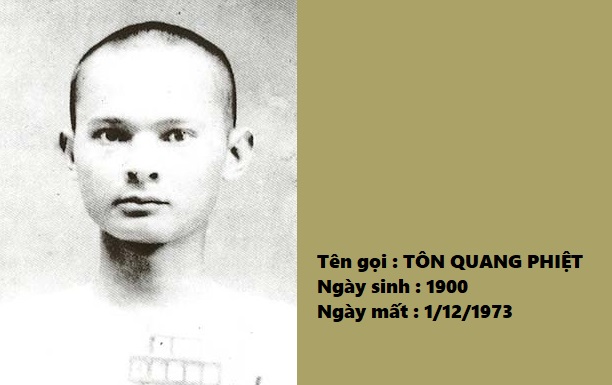
Ton Quang Phiệt was born in 1900 into a Confucian scholarly family in Vo Liet commune, Thanh Chuong district. He was the son of Ton Thuc Dinh, a graduate.
The hometown of Ton Quang Phiệt is renowned as a land of outstanding people and rich history. General Phan Đà, a subordinate of Le Loi, bravely and intelligently pursued the Ming invaders and sacrificed himself at Vo Liet. The people erected the Bach Ma Temple to worship him. The Vo Liet communal house, with its unique architectural style, was a gathering place for patriotic scholars to discuss literature, poetry, and current affairs. Here, stone steles record the names of sons of Vo Liet who passed the provincial, national, and imperial examinations. Vo Liet served as the district capital from the reign of Emperor Thanh Thai until the August Revolution of 1945.
The people of Vo Liet responded to and actively participated in the scholar-royalist movements against the French in the late 19th century and the Dong Du movement led by Phan Boi Chau in the early 20th century.
From a young age, Ton Quang Phiệt was taught classical Chinese by his father and was exposed early to the passionate patriotic poems and writings of the scholars of Nghe An province. The conversations about the fate of the country, the anti-French resistance movement, and the search for a savior between these scholars and his grandfather's students—such as the Vice-Bachelor Nguyen Sinh Sac, the First-Rank Scholar Nguyen Chinh, the Bachelor Dang Nhu Hai, the Vice-Bachelor Dang Trong Can, and the top-ranking scholar Dang Thai Than—left a deep impression on Ton Quang Phiệt's mind.
In 1920, Ton Quang Phiệt was admitted to the first class of Vinh National School. Throughout his studies, Ton Quang Phiệt was always an exemplary student. By his third year, he was able to write short stories and articles with profound patriotic content.
In 1924, after graduating from Vinh National School, Ton Quang Phiệt enrolled in Hanoi Teacher Training College. On January 25, 1925, he and 16 patriotic students from the school, including Pham Thieu, Dang Thai Mai, Nguyen Quoc Tuy, etc., organized and founded the Vietnam Patriotic Association.
In early 1925, Ton Quang Phiệt and Le Huan went to Thanh Hoa to meet Hoang Van Khai to discuss organizing the Phuc Viet Society. On July 14, 1925 (French National Day), at Con Meo Mountain in Ben Thuy - Vinh, the Phuc Viet Society was founded. The founding members were all intellectuals, including Le Van Huan, Ton Quang Phiệt, Ngo Duc Dien, and others.
Ton Quang Phiệt was appointed to head the Northern branch. On December 5, 1925, in the wake of the Phan Boi Chau case, members of the Northern group distributed leaflets calling on the people to fight.
In July 1926, Ton Quang Phiệt, along with other members of the Viet Restoration Society such as Tran Phu, Phan Trong Binh, Phan Trong Quang, Nguyen Van Loi, Hoang Tung, etc., traveled to Guangzhou (China) under the organization and guidance of Le Duy Diem; however, near the border, he and Hoang Tung were arrested by French secret police. Lacking sufficient evidence, the secret police later released Ton Quang Phiệt.
In late 1929, Ton Quang Phiệt was arrested, and the Southern Court of Nghe An Province sentenced him to 7 years of hard labor and 7 years of house arrest according to judgment No. 11 dated January 21, 1930, and exiled him to Buon Ma Thuot. While in prison, Ton Quang Phiệt and his fellow political prisoners composed poetry and prose as weapons to fight against the harsh prison regime. In 1933, Ton Quang Phiệt was released.
In 1934, Ton Quang Phiệt taught in Vinh; in 1937, he was the principal of Thuan Hoa private school (Hue). He participated in the National Language Propagation Association, wrote articles, campaigned for the Indochina Congress, and joined the democratic front in Hue.
On August 23, 1945, following the successful uprising to seize power in Hue, Ton Quang Phiệt was elected the first Chairman of the Revolutionary People's Committee of Thua Thien province, and later the Chairman of the Thua Thien Administrative Committee.
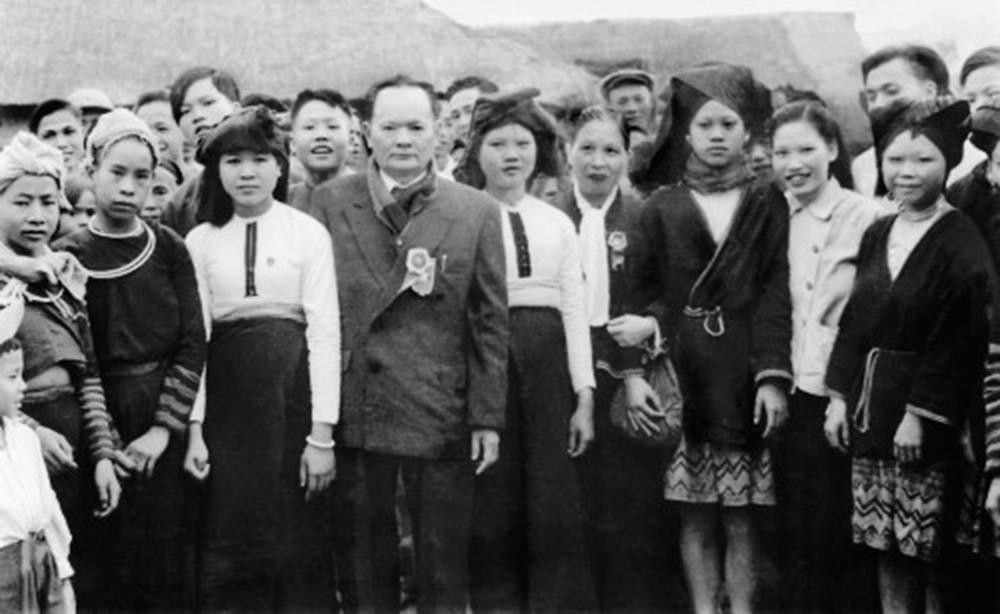
From 1946 to 1963, Ton Quang Phiệt continuously served as a National Assembly representative and held many important positions: Member of the Standing Committee and concurrently Secretary General of the National Assembly Standing Committee; Chairman of the Thanh Hoa Provincial Resistance and Administrative Committee; Vice Chairman of the Inter-Regional Committee of Vietnam, Chairman of the Committee for Solidarity of the Asian and African Peoples of Vietnam; Vice President of the Vietnam-China Friendship Association; Member of the Central Executive Committee of the Vietnam-Soviet Friendship Association; Member of the Central Committee of the Vietnam Fatherland Front; and Member of the Executive Committee of the Vietnam Historical Science Association.
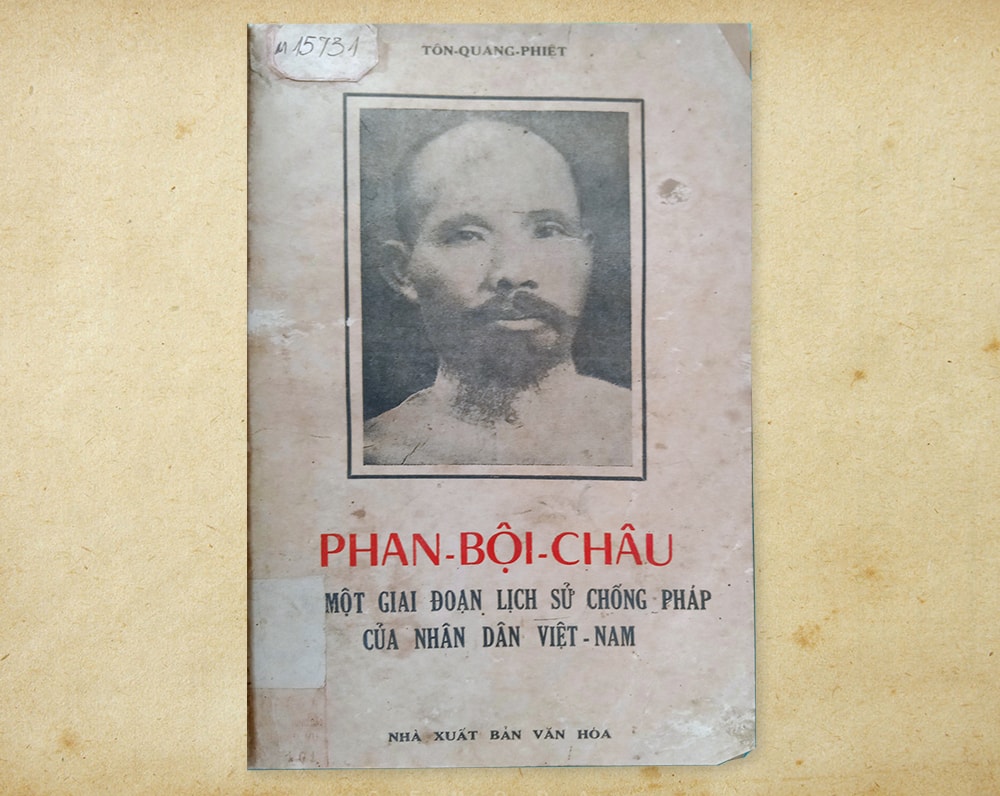
During his revolutionary activities, Ton Quang Phiệt also wrote poetry and prose, history, and conducted social science research. His notable works and research include: "The History of the Vietnamese People's Resistance Against Foreign Invasion" - published in 1946; "On the Path of Struggle of the Vietnamese People" - published in 1950; "Phan Boi Chau and a Period of History of the Vietnamese People's Resistance Against the French" - published in 1958…
On December 1, 1973, Ton Quang Phiệt breathed his last, ending a life dedicated entirely to national independence and socialism, just as he was described in the eulogy read on December 5, 1973: "a shining example of an intellectual with a deep love for his country, loyal to the revolution and the people, fighting persistently, constantly improving and training himself to meet the standards of a true revolutionary."
For his immense contributions to the revolutionary cause, Ton Quang Phiệt was awarded the Ho Chi Minh Order and many other prestigious honors by the State.