
General Secretary and President To Lam attends the Vietnam-Singapore Technology Connectivity Forum.
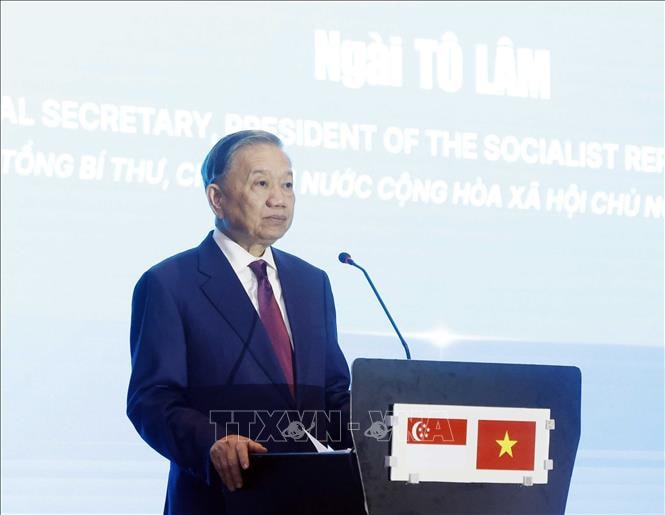
Continuing his state visit to Singapore, on the afternoon of May 29th, General Secretary and President To Lam attended and delivered a speech at the Vietnam-Singapore Technology Connectivity Forum.
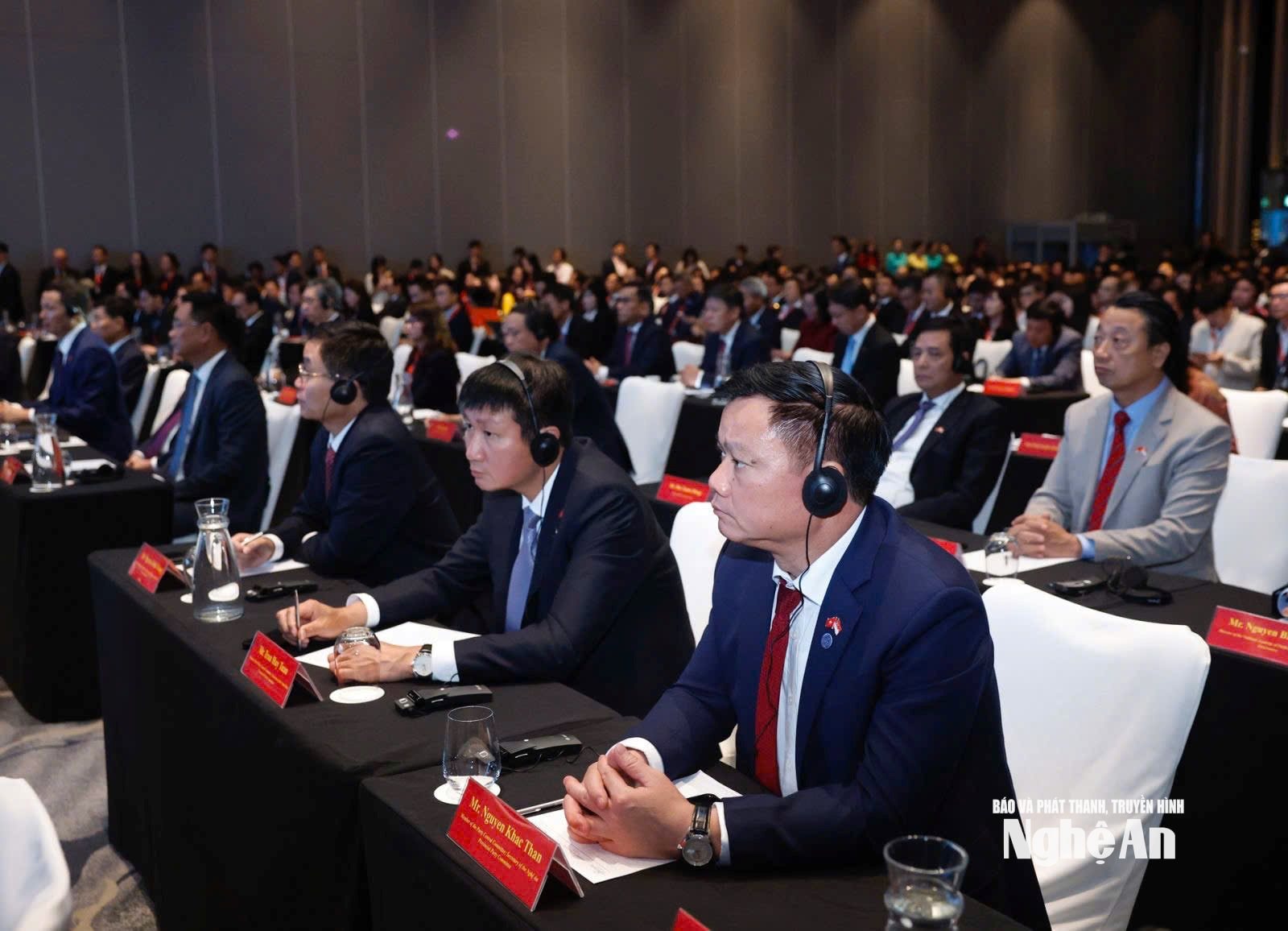
Also attending were high-ranking delegates and leaders from ministries and agencies of Vietnam and Singapore. Representing Nghe An province was Comrade Nguyen Khac Than - Member of the Central Committee of the Communist Party of Vietnam, Secretary of the Provincial Party Committee, and Head of the Provincial Delegation of National Assembly Deputies.
Speaking on the strategic direction of cooperation in science and technology, innovation, and digital transformation between Vietnam and Singapore, General Secretary and President To Lam stated that the world is entering a period of profound transformation, where science, technology, and innovation are not only drivers of growth but are becoming decisive factors in national competitiveness and the position of each economy in the global value chain.
Artificial intelligence, semiconductors, big data, biotechnology, quantum technology, clean energy, and the digital economy are fundamentally changing the way production methods, business models, and the operation of the global economy. The nation that masters these strategic technologies will have the ability to lead the future.
General Secretary and President To Lam stated that, for Vietnam, Resolution No. 57-NQ/TW of the Politburo on breakthroughs in the development of science, technology, innovation, and national digital transformation has clearly identified science and technology as the central driving force of development; and is striving to improve institutions, develop high-quality human resources, promote the innovation ecosystem, and create favorable conditions for businesses to participate more deeply in the digital transformation and technology development process.
Vietnam places particular importance on expanding international cooperation in science, technology, innovation, and human resource development. In today's era, technological self-reliance does not mean isolation, but rather needs to be built on a foundation of open cooperation, knowledge sharing, and joint development of technological capabilities.
Recognizing Singapore as one of Asia's leading technology, innovation, and financial hubs, and impressed by its long-term development vision, modern governance capabilities, and dynamic innovation ecosystem, General Secretary and President To Lam stated that the two economies have a clear strategic complementary nature.
Singapore has strengths in research and development (R&D), technology management, finance, innovation, and a startup ecosystem; while Vietnam has a young workforce, a large market size, a rapid pace of digital transformation, and a growing demand for technology applications.
In particular, in industrial parks, including the Vietnam-Singapore Industrial Parks (VSIP) system, the demand for technology applications in smart manufacturing, smart logistics, supply chain management, clean energy, and digital transformation is opening up huge opportunities for cooperation between businesses of the two countries.
General Secretary and President To Lam stated that the most important thing now is not just to promote more connectivity activities, but to build mechanisms to transform connectivity into substantive cooperation and concrete projects.
The spirit of "Tech Connect" should not be limited to a forum for meetings, but should aim towards forming a new model of cooperation – where the State acts as a facilitator, pioneering scientists and leading businesses participate together in the process of co-research, co-development and co-production.
From the "Three Houses" model within a single country, it is necessary to gradually form a "Three Houses of two countries," thereby building a cross-border cooperation network between businesses, universities, research institutes, and innovation centers of Vietnam and Singapore.
General Secretary and President To Lam emphasized that what the two countries are aiming for is not just receiving technology, but jointly developing technological capabilities; not just short-term cooperation, but jointly creating new values capable of deeply participating in regional and global value chains; gradually forming a Vietnam-Singapore technology cooperation space where knowledge, data, technology, and high-quality human resources are effectively connected to create technological products and solutions with regional and international value.
General Secretary and President To Lam expressed confidence that the two sides would not only exchange ideas but also open up concrete avenues of cooperation between businesses, universities, research institutes, and technology partners of the two countries; and that cooperation projects in strategic areas such as artificial intelligence, semiconductors, digital technology, smart logistics, clean energy, cybersecurity, and innovation should be promoted more strongly.
Both sides need to strengthen connections between businesses and research institutes and universities; establish joint R&D centers, joint laboratories, high-quality technology human resource exchange programs, and mechanisms to support cross-border innovation into specific technology projects at the implementation level.
General Secretary and President To Lam affirmed that, with the foundation of good political relations, strategic trust between the two countries, and enormous potential in science, technology and human resources, Vietnam-Singapore technology cooperation will become an important pillar in bilateral relations in the coming time.
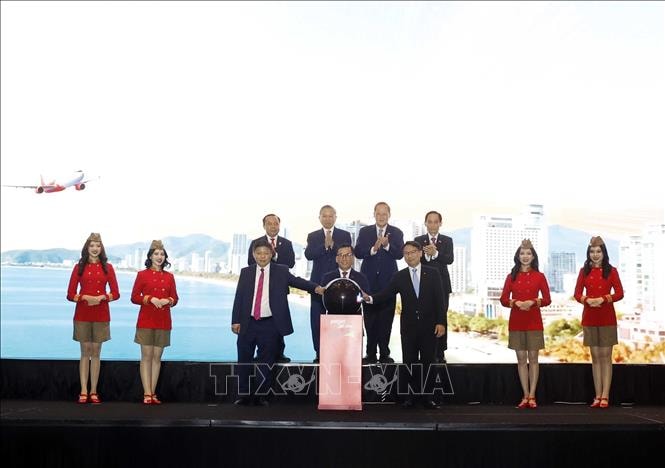
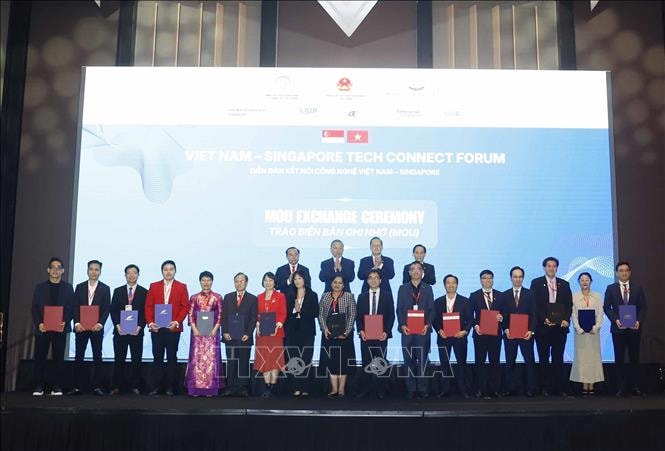
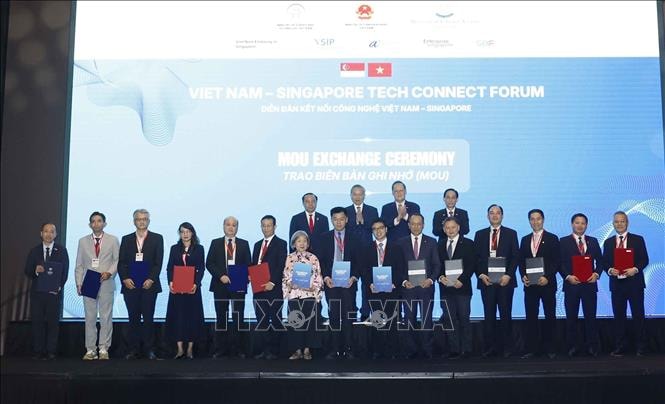
On this occasion, General Secretary and President To Lam and high-ranking leaders of both countries witnessed the exchange of cooperation documents between Vietnam and Singapore in the following areas: high technology; artificial intelligence (AI) and digital transformation; semiconductor industry, energy and supply chain; health, biotechnology and healthcare; innovation and entrepreneurship (startup); education, training and human resource development; digital finance, trade and services.


