
US President warns Iran: "Time is running out for the nuclear deal."
Tensions in the Middle East are escalating to a dangerous new level as US President Donald Trump issued a stern warning demanding Iran reach a nuclear deal immediately, amid the entry of the USS Abraham Lincoln carrier strike group into the region's waters.
"Time is running out."
On January 28th (Washington time), US President Donald Trump used social media to send an ultimatum to Tehran. He warned that time was running out for Iran and that any delay could lead to military consequences far more devastating than past campaigns.
In a post that garnered significant international attention, President Trump wrote: "Hopefully Iran will quickly 'sit down at the negotiating table' and negotiate a fair, equitable deal – NO NUCLEAR WEAPONS – a good deal for all parties. Time is running out, this is really a crucial issue!"
Not content with diplomatic appeals, the White House directly threatened military force, recalling the short but devastating conflict between Iran and Israel last June.
"As I told Iran before: MAKE A DEAL! They didn't, and as a result, 'Operation Midnight Hammer' took place, destroying much of Iran. The next attack will be much worse! Don't let that happen again," Trump emphasized.
The "Operation Midnight Hammer" that Trump referred to was a series of coordinated airstrikes by the U.S. and Israel targeting key Iranian nuclear facilities during last year's 12-day war. Despite causing significant damage, military experts believe this effort has not completely eradicated Tehran's nuclear program.
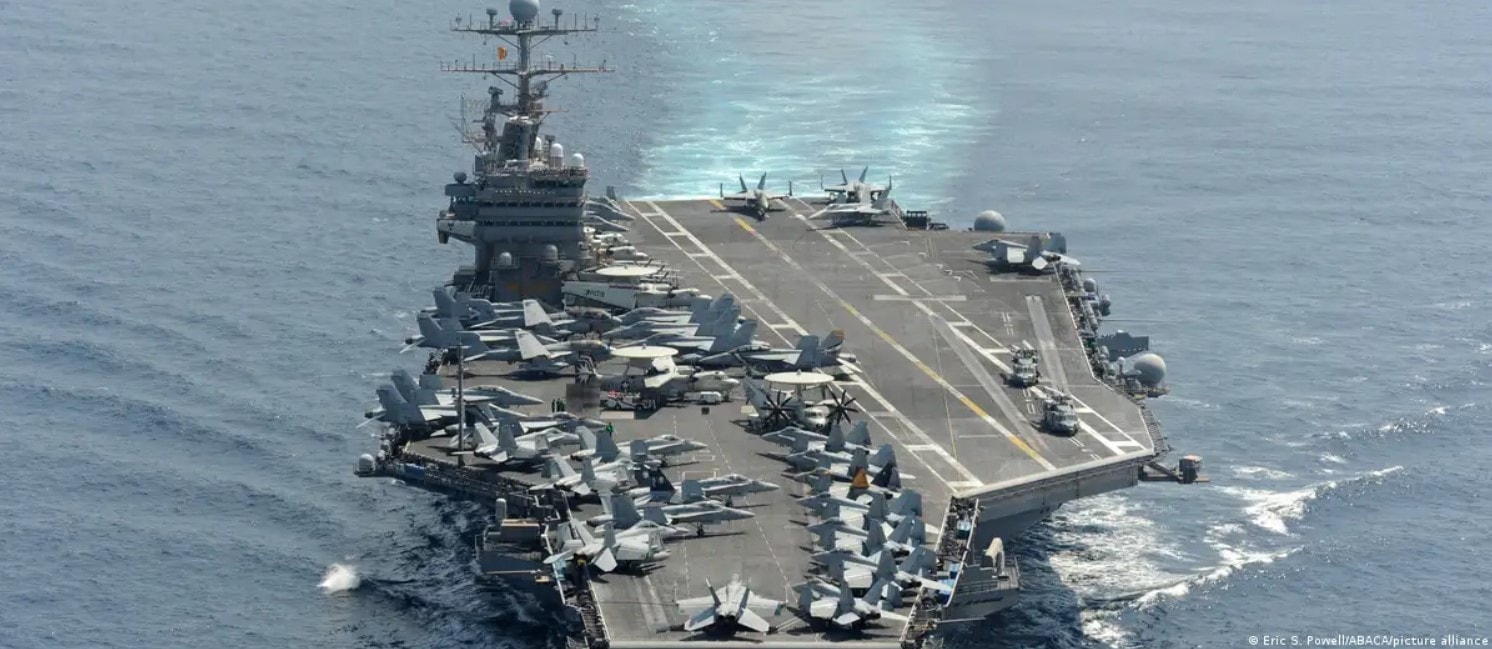
The US President's warning was not just a psychological tactic but was backed by actual military movements. Trump declared a "massive fleet" was heading toward the Islamic Republic.
This large-scale deployment comes amid intelligence reports indicating that Iran has enriched uranium to levels far exceeding civilian needs, raising concerns that the country is nearing nuclear weapons production.
Tehran: "The finger is on the trigger."
Faced with relentless pressure from Washington, Tehran's response has been extremely firm. Iranian leaders have asserted that they will never negotiate under threat and are ready to retaliate against any military action.
On January 29, Iranian Foreign Minister Abbas Araghchi declared on television: "Conducting diplomacy through military threats is ineffective and futile. If they want negotiations to take place, they must certainly set aside their threats, unreasonable demands, and absurd issues."
In response to Trump's use of capitalized keywords on the social media platform X, Araghchi also posted a strong message: "Our brave armed forces are ready - finger on trigger - to respond immediately and forcefully to any aggression against our beloved lands, airspace and seas."
However, Iran is keeping the door open for diplomacy, with Foreign Minister Araghchi emphasizing that the country welcomes a "fair, equitable, and mutually respectful" nuclear agreement that guarantees peaceful access to nuclear technology.
Meanwhile, Ali Shamkhani, a senior adviser to Iran's Supreme Leader Ayatollah Ali Khamenei, issued a more specific warning: "Any military action from the US will lead to Iran targeting the US, Israel, and their supporters."
Iran's mission to the United Nations also reminded the US of the price paid for the wars in Afghanistan and Iraq, warning Washington not to get bogged down again.
Not only is Iran facing pressure from the US, but it is also experiencing increasing isolation from Europe. German Chancellor Friedrich Merz made harsh remarks about Iran's internal situation on January 28.
International tensions are escalating at a time when Iran is experiencing severe internal instability. During a congressional hearing, U.S. Secretary of State Marco Rubio stated that the Iranian government is at its weakest point in history and its economy is on the verge of collapse. He predicted that street protests would soon erupt again.
However, U.S. intelligence has a more cautious view. Although the economic conditions that fueled the protests remain, Iran's top leadership maintains tight control, and there are no signs of major cracks in the power structure.
The current US-Iran confrontation is not just about the nuclear issue, but also about geopolitical positioning, the stability of energy markets, and the security of the entire Middle East region. With both sides holding their breath, the international community is watching every development in the coming period.


