
The Serbian president praised the CM-400AKG missile for its ability to destroy the S-400 system.
President Aleksandar Vucic praised the capabilities of the Chinese-made CM-400AKG hypersonic missile, a weapon believed to have neutralized the S-400 air defense system.
During his five-day official visit to China (May 24-28), Serbian President Aleksandar Vucic expressed his admiration for the effectiveness of the CM-400AKG missile system. This air-launched weapon system has been modified by Belgrade for integration into the MiG-29 fighter squadron of the Serbian Air Force.
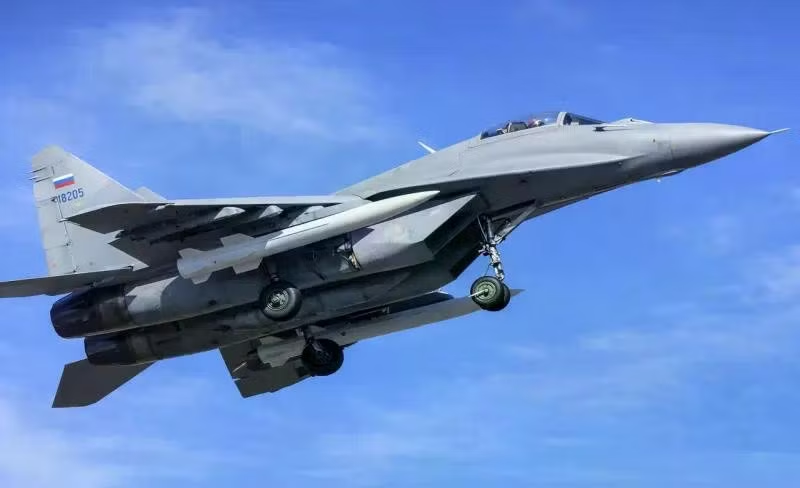
Combat capability and effectiveness
According to Chinese media, President Vucic emphasized the superior quality of the CM-400AKG compared to other missiles Serbia previously possessed. The decision to purchase this weapon was made after reports confirmed its effectiveness in international conflicts.
Specifically, China provided information to the Serbian leader about the Pakistani military's use of CM-400AKG missiles launched from JF-17 fighter jets to destroy Indian S-400 air defense systems. Mr. Vucic stated that this military technological assistance is a testament to the strong friendship between the two countries.
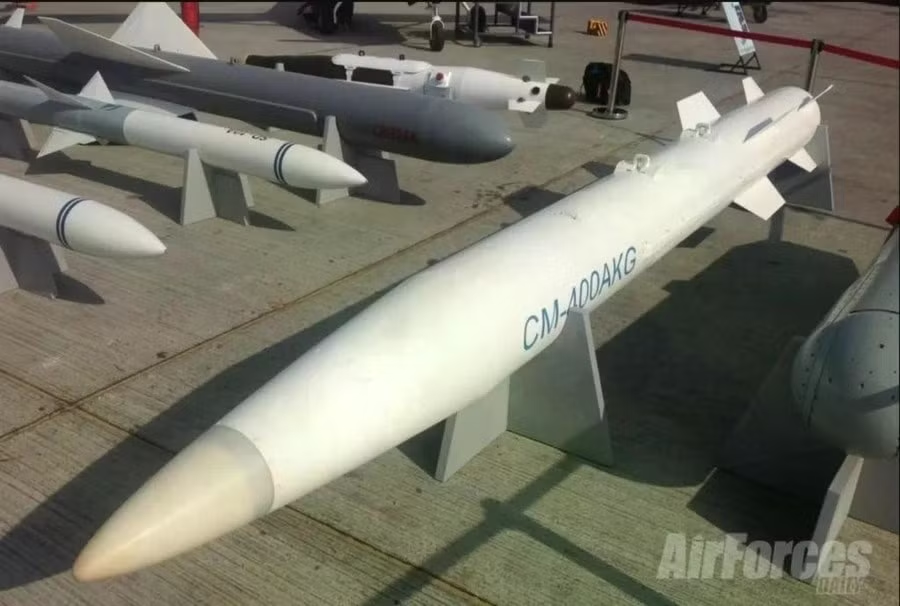
Technical specifications of the CM-400AKG hypersonic missile.
The CM-400AKG is a hypersonic ballistic missile developed by China's CASIC Corporation. This weapon is designed to strike critical ground targets and large warships, including aircraft carriers. With a maximum speed of up to Mach 6, the missile poses a significant challenge to current defense systems.
In terms of physical characteristics, the missile weighs approximately 910 kg, a relatively light payload that allows it to be deployed from light fighter aircraft such as the JF-17 or MiG-29. With the acquisition of the CM-400AKG, Serbia became the second country in the world after Pakistan to field this type of weapon.
Besides upgrading military equipment, President Vucic also expressed concern about the military alliances forming in the Balkans between Croatia, Albania, and Kosovo. He asserted that Serbia's new combat capabilities had surprised NATO in its assessment of Belgrade's defensive capabilities.


