
President Trump proposed a record $1.5 trillion defense budget for 2027.
On January 7th, US President Donald Trump announced that the country's defense budget for 2027 needs to reach $1.5 trillion. This figure is significantly higher than the $901 billion approved by the US Congress for 2026.
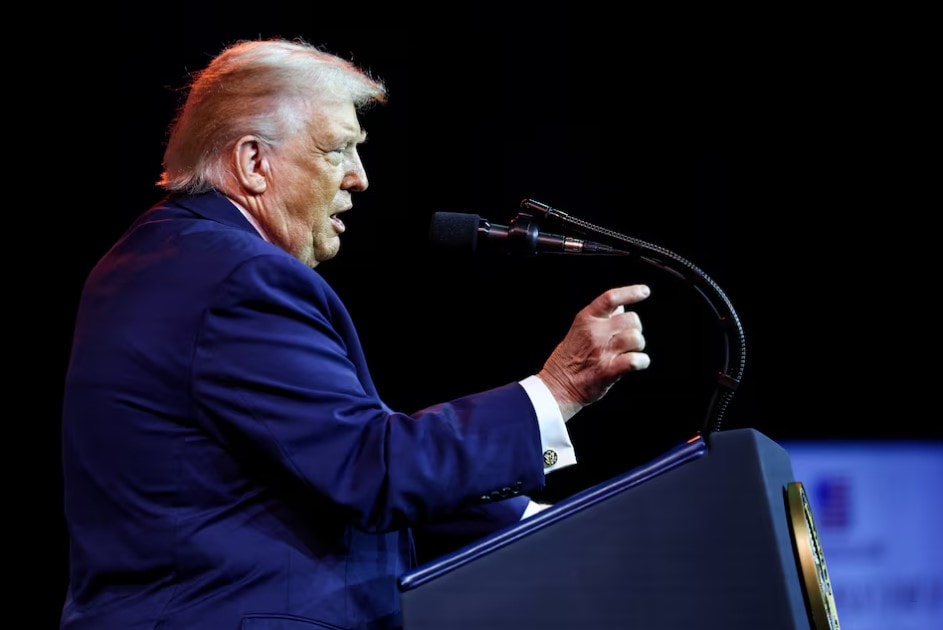
According to Reuters, the proposed budget increase will require approval from the US Congress. However, with the Republican Party holding a majority, albeit a narrow one, in both the Senate and the House of Representatives, President Trump's spending plans are not expected to face significant internal party obstacles.
Sharing on the social media platform Truth Social, President Donald Trump stated that the decision on the 2027 military budget was made "after long and difficult negotiations with Senators, Representatives, Cabinets, and political representatives... especially during this time of great uncertainty and danger."
This move comes amid significant geopolitical shifts. Recently, US forces conducted a military operation related to Venezuelan leader Nicolas Maduro. Simultaneously, the White House revealed that the President is discussing options regarding Greenland, including the possibility of using military force. Domestically, troops have also been deployed to assist in maintaining order in several cities.
Earlier, President Trump had also criticized defense companies for their slow pace of weapons production. He pledged to prevent defense contractors from paying dividends or buying back shares until they accelerated production.
Regarding the financial plan, President Trump asserted that the increased spending would be offset by revenue from the tariffs he has imposed on most countries and many industries. He believes that America can still reduce its debt and even send dividend checks to middle-income earners.
However, economic experts have expressed skepticism about the feasibility of this plan.
The Committee on Responsible Federal Budgeting (CRFB) – a nonpartisan think tank – estimates that the proposal could cost $5 trillion by 2035, adding $5.8 trillion to the U.S. national debt (including interest). The organization notes that current tariff revenues would only cover half the cost, not to mention the legal risks if the Supreme Court rules some of the tariffs illegal.
According to estimates from the Bipartisan Policy Center, total US tariff revenue in 2025 will only reach $288 billion, significantly lower than the $600 billion estimate recently put forward by President Trump.
Byron Callan, a defense analyst at Capital Alpha Partners, commented: "Trump's post raises big questions about where the funds will be specifically allocated and whether the defense industry has the capacity to absorb this massive budget."
If approved, this would be a historic increase in the defense budget. Callan noted that the last time the U.S. Department of Defense saw a budget increase of over 50% was in 1951, during the Korean War. Even the major increases in military spending under former President Ronald Reagan in 1981 and 1982 only reached 25% and 20%, respectively.
In response to this news, in after-hours trading following the market close, shares of major US defense corporations rose across the board, as investors anticipated a new wave of spending would boost the industry's profits.


