
President Trump announced that the US would receive 50 million barrels of oil from Venezuela.
President Donald Trump announced that Venezuela would transfer between 30 and 50 million barrels of oil to the United States. This oil would be sold at market prices, and all proceeds would be controlled by the United States.
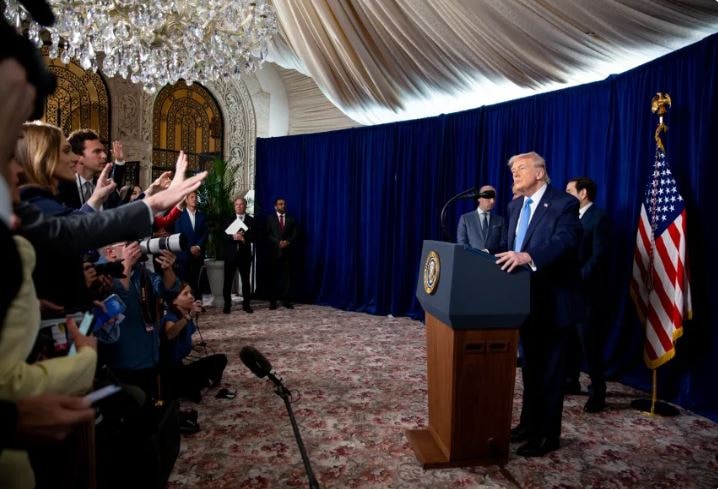
According to CNN, on the social media platform Truth Social on the evening of January 6th (Washington time), Mr. Trump stated: "I am pleased to announce that interim authorities in Venezuela will transfer between 30 and 50 million barrels of high-quality oil, which is subject to sanctions, to the United States."
He further emphasized: "This oil will be sold at market price, and that money will be directly controlled by me, as President of the United States, to ensure it is used for the benefit of the Venezuelan and American people!"
President Trump also stated that he had instructed Energy Secretary Chris Wright to "implement this plan immediately." The oil will be received by specialized vessels and transported directly to unloading ports in the United States.
A senior administration official (who requested anonymity) told CNN that the oil had already been extracted and bottled. Much of it is currently on transport ships and will soon be shipped to U.S. refineries in the Gulf region.
Although 50 million barrels sounds enormous, the US actually consumed over 20 million barrels of oil per day last month. Therefore, this amount of oil might help lower prices slightly, but it's unlikely to significantly impact gasoline prices for Americans. For comparison, in 2022, former President Joe Biden released four to six times the amount of oil from the Strategic Petroleum Reserve (approximately 180 million barrels), but according to Treasury analysis, the reduction in gasoline prices only ranged from 13 to 31 cents per gallon over four months.
Immediately after Trump's announcement, oil prices in the US fell by about $1 per barrel (almost 2%), to $56.
Selling 50 million barrels of oil could generate significant revenue. With Venezuelan oil currently priced at $55 per barrel, if the U.S. finds a buyer willing to pay market price, the deal could bring in between $1.65 billion and $2.75 billion.
Since the U.S. began its oil embargo late last year, Venezuela has accumulated vast reserves of crude oil. However, handing over this oil to the U.S. could deplete the country's own reserves.
According to Phil Flynn, senior market analyst at Price Futures Group, this oil supply almost certainly comes from onshore storage facilities (currently nearing full capacity of 48 million barrels) and from seized oil tankers (carrying approximately 15-22 million barrels).
The exact handover time has not yet been revealed. However, government officials said the process would be quick because Venezuelan crude oil is heavy and cannot be stored for too long.


