
Top 8 outstanding talents at the 2025 U17 World Cup
The FIFA U17 World Cup 2025 in Qatar concluded with Portugal winning the championship. From over 100 scouts in attendance, eight players made a strong impression: Moser with 8 goals, Cabral with 7 goals (including the decisive goal), and Heskey creating 9 chances – the most in the tournament.
The FIFA U17 World Cup 2025 in Qatar was the ideal launching pad for a new generation. Portugal triumphed thanks to a decisive moment from Anisio Cabral, while European scouts left with a long list of noteworthy names. Below are eight outstanding talents, selected based on their decisive contributions, tactical roles, and consistency throughout the tournament.
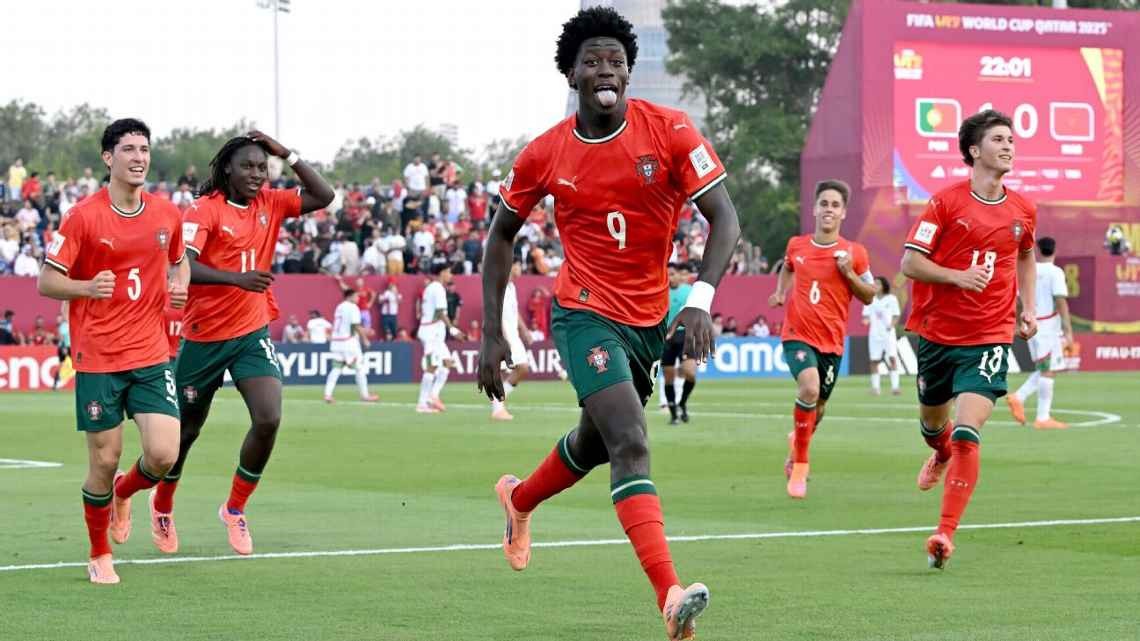
8 faces that left a lasting impression
1. Johannes Moser – Austria/Liefering
With eight goals, Johannes Moser became central to Austria's system. Playing as a modern-day "number 10," Moser moved intelligently, positioned himself perfectly in the penalty area, and finished with a variety of shots. Three of his penalty goals – including a panenka – demonstrated his steely mentality in high-pressure situations.
Moser's tactical strength lies in his ability to link up play between the midfield and the center forward. He participates in one-two passes in the air, creating numerical advantages and opening up space for teammates to make runs. His abundant energy allows him to maintain pressure in both situations: pressing when out of possession and shooting when opportunities arise.
2. Anisio Cabral – Portugal/Benfica
With 7 goals, including the decisive one in the final, Cabral was a key figure in Portugal's victory. Playing as a true "number 9," Cabral didn't flaunt flashy techniques but optimized his movement and positioning. The way he exploited the space behind the central defenders, turned towards the goal, and unleashed a one-touch finish demonstrated his killer instinct.
In terms of attacking structure, Cabral effectively holds up the ball, maintaining a simple tempo for his teammates to make runs. His physique and consistent technique allow him to retain possession under pressure, creating an anchor point around which the attack revolves. This performance has put the Benfica striker on the radar of many major European clubs.
3. Reigan Heskey – England/Manchester City
Although England U17 were eliminated in the round of 16, Reigan Heskey still stood out with 4 goals and 9 assists – the most in the tournament. Starting on the left wing but being right-footed, Heskey possesses speed and short bursts of acceleration, optimizing the space behind opposing full-backs.
In terms of skill, Heskey can receive the ball with his back to the goal, turn quickly, and sprint into half-space. His neat, quick-touch finishing is a highlight, while his ability to create chances demonstrates his decisive final touch – a key differentiating factor for a modern winger.

4. Seydou Dembele – Mali/JMG Academy
A new addition to Mali's rich talent pool, Seydou Dembele operates as a "number 10" or right-sided attacking midfielder. His finesse, dribbling ability, and long-range shooting are core skills. With 7 assists in 5 games, Dembele acts as a "maestro," connecting the midfield with the attack through runs between the lines.
The difference lies in how Dembele holds the ball under pressure and chooses his key passing options. He often finds space between opposing defenders and midfielders, drawing them out of their defensive structure before setting up teammates to make deeper runs.
5. Jose Neto – Portugal/Benfica
A versatile left-back with 3 goals and 4 assists, Jose Neto demonstrates a balanced attacking and defensive style. Standing at 1.84m tall, Neto can play center-back when needed, but on the left flank he excels at speed, strength, and the ability to penetrate the penalty area.
From a tactical standpoint, Neto consistently pushes forward to create pressure on the left flank, maintaining width during build-up play and unexpectedly cutting inside for finishing. His positional discipline prevents him from overextending himself, while his left-footed quality provides a constant threat with crosses and long-range shots.
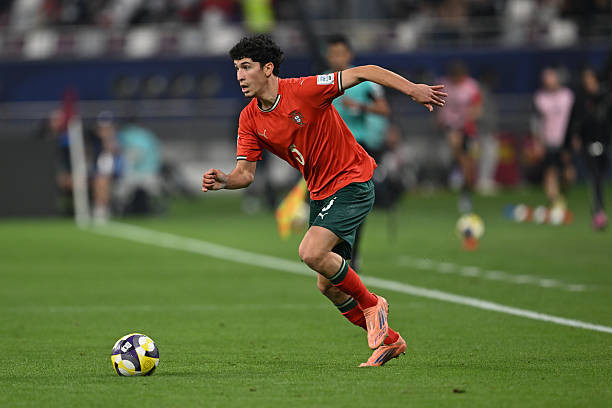
6. Samuele Inacio – Italy/Borussia Dortmund
Leading the Italian U17 team, Samuele Inacio combines the classic "number 10" style with a modern rhythm. He excels at ball control, speed dribbling, and breaking through defensive structures. His statistics of 39 passes – more than any other player in the tournament – demonstrate Inacio's influence in every attacking move by the Italian U17 team.
Despite receiving a red card in the semi-final, his overall performance was very impressive. Inacio often dribbled the ball past the first line of pressing, creating 3v2 or 2v1 situations in the half-space between the flanks – crucial moments for Italy's progress.
7. Dell – Brazil/Bahia
Without flash, Dell conquers with efficiency. With 5 goals, he is a "predator" in the penalty box: reading the game well, choosing the right position, and finishing cleanly. Dell operates widely to stretch the defense, persistently moving to create positional errors for the opponent, then punishing them with a minimal touch.
Dell's composure in the final moments – choosing between a one-touch finish or a longer one – ensured Brazil always had a clear finishing option when the ball went deep into the final third.
8. Rafael Quintas – Portugal/Benfica
The silent leader of the champions. In his defensive midfield role, Rafael Quintas orchestrates the tempo and protects the space in front of the back line. Instead of risky tackles, Quintas reads the situation, intercepts the ball with positional awareness, and then neatly finishes to initiate a transition.
In attack, Quintas provides support with long passes to the flanks or attempts long-range shots when needed. This stability and minimalist approach allows Portugal to maintain a tight structure, creating a foundation for their forwards to shine.
From Qatar to the launching pad of the future.
The tournament concluded with a well-deserved championship for Portugal, but the biggest impact was the updated talent map presented to European academies. Moser, Cabral, Heskey, and Dembele not only showcased their skills, but also demonstrated maturity and a deep understanding of the game – qualities rare at the age of 17. The next generation has made a clear statement on the stage of the 2025 U17 World Cup.


