
TPP: Opportunities and Challenges for Vietnam
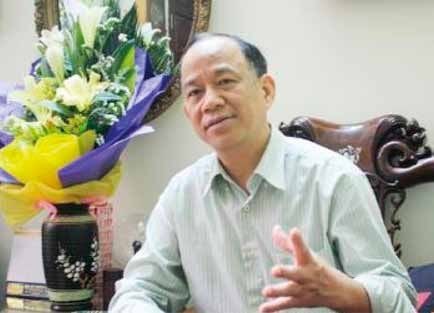 |
| Economist, Dr. Nguyen Minh Phong. |
- Regarding tariffs, once the TPP is signed, 90% of tariff lines will be reduced to 0% immediately, and the remaining 10% will be gradually reduced to 0% within a period of no more than 10 years.
- Regarding services, increase the level of openness in service sectors, especially financial services.
- Regarding investment, strengthen regulations related to foreign investment and protect the rights of investors.
- Regarding intellectual property rights, increase the level of protection for intellectual property rights to a higher level than that in the WTO.
- Regarding SPS and TBT measures, tighten epidemiological requirements and technical barriers.
- Regarding competition and public procurement, strengthen competition, especially in the field of public procurement.
- Regarding labor issues, particularly those concerning the right to association (trade unions), the right of workers to assemble and negotiate collectively, regulations prohibiting all forms of forced labor, regulations prohibiting child labor exploitation, and regulations against discrimination in the workforce.
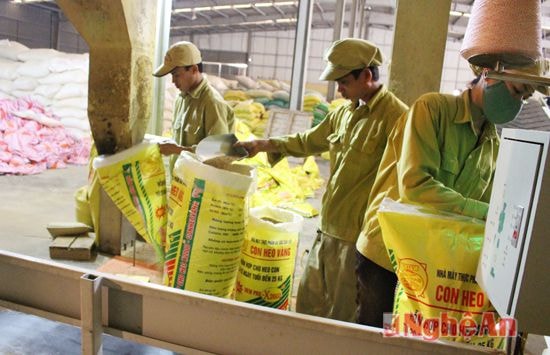 |
| Livestock businesses still rely heavily on imported raw materials. |
When the TPP comes into effect (as early as Q1/2016), it will not only reduce over 90% of tariffs to 0% immediately, with the remaining 10% gradually reduced to 0% within a period of no more than 10 years, but also include deep commitments encompassing 22 sectors, easing international investment and the free flow of resources, creating the highest quality environment and new, more favorable supply chains, benefiting all participating countries; helping to strengthen strategic relationships between partners and allies in this important region, with 800 million people, accounting for 40% of global GDP and 30% of global trade (including the US, which accounts for 57% of global GDP and nearly 40% of the total population).
With many of the largest and most ambitious agreements, and very high standards in trade, technology, IP (intellectual property), environment, labor, finance, and monetary matters, the TPP represents the biggest and most significant breakthrough achieved by member countries in the past 20 years since the Uruguay Round of negotiations. It marks the beginning of a new generation of FTAs (Free Trade Agreements), a landmark event involving numerous nations. The TPP is not only a tremendous achievement for each member country, supporting jobs, promoting sustainable growth, inclusive development, and innovation across the Asia-Pacific region, but it will also add nearly $300 billion to global GDP annually and truly shape the future of global trade in the 21st century…
The TPP is considered a model agreement for the 21st century due to its high standards and broader scope of influence compared to existing FTAs. The TPP implements an open mechanism, meaning that in the future, interested countries can participate in negotiations to join. The open nature of the TPP has the advantage that, through TPP negotiations alone, a country can have FTAs with multiple partners. However, this also creates difficulties because the more countries participate, the harder it is to find common ground, and the longer the negotiation time.
According to several sources, many countries and territories have expressed interest in participating in the negotiations, including South Korea, Taiwan, the Philippines, Laos, Thailand, Colombia, and Costa Rica. Among these, the likelihood of South Korea joining the TPP negotiations is the highest.
Vietnam in the TPP
As the country with the lowest economic development level, both in terms of total GDP and per capita, among the 12 TPP member countries, Vietnam requested during negotiations that TPP member countries pay attention to ensuring the principle of balancing interests and taking into account the differences in development levels.
It should be noted that the TPP will not eliminate the anti-dumping/countervailing measures currently applied by the United States. The United States will continue to apply the non-market economy approach to Vietnam in anti-dumping cases until Vietnam achieves market economy status. Regulations related to the environment and labor will increase production costs for countries, including Vietnam.
Vietnam currently has diplomatic relations with approximately 185 countries and territories, including 13 strategic partners and 11 comprehensive partners; it also has trade relations and exports goods to over 230 countries and territories; and has signed over 90 bilateral trade agreements, nearly 60 agreements on investment promotion and protection, 54 agreements on avoiding double taxation, and numerous bilateral cultural cooperation agreements with countries and international organizations.
Joining the TPP was a particularly historic event in Vietnam's international integration following its membership in the WTO. Since 2013, Vietnam has been recognized as having a market economy by 45 countries; it has currently signed 10 FTAs, including: the ASEAN Free Trade Area (AFTA); the ASEAN-China Free Trade Area; the ASEAN-Korea Free Trade Area; the ASEAN-Japan Free Trade Area; the ASEAN-Australia and New Zealand Free Trade Area; the ASEAN-India Free Trade Area; the Vietnam-Japan Economic Partnership Agreement; the Vietnam-Chile Free Trade Agreement; and an FTA with the Customs Union of Russia, Belarus, and Kazakhstan. Negotiations for FTAs with the EU and South Korea have concluded; and negotiations are underway for four other FTAs: the EFTA (comprising Switzerland, Norway, Liechtenstein, and Iceland); and an FTA with Taiwan. Türkiye and the Regional Comprehensive Economic Partnership (RCEP).
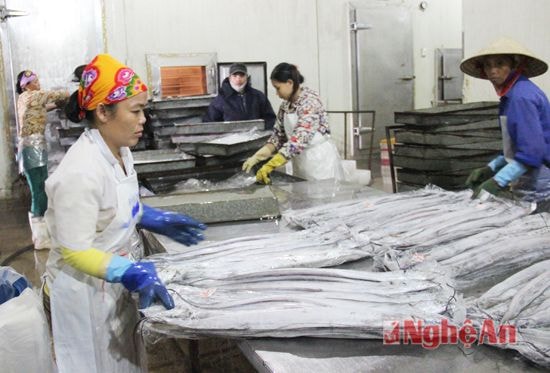 |
| Exporting tuna at Phuong Mai seafood processing enterprise (Hoang Mai district) |
The TPP will create a positive impetus for Vietnam to develop its external economy more strongly, both in breadth and depth. The TPP offers Vietnam many opportunities to further develop its key export products, such as textiles, footwear, seafood, wood products, and electronics and mobile phones, employing tens of millions of workers. At the same time, the TPP provides businesses with more opportunities for fair treatment, equal competition, and freedom of investment and business, as well as the import of appropriate technology; and the movement of labor to participate in other activities in the markets of the 12 TPP member countries within the framework of the commitments. However, challenges also increase regarding the environment and intellectual property, competitive pressure even in the domestic market and in sectors where Vietnam has a long-standing tradition, such as livestock farming and agricultural production. Furthermore, pressure from macroeconomic and microeconomic instability, as well as pressure on employment and social security within the country, may increase.
Joining the TPP requires Vietnam to make stronger and faster breakthroughs in both awareness and the legal framework for developing a modern, integrated market economy with state management under a socialist orientation; paying attention to ensuring the synchronization and coordination of policies and management agencies, and harmonizing the two sides of policies, placing national and ethnic interests above all else; strictly adhering to integration commitments, ensuring the right to freedom of business, equal competition, and legal property ownership, creating the highest possible business conditions for enterprises in areas not prohibited by law; gradually forming a complete and synchronized market with various market elements and types, operating fundamentally smoothly, while simultaneously being linked to regional and international markets.
Harmoniously coordinate the role of the market and the state; strengthen supervision and critical review to ensure economic, political, and social stability; promote democratization and maintain independence and self-reliance; uphold strategic trust and political confidence among nations; continue to improve the business environment, human resources, and protect the living environment; reform the management of state-owned enterprises, expand the scope and increase liberalization for foreign and private investors; promote comprehensive innovation, institutional breakthroughs, and accelerate restructuring associated with innovation in the development model; enhance the capacity, effectiveness, and efficiency of state management under the rule of law; develop supporting industries and increase the localization rate of raw material supply; effectively control macroeconomic financial safety, public debt, bad debt, cross-ownership, exchange rates, foreign exchange reserves, and quality management. Developing socio-technical infrastructure, creating all favorable conditions for businesses to enhance their competitiveness and information transparency, stabilize production and conduct business effectively…
NMP
Box: To date, Nghe An province has approximately 8,500 active businesses out of 13,000 registered businesses. The average registered capital is about 5.52 billion VND per business. Most businesses in Nghe An are small-scale and have weak competitiveness. Therefore, Vietnam's accession to the TPP will create both opportunities and many challenges for businesses, especially those involved in exports.


