
Black olives from Nghe An are having a bumper crop and fetching good prices; people can't harvest them fast enough to sell.
This year, the black olive harvest is abundant and the prices are good, bringing joy to both olive growers and those who climb and trade olive trees in the province.
Black olive trees are mainly grown in home gardens and hillside orchards. The majority of the currently abundant olive trees are purebred, old-growth trees, tall with wide canopies and abundant fruit, scattered across mountainous communes in former districts such as Anh Son, Nam Dan, Do Luong, Tan Ky, etc., but most concentrated in the former Thanh Chuong district, with an estimated yield of several hundred tons of fruit per year.
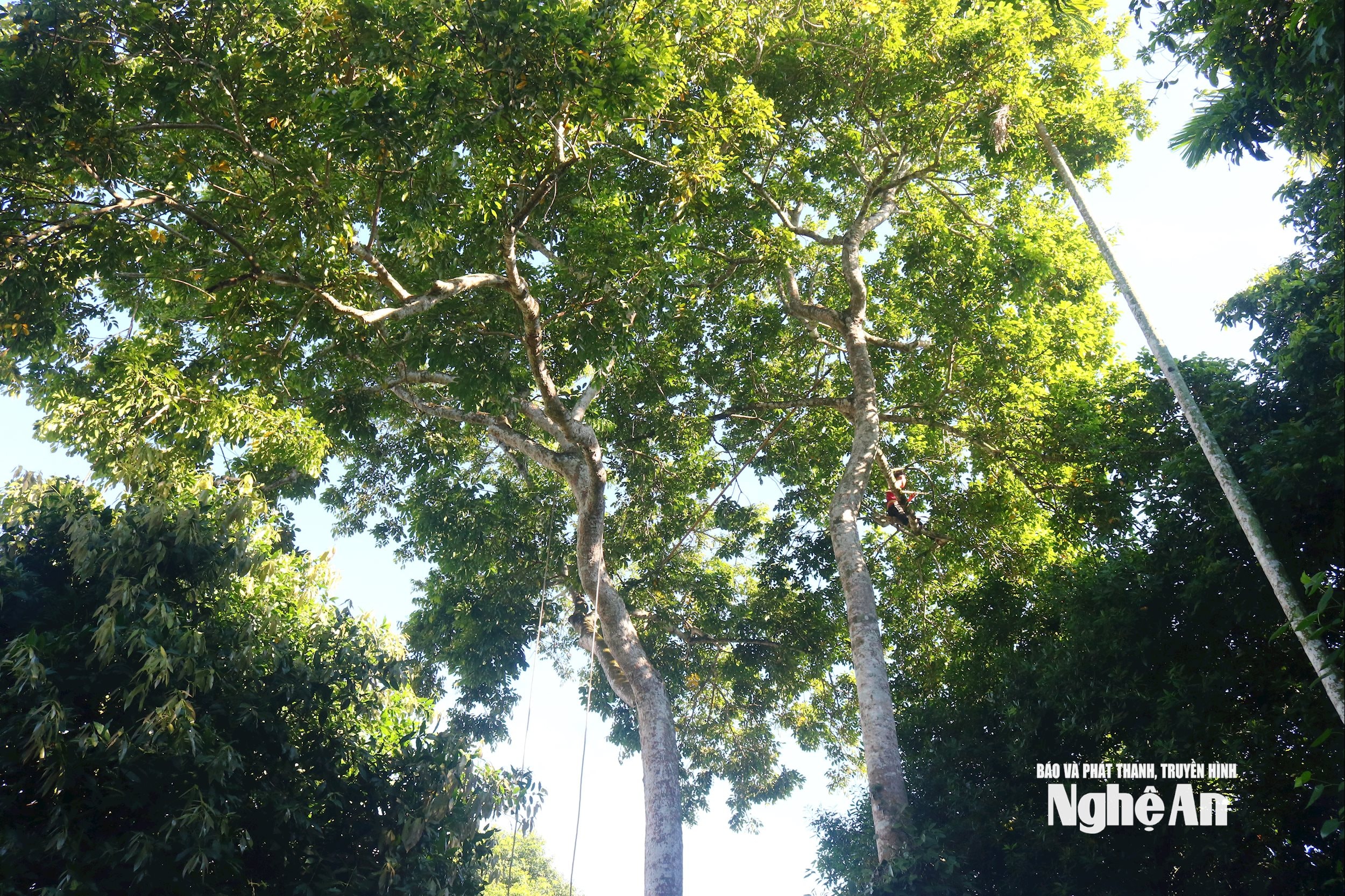
Mr. Nguyen The Ha (65 years old) from Hoa Quan commune (formerly Thanh Huong commune, Thanh Chuong district) said: This year, his orchard has 19 persimmon trees bearing fruit, 16 of which have been fruiting for over 20 years. After setting aside some trees for harvesting for food, he sold most of his orchard to traders for 50 million VND.
The estimated yield for the entire orchard is about 1.3-1.4 tons, which is 3-4 quintals more than last year.
According to Mr. Ha, this year the weather has been quite favorable, with plenty of rain but no hailstorms, fewer extreme thunderstorms, and less scorching sun than in previous years. As a result, the Terminalia trees have flowered and borne abundant fruit. The trees in his garden are laden with fruit, which is large, uniform, and beautiful. At this time, the fruit is ripening, and the strong sunshine makes harvesting easy.
The black olive fruit is green when it first sets, turning black when ripe, and covered with a thin layer of powder. The harvesting season for black olives is from July to October. Ripe olives must be harvested at the right time; harvesting too early results in many green fruits, while harvesting too late causes the olives to become sticky with sap, a condition known as "black olives."
Mr. Nguyen Van Giap from Tam Dong commune (formerly Thanh My commune, Thanh Chuong district) said: His family's orchard has sold half of its canarium fruit to traders for 20 million VND, and the family will harvest the other half. The canarium fruit is now fully ripe.
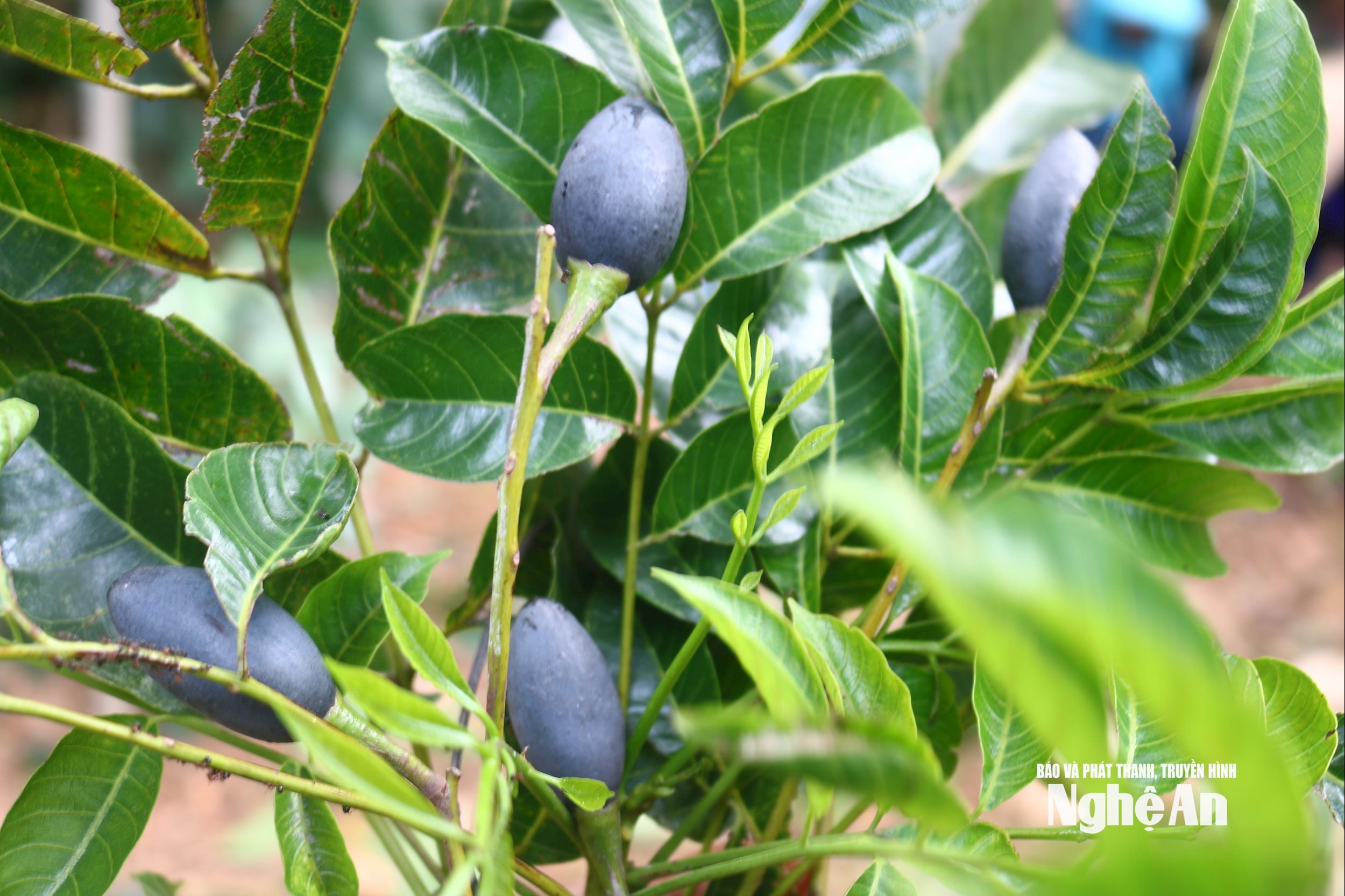
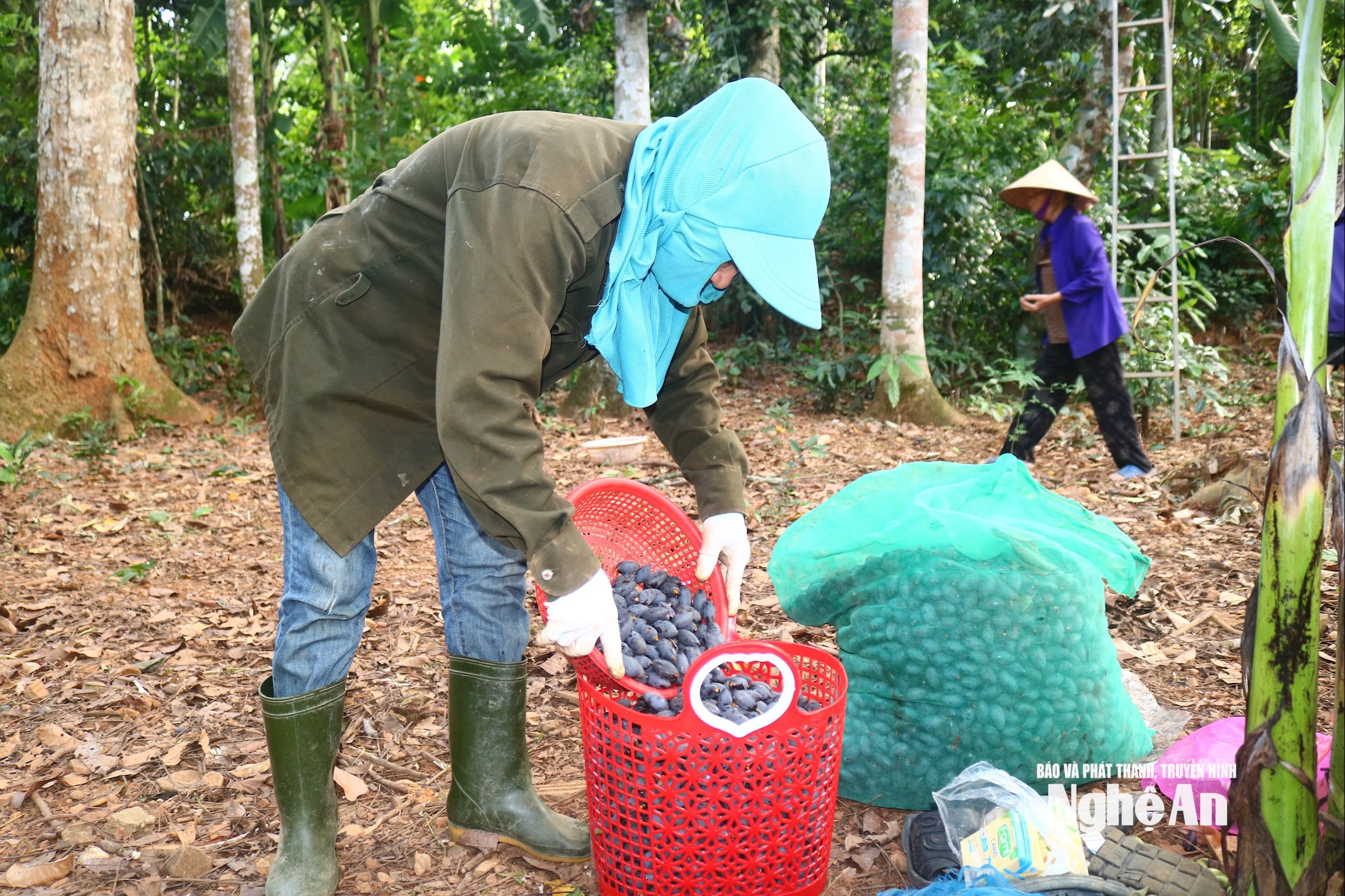
These days, visiting the mountainous communes in the province, you can see that the people who work as canarium fruit pickers have entered the harvest season. They go in groups of 3-5 people, carrying ladders, specialized poles, basins, baskets, nets, tarpaulins, bags, etc.
The persimmon harvesting season has created jobs for many laborers. In communes such as Cat Ngan, Tam Dong, Yen Xuan, and Do Luong, hundreds of people are engaged in persimmon harvesting. Men and boys specialize in climbing the trees to pick the fruit, while women are responsible for picking the remaining fruit. Those who pick persimmons earn between 500,000 and 700,000 VND per day, while those who pick the fruit earn 300,000 VND per day.
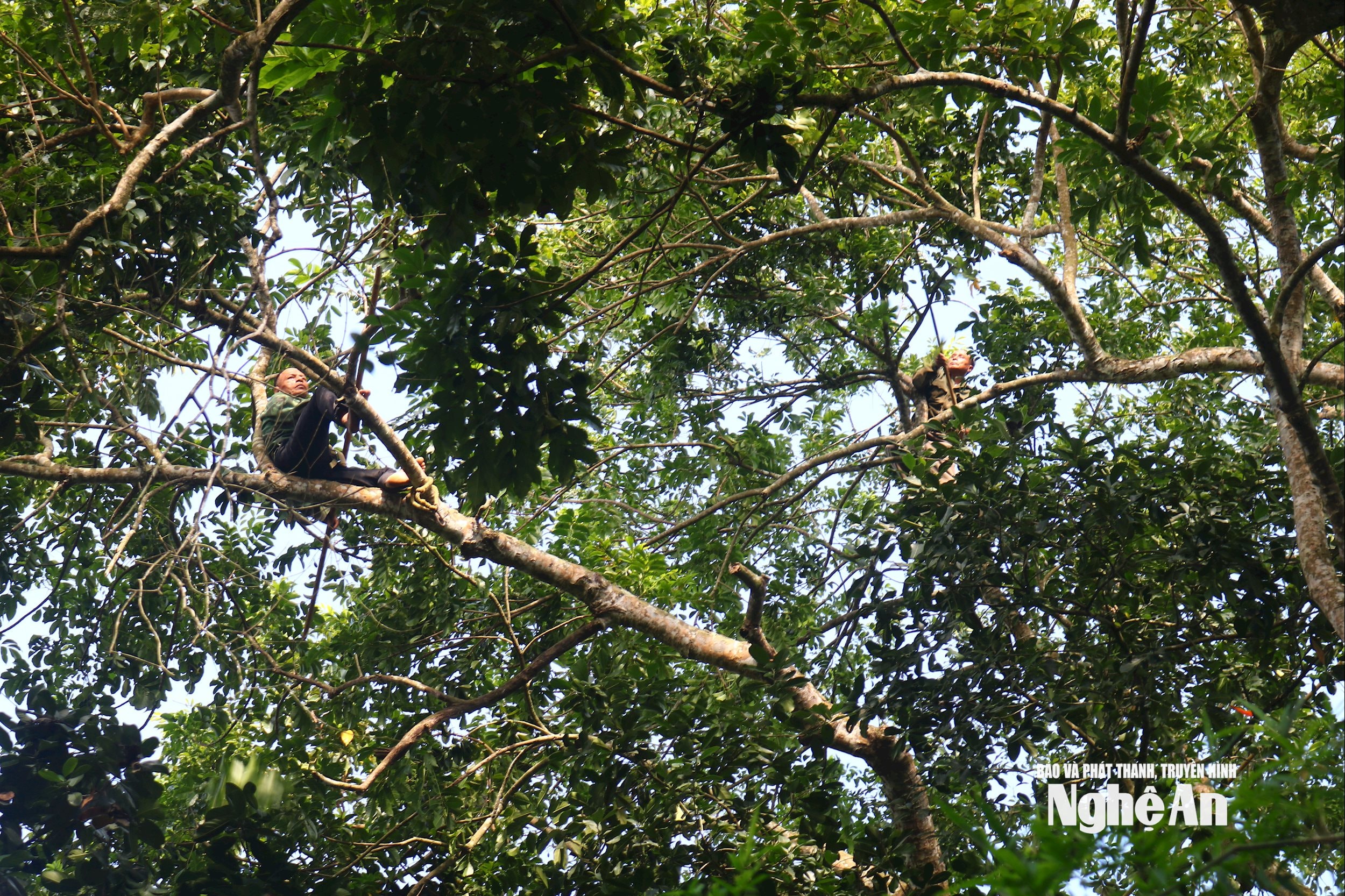
Experience shows that people who work climbing the persimmon trees must be brave and in good health. Persimmon trees are tall, have wide canopies, and their small fruits are very difficult to harvest. Persimmon pickers have to climb the trees and use poles to poke the fruit. Climbing the tree is difficult enough, but poking the fruit from the tree is even more challenging. Persimmon branches are brittle and easily broken, so careful climbers often wear safety ropes to prevent accidents.
When harvesting persimmons in steep, grassy, and bushy areas, persimmon pickers often set up nets or tarpaulins around the base of the trees. Thanks to these wide nets, harvesting persimmons near ponds and fences becomes simpler, less labor-intensive, and less prone to loss.
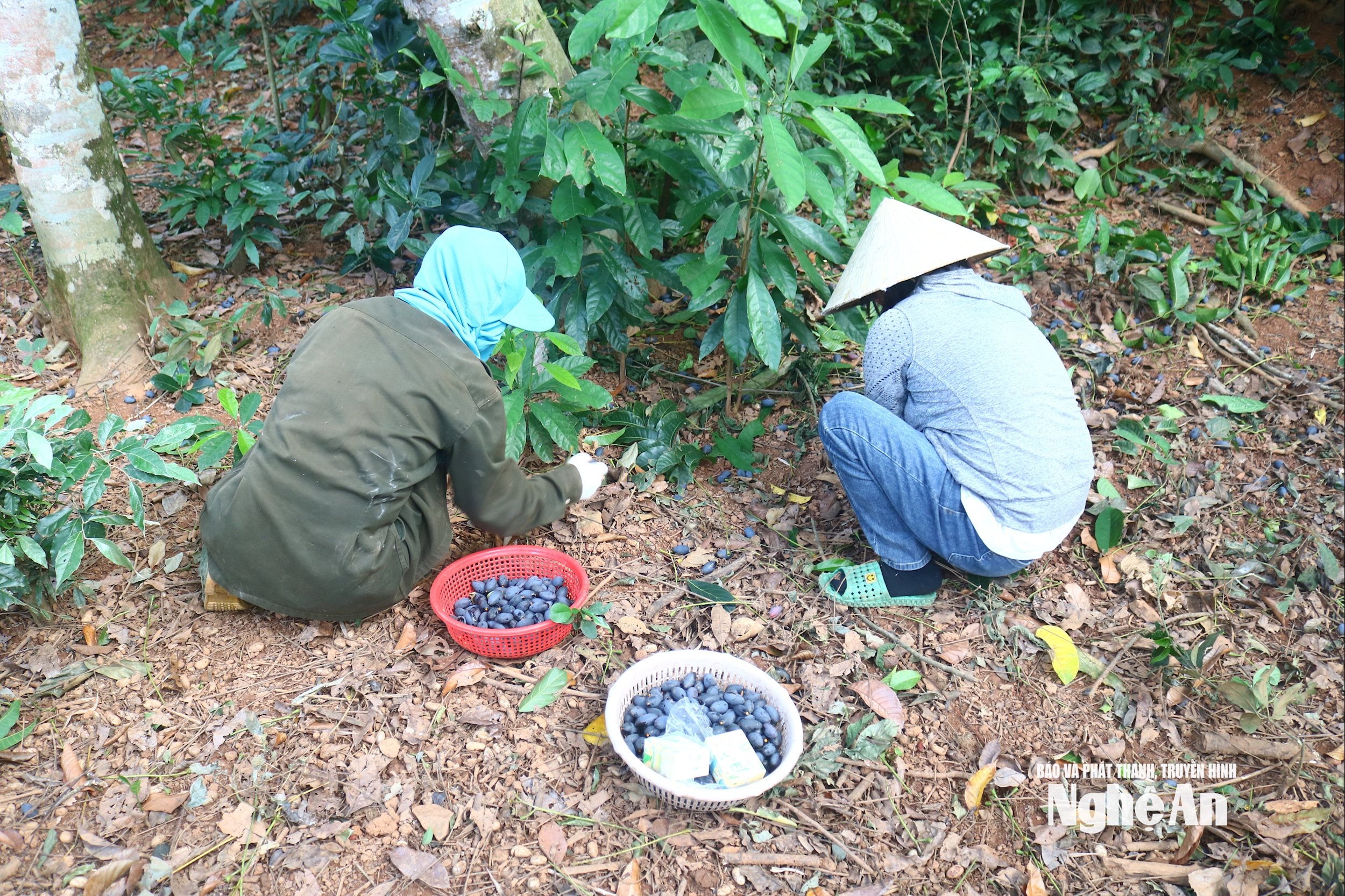
After being harvested, the canarium fruit is usually placed in breathable mesh bags for transportation. According to locals, on sunny days, people usually go to harvest canarium fruit early. The sooner they finish harvesting, the better, as it's healthier and ensures the fruit doesn't ripen too quickly in the sun. Because there are few canarium fruits at the beginning of the season, the harvesting groups sell everything they pick. Sometimes traders even come to the orchards and wait for the fruit to be harvested before buying it.
Mr. Hoang Van Thuc, originally from Kim Bang commune, who is currently climbing the Terminalia catappa trees in Bich Hao commune, said: "For this Terminalia catappa season, my brother and I spent several hundred million dong buying young trees. We've only been harvesting for three days. My brother and I climb the trees to pick the fruit, while our wives are responsible for picking it."
Each morning of hard work yields 100-120 kg of canarium fruit. Usually, canarium fruit pickers only work for one morning, resting in the afternoon to regain their strength. Because the quantity of canarium fruit in demand is large, it takes the group several months to harvest it all. At the beginning of the season, they select trees with ripe, beautiful fruit to pick, and in the middle of the season, when the fruit ripens abundantly, they harvest it all at once.
According to those who work climbing the Terminalia catappa trees, every year, when the trees first bloom or bear young fruit, traders travel to various localities to find households with Terminalia catappa trees to place orders. Once they agree on a price with the owner, they leave a small "deposit" and pay the remaining amount when the fruit ripens before harvesting. In the past, Terminalia catappa was cheap and required little capital. Now, it's expensive, requires more capital, and they have to buy early to have fruit to climb.
Each persimmon season, a group of persimmon traders has to spend hundreds of millions of dong to buy persimmons. When the persimmons ripen, the persimmon climbing groups either harvest them themselves or hire people to pick them. Mr. Tran Van Mao (50 years old), a long-time persimmon climbing worker in Cat Ngan commune, shared: This year, his persimmon harvesting group spent nearly 300 million dong to buy about 80 persimmon trees in the communes of the former two districts of Thanh Chuong and Anh Son, harvesting them gradually over several months.
There are some ancient, fruit-laden Terminalia trees that he bought for 15 million dong, yielding about 3-4 quintals of fruit. A prime example is the "giant" Terminalia tree belonging to Mr. Dao and Mrs. Chuyen's family in Yen Xuan commune (formerly Linh Son commune, Anh Son district).
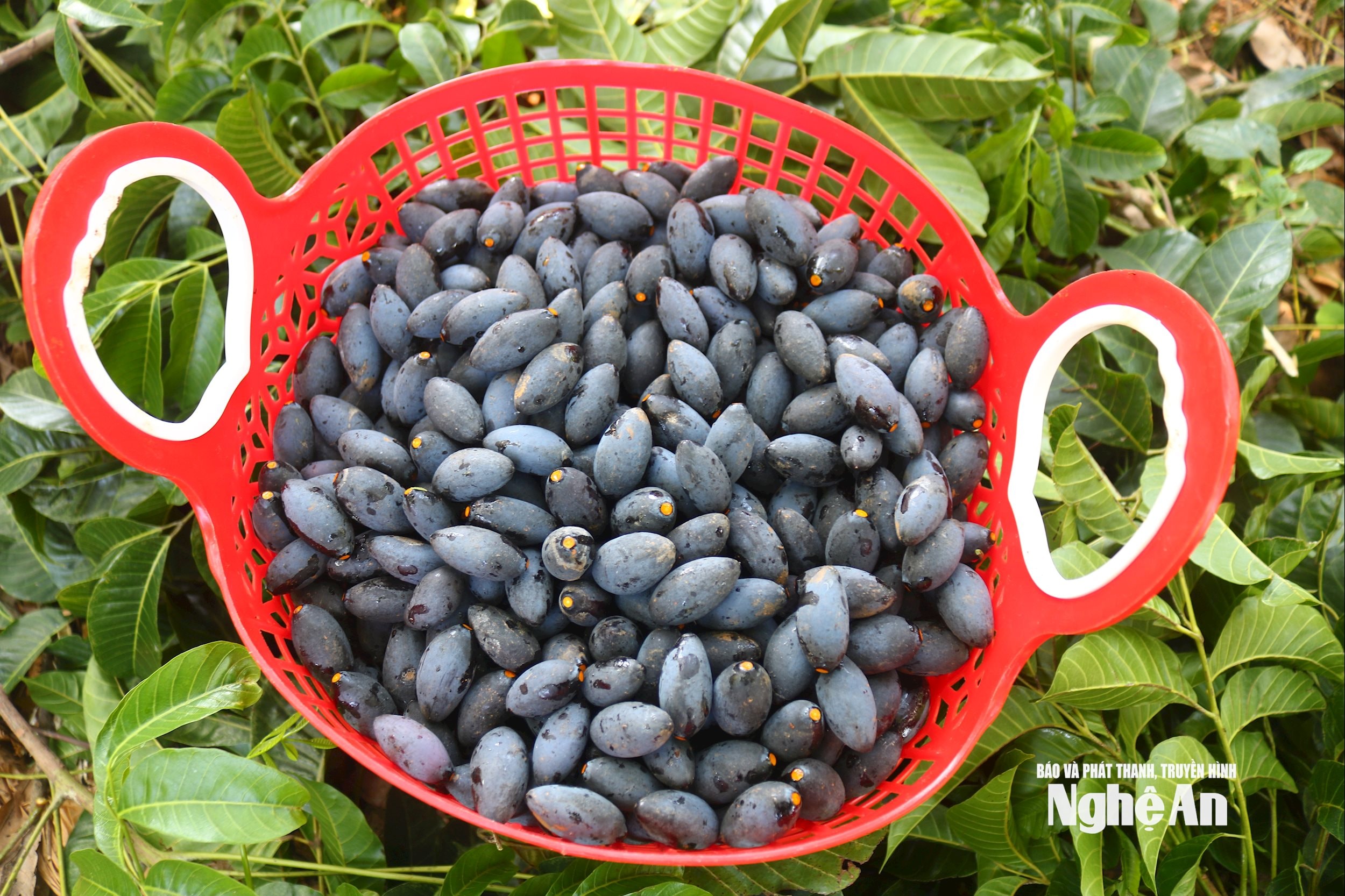
Mr. Mão believes that: The persimmon harvest is good, productivity has increased, and while the purchase price of unripe persimmons is not much different from last year, ripe persimmons sell at a good wholesale price, so those who "trade in whole persimmon trees" are making a profit.
High-quality black olives are fragrant, rich, and have a distinctive flavor. They can be used to prepare many delicious dishes and are enjoyed by many people.
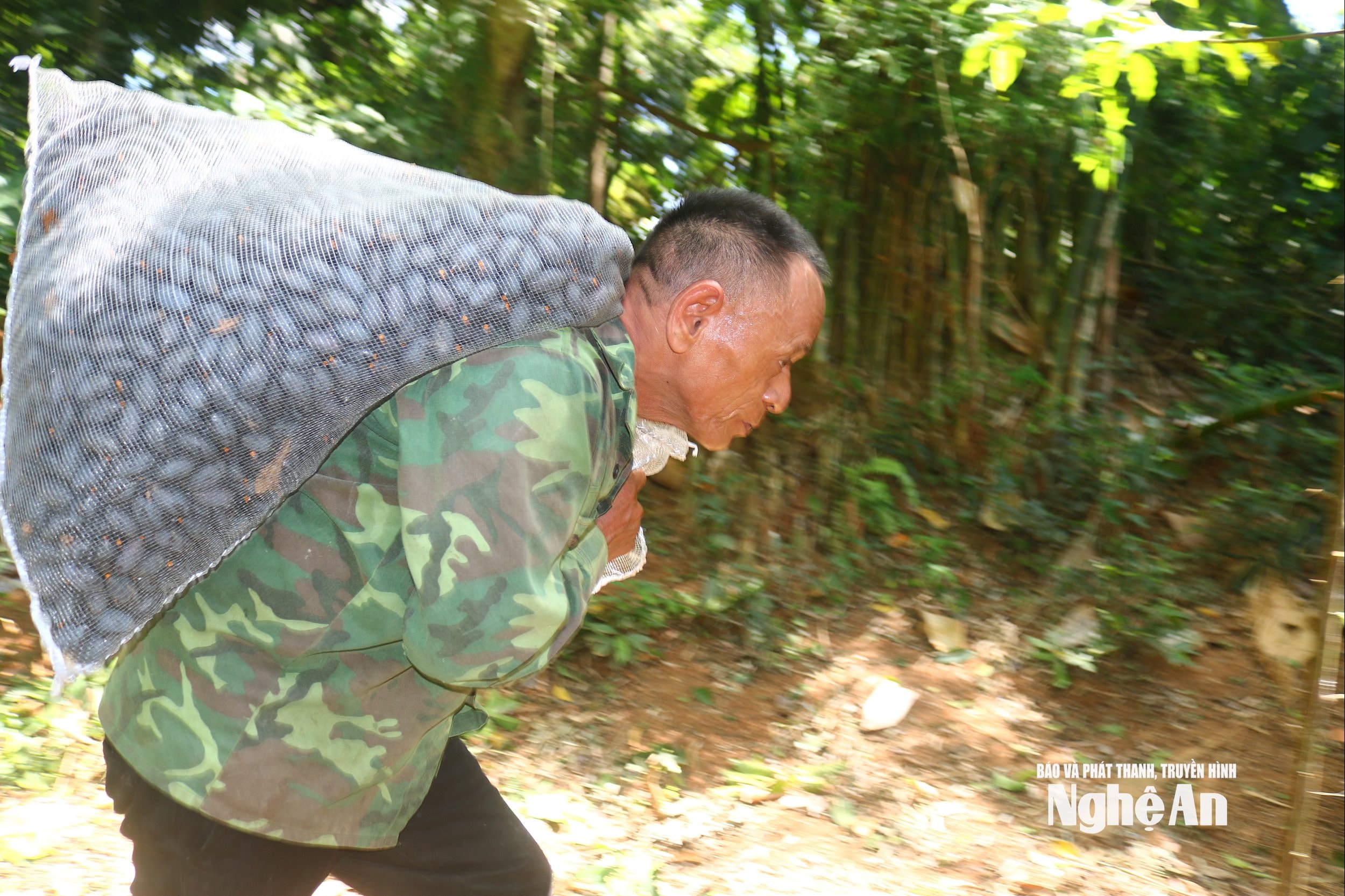
Nghe An's black olive specialty not only serves local needs but is also transported to provinces and cities throughout Vietnam for consumption. Online sales channels are used quite effectively by olive traders.
Retail prices for canarium fruit in rural markets range from 100,000 to 135,000 VND/kg, depending on the type of fruit. The bumper crop and high prices are bringing joy to canarium growers, climbers, and traders in the province.


