
The 8.5-ton space station is about to crash into Earth.
The Tiangong 1 space station is flying out of control in orbit and is likely to fall to Earth in January 2018.
China's Tiangong 1 space station ceased operations on March 16, 2016, and is about to fall through Earth's atmosphere, Space.com reported on August 5.
The Tiangong 1 space station, launched into orbit in 2011, has hosted two Chinese astronauts and an unmanned spacecraft. Throughout its operational life, China has periodically activated its thrusters to help the station maintain its orbital altitude.
However, after Tiangong-1 went out of control last March, atmospheric drag caused the station's orbit to descend by about 160 meters per day. Tiangong-1 has dropped from an altitude of about 400 km to 350 km.
"It is highly likely that this space station will eventually get out of control. We suspect that Chinese authorities have lost control of the Tiangong 1 space station and will not be able to regain control before it re-enters the atmosphere," said the US-based Aerospace Corporation.
At its current rate of descent, the Tiangong 1 space station will inevitably fall to Earth. Experts predict the fall will occur between October 2017 and April 2018, according to the United Nations Office for Outer Space Operations (UNOOSA). The most likely scenario is that the station will fall in January of next year.
The Tiangong 1 space station will fall between 43 degrees north and 43 degrees south latitude, somewhere between northern Italy and southern New Zealand. Debris is expected to burn up as it passes through the atmosphere, and the likelihood of anyone being hit by falling debris is very low.
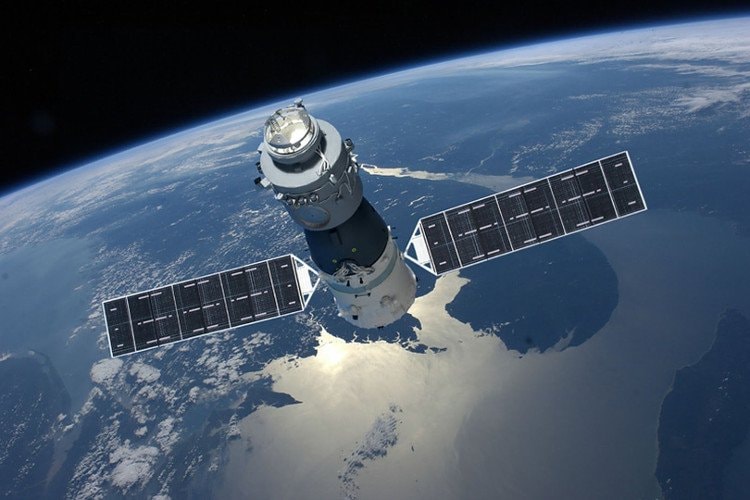 |
| The Tiangong 1 space station is gradually descending in orbit. Photo: Wikipedia |
However, any debris that falls to the ground may contain a highly toxic corrosive substance called hydrazine, and people are advised not to touch it.
The largest man-made object ever to re-enter the atmosphere was the Mir space station in 2001. The station weighed 120 tons, and some debris from it was visible from the ground.
The Tiangong 1 space station was relatively small compared to the Mir station, weighing only 8.5 tons. However, depending on the time of fall, some burning debris could be clearly seen for several minutes as it flew across the sky.
According to Khoahoc.tv
| RELATED NEWS |
|---|


