
How much food is enough for children?
To ensure children have enough energy each day, parents need to pay attention to their calorie intake according to their age.
Thinking that children should eat until they are full at regular meals, and consume lots of protein and carbohydrates, is not appropriate. Depending on age, parents need to calculate the necessary daily calorie intake using the formula: 1,000 calories + 100 x age. School-aged children have calorie needs ranging from 1,300 calories to 2,100 calories.
In addition to the three main meals (breakfast, lunch, and dinner), mothers should give their children one or two extra snacks depending on their age and physical activity level. Children just starting school need at least two snacks per day. Older children can have one or two snacks depending on their physical condition. This is the result of research by Jo Ellen Shield and Mary Mullen published on the website of the Academy of Nutrition and Dietetics.
 |
Children need to eat 3 main meals and 1-2 snacks to ensure they get enough nutrients and energy each day. |
Explaining the role of supplementary meals, the Hong Kong Institute of Nutrition stated: "Due to the small size of children's stomachs and their active lifestyles, the energy from three main meals is insufficient to meet their daily needs. Children need nutritious supplementary meals to keep their bodies functioning properly."
Contrary to the belief of some parents that snacks are unimportant and cause children to eat less at main meals afterward, or that snacks lead to overweight or obesity, in reality, snacks at the right time and in the right amount provide the necessary energy, contributing to healthy development.
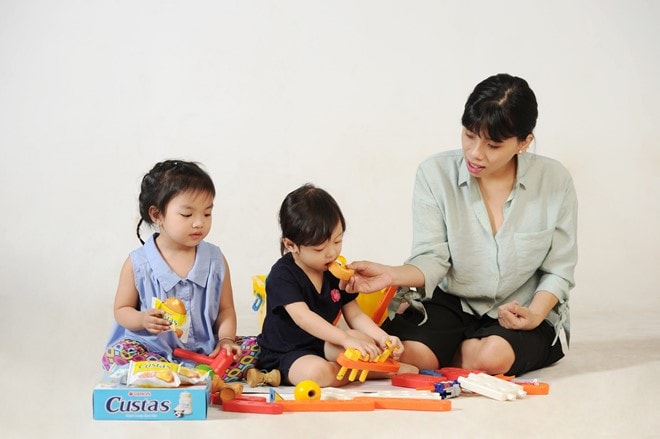 |
Snacks help replenish energy for children. |
A study by Alice Park published in Time magazine indicated that snacks provide 42% of a child's daily calorie intake. However, the author also pointed out that children's snacks today are often too high in sugar and saturated fat, while lacking essential nutrients such as fiber, vitamin D, and zinc.
 |
Snacks provide children with the necessary energy. |
Besides the nutritional content of each meal, the key to organizing reasonable and scientific mealtimes is establishing a habit of eating at regular times. Snacks should be given 2-3 hours after main meals to help children eat well, avoid boredom with food, or skip the next main meal. Snacks should not be given immediately before main meals.
During holidays and festivals, families often travel, leading some parents to neglect their children's eating habits, resulting in undisciplined eating patterns. To avoid this, parents should ensure their children eat three main meals and prepare a light, convenient, nutritious, and appealing snack. A good suggestion is to prepare one or two Custas cookies for your child each day.
According to Zing
| RELATED NEWS |
|---|


