
Introducing a new Japonica rice variety from ThaiBinh Seed: TBR16
Japonica TBR16 is considered a promising "newcomer" in the ecosystem of high-quality varieties owned by ThaiBinh Seed, especially suitable for production areas with harsh conditions such as the northern mountainous region.
Good quality rice, resistant to lodging.
Japonica rice is a variety of rice from Japan characterized by its white color, fragrant aroma, and short grains. Cooked Japonica rice is sticky, soft, and contains many minerals that are good for health.
In response to the growing demand for high-quality Japonica rice, both in the domestic and export markets require rice with a soft, fragrant texture and high food safety standards. ThaiBinh Seed Corporation – a leading enterprise in the field of plant breeding in Vietnam – has continuously researched, developed, and officially launched a new Japonica rice variety called TBR16.
TBR16 is a temperature-sensitive Japonica variety developed by ThaiBinh Seed after many cycles of testing. The variety has a medium growth period, suitable for planting in both the winter-spring and summer-autumn seasons. The plants grow to a height of 100–105 cm, possessing robust morphology, a sturdy stem, and upright flag leaves, which helps prevent lodging at the end of the season – a common problem with many other Japonica varieties, especially in areas with strong winds, late rains, or steep terrain such as the midland and mountainous regions of Northern Vietnam.
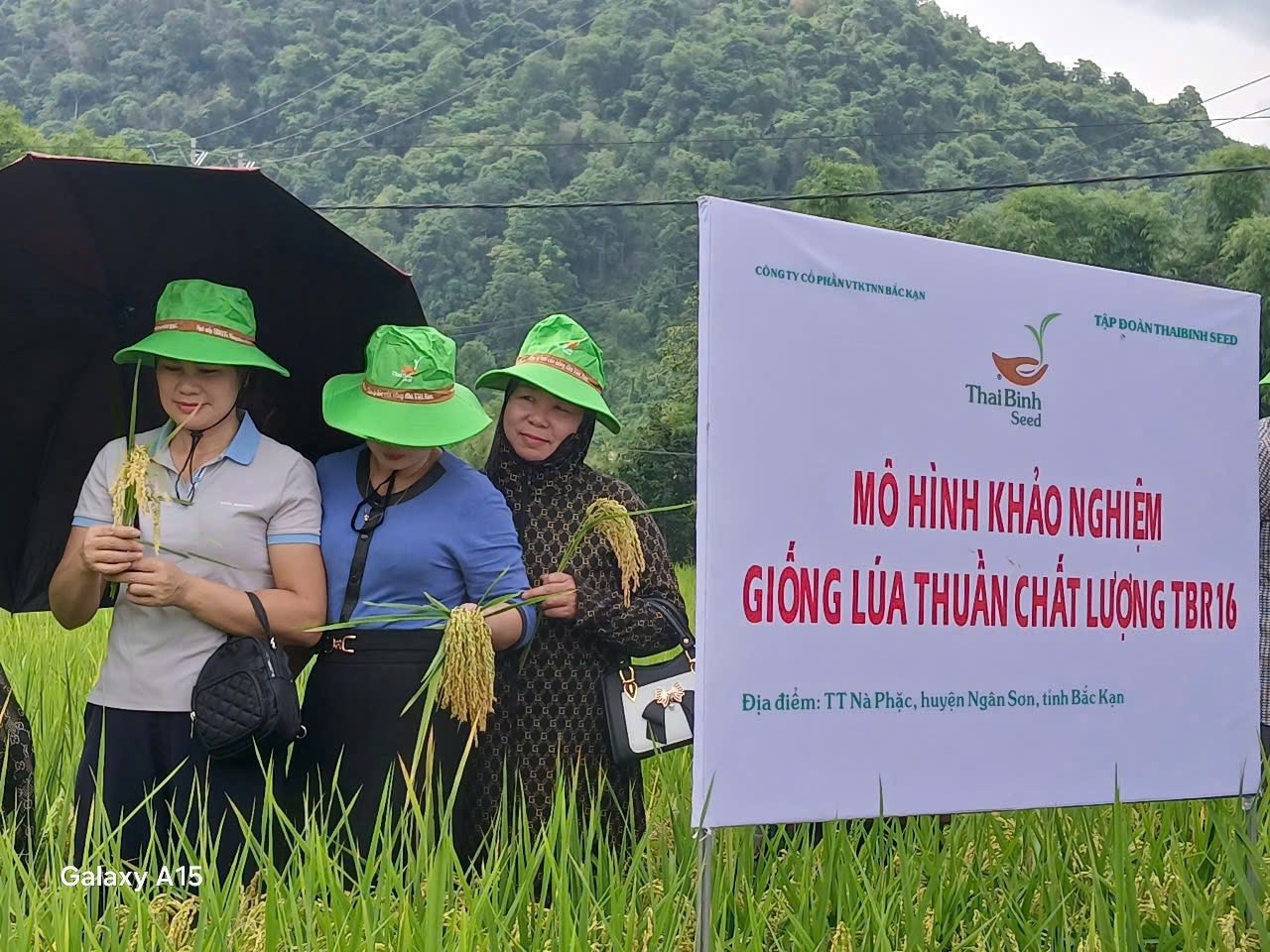
In particular, TBR16 exhibits vigorous growth, strong tillering, and wide adaptability to various soil types such as neutral alluvial soil, degraded soil, and slightly acidic soil. Under normal cultivation conditions, the variety achieves stable yields of 55–65 quintals/ha. If intensive cultivation is applied according to the technical procedures recommended by ThaiBinh Seed, yields can reach 70–85 quintals/ha, a very promising level for Japonica varieties – which were previously mainly cultivated on a limited scale due to their demanding growth requirements.
TBR16's resilience is also a standout feature. The variety shows good cold tolerance and is less susceptible to common Japonica rice diseases such as rice leaf roller and blast.
A representative from ThaiBinh Seed Group stated: In the field trial in Na Phac town, Bac Kan province (now Na Phac commune, Thai Nguyen province), TBR16 was planted in the 2024-2025 Winter-Spring crop. Despite a prolonged drought at the beginning of the season combined with severe cold weather in mid-February – the time when the rice plants take root and turn green – the variety still developed well, the number of effective tillers met requirements, the leaves were strong and upright, and the flowering was even. The final yield reached 70-75 quintals/hectare, significantly better than many other Japonica varieties previously tested in the northern mountainous region.
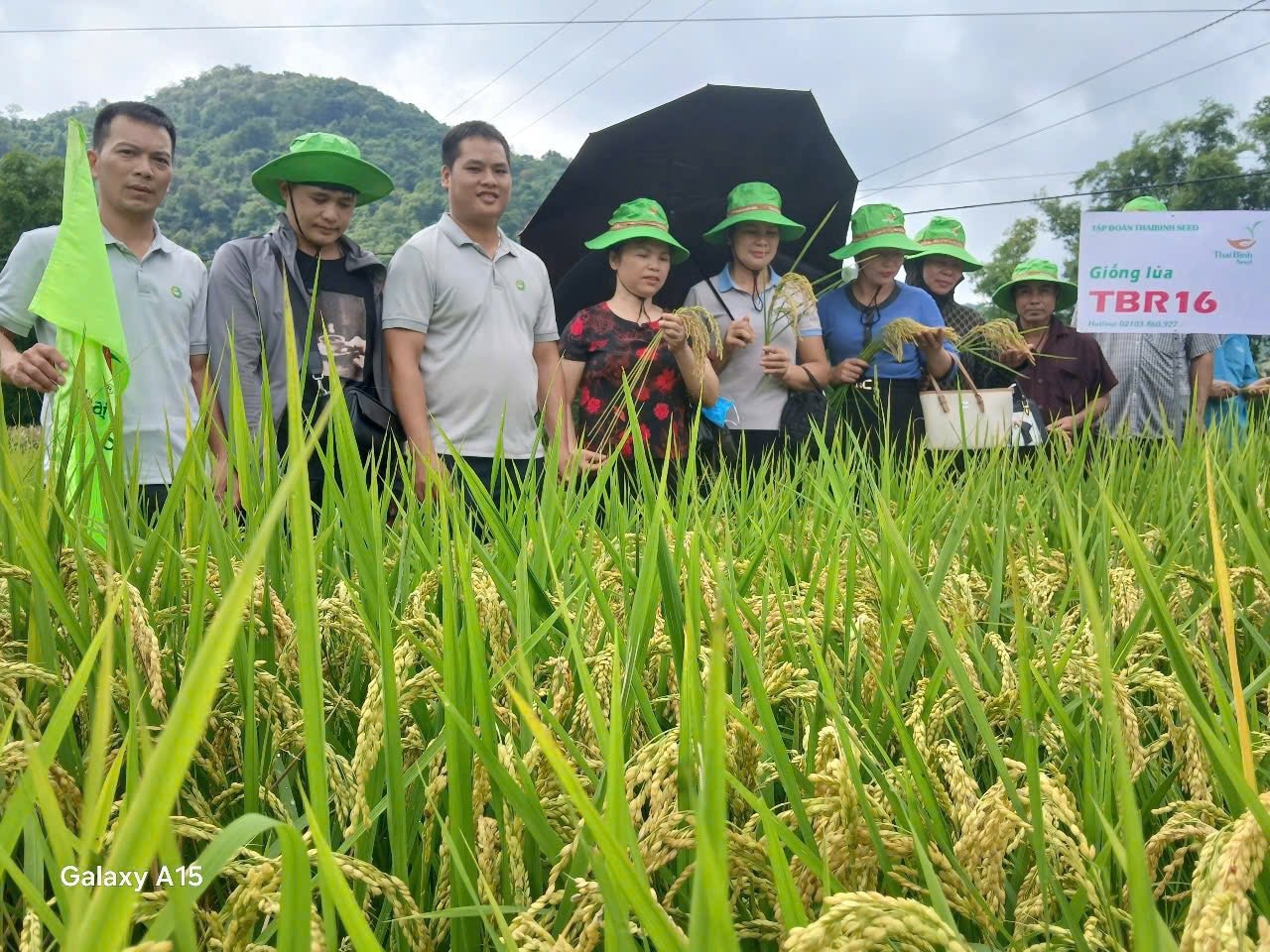
In terms of rice quality, TBR16 has semi-slender grains with a bright white husk and no chalky kernels. When cooked, the rice has a moderate softness, a light, fragrant stickiness, and a rich, sweet aftertaste – highly favored by high-end consumers. In particular, it has a high milling rate, with 78-85% milled rice and a high percentage of whole grains, making it very suitable for export orders requiring high standards of appearance and whole grain percentage. Preliminary assessments suggest that TBR16 qualifies to participate in the supply chain of clean rice, organic rice, and products serving the Japanese, Korean, and European markets – regions with high demand for Japonica rice.
A notable highlight is that the entire process of producing seeds and commercial rice at ThaiBinh Seed adheres to strict safety standards, with a commitment to "5 no's": no pesticide residues, no preservatives, no anti-mold/anti-insect agents, no bleaching, and no mixing with low-quality rice. This clearly demonstrates a sustainable development orientation towards clean agriculture, ensuring consumer health and meeting the requirements of new generation free trade agreements such as EVFTA and CPTPP.
With its high yield potential, superior quality, and good resistance, TBR16 not only helps farmers increase their income but also opens up opportunities for large-scale, high-quality rice production.
According to a report from ThaiBinh Seed, many of the company's previous demonstration plots, such as TBR225 and TBR279, have recorded average profits of over 100 million VND/ha/year when applying proper cultivation practices and guaranteed output. TBR16, with its outstanding advantages, is expected to follow suit and expand Japonica production in midland and mountainous regions.
Besides its economic value, TBR16 also helps minimize production risks for farmers thanks to its good adaptability to climate change, especially its cold tolerance. With the increasingly unpredictable extreme weather patterns in recent years, introducing highly resistant rice varieties like TBR16 into production is a smart and sustainable choice.
Promising rice varieties
Based on the production model in Thai Nguyen, TBR16 is a promising rice variety. However, to maximize its potential, farmers need to adhere to the technical procedures guided by ThaiBinh Seed and should conduct trials on a household or group scale before expanding to a large scale. Furthermore, localities, cooperatives, and businesses need to coordinate and organize more demonstration models in disadvantaged areas such as the Northwest, Northeast, and mountainous regions of Thanh Hoa and Nghe An, to verify its adaptability and promote the development of a stable supply chain and market.
TBR16 is not simply a new rice variety. It is the result of a series of systematic research, linked to ThaiBinh Seed's strategy of developing high-quality, sustainable rice varieties. The appearance of TBR16 will be a catalyst for transforming farmers' farming mindset from small-scale to specialized commercial production, increasing added value and building the brand of Vietnamese rice in the international market.
ThaiBinh Seed was established in January 1972. After more than half a century of development, the company now holds a leading position in the field of plant breeding in Vietnam. The company currently owns over 20 copyrighted plant varieties, annually cultivating them on approximately 62,000 hectares, supplying about 15-20% of the national rice seed demand. With strong research and development (R&D) capabilities, ThaiBinh Seed has built a 152-hectare Plant Research Institute and operates two seed processing plants with a total capacity of 40,000-50,000 tons per year. The company's current value chain model, from research to commercialization, is considered one of the exemplary closed-loop supply chains, demonstrating the pioneering role of Vietnamese enterprises in high-quality agriculture.
To date, ThaiBinh Seed has 28 plant varieties recognized as national varieties by the Ministry of Agriculture and Rural Development, including notable varieties such as TBR97, TBR225, BC15, TBR89, etc. Many varieties have won national and international scientific awards and have been included in large-scale commercial production programs in various regions. In line with the trend of developing rice varieties for export, while ensuring good adaptation to changing climate conditions, ThaiBinh Seed has focused on researching Japonica rice – a type of rice increasingly favored by the high-end market.


