
Returning to the villages where people crossed the border to sell fetuses.
(Baonghean.vn) - Exactly six months after Baonghean.vn discovered and widely reported on this issue, the investigating agency has prosecuted many individuals who lured women to China to sell their unborn babies. Meanwhile, to prevent this situation from continuing, the police have had to include pregnant women in the locality in their "management list."
Pregnancy management
Six months after conducting a series of investigative reports on the situation of women in this mountainous district crossing the border into China to give birth and then sell their babies, we returned to Huu Kiem commune (Ky Son district). This is considered one of the "hot spots," with more than 20 women identified as having crossed into China to sell their fetuses in a short period, especially in Dinh Son 1 and Dinh Son 2 villages. These villages are mainly inhabited by the Khmu ethnic group.
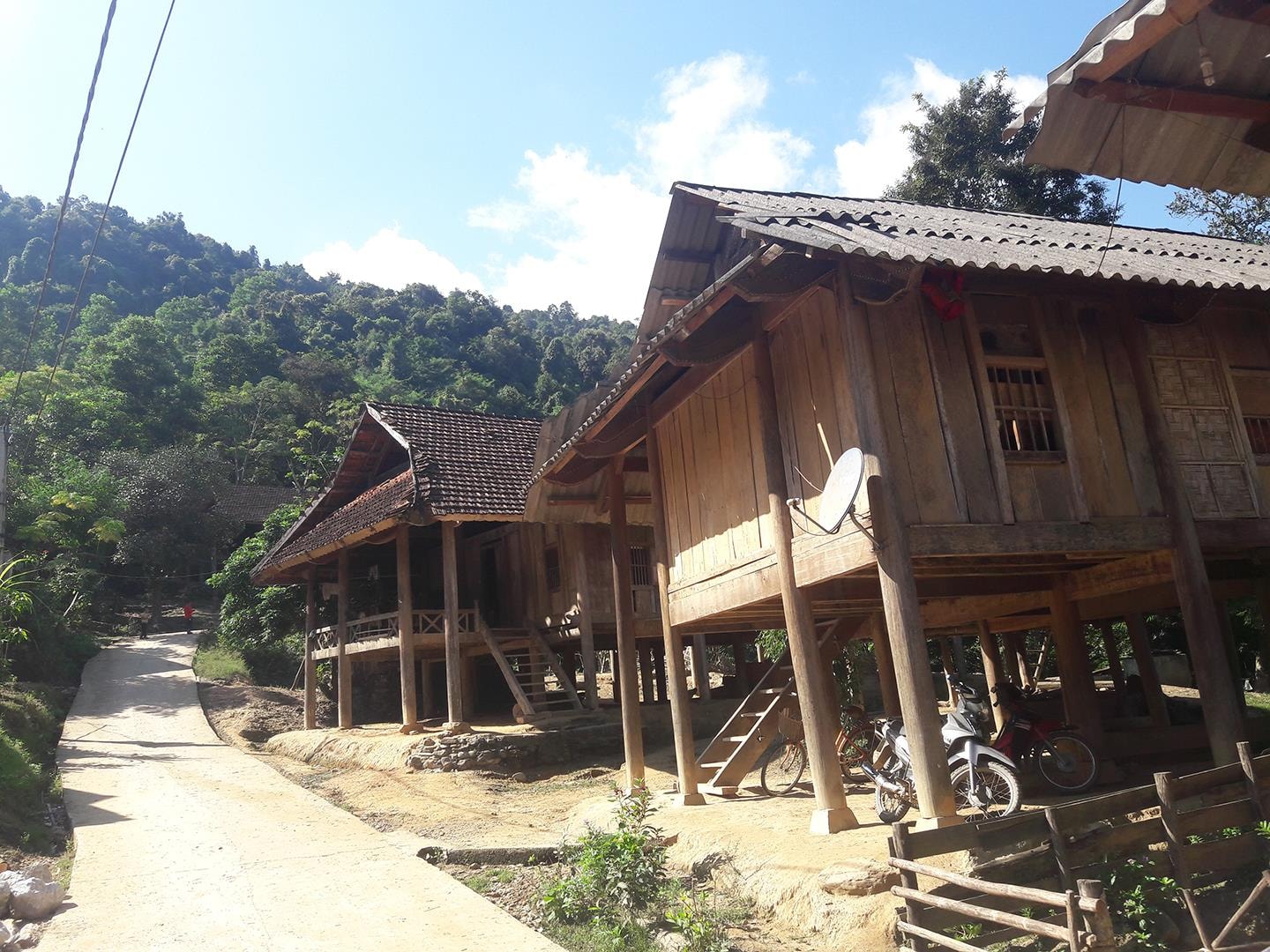 |
| Dinh Son 1 village is home to the Khmu ethnic minority. |
In early June, the winding concrete road leading to Dinh Son 1 village was deserted. During this season, the villagers usually go to their fields quite far from the village. After waiting for many hours, we finally met Ms. Lu Thi H. (37 years old). She is one of the women who went to China to sell fetuses and returned, as reported by Nghe An Newspaper in a previous series of articles.
"I wouldn't dare go again. I wouldn't sell my child even for billions of dong; I love her so much," Ms. H. said.
The woman recounted that after the Nghe An Newspaper published the story, local authorities and the police frequently visited her. They came both to take her statement and to persuade and educate her. Through these meetings, she gradually realized the mistake she and her husband had made... "We were wrong. It was only poverty that drove us. But now, even if we starve to death, we will never sell our child again," H. said.
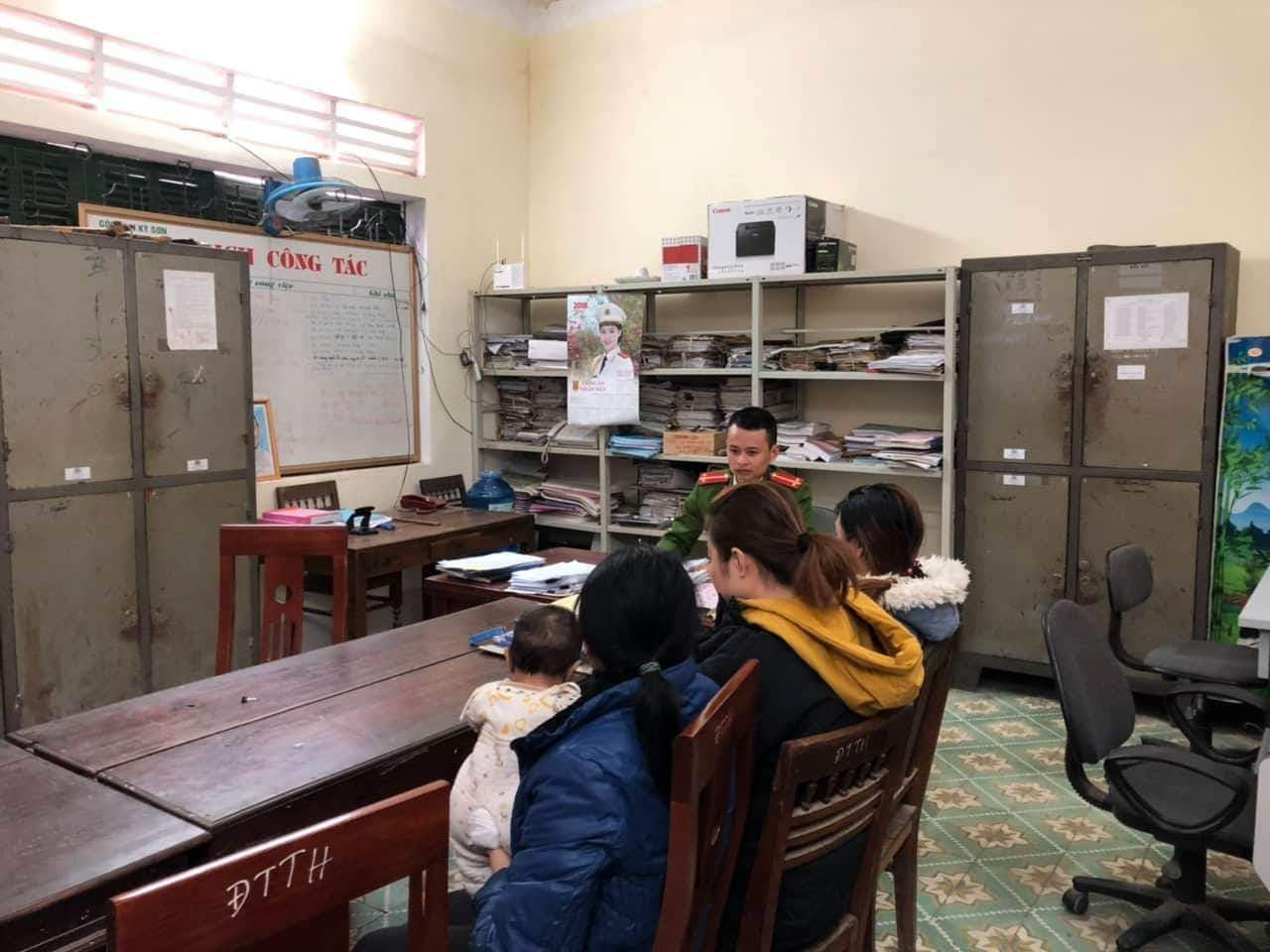 |
| Police are working with women who have recently returned after going to China to sell their babies. |
For several months now, the police in the communes of Ky Son have been maintaining a rather unusual list. Those on this list are not drug addicts, nor are they troublemakers. They are simply pregnant women in the area.
This is one of the measures that the Ky Son District Police have implemented since the beginning of this year to prevent the buying and selling of fetuses in the area.
According to Lieutenant Colonel Lo Van Thao, Deputy Head of the Ky Son District Police, after compiling the list, the commune police are responsible for dividing the individuals into groups and villages for management. “Each officer assigned to manage a particular woman must visit her at least twice a week. During these visits, they must wear police uniforms, go to her house, and ensure the pregnant woman is still there before leaving to report. Furthermore, if they hear even the slightest piece of information, they must immediately intervene to prevent her from going to China to sell her child,” Lieutenant Colonel Thao said, adding that this management only ends after the pregnant woman gives birth locally.
In this list, the police are also paying more attention to Khmu women who are pregnant with their third child or more. These are targets for those who specialize in luring women to China to sell their fetuses. "In some villages, if we don't closely monitor pregnant women with their third child or more, they will certainly end up selling their unborn babies," Lieutenant Colonel Thao stated.
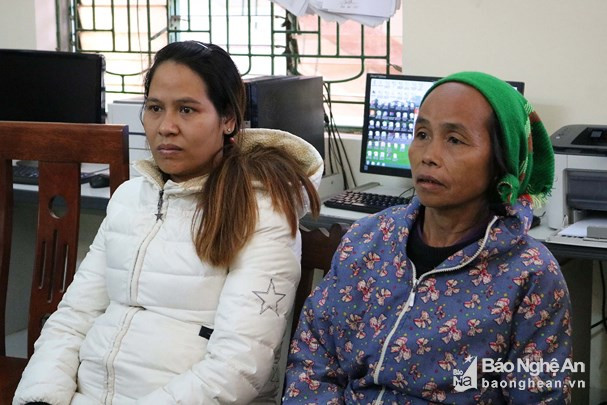 |
| Moong Thi Oanh and her mother are the individuals featured in a series of articles by Nghe An Newspaper about luring neighbors to China to sell their children. Oanh has now been charged by the investigating authorities. |
Many women prosecuted.
According to the Ky Son District Police, the buying and selling of fetuses is a very new tactic used by human traffickers, and the perpetrators operate very sophisticatedly. These criminals mainly go to areas with large Khmu ethnic minority populations, targeting pregnant women who are facing unplanned pregnancies, are economically disadvantaged, and have limited awareness. They often exploit the fear of being punished for having a third child, while simultaneously offering enticing promises such as, "If you take the child to China to give birth, you and your spouse will receive money and won't have to struggle to raise the child. The child will be well cared for..."
After agreeing, the two sides began negotiating the price. “All these activities were conducted secretly, with close connections to Vietnamese individuals in China. A discreet network was formed. Once an agreement was reached, the individuals involved usually didn't appear in person but primarily used telephones to communicate and provide directions,” Lieutenant Colonel Thao recounted.
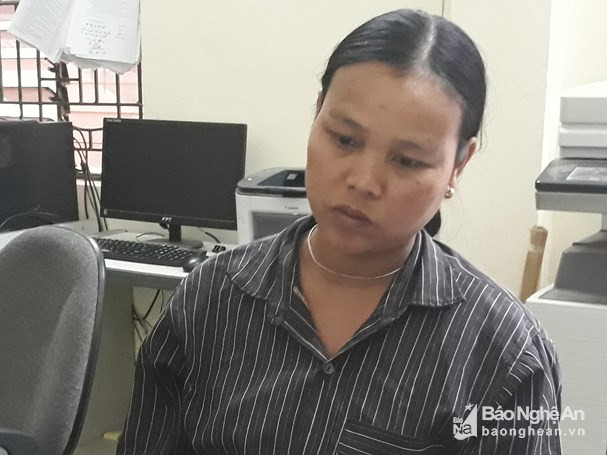 |
| Moong Thi Ly, one of the women from Ky Son who trafficked women to China to sell their babies, has also been prosecuted. |
Immediately after Nghe An Newspaper reported on the issue, the leaders of the Nghe An Provincial Police also sent a document to central ministries and agencies to request guidance due to some regulatory obstacles, but to date no guidance document has been issued to address this situation.
The 2017 amended Penal Code lists five offenses related to human trafficking but makes no mention of trafficking in fetuses. Meanwhile, for a crime to be constituted, there must be a victim. However, in these cases, there was no victim, so prosecution is impossible. The victims here are the children, the fetuses. But many legal experts argue that fetuses are not yet human beings...
However, to create a deterrent effect, since the beginning of the year, the Ky Son Police have prosecuted four women for organizing illegal emigration to other countries for the purpose of selling fetuses. Three of these four women are the same individuals previously mentioned in the Nghe An Newspaper. They were individuals who specialized in luring women in Ky Son district to China to sell their babies; however, due to the lack of clear legal provisions, the investigating agency could only prosecute them for this crime.
One of them is Moong Thi Oanh (32 years old, from Cha Lan village, Huu Lap commune). Many years ago, Oanh left her husband, went to China to work, and then married a local man. In early 2018, knowing that her neighbor Luong Thi Mui (48 years old, pregnant with her sixth child and in difficult circumstances) was in China, Oanh and her mother approached her and lured her to China to sell the fetus with the promise of 60 million dong.
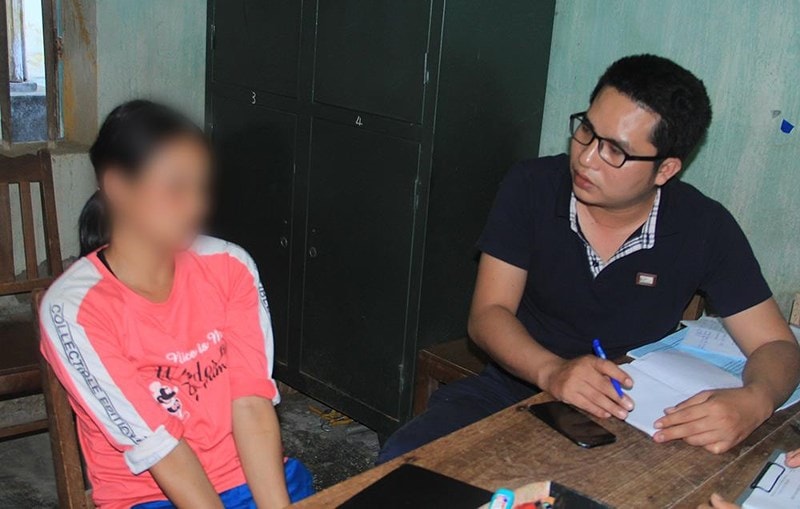 |
| One of the women who went to sell fetuses in China has returned. |
After crossing the border, Mùi was taken to the private home of Oanh and her husband. Held captive there for 35 days, Mùi gave birth to a healthy baby boy. Oanh then sold the baby. Twenty days after giving birth, Mùi was brought back to Vietnam by Oanh and her baby. However, contrary to the initial promise, upon arriving at Chà Lắn village, Mùi only received 4 million dong from Oanh for the child she had sold. The couple then reported the matter to the village management committee, seeking help from influential people in the village to pressure Oanh into paying the money.
In addition, there is another person we have mentioned, Lu Thi Khuon (from Dinh Son 1 village). Khuon is the person who specializes in taking women from this village to China to sell their fetuses. At the time of publishing the series of reports, fearing it would affect the investigation process, we did not reveal this woman's real name. However, before being prosecuted, Khuon managed to escape. The investigating agency has now issued an arrest warrant.
Simultaneously with prosecuting those involved in the trafficking of fetuses, Lieutenant Colonel Lo Van Thao stated that the Ky Son Police have also regularly organized awareness campaigns to prevent this. These campaigns have focused particularly on the nine communes inhabited by the Khmu ethnic group. The district police have prepared various forms and content for these campaigns, including oral presentations, materials broadcast via local loudspeakers, and the creation of banners, slogans, and posters.
In addition, the police also established task forces, each consisting of about 4 officers, mainly those with community outreach skills and fluent in the Khmu language, to coordinate with the authorities and go directly to households to disseminate information. After meetings with the residents, the task force would organize for couples to sign a commitment not to sell their children.
Profiting from the suffering of others.
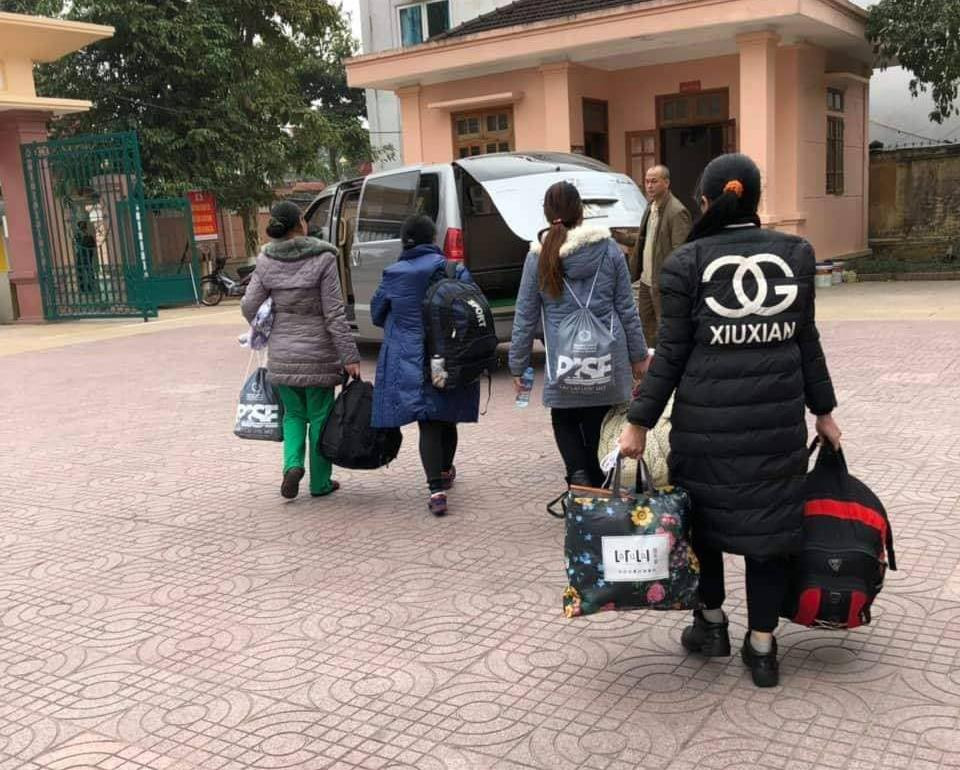 |
| Tien and the other victims of the accident were brought back to their hometowns by the authorities. |
Not only was Tien the one who directly sold her child, but before leaving, she also persuaded her neighbor, Moong Thi Lam, to join her, leading to Lam's death. At that time, Lam was eight months pregnant. "I regret it so much," Tien said, her face filled with fear as she recalled the fateful journey in a foreign land.
This traffic accident occurred in Yanggao Township, Linzhang County, Hebei Province (China), on September 20th. The Linzhang County police subsequently investigated and apprehended the driver responsible for the accident. The driver was ordered to pay for medical expenses and compensation for the injured. After being discharged from the hospital, Tien and three other women were detained there.
Meanwhile, back in Ky Son, upon hearing that his wife had been in trouble for months and couldn't return, Tien's husband, Oc Van Long, was filled with worry. However, having never left this remote mountain village since childhood, and speaking broken Vietnamese, he lacked the confidence to travel abroad to find his wife. At this point, Long sought out Moong Van Tinh, the Chairman of the Veterans Association of Chieu Luu commune, knowing that he frequently traveled to China.
Seeing this as an opportunity to make money, Tinh suggested, "If the family wants to bring Ms. Xeo Thi Tien back, give me 15 million dong." Mr. Long then had to borrow money from everywhere to raise that amount to give to Tinh. However, according to Ms. Tien, when Tinh met her at the hospital in China, he only threatened her and did not bring her back to Vietnam.
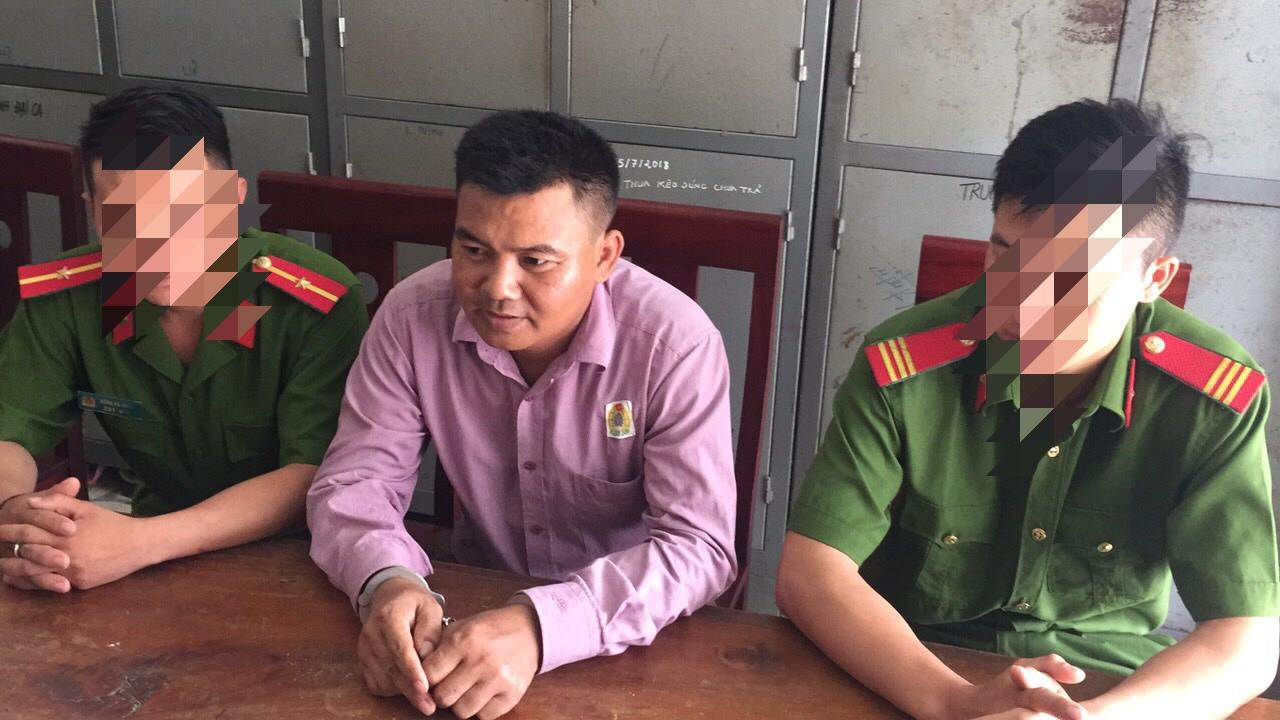 |
| Moong Van Tinh at the investigative agency. |
In January 2019, the Criminal Police Department (Ministry of Public Security), along with the Nghe An Provincial Police and the Blue Dragon Children's Protection Organization, brought Ms. Tien and three other women involved in the accident back to Ky Son district to hand them over to their families. Ms. Tien stated that Tinh had done nothing to help them return to Vietnam. After being brought home, Ms. Tien and her husband demanded the return of 15 million VND, but the Chairman of the Veterans Association of the commune refused to return it, claiming that their return was due to his efforts. After months of unsuccessful attempts to recover the money, a few days ago, Ms. Tien and her husband filed a complaint against Tinh with the police.
The suspects are part of a human trafficking ring.
Coincidentally, immediately after the complaint was filed, the Ky Son District Police Investigation Agency also promptly initiated legal proceedings and arrested Moong Van Tinh for investigation into the act of "Abusing trust to appropriate property," as stipulated in Article 140 of the 1999 Penal Code. However, this commune official was prosecuted in a separate case, and the complaint from Tien and her husband, along with other suspicions regarding this official, are still being investigated by the police.
Accordingly, on May 8th, the Ky Son Police received a complaint from Mr. Xeo Van Toan (44 years old), residing in Luu Tien village, Chieu Luu commune, Ky Son district, accusing Tinh of embezzling 48 million VND from him and his wife. According to the police investigation, around April 2016, Ms. Lu Thi Thuy (Mr. Toan's wife) was charged by the Tuong Duong District Police with "human trafficking" but was released on bail. On May 1st, 2016, Tinh called Ms. Thuy to his house to "discuss." There, Ms. Thuy gave Tinh 500,000 VND to buy beer. After drinking beer, Ms. Thuy asked Tinh to help reduce her sentence, and Tinh demanded 30 million VND to handle the matter. Ms. Thuy agreed and gave Tinh 30 million VND.
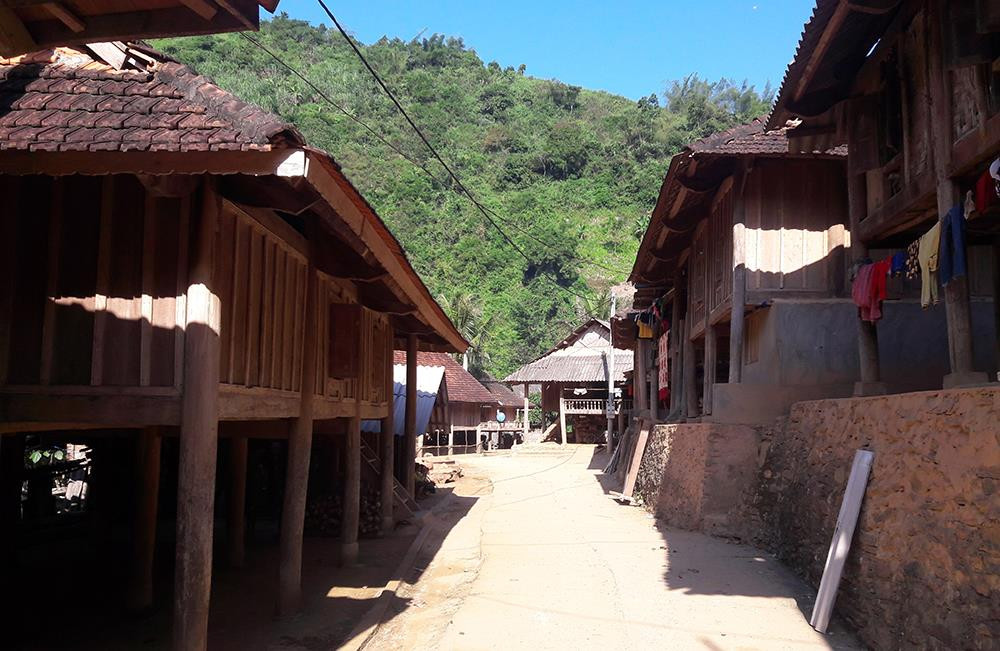 |
| Dinh Son 1 village, where women view selling their children as a means of livelihood. |
A few days later, Tinh called Thuy again, asking her to prepare another 18 million dong, of which 10 million dong was for Thuy's affairs, and the remaining 8 million dong he claimed was a personal loan. Trusting the well-connected local official, Thuy immediately agreed. However, contrary to her expectations, on September 22, 2016, the Nghe An Provincial People's Court sentenced Thuy to 4 years in prison, but she was not required to serve the sentence because she was raising a young child under 36 months old. After returning to her hometown, Thuy went to Tinh's house to ask why he hadn't taken care of her after receiving the money, but he repeatedly showed a defiant and threatening attitude.
Lieutenant Colonel Lo Van Thao stated that after his arrest, Moong Van Tinh consistently displayed an uncooperative attitude. However, with the evidence gathered by the police, he eventually confessed. Regarding the accusation by Ms. Xeo Thi Tien and her husband that Tinh embezzled 15 million VND, the police have initially confirmed this. Furthermore, Tinh is also accused of receiving compensation from the perpetrator of a traffic accident in China but failing to give it to the victims. "We are still awaiting translations of the documents and files sent from China, and are also taking statements from many other witnesses to further clarify all these accusations," Lieutenant Colonel Thao said.
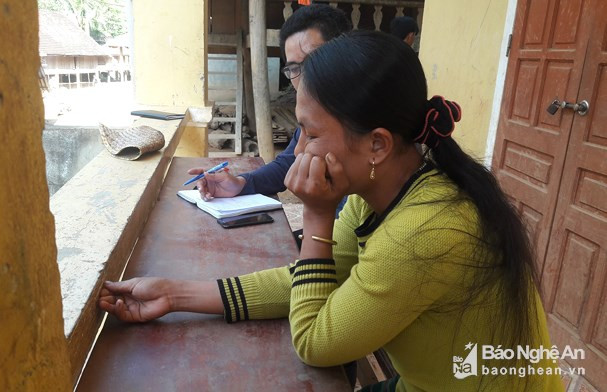 |
| To date, the law has not been amended to address crimes related to the buying and selling of fetuses. |
Mr. Luong Thinh Vuong, Chairman of the People's Committee of Chieu Luu commune, said that Tinh (45 years old), after returning from military service, became the commune's militia commander. He later became the chairman of the commune's veterans' association, and was very active in his work. At the recently held congress, Tinh was re-elected to this position for a second term. "However, I have long suspected Tinh because of some very unusual signs. In the mountainous area, his wife only works in agriculture, but he has a fancy car," Mr. Vuong said.
According to the Chairman of the People's Committee of Chieu Luu commune, every day after work, Tinh would drive to the Khmu villages to "secretly" converse with the locals. On weekends, he was often in China. "I only supervise officials during working hours. As for Tinh, he would go to China every Friday evening and then return the following week. Once, when I asked him, he even said, 'If you want to go to China, I can take you, it's easy.' I suspected that Tinh might be involved in a human trafficking ring," Mr. Vuong said.
Chieu Luu is one of the communes in Nghe An province with the highest number of people illegally working in China, especially among the Khmu ethnic group. According to the commune's People's Committee Chairman, almost every day someone from the commune returns from or heads to China. Many women who work there often have children with Chinese men and bring them back to their families to care for.
The law has not yet been adjusted.
In a report submitted to the National Assembly on several issues related to the questions raised before the recent National Assembly session, Minister of Public Security To Lam stated that the police force has uncovered quite a number of cases of trafficking in children and fetuses to China.
For example, the Nghe An Provincial Police discovered 25 cases of ethnic minority women in Ky Son district who were pregnant and went to China to give birth before selling their babies.
Although many cases have been discovered, according to Minister To Lam's report, there are still many obstacles in handling them. Regarding cases of luring pregnant women to China to give birth and sell their babies, the nature of the act is "child trafficking," but because the victims (the babies) cannot be rescued and there is no documentation or evidence to confirm that the victims' mothers went to China (only the mothers' statements and the perpetrators' statements exist), investigation and prosecution face many difficulties.
Police in some localities have uncovered cases where perpetrators were transporting pregnant women to China to give birth and then sell the babies to Chinese buyers. However, at this stage, the mothers have not yet given birth, so prosecuting them under Articles 150 and 151 of the Penal Code for "human trafficking" or "trafficking of persons under 16 years of age" would be inappropriate, and there are currently no guidelines for prosecuting this act. Currently, there are no legal regulations governing the buying and selling of fetuses.
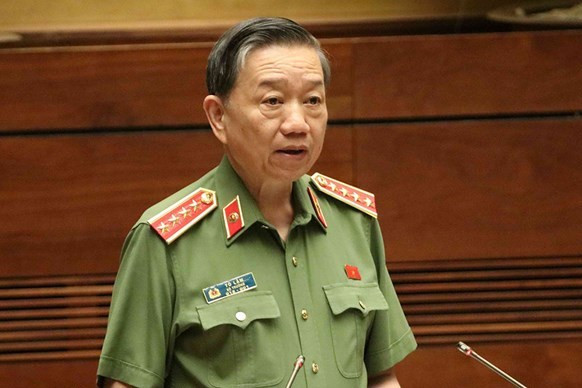 |
| According to a report by General To Lam, Minister of Public Security, there are still many obstacles in dealing with the trafficking of children and fetuses. (Photo: VnExpress) |
In 2018, the Government's Steering Committee 138 on crime prevention and control proposed reviewing, amending, supplementing, or issuing eight new documents, but only Resolution No. 02/NQ-HĐTP dated February 11, 2019, of the Council of Judges of the Supreme People's Court has been issued so far.
In some localities, the monitoring, detection, investigation, and handling of human trafficking, surrogacy arrangements, and the buying and selling of fetuses are still reactive, mainly detected through complaints from victims or their families. In some cases, the perpetrators are clearly identified and there is sufficient evidence to prove the act of human trafficking, and the victims have been identified, but the victims have not been rescued or have not presented themselves to the judicial authorities, leading to inconsistencies in how the prosecuting agencies in some localities handle the cases.
Furthermore, according to the Ministry of Public Security, international cooperation in preventing and combating human trafficking and transnational surrogacy faces many difficulties. The lack of consensus on criteria for defining human trafficking between Vietnam and some countries, especially China, has significantly impacted investigations and victim rescue; the slow response to requests for investigation from foreign countries also affects the progress and deadlines of human trafficking investigations.


