
The focus of Party building work, organizational work, and personnel work.
The focus of Party building, organization, and personnel work in the new period is to vigorously reform personnel work, improve the efficiency of the organizational structure, control power, and accelerate digital transformation... in order to meet the requirements of national development in the spirit of the Resolution of the 14th National Congress of the Party.
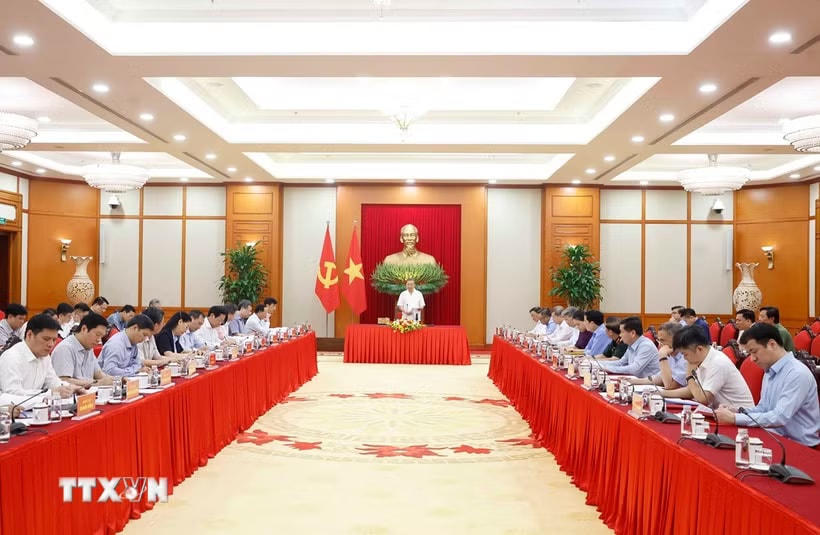
The Central Party Office has just issued a Notice summarizing the conclusions of General Secretary and President To Lam at the working session with the Central Organization Committee on the focus of Party building, organizational work, and personnel work in accordance with the spirit of the Party's 14th National Congress Resolution (Notice No. 90-TB/VPTW, dated June 10, 2026).
The content of Announcement No. 90-TB/VPTW is as follows:
On June 3, 2026, at the Party Central Headquarters, General Secretary and President To Lam worked with the Central Organization Department on the key tasks of Party building, organization, and personnel work in accordance with the spirit of the Party's 14th National Congress Resolution.
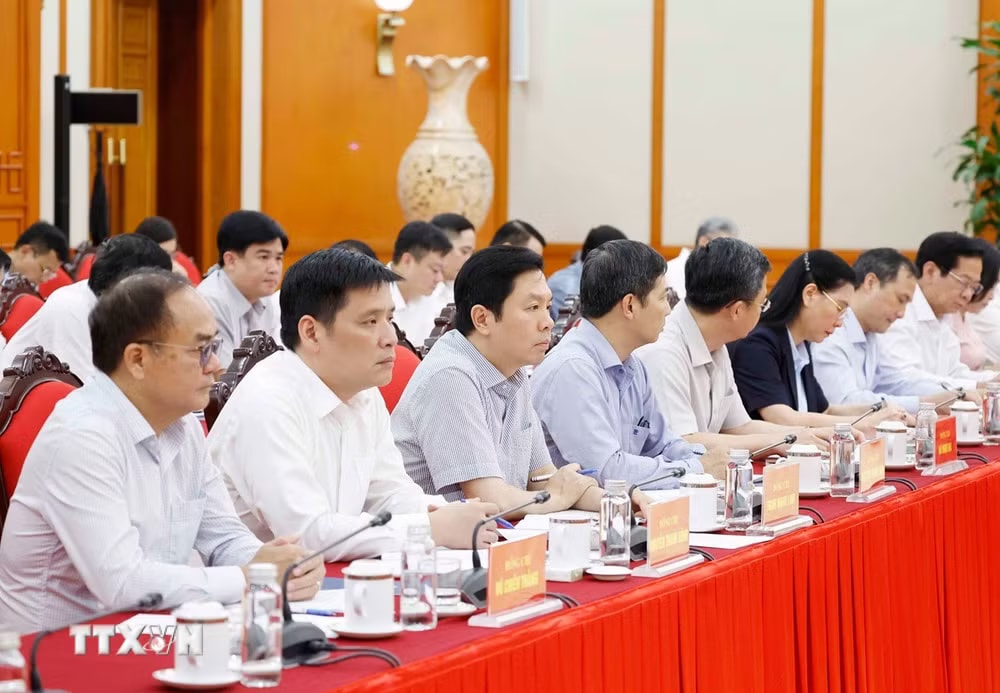
Attending the meeting were Comrade Tran Cam Tu - Member of the Political Bureau, Standing Secretary of the Central Committee; other members of the Political Bureau, members of the Central Committee, members of the Party Central Committee, leaders and heads of agencies and units.
After hearing the report from the Central Organizing Committee and the opinions of the delegates, the General Secretary and President concluded as follows:
1. We generally agree with the Report of the Central Organizing Committee. At the same time, we note some requirements for the Party's organizational and personnel work; specifically:
Firstly, there is a unified understanding that Party building, organizational work, and personnel management are core elements of national governance.
Party building, organizational work, and personnel management in the new era are of decisive importance to the Party's leadership and governance, and the capacity of the political system. They must not only meet the requirements of being clean and strong, but also emphasize the need for sufficient courage, intelligence, prestige, and competence to lead the country towards rapid and sustainable development. Cadres must be steadfast and insightful in their policies, strong in implementation, sharp in forecasting, pioneering in science and technology, proactive in development creation, close to the people, and serving the people; overcoming stagnation, conservatism, weakness, and bureaucracy; and preventing and combating ideological, political, moral, and lifestyle degradation. Party building must be closely linked to building a streamlined, clean, efficient, and effective political system; promoting democracy, controlling power, and improving the quality of service to the people.
Secondly, we must innovate the methods of leadership and governance, and enhance the Party's capacity for organization and implementation.
The Party's leadership ensures correctness, thoroughness, effectiveness, and efficiency through its guidelines, policies, strategic directions, propaganda and mobilization work, personnel organization, inspection, supervision, setting examples, persuasion, and practical results. Emphasis is placed on proactively advising, researching, forecasting, and addressing major, new, unexpected, and sudden issues early and from afar; shifting the leadership method from administrative command to constructive management and development; from process control to substantive evaluation of work results and effectiveness; ensuring clarity of personnel, tasks, authority, responsibility, resources, timeframes, and expected results in implementation; and enhancing implementation capacity and strengthening accountability linked to results.
Focus on thoroughly addressing weaknesses, bottlenecks, and obstacles in implementation. Resolutely overcome the situation of talking much but doing little, holding many meetings with low efficiency, and having numerous documents without clear tasks and solutions. All tasks must be concretized and quantified, linked to responsibilities, authority, resources, and necessary conditions; using products, quality, work efficiency, and the satisfaction of citizens and businesses as benchmarks for evaluation. Ensure that delegation of authority goes hand in hand with the allocation of resources; and that delegation of responsibility goes hand in hand with inspection, supervision, and evaluation of results.
Thirdly, continue to improve and effectively operate the new organizational structure. Continue to review and refine the functions, tasks, powers, organizational structure, coordination mechanisms, working relationships, and digitize the operations of agencies and units after reorganization; overcome overlapping, duplication, omissions, or avoidance and shirking of responsibility. Implement the principle that one task should only be assigned to one agency that is primarily responsible; one agency may be responsible for multiple tasks.
Continue to promote decentralization, delegation of power, and authorization in a way that increases authority and responsibility, creating mechanisms to foster initiative, creativity, self-determination, and accountability within assigned authority and responsibility. The central level will focus on perfecting institutions, strategies, plans, standards, regulations, and procedures, and strengthening monitoring, supervision, and inspection; provincial and city levels will proactively decide, implement, and be responsible within their assigned authority and resources; and grassroots levels will directly serve citizens and businesses, ensuring simple, quick, and convenient procedures.
Fourth, fundamentally and comprehensively reform personnel work, considering personnel evaluation as a breakthrough.
The requirements for cadres in the new era are not only for strong political conviction, loyalty to the Party and national interests, impeccable ethics, and exemplary lifestyles, but also for strategic thinking, modern management, organizational and implementation capabilities, and the ability to handle and resolve new, difficult, and complex issues arising from practice; and for a spirit of daring to think, daring to act, and daring to take responsibility for the common good. The selection, assignment, and appointment of cadres must ensure the right person is in the right job, with the right abilities, strengths, and authority.
Evaluating cadres is a crucial step; it must be fair, objective, and substantive, based on the trust of the collective, and measured by the results and effectiveness of fulfilling the collective's political functions and tasks, as well as the individual's responsibilities and duties. A breakthrough is needed in cadre appointments, especially for leaders. We must resolutely overcome the "one-size-fits-all" approach in cadre evaluation; the slow replacement of cadres who evade responsibility; and the failure to recognize, protect, and utilize cadres who dare to think, dare to act, dare to take responsibility, produce results, and possess credibility.
Seriously and effectively implement the principle of "in and out," "promotion and demotion"; promptly dismiss, accept resignations from, and replace officials with limited capabilities, low prestige, or who do not meet job requirements through quarterly and annual performance evaluations. Focus on identifying, training, nurturing, assigning, and utilizing outstanding, proactive, creative, and decisive officials, including young officials, female officials, officials from ethnic minorities, and officials with scientific and technical expertise.
Emphasis should be placed on building a team of strategic-level and grassroots-level cadres. Strategic-level cadres must possess vision, intellect, courage, systemic thinking, and the capacity to plan and handle major, new, difficult, and complex issues; grassroots-level cadres must be close to the people, understand the people, respect the people, and possess skills in persuasion, dialogue, problem-solving, and serving the people. Research should be conducted on mechanisms and policies to promote interconnectedness in personnel management between the state sector and outside the state sector; mechanisms and policies should be in place to attract, utilize, and value talent, especially in strategic fields. A new mindset and vision are needed regarding internal political security, ensuring it is rigorous, proactive, objective, and comprehensive.
Fifth, strengthen grassroots Party organizations and improve the quality of Party members.
Focus on strengthening grassroots Party organizations, improving the capacity to grasp the situation and promptly resolve issues arising from the grassroots, especially those related to the legitimate rights and interests of the people. Party branch meetings must be substantive, linking political tasks with the resolution of practical issues; overcoming formalism, favoritism, avoidance, and lack of fighting spirit; promoting democracy, criticism and self-criticism, and upholding the principles and discipline of the Party.
Prioritize the development of Party members in both quantity and quality, focusing on areas, sectors, and regions with few Party members, such as the private economic sector, new fields, and difficult areas, with the spirit of "wherever there are people, there must be Party members as the core." Strengthen management, education, training, review, screening, and expel from the Party those individuals who are not qualified.
Sixth, control power, tighten discipline, and prevent and combat corruption, waste, and negative practices. Strict control of power, especially in personnel matters, is crucial to the quality of the workforce, the organizational structure, and the effectiveness of implementing the Party's policies and guidelines. Resolutely combat vested interests, parochialism, factionalism, and the pursuit of positions and power; strictly enforce regulations on power control.
Innovate inspection, supervision, and strict handling of violations in a proactive manner, starting early, from afar, and from the grassroots; strengthen the fight against corruption, waste, and negative practices with the spirit of no forbidden zones and no exceptions.
Seventh, promote digital transformation in Party building. Raise awareness and create a strong shift in digital transformation in Party building, considering this a crucial solution for innovating methods of leadership, management, administration, inspection, supervision, and evaluation of cadres. Focus on building a unified, synchronized, interconnected, accurate, and secure database on Party organizations, Party members, cadres, and personnel; ensuring effective support for strategic planning, management, inspection, supervision, power control, and violation prevention. Link digital transformation within the Party with the building of a digital government, digital economy, digital society, and digital citizens.
2. Basically agree with the recommendations and proposals of the Central Organizing Committee: Assign the Central Organizing Committee to select the right major, new, difficult issues with long-term impacts that fall under the authority of the Politburo and the Secretariat to add to the work program and submit it to the Politburo and the Secretariat in June 2026.
For the 100th anniversary of the Party's leadership of the Vietnamese revolution and the 40th anniversary of the implementation of the Party's Platform, building the Party, building the political system, building the cadre, and reforming the Party's leadership and governance methods must be considered fundamental contents; through this summing up, we should draw out laws, lessons, scientific and practical arguments, supplement and elevate theory, and create breakthroughs for a new stage of development.
3. The Ho Chi Minh National Academy of Politics and the system of political schools will continue to vigorously innovate the training and development of cadres in a practical, modern direction, suitable to the conditions of Vietnam and the international context; focusing on improving strategic thinking, leadership capacity, management, administration, and handling new, difficult, and complex issues.
4. Provincial Party Committees, Municipal Party Committees, and Party Committees directly under the Central Committee should focus on effectively implementing digital transformation tasks, evaluating the two-tiered local government model; building a database of cadres and Party members; protecting internal political security at the grassroots level; conducting political and ideological education and summarizing practical experiences... ensuring synchronicity, consistency, clear objectives, progress, and deliverables, avoiding formalism.
The Central Party Office hereby informs the Central Organization Department and relevant Party committees and organizations at all levels to organize the implementation./.


