
China is building a new unmanned semi-submersible missile boat in Guangzhou.
The semi-submersible design combined with artificial intelligence on the new unmanned warship model helps the Chinese Navy optimize firepower and stealth capabilities at sea.
At the Huangpu Shipyard in Guangzhou, China, construction is underway on a completely new class of unmanned semi-submersible missile boats. This is considered a crucial component in amplifying the combat power of the People's Liberation Army Navy (PLAN) destroyer squadrons and carrier strike groups.
Optimized design for stealth and firepower.
This new type of warship completely eliminates the need for living space for the crew, allowing for maximum utilization of payload for sensor systems and weapons. According to satellite imagery, the hull is approximately 65 meters long, possessing a slender design with two floating wings at the stern, exhibiting characteristics of a hybrid between a submarine and a high-speed attack boat.
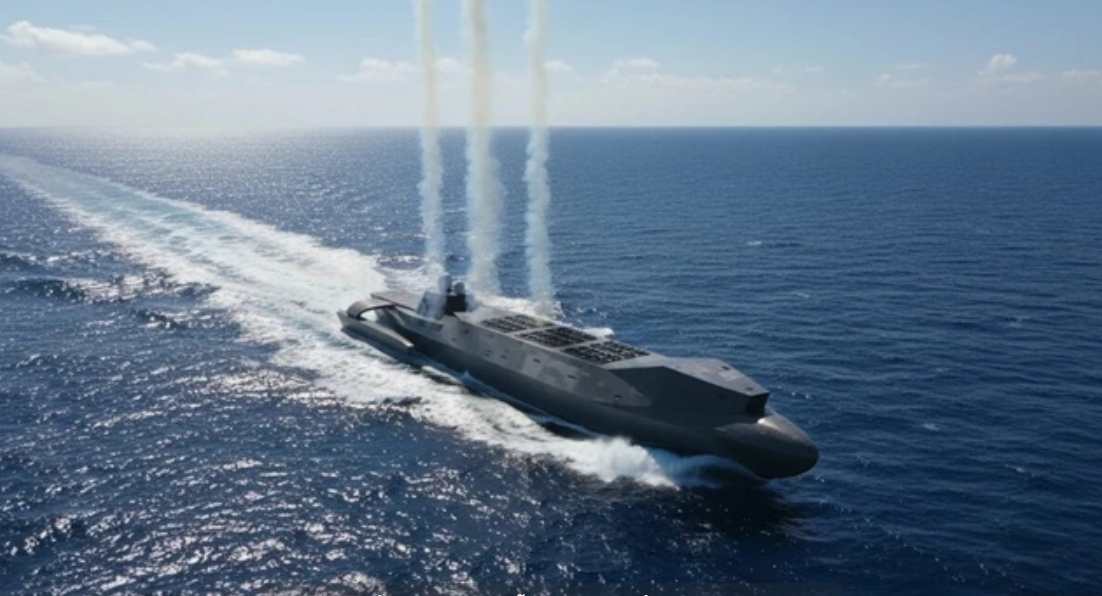
The semi-submersible design allows the vessel to partially conceal itself below the water's surface, significantly reducing its radar cross-section (RCS) and making it more difficult for enemy reconnaissance systems to detect. The ability to temporarily submerge at limited depths not only helps the vessel avoid detection from a distance but also increases its chances of survival against cruise missile attacks.
Technical specifications and maneuverability
By omitting the life support system, the ship can achieve superior maneuverability compared to destroyers of similar size. Analysts predict that this vessel could be equipped with YJ-18 anti-ship cruise missiles or HHQ-9 long-range anti-aircraft missiles, similar to the system on the Type 055 destroyer, making it a flexible "floating launch platform" for the fleet.
Simulating tactics and damage networks
Last February, the China Ship Design and Development Center (CSDDC), in collaboration with Huazhong University of Science and Technology, conducted a combat simulation. The results showed that the support of two unmanned semi-submersible vessels could help a Type 055 destroyer defeat eight Arleigh Burke-class destroyers under the same combat conditions.
In this scenario, the unmanned vessels act as "extended arms," carrying unmanned aerial vehicles (UAVs) and suicide boats under the coordination of the main destroyer's command center. An integrated artificial intelligence (AI) system allows the vehicles to automatically share sensor data and target location information, creating a dense, layered kill network.
Ambitions for a Smart Navy
Professor Du Minghui, head of the simulation research group, asserted in the China Journal of Ship Research that semi-submersible unmanned vessels will become a core element in future naval warfare. This strategy is part of Beijing's roadmap to building a "smart navy," with automation technology and guided weapons as its core.
While the U.S. Navy is also developing unmanned warship programs, China has progressed to the construction phase in Guangzhou. With the size of the Chinese fleet projected to surpass that of the U.S. by the mid-2030s, equipping a large number of unmanned support vessels is seen as a viable option to maintain superior firepower density in strategic waters.
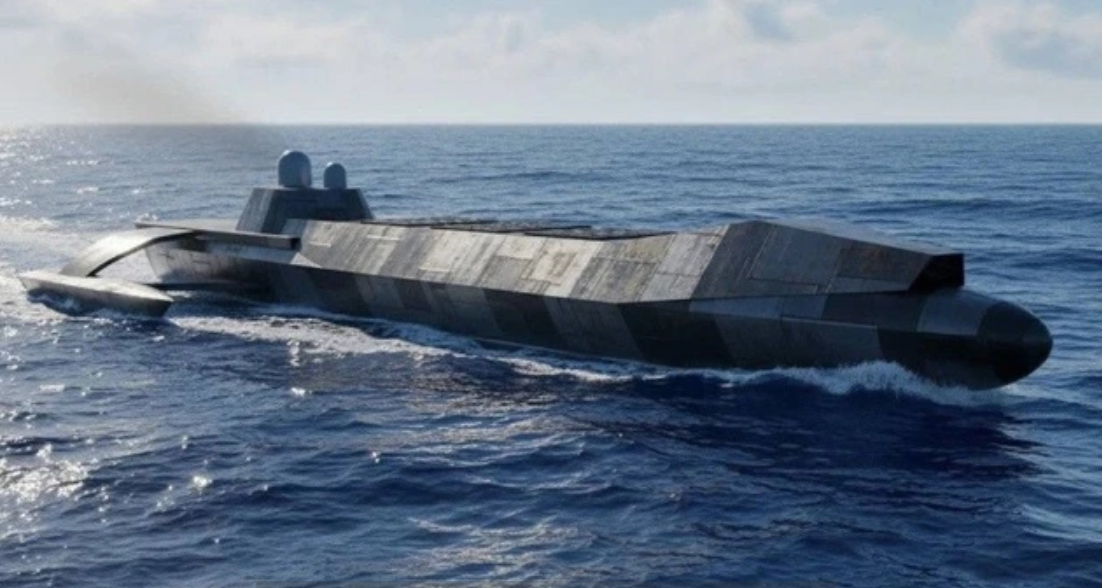
The emergence of this type of semi-submersible missile boat could completely change the way naval forces are deployed, establishing a modern three-dimensional combat structure where automation technology plays a decisive role in determining victory or defeat on the maritime battlefield.


