
China has released PADJ-X software that simulates weaknesses in the US B-21 stealth bomber.
Chinese scientists have developed the PADJ-X system, based on an adjoint optimization algorithm, which allows for the detection of aerodynamic and stealth vulnerabilities in the B-21 Raider aircraft.
PADJ-X is the first fully integrated multidisciplinary platform for stealth aircraft design, developed by a research team at the China Aerodynamics Research and Development Center. (According to an article published in a journal.)Acta Aeronautica et Astronautica SinicaThis system utilizes adjoint optimization technology to simultaneously calculate hundreds of design variables, reducing the cost and time required to simulate complex aerospace systems.
Potential flaws discovered in the B-21 Raider aircraft.
Using PADJ-X to analyze the configuration of the B-21 Raider – currently the most advanced stealth bomber in the US – the research team concluded that Northrop Grumman's design may not be optimal in terms of aerodynamics and stability. Simulation results showed that optimization could increase the lift-to-drag ratio by 15% and significantly reduce shock waves for a configuration similar to the B-21.
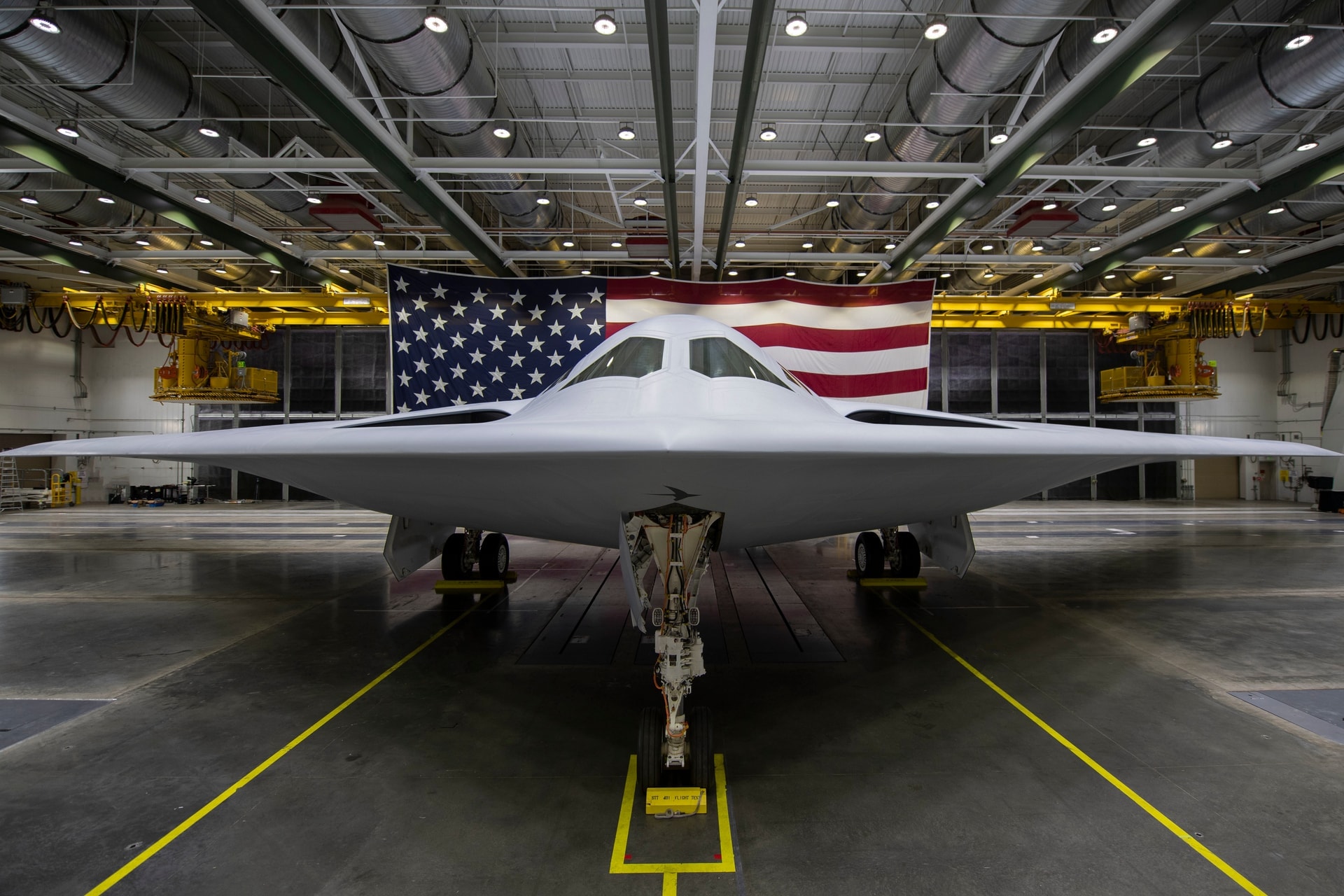
Notably, scientists have improved the aircraft's pitching moment from 0.07 down to -0.001. In aviation engineering, a pitching moment value close to zero allows the aircraft to maintain a stable flight state without constant pilot intervention, thereby improving fuel efficiency and range.
Optimizing stealth capabilities and multi-industry performance.
The PADJ-X system integrates five key areas: aerodynamics, propulsion, electromagnetism (stealth), infrared signature, and sonic boom. In tests on a model similar to the X-47B drone, this software helped reduce the drag coefficient by approximately 10%.
In terms of electromagnetic warfare capabilities, the PADJ-X reduced the average forward radar cross-section (RCS) of the X-47B model from 13.55 m2 to just 1.33 m2. Reducing the RCS to one-tenth of its original size is considered a major leap forward in stealth technology, making the aircraft harder to detect in the forward cone – the most sensitive area for enemy radar.
Comparison with NASA and international simulation technology.
For decades, organizations like NASA (USA) with its FUN3D platform, and research institutes in Germany and France have developed their own adjoint optimization software. However, Chinese researchers argue that PADJ-X has the advantage of broader multidisciplinary coverage, reducing the need for manual adjustments when switching between different design fields.
Although the actual specifications of the B-21 and X-47B remain classified by the US military, the announcement of PADJ-X demonstrates China's progress in using supercomputers and algorithms to shorten the development process of military aircraft. This technology promises to reduce reliance on wind tunnel testing and lower the cost of prototype manufacturing for next-generation aircraft.


