
China is stepping up testing of its 6th-generation J-36 and J-50 fighter jets.
The deployment of J-36 and J-50 prototypes for test flights shows that China is accelerating its race for sixth-generation fighter jets, posing a direct challenge to the US advantage.
According to newly released analysis from Army Recognition, China's sixth-generation fighter program has officially entered the field deployment phase. Open-source data and satellite imagery show that the J-36 and J-50 prototypes have begun flight testing, marking a significant transition from theoretical design to field implementation.
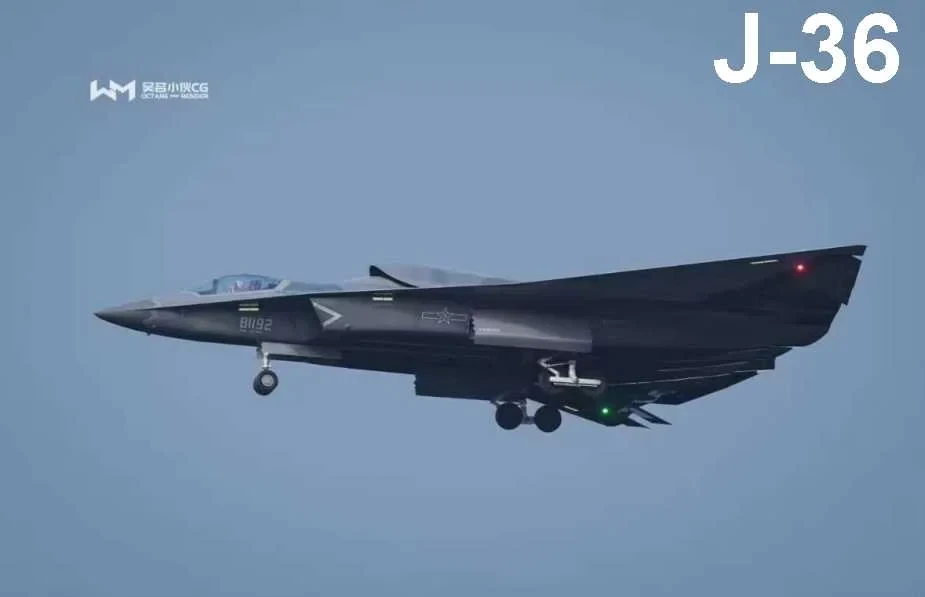
J-36: The next-generation air superiority platform.
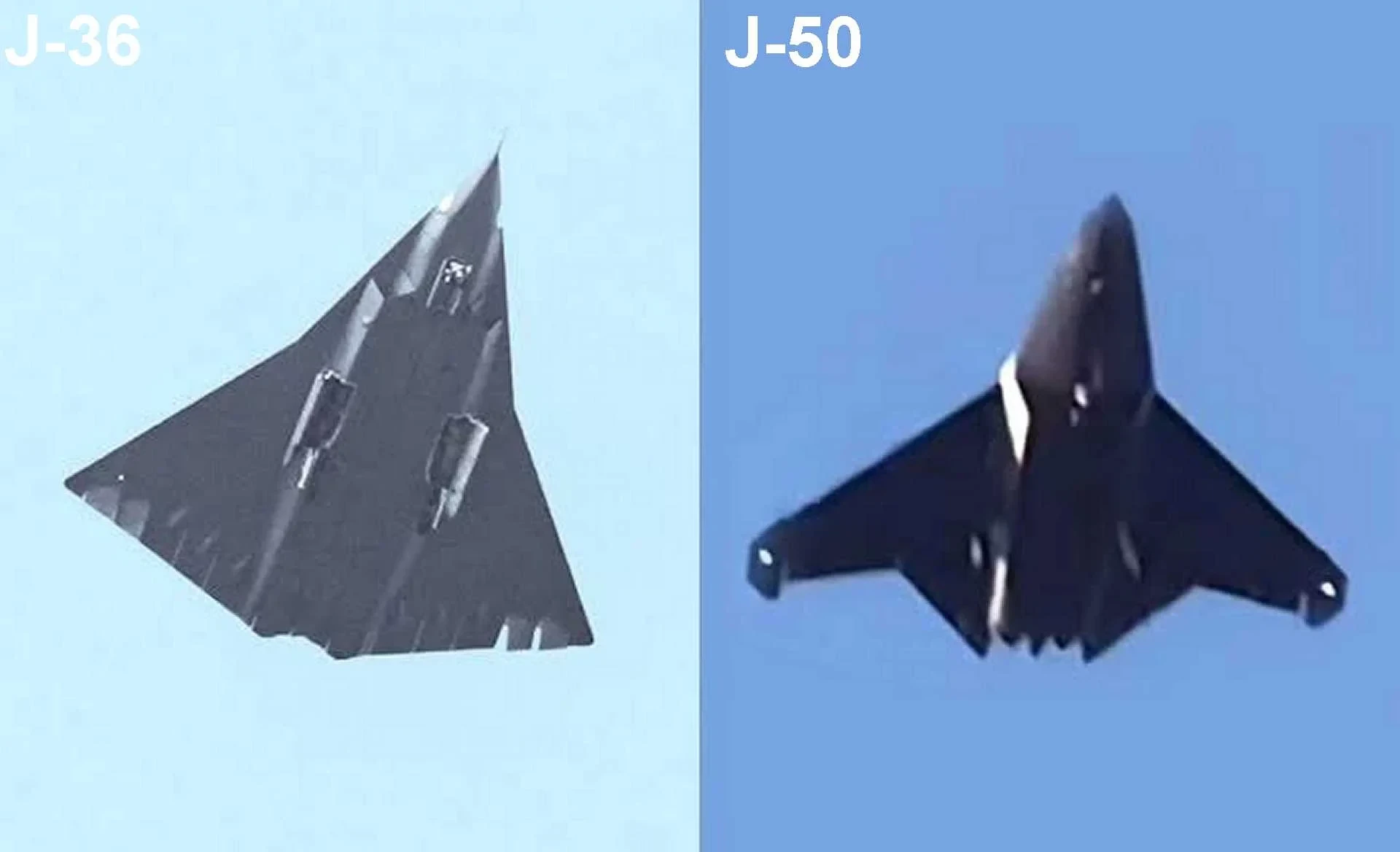
The J-36, a product of the Chengdu Aircraft Corporation, is identified as central to China's strategy of maintaining air superiority. The aircraft possesses a tailless wing design and an airframe optimized for stealth capabilities, making it suitable for missions in environments with high levels of surveillance and jamming.
The weapon bays are entirely internally housed to reduce radar cross-section (RCS). Notably, the J-36 is not just a traditional fighter but also serves as a command center in a complex combat network, capable of coordinating with unmanned aerial vehicles (UAVs) and integrating real-time sensor data.
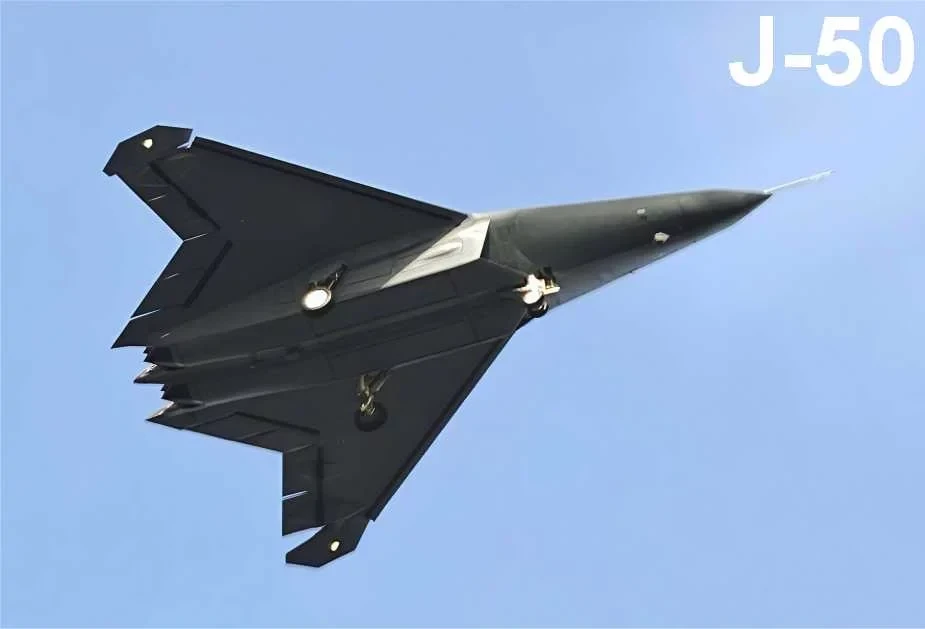
J-50: Air power at sea
Alongside the J-36, Shenyang Aircraft Corporation is developing the J-50, a fighter jet specifically designed for naval missions. Experts believe the J-50 will utilize a twin-engine configuration with a larger airframe to meet the operational requirements of new-generation aircraft carriers equipped with electromagnetic catapult systems.
China's strategy of developing two aircraft lines in parallel helps minimize technological risks and optimize them for each specific combat environment: the J-36 prioritizes land-based operations, while the J-50 serves its ambitions for long-range combat.
The technological race with the US NGAD program.
While China has publicly disclosed some progress to demonstrate its defense industry capabilities, the U.S. maintains a high degree of secrecy regarding its Next Generation Air Dominance (NGAD) program, led by the United States Air Force. NGAD is described as a combat ecosystem that combines manned aircraft with supporting unmanned systems.
China's rapid advancements with the J-36 and J-50 demonstrate that the aviation technology gap between Beijing and Washington is gradually narrowing. The focus of the race is now not just on speed or maneuverability, but has shifted to artificial intelligence (AI), electronic warfare, and the ability to maintain connectivity in signal-denied environments.
Early deployment of prototypes for flight testing allows China to accumulate crucial real-world data to refine its control algorithms, thereby reshaping the balance of air power in the Indo-Pacific region over the next decade.


