
China 'easily' wins against South Korea regarding THAAD.
(Baonghean.vn) - The easing of tensions between China and South Korea could be good news for the South Korean economy and an important step towards resolving the North Korean issue. However, this situation also poses a risk of declining regional security in the coming years.
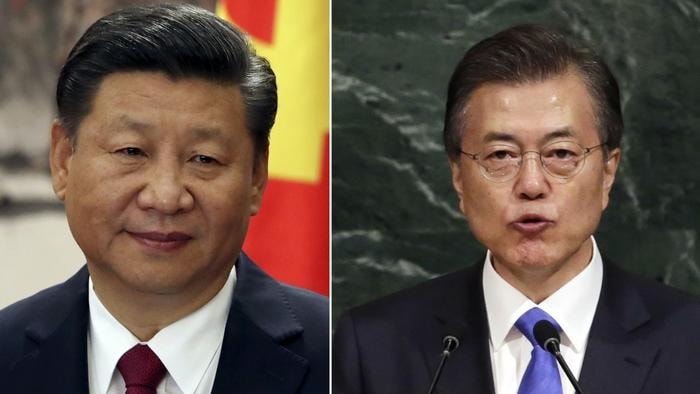 |
| Chinese President Xi Jinping and South Korean President Moon Jae-in. Photo: AP |
On November 11, South Korean President Moon Jae-in and Chinese President Xi Jinping agreed to “normalize bilateral exchanges soon.” This move ended a disagreement that erupted more than a year ago between Seoul and Beijing over the US decision to deploy the Terminal High Altitude Area Defense (THAAD) missile defense system in South Korea.
Specifically, Seoul agreed to implement military restraint measures in exchange for Beijing lifting unofficial sanctions. This sets a worrying precedent for China's rivals in the region.
The military restraint measures included the "Three No's." South Korea agreed not to deploy additional THAAD systems in the country, not to participate in the US missile defense system across the region, and not to join the military alliance of South Korea, the US, and Japan. This was a huge sacrifice, but for economic and political reasons, President Moon had no other choice.
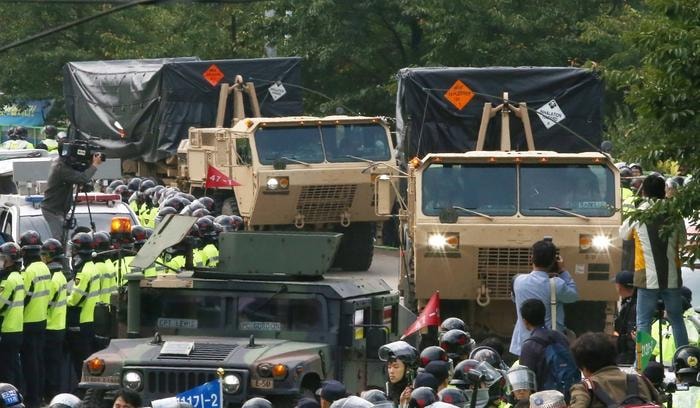 |
| South Korean protesters blocked two vehicles carrying THAAD equipment in Seongju. Photo: EPA |
Professor Joseph E. Yi, a professor of political science and international studies at Hanyang University (South Korea), stated: "President Moon Jae-in is a left-wing politician who tends to believe that 'the enemy of my enemy is my friend,' therefore South Korea dislikes Japan and feels closer to China for historical and political reasons."
This expert stated: "The left wing in South Korea has anti-Japanese sentiments and a post-colonial perspective, viewing China and South Korea as rivals of Japanese colonialism."
However, according to Mr. Yi, this depends on how one views the past. If Koreans see themselves and China as victims of oppression under Japanese colonial rule, they will be more likely to sympathize with China. However, Mr. Yi notes that the issue here is that Japan today is not the same country as it was 60-70 years ago, and neither is China.
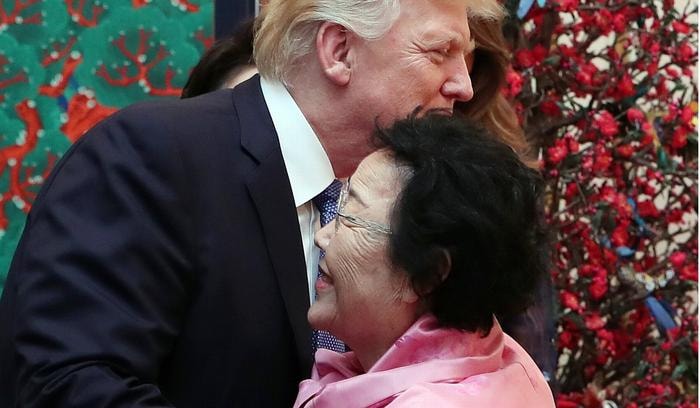 |
| US President Donald Trump embraces Lee Yong-soo, a former "comfort woman." Photo: EPA |
Professor Yi commented, “If you view Japan as an unrepentant and evil colonial power, then you should ally with China against Japan. Therefore, when President Moon met (US President Donald) Trump, instead of striving to develop a stronger alliance between South Korea, Japan, and China, President Moon introduced a ‘comfort woman,’ and they had Dokdo shrimp.” The strained relationship between Tokyo and Seoul stems from the issue of comfort women and the dispute over sovereignty of the Dokdo islands, which Japan calls Takeshima.
Expert Yi commented: “President Moon wants atonement for the past. He wants the Japanese Prime Minister to apologize, and I think focusing on the past like this is shaping politics in a negative way. The ‘three no’s’ create a precedent linking economics with politics and national security. South Korea would never do this if it were any other country, like Vietnam or Japan, but they are doing it for China because otherwise, the only option left is to form an alliance with Tokyo, and that is not an option for the left.”
According to Donald Emmerson, Director of the Southeast Asia Program at Stanford University (USA), there are growing suspicions about a Chinese plot to isolate Japan and curb South Korea's military options.
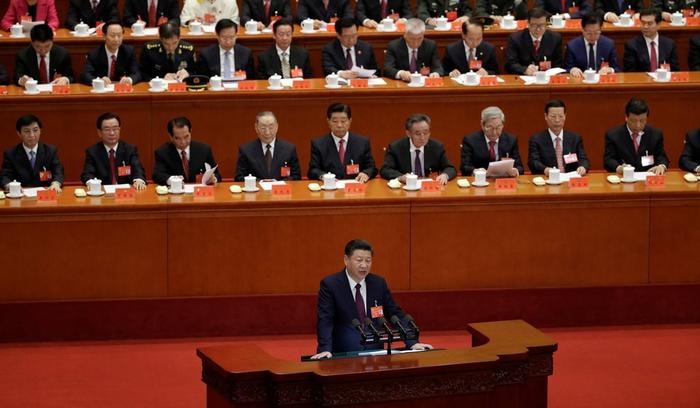 |
| Chinese President Xi Jinping speaks at the 19th National Congress of the Communist Party of China. Photo: Reuters |
Mr. Emmerson commented that President Xi Jinping's emphasis in his speech at the 19th National Congress of the Communist Party of China in October, where he stressed that the country "has entered a new phase" and must "occupy a central position in the world," means that Beijing's expansionist ambitions are not spreading to Europe. According to him, China "wants to dominate right at its nearest periphery."
Referring to the Philippines' lawsuit against China in the international arbitration court regarding the South China Sea dispute, expert Emmerson said: “China is furious. They criticized the Philippines and imposed economic sanctions, similar to what happened to Lotte Group in (China) after the THAAD incident in South Korea. According to Beijing, the idea is to inflict economic damage until the other government acts appropriately.”
Lan Ha
(According to SCMP)
| RELATED NEWS |
|---|


