
China proposes a minimum 0–100 km/h acceleration time of 5 seconds.
China proposes that after each start, the vehicle should default to taking a minimum of 5 seconds to reach 0–100 km/h; the driver then manually reactivates the performance mode. The goal is to reduce the risk of accidents caused by sudden acceleration or accidentally pressing the wrong pedal.
Authorities in China are seeking feedback on a new regulation: all cars, including electric and internal combustion engine vehicles, will default to a minimum 0–100 km/h acceleration time of 5 seconds upon startup. To exceed this limit and use high-performance driving modes, drivers must proactively disable the acceleration restriction feature after each start. According to CarNewsChina, this measure aims to reduce the risk of sudden acceleration and accidental pressing of the accelerator pedal – situations that easily lead to accidents in urban areas and parking lots.
5-second limit: operating procedures and safety objectives
The proposed mechanism operates on the principle of "safe default," similar to how many gasoline-powered cars are equipped with an automatic start-stop system. Each time the car is started, the acceleration profile is limited so that the car cannot reach 0–100 km/h faster than 5 seconds, unless the driver actively reactivates a higher-performance mode.
The regulation aims to minimize unintended sudden accelerations and limit instantaneous torque – a characteristic that allows electric vehicles to achieve high acceleration with just a press of the accelerator. The measure also aims to help vehicles react appropriately to human error, contributing to overall safety in congested traffic environments.
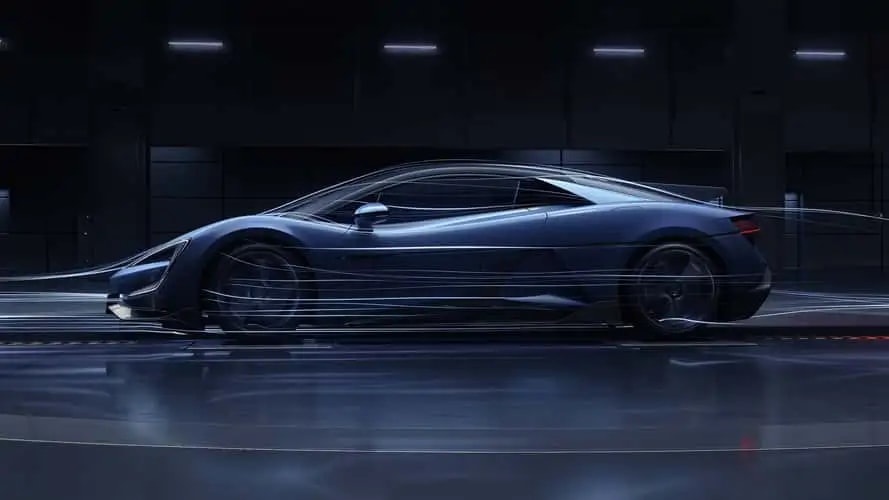
Add user-friendly actions, prioritizing safety by default.
The trade-off is that drivers will have an extra starting step: disabling the limiter if they want full performance. For users who frequently activate performance mode, this could be inconvenient, similar to having to disable the start-stop function every day. However, regulators expect the safety benefits in high-risk scenarios to outweigh this inconvenience.
- The parking lot has many obstacles and narrow spaces.
- Inner-city streets, where the density of vehicles and pedestrians is high.
- There are situations where just one wrong press of the accelerator can have serious consequences.
Performance car models may be affected.
If approved, the regulation would directly impact high-acceleration vehicles, especially high-performance electric cars. According to the information provided, models such as the Tesla Model S Plaid, Model 3, Model Y Performance, BYD Yangwang U9, Xiaomi SU7 Ultra, and many other high-acceleration electric cars could be affected. Although the focus is on electric vehicles, this limitation mechanism also applies to internal combustion engine vehicles.
The common feature of the aforementioned models is their ability to generate high acceleration almost instantaneously, allowing them to reach 0–100 km/h in a very short time. With the new limit, all cars will start in a smoother and safer configuration before the driver actively switches to performance mode.
Impact on driving experience and interface design.
In terms of user experience, users will have to get used to reactivating performance mode after each trip if they want to fully exploit acceleration capabilities. From a product perspective, this proposal could lead to changes in how manufacturers arrange their control interfaces.
- Some argue that manufacturers could turn the "performance unlock" process into a ritualistic experience, similar to switching on turbo mode or race mode.
- However, the likelihood of a dedicated physical button appearing is considered low due to the current trend towards minimalist in-car interfaces.
For manufacturers, the challenge is to optimize the state transition process so that it is clear, easily accessible, but not accidentally triggered. This is especially important for models with digital interfaces, where many functions are grouped into multi-tiered menus.
The potential for global expansion.
According to insideevs, regulators around the world are monitoring China's move. If the data shows clear safety effectiveness, it is not ruled out that other markets will consider similar proposals. However, given the current political climate, it is considered unlikely that the US will adopt regulations in this direction.
From an industry perspective, such moves typically require time to build practical evidence. Once a sufficiently large database of accidents related to sudden acceleration and the impact of limiting default acceleration is established, policy discussions in other areas may become more active.
Unanswered questions
The proposal raises several practical operational questions that lawmakers and producers will have to consider during the refinement process:
- Status display and confirmation: the driver needs to know exactly which configuration the vehicle is in as soon as it starts.
- State transition process: How many steps are reasonable to avoid accidental activation and prevent inconvenience?
- Impact on driving feel at low speeds: ensures sufficient traction for safe lane changes and overtaking when necessary.
Summary
The proposed 0-100 km/h acceleration limit of 5 seconds is a safety-focused initiative aimed at "reducing risk right from the start." If approved, this measure would directly impact high-performance vehicles, especially electric cars, and require drivers to be more proactive in exploiting their vehicle's full potential. While its practicality remains debated, the idea is being monitored by many regulatory bodies worldwide and could become a trend if its safety effectiveness is proven by data.


