
China plans to ban partial steering wheels from 2027: A challenge for Tesla and Lexus.
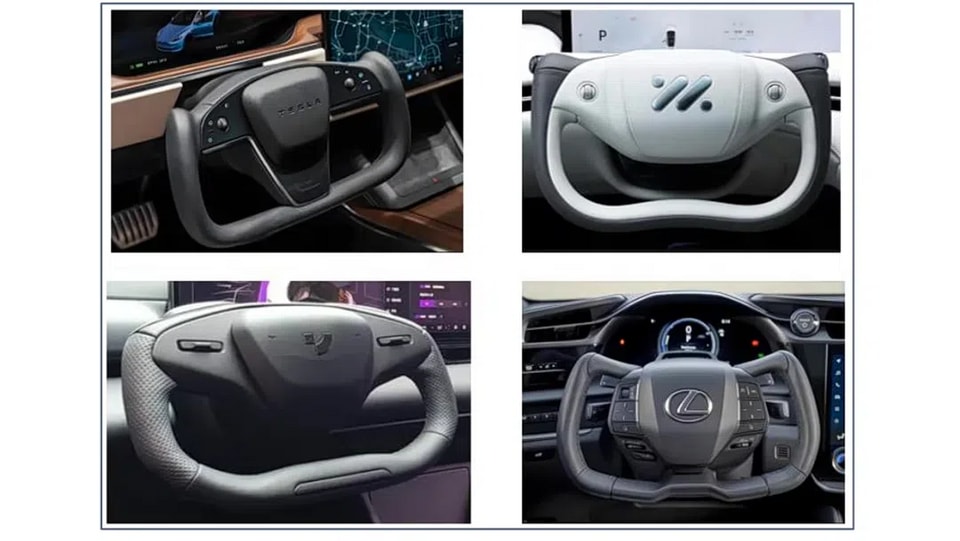
China's new safety standards require the steering wheel rim to be completely closed to pass crash tests, directly eliminating the yoke-style steering wheel design that is currently popular on some electric vehicle models.
The Chinese Ministry of Industry and Information Technology (MIIT) has officially released a draft of the mandatory national standard, coded GB 11557-202X. This new regulation focuses on protecting drivers from steering injuries in the event of a collision. Notably, the draft completely removes any technical provisions allowing the use of partial steering wheels (sprocket-type steering wheels), a sign of stricter regulation of unconventional steering designs.
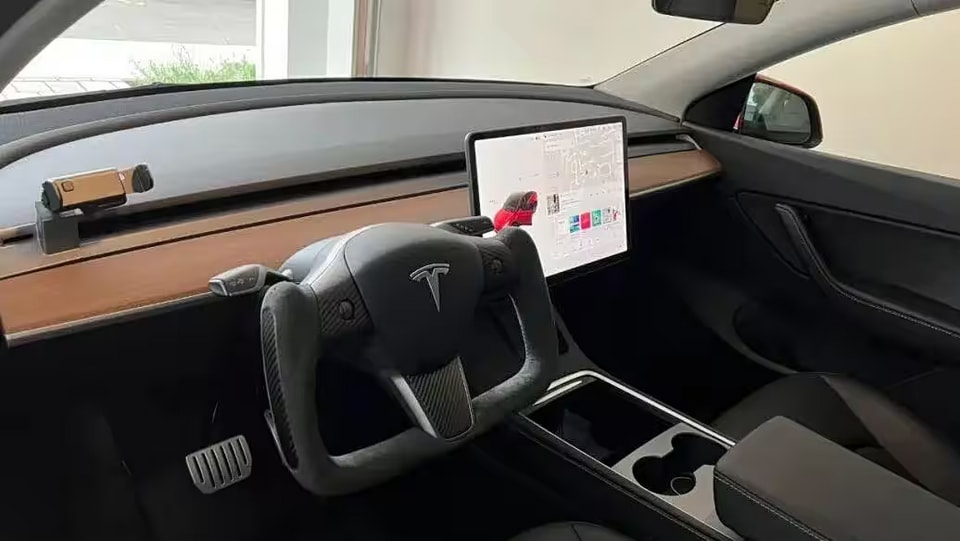
The current safety standard (GB 11557-2011) has been in effect for over a decade and is considered no longer suitable for regulating new technologies in electric vehicles. In this update, Chinese authorities have aligned with international regulations by reducing the lateral force limit in the human mannequin test to 11,110N, equivalent to the UN R12 specification. Additionally, the regulation establishes stricter thresholds for steering column displacement in the event of a collision.
Technical reasons why the partial steering wheel was eliminated.
The biggest problem with partial steering wheels lies in their ability to pass crash safety tests. Under the new standards, authorities require crash tests to be performed at 10 specific points on the steering wheel rim, including the “midpoint of the weakest area” and the “midpoint of the shortest unsupported area”.
For steering wheel designs that lack the upper rim, these test points do not physically exist. This means that vehicles equipped with this type of steering wheel will not be able to pass the roadworthiness test. Statistics from accident data show that the steering mechanism is the cause of 46% of driver injuries. While traditional round steering wheels act as a large buffer zone when the driver's body leans forward, the semi-round design makes it easier for the driver to slip out of the protective zone, increasing the risk of secondary injury.
Risks from airbags and real-world driving experience.
Besides mechanical structure, airbag safety is also a major concern. New standards prohibit hard objects (such as metal or plastic) from being pointed directly at the occupant when the airbag deploys. With its inconsistent casing and structure, the partial steering wheel creates unpredictable fracture patterns when the airbag deploys at high speeds, making it difficult to verify its safety through in-depth testing.
Besides legal hurdles, users have also reported several drawbacks when using this design in daily life. Unlike Formula 1 racing cars with very small steering ratios suitable for the racetrack, civilian cars require drivers to turn the steering wheel many times when making U-turns or parking. The lack of an upper rim makes one-handed operation difficult and easily leads to accidental touches to the dashboard screen.
Implementation roadmap and transition period
The GB 11557-202X standard is expected to officially come into effect on January 1, 2027. From this date onwards, all new vehicle models seeking type approval in the Chinese market must comply with the enclosed steering wheel design.
For models currently on the market and previously approved, authorities are expected to allow a transition period of approximately 13 months. During this period, automakers such as Tesla, IM Motor, and Lexus will have to adjust their designs or replace the steering wheels with traditional round ones in order to continue operating legally in the world's largest automotive market.


