
China recorded a record trade surplus of $1 trillion despite tariffs.
China has announced impressive export growth figures for 2025, with a trade surplus reaching a record $1 trillion.
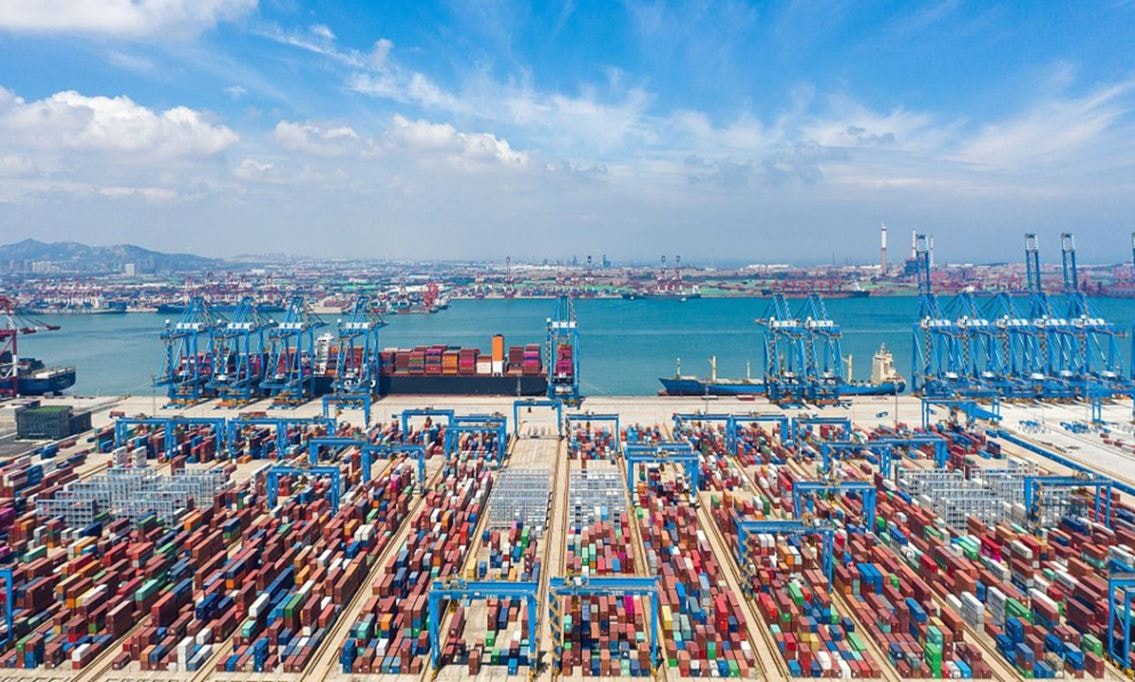
According to Reuters on January 14th, China announced impressive export growth figures for 2025, with a record trade surplus of $1 trillion. This result comes as manufacturers in the country prepare for the next three years under a Trump 2.0 administration, which is determined to curb the "world's factory" by shifting orders from the US to other markets.
Beijing's resilience in the face of tariff tensions since President Donald Trump's return to the White House in January 2025 has prompted Chinese businesses to shift their focus to Southeast Asia, Africa, and Latin America to offset losses from US tariffs.
Against the backdrop of Beijing hoping exports will act as a buffer against the prolonged slump in the real estate market and sluggish domestic demand, this record-breaking surplus risks further destabilizing economies already concerned about China's trade practices and overcapacity, as well as its over-reliance on key products from the country.
Chinese customs data released on January 14th showed that the manufacturing powerhouse's full-year trade surplus reached $1.189 trillion – a figure equivalent to the GDP of a top 20 global economy like Saudi Arabia. Prior to this, China's trade surplus had surpassed $1 trillion for the first time in November.
"The momentum for global trade growth is still not strong enough, and the external environment for China's foreign trade development remains serious and complex," said Wang Jun, Vice Minister of the General Administration of Customs of China, at a press conference on January 14.
However, Mr. Wang also affirmed: "With a more diversified trading partner, China's resilience to risks has been significantly strengthened. The fundamental foundations for China's foreign trade remain very solid."
In terms of value, exports from the world's second-largest economy rose 6.6% year-on-year in December, higher than the 5.9% increase in November. This far exceeded the 3.0% increase forecast in a Reuters poll of economists. Imports also rose 5.7%, surpassing the forecast of a 0.9% increase, after a 1.9% increase the previous month.
Last year, the Asian economic giant's monthly export surplus exceeded $100 billion seven times – partly due to the weakening of the yuan. This is a significant increase compared to only one instance in 2024. This suggests that while Trump's actions have significantly restricted goods entering the US, they have largely failed to destabilize China's trade relations with the rest of the world.
Globally, total assets have grown by more than 30% and are nearing the $20 trillion mark. Economists predict China will continue to increase its global market share this year, thanks to Chinese companies establishing overseas manufacturing centers to take advantage of lower tariffs on access to the US and European Union (EU) markets, as well as strong demand for older chips and other electronic components.
As a spearhead of Beijing's global industrial ambitions, China's automotive industry saw total exports jump 19.4% to 5.79 million vehicles last year, with exports of pure electric vehicles (EVs) increasing by 48.8%. China is likely to maintain its position as the world's leading automotive exporter for the third consecutive year, having surpassed Japan in 2023.
Nevertheless, Beijing has begun to show signs of acknowledging that it needs to regulate its industrial exports if it wants to maintain sustainable success. Chinese leaders are increasingly aware and frank about the imbalances in the economy, as well as the image problems that excessive exports are causing internationally.


