
China reduces tax incentives for new energy vehicles by 50% in 2026.
The policy of full tax exemption for NEV purchases ends on December 31, 2025; from January 1, 2026, the discount will be reduced to 50% with a ceiling of 15,000 RMB. Orders at dealerships increased by nearly 60%.
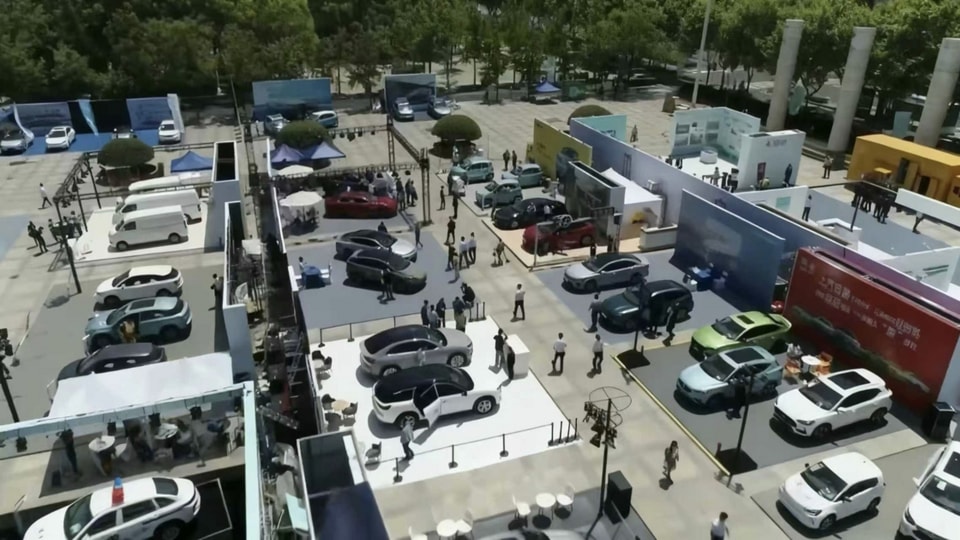
A major change in China's tax policy for new energy vehicles (NEVs) is triggering a surge in year-end purchases. According to Sina Finance, the full tax exemption on vehicle purchases is expected to end on December 31, 2025. From January 1, 2026, the incentive will shift to a 50% exemption, causing dealerships across China to see a surge in orders ahead of the new policy's effective date.
New tax policy: preferential rates and duration.
According to China Central Television, starting January 1, 2026, NEVs will transition from a complete exemption from purchase tax to a 50% exemption. Currently, eligible passenger NEVs are exempt from tax up to a maximum of 30,000 yuan (US$4,200). Under the new regulations, effective until 2027, the exemption ceiling will be reduced to 15,000 yuan (US$2,100).
Purchasing power is expected to surge ahead of December 31, 2025.
The timing of the promotional adjustments coincided with the traditional year-end sales season, creating a surge in pre-orders. Some dealers reported that order volumes increased by nearly 60% compared to the monthly average, reflecting a desire to maximize the benefits before the discounts were halved.
Policy signal: from price competition to value competition
Executives from the China Automobile Dealers Association believe the adjustments are not just financial changes but also a message to guide the industry. Beijing wants to steer the NEV market away from the price war and focus on product quality and value.
Tighter technical standards: new thresholds for PHEVs and EREVs.
In October 2025, China's Ministry of Industry and Information Technology, Ministry of Finance, and State Taxation Administration jointly raised the eligibility standards for vehicles eligible for tax reductions. Accordingly, plug-in hybrid vehicles (PHEVs) and passenger cars with extended range must achieve a minimum pure electric range of 100 km, aiming to exclude low-performance models.
Producer reaction and market scenario for 2026
To support customers during the transition period, many car manufacturers are implementing a "tax difference guarantee" program for those who finalize their purchase before the end of November 2025 but receive their vehicle in 2026, compensating for the lost incentives due to the new policy.
Analysts predict two distinct effects: a short-term surge in sales as buyers rush to finalize deals before December 31, 2025, followed by a potential slowdown in early 2026 when the tax exemption drops to 50%. With electric vehicle penetration already exceeding 45% of new car sales, future growth is more likely to rely on technology and product innovation than on tax incentives.
Summary of key policy milestones and standards
| Timeline | Discount level | Exemption/Deduction | Note |
|---|---|---|---|
| By December 31, 2025 | 100% Free | 30,000 yuan (US$4,200) | Applies to eligible passenger NEVs. |
| From January 1, 2026 to 2027 | 50% off | 15,000 yuan (US$2,100) | Tighten standards; PHEV/EREV must achieve 100 km of pure electric range. |
Prospects
Since 2014, full tax exemptions on vehicle purchases have accelerated the adoption of NEVs in China. The reduction of incentives to 50% from 2026 marks a shift towards a focus on sustainability, quality, and reduced reliance on subsidies in the world's largest electric vehicle market.


