
China unveils DF-27 hypersonic ballistic missile system in Hebei.
Field images of the DF-27 missile in Hebei province show its hypersonic attack capability with a range of 8,000 km, significantly enhancing maritime control capabilities.
China's new generation DF-27 medium-range ballistic missile system has recently appeared in images and videos recorded in Hebei province. This is a mobile missile system capable of carrying hypersonic glide warheads, with an estimated range sufficient to cover strategic targets in the Western Pacific region.
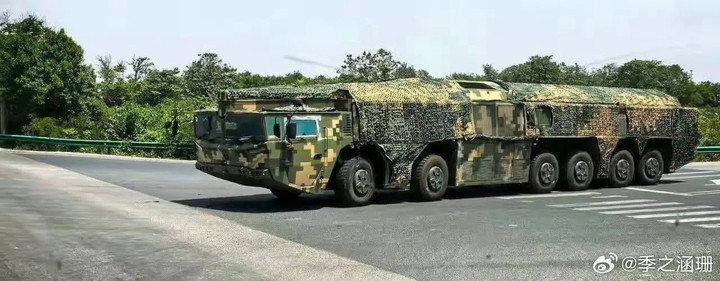
Missile-carrying vehicles were detected moving through residential areas. Although heavily concealed with tarpaulins and camouflage netting, many of their distinctive technical characteristics were still visible. According to military analysts, this system is directly related to the DF-27 project – a weapon previously reported by the Pentagon with a described range of 5,000 to 8,000 km.

Technical specifications and maneuverability of the DF-27
The unexpected appearance of this system in the field suggests that the program may have entered the testing or limited combat deployment phase. Based on the images collected, the DF-27 system has a structure similar to the modern "Dongfeng" missile series, using a self-propelled launcher (TEL) mounted on a multi-axle chassis. This design allows the missile to maneuver flexibly on road networks and complex terrain, increasing its survivability against preemptive attacks.
The most significant difference between the DF-27 and its predecessors, such as the DF-17 or DF-26, is the extended nose cone located above the control cabin. The missile is mounted directly on an open launch platform instead of a traditional enclosed launch tube, with the body protected by special shields that open when entering the firing position.
Hypersonic technology and combat parameters
In terms of specifications, the DF-27 is estimated to be approximately 12-15 meters long, with a maximum launch weight of 20-25 tons and carrying a warhead weighing about 1.5-1.8 tons. The system uses a multi-stage solid-fuel engine, which shortens preparation time and achieves extremely fast response speeds.
Notably, the DF-27 is believed to incorporate a hypersonic glide vehicle (HGV). After reaching the required altitude, the warhead separates and flies along a continuously changing glide trajectory at speeds of Mach 5 or higher. This maneuverability in the atmosphere makes it very difficult for enemy defense radar systems to accurately determine its impact point, thereby neutralizing most modern air defense systems.
Strategic impact on the Western Pacific region
The presence of the DF-27 serves as a strategic long-range anti-ship system. With the ability to accurately strike targets at distances exceeding 2,000 km (previous tests achieved a flight range of 2,000 km in just 12 minutes), this system directly threatens carrier strike groups and military bases located deep within the second island chain.

The combination of intercontinental ballistic missile range and hypersonic technology demonstrates China's efforts to narrow the operational space of foreign navies. In the context of increasing military competition, the DF-27 reflects the trend of developing smart weapons capable of penetrating even the most advanced defenses.


