
China unveils new type of intercontinental ballistic missile launcher.
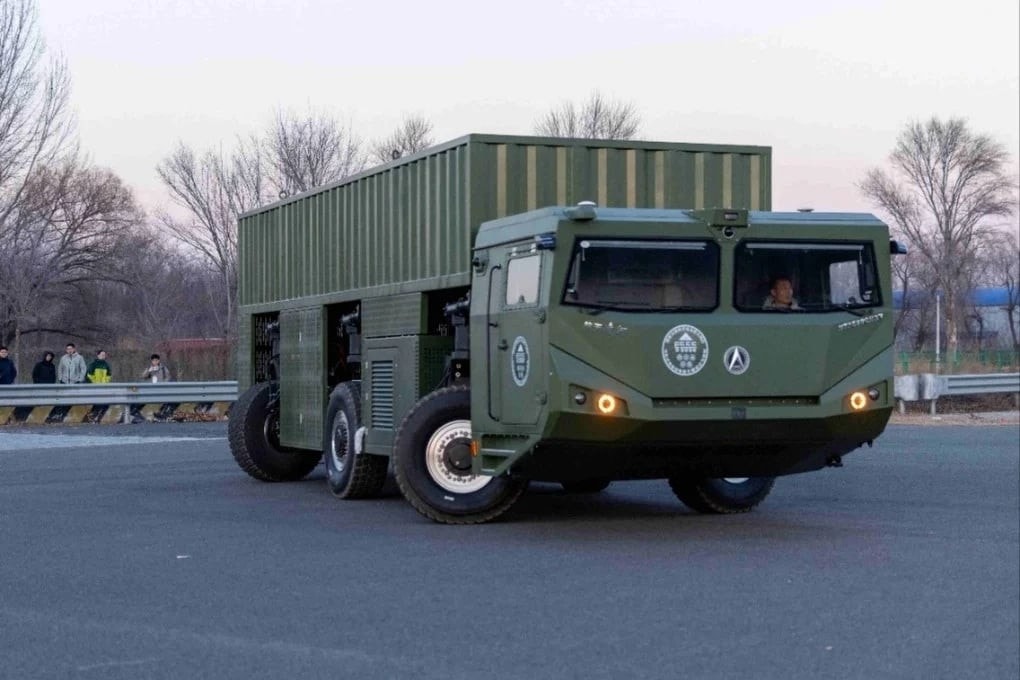
The prototype of the next-generation ICBM launcher incorporates independent electric propulsion, supporting lateral movement and silent operation to optimize stealth and survivability.
China has just unveiled a prototype of a new generation intercontinental ballistic missile (ICBM) launch vehicle with breakthroughs in maneuverability and stealth capabilities. The project was led by Tsinghua University, in collaboration with the Beijing Institute of Launch Vehicle Technology, Jilin University, Beijing Institute of Technology, and Southeast University.
Electric propulsion technology and stealth capabilities
The core difference between this launch platform and traditional designs is the complete integration of electric propulsion and an intelligent control system. According to expert Yang Dian Ge from the Department of Vehicles and Mobility at Tsinghua University, this is a "world-first" configuration that breaks through old design limitations.
The use of electric power allows the vehicle to operate almost silently. This characteristic, combined with an optimized design, significantly enhances stealth capabilities, enabling the launch platform to operate covertly and minimizing the likelihood of detection during critical missions. This system also eliminates complex mechanical components such as gearboxes and steering linkages, reducing overall weight and limiting potential points of failure.
A breakthrough in maneuverability in tight spaces.
The new prototype boasts the ability to "completely detach" the wheels from traditional mechanical linkages. Each wheel operates independently, performing its own steering, braking, and suspension functions under the coordination of an electronic control system.
Thanks to this mechanism, the vehicle can perform complex maneuvers such as sideways turning, diagonal movement, or rotating around its center in place. This capability minimizes the turning radius, allowing the launcher to operate flexibly in tight spaces or complex areas inaccessible to older launchers.
Flexible modular design and versatile applications.
The vehicle is built on a modular concept, allowing it to be expanded or reduced in size by adding or removing wheel assemblies. This design enables the launch platform to adapt to a wide range of payloads, from large rocket stages to oversized and heavy industrial equipment such as wind turbines or transformers.
Beyond defense purposes, the research team stated that the technology was initially developed to revolutionize heavy-duty logistics. However, its superior technical characteristics in terms of stability on inclines and the ability to automatically recover in harsh conditions have opened up significant potential for next-generation specialized military vehicles.
The project was approved in January 2024 as part of an initiative by the National Natural Science Foundation of China and the prototype was completed on December 21st, after less than two years of research.


