
China unveils stealth-equipped electric missile launcher.
China's new electric heavy-duty vehicle prototype boasts high mobility and low noise levels, promising to become an armored launch platform for nuclear missiles.
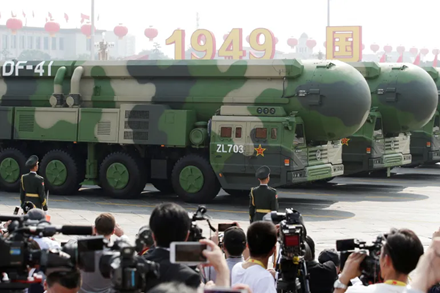
China has just unveiled a groundbreaking electric heavy-duty transport vehicle prototype capable of multi-directional mobility. While presented as a versatile platform for both civilian and industrial use, military analysts are paying particular attention to its potential as a mobile launch platform for intercontinental ballistic missiles (ICBMs) in the future.
Large-scale collaborative research efforts
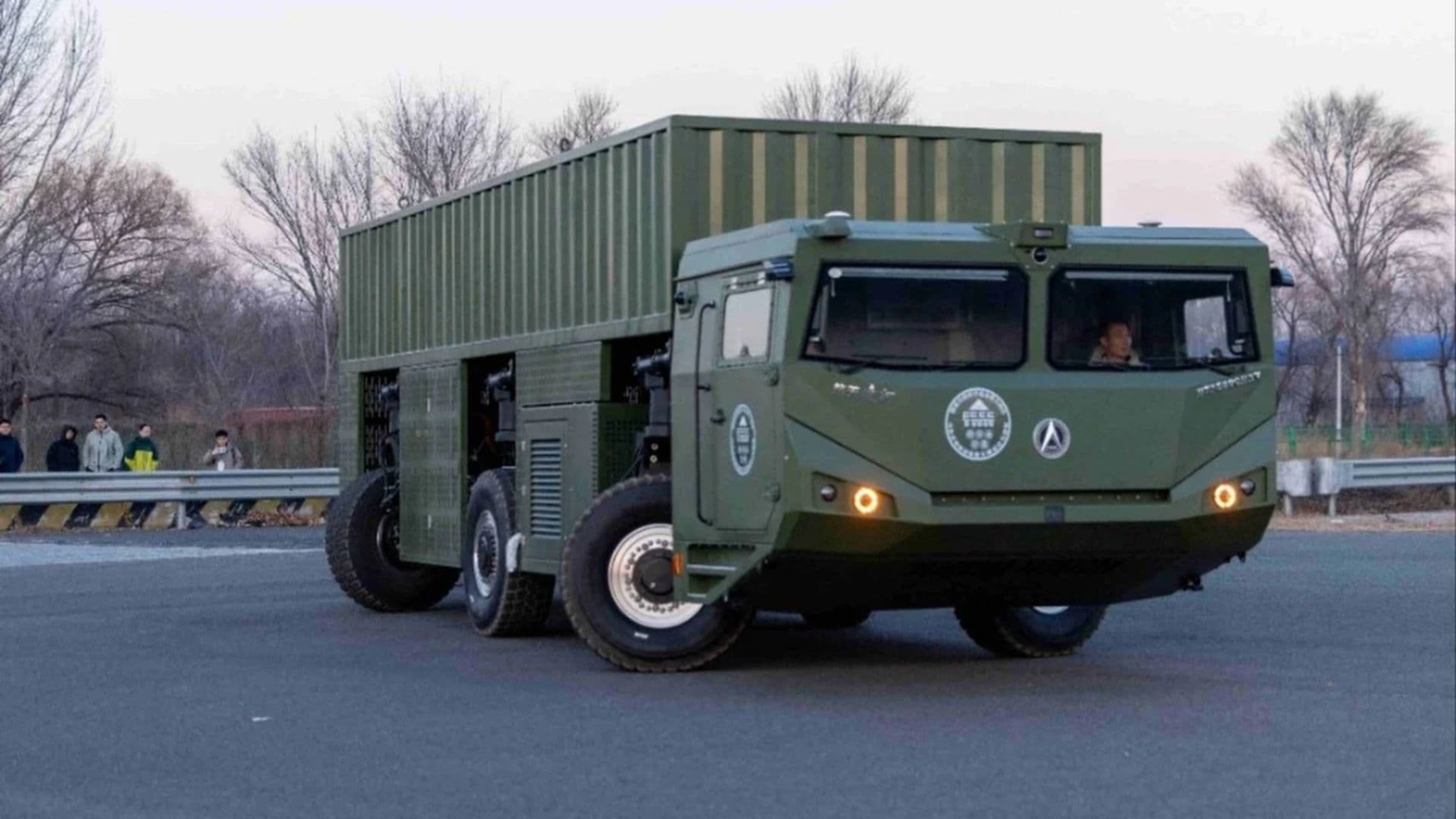
This prototype, displayed in Beijing on December 21st, is the result of a nearly two-year research project that began in January 2024. The project was led by Tsinghua University, in collaboration with leading institutions such as the Beijing Institute of Launch Vehicle Technology, Jilin University, Beijing Institute of Technology, and Southeast University, under the auspices of the National Science Foundation of China.
Modular structure and independent operation capabilities
The biggest difference between this model and traditional heavy military vehicles is its completely modular design. The wheel modules are designed as independent building blocks, allowing for expansion or contraction of their number depending on the actual load. According to a report from Tsinghua University, adjusting the number of modules allows the vehicle to easily convert from an industrial cargo configuration to a configuration capable of transporting large missile stages or ICBMs.
Instead of using a fixed axle and complex mechanical system, each wheel of the prototype operates completely independently. Each wheel unit simultaneously performs four functions: propulsion, braking, steering, and suspension. This not only minimizes the risk of chain-reaction failures but also optimizes performance across various terrains.
The ability to move as nimbly as a crab.
The intelligent electronic control system allows the vehicle to perform maneuvers previously impossible with traditional military vehicles. The vehicle is capable of "crab walking" or diagonal movement, enabling access to and exit from deployment positions in tight spaces or areas with complex terrain.
Furthermore, the center steering feature minimizes the turning radius, a crucial factor when operating oversized and heavy loads. Professor Yang Tiancai, a lecturer at Tsinghua University, affirmed that this is the first time the world has witnessed a heavy-duty transport platform combining electric drive and intelligent control systems at this advanced level.
Stealth advantage and survivability
The vehicle's "stealth" capability is highly valued by experts thanks to its use of an electric motor. Eliminating the internal combustion engine means the vehicle emits no smoke, significantly reducing heat radiation and noise during operation. In modern warfare, the ability to move silently and the low heat signature make the vehicle difficult to detect by enemy infrared sensors and acoustic reconnaissance equipment.
Furthermore, eliminating traditional mechanical components such as the gearbox or steering linkage reduces weight and technical weaknesses. Even if one wheel module fails, the remaining wheels can still maintain operation, ensuring mission continuity.
Dual-use applications: From military to heavy industry
While its military potential is clear, the development team emphasizes the dual-use nature of the project. In the civilian sector, this technology solves the problem of ultra-heavy transport, such as moving giant wind turbine blades through narrow, mountainous terrain or transporting aerospace components between factories and launch sites.
This project was officially included in China's new energy vehicle development roadmap from October 2025. The emergence of this type of vehicle could change the way strategic weapons systems are deployed and protected, while also boosting logistics efficiency in key heavy industries.


