
China is using an extremely dangerous 'weapon' against the US.
China halted exports of crucial rare earth metals to the US and stopped buying Boeing, potentially depriving its rival of its "technological weapon."
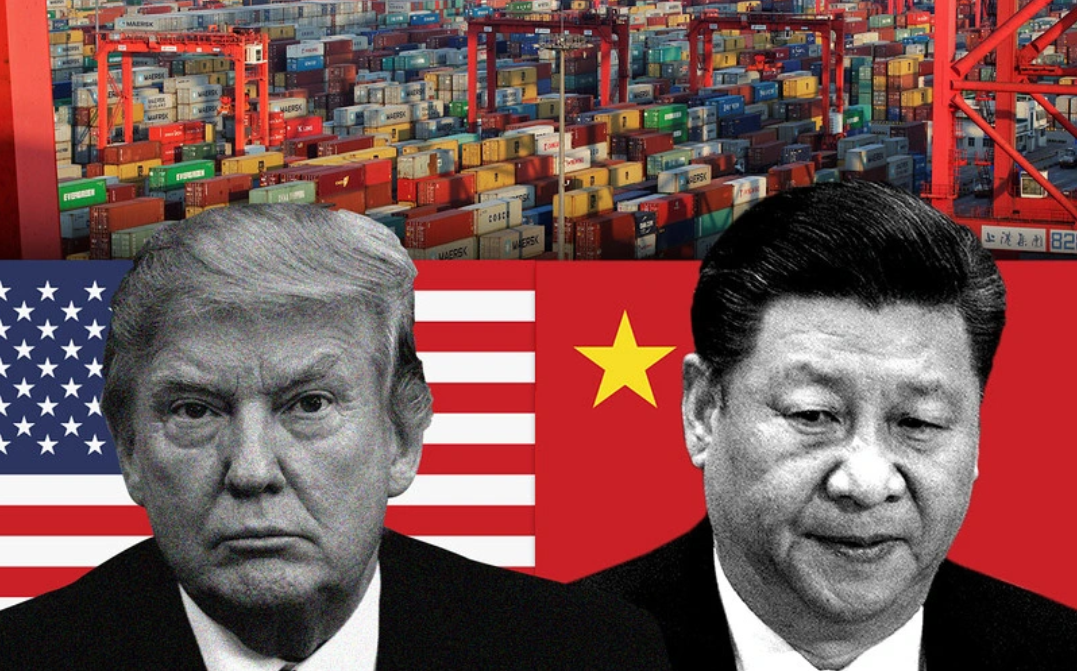
According to RIA Novosti, in response to President Donald Trump's "tariff terrorism campaign," China has suspended exports of rare earth minerals. Observers say that by controlling more than 90% of this market, China has used an extremely dangerous geopolitical weapon. Every high-tech industry in the US is affected, from aerospace to defense. Washington threatens to sever ties, but has also made it clear that it is prepared to back down.
My patience has run out.
During President Trump's trade war, China was particularly hard hit. Tariffs imposed on Beijing peaked at 145%. Following a series of retaliatory measures, Beijing launched a targeted attack: suspending exports of a range of rare earth metals.
According to The New York Times, by doing so, China is threatening to cut off the supply of essential components to critical industries: aerospace, semiconductors, the automotive industry, and defense. Shipments of these products have been blocked at many Chinese ports while the government is finalizing a new management system.
Tighten the nuts.
China controls over 90% of the global rare earth metals market.
Evgeny Shatov, an expert at Capital Lab, explains: "Formally, Beijing isn't suspending but restricting exports: companies now need to apply for special permits. But the system is congested and deadlines are being delayed. Everyone is rushing to submit applications, but this can take up to 45 days. Some companies will run out of stock sooner."
High dependence
Last year, China restricted exports of gallium, germanium, graphite, and antimony.
The U.S. Department of Defense immediately began searching for alternatives, particularly in Canada. But even then, economists warned: “We cannot live without China.” Of the 47 rare earth metals the U.S. imports, more than 50% come from China, with China being the largest or sole supplier for 25 of them.
"The U.S. is trying to mitigate risks by increasing production at mines in California and Texas and strengthening partnerships with Australia and Canada. However, it will not be possible to increase capacity quickly. The deficit could lead to a two to four-fold increase in component prices, and the depletion of reserves threatens to disrupt production," said Pavel Sevostyanov, Associate Professor of Political Analysis and Socio-Psychological Processes at Plekhanov University of Economics in Russia.
The economist added that the situation from the post-COVID-19 pandemic will repeat itself, but at a more severe level.

Poor defense
The US is currently negotiating with Russia, which also has reserves of rare earth metals. Brazil and India are also involved.
But the U.S. Commerce Department's Essential Minerals Advisory Committee is concerned: "It's unclear who has what reserves and who isn't ready. Things are very different here."
Therefore, heavy rare earth metals are used in magnets necessary for electric motors. The New York Times noted that there is a risk of suspending car assembly at factories in Detroit.
Furthermore, it's not just the US that will suffer losses; Europe and Japan will too.
However, according to the New York Times, while large Japanese companies buy rare earth minerals more than a year in advance, Americans often limit their reserves to small amounts or don't buy rare earth minerals at all because they are too expensive.
The possibility of failures during the production of drones, robots, missiles, and spacecraft cannot be ruled out.
MP Materials, a US producer of rare earth metals, stated: "UAVs and robots are seen as the future of the military, and given the current situation, critical resources in our supply chain are being cut off."
"China has the ability to strip its rivals of their 'technological gunpowder': both in smartphones and missile guidance systems. Entire modern industries, from green technology to defense, are tied to these supplies. If Beijing 'puts the brakes on,' the West will find itself in a dead end: there are virtually no alternatives, and creating them from scratch is a lengthy, costly, and painful process," said Ruslan Pichugin, an independent private investment expert.
Meanwhile, Beijing announced it would stop buying Boeing passenger aircraft. Chinese companies have been ordered to cease supplying equipment and spare parts to the US.
Bloomberg emphasized that the tariffs themselves would double the cost of aircraft and parts, making China's purchase of Boeing pointless.
The drastic retaliatory measures stunned Washington to the point that the US Treasury Department even acknowledged the possibility of severing economic ties with China. But they immediately called for compromise, assuring that no one “wanted” to maintain high tariffs on China.


