
China conducts Justice Mission 2025 military exercises around Taiwan.
The large-scale exercise, involving multiple branches of the military, was a response to the US's $11.1 billion arms package and incorporated AI technology to simulate future combat scenarios.
The Chinese military launched a large-scale exercise codenamed Justice Mission 2025 on December 29th. This military activity comes shortly after the US announced an $11.1 billion arms sale to Taiwan, marking one of Beijing's largest troop movements around the region.
Coordinated tactics and target blockade
The exercise focused on realistic combat scenarios including multi-branch coordination, achieving air superiority, and establishing blockade corridors around ports and key areas. According to China's Eastern Theater Command, participating forces included the army, navy, air force, and missile forces.
In southeastern Taiwan, the Chinese military deployed bombers and anti-ship missiles to attack simulated targets at sea. The objective of this phase was to clear the way for amphibious assault ships and test the ability to destroy the enemy at maximum range, minimizing risks for the attacking force.
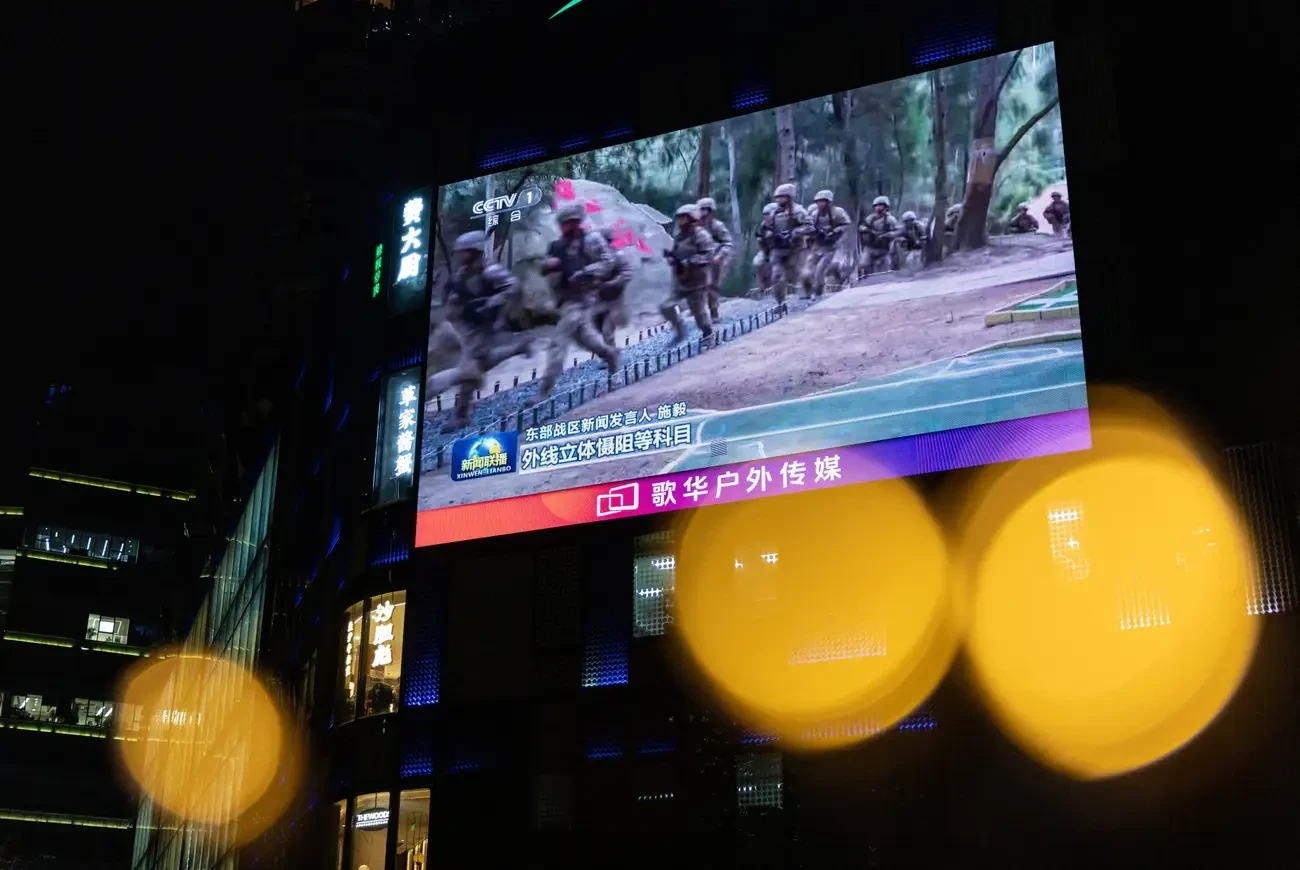
To the north and southwest, destroyers, frigates, and drones, along with long-range missiles, conducted exercises simulating target acquisition and control. These operations simulated target pursuit across three environments: land, sea, and air.
Equipment volume and specifications
Taiwan's defense authorities noted the presence of 14 Chinese naval warships and 14 coast guard vessels operating around the island. Notably, the air force deployed as many as 89 aircraft of various modern types.
- Fighter jets:The J-10 and J-16 are tasked with achieving air superiority.
- Bomber aircraft:The JH-7 participated in attacks on ground and sea targets.
- Combat support:The KJ-500 early warning aircraft and other electronic warfare aircraft.
The Chinese Coast Guard also participated in parallel patrols, exerting pressure to maintain control in the surrounding waters.
AI applications and future combat scenarios
A notable aspect of this exercise was China's release of AI-generated video simulating future forms of warfare. In it, unmanned systems are depicted through shapeshifting animals: eagles and bees become drones, wolves transform into weaponized ground robots, and groups of humanoid drones operate in urban environments.
Although some of the technologies in the video are propagandistic, analysts believe this demonstrates China's intention to deeply integrate unmanned systems into real-world joint military operations.
Impact on aviation security and international response
Live-fire exercises in five areas surrounding the island caused serious disruptions to the civil aviation network. It is estimated that on December 30th, approximately 561 international flights to and from Taiwan, along with nearly 296 transit flights, were affected, directly impacting more than 100,000 passengers.
On the US side, President Donald Trump said he was not concerned about these military activities. He affirmed that he has a good relationship with Chinese President Xi Jinping and stated that naval exercises in the region have been a regular occurrence over the past 20 years.
On the morning of December 30, the Chinese military announced an extension of the exercise by 10 hours to further test the coordination capabilities of the navy and air force in comprehensive containment and control.


