
China tests YJ-20 hypersonic missile on warship.
The Chinese Navy has for the first time tested the YJ-20 hypersonic anti-ship missile from a Type 055 destroyer, marking a significant step forward in maritime warfare technology.
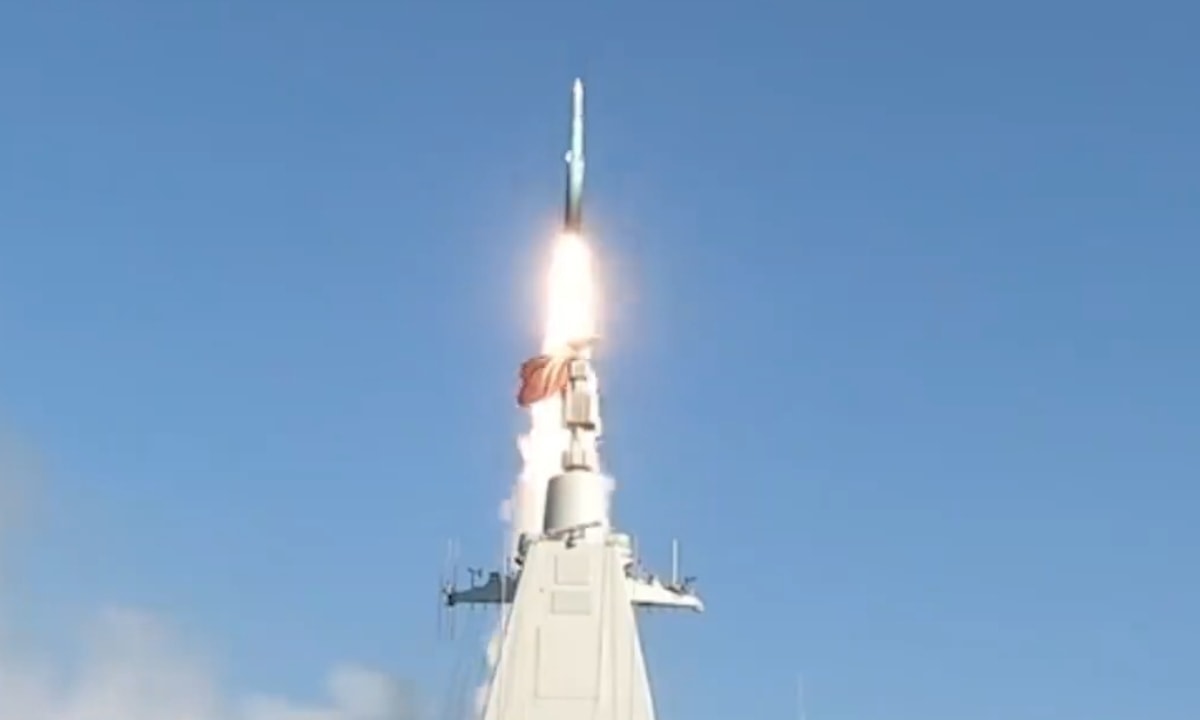
The Chinese Navy has just announced the testing of the YJ-20 hypersonic missile from a surface warship, marking an expansion of its offensive capabilities from strategic platforms to actual naval warfare. Videos and images published by state media show the missile being launched vertically from a large destroyer as part of routine training exercises.
The shift in hypersonic technology
According to analysts, this is the first time a Chinese hypersonic missile has been confirmed to be integrated into a naval platform. Previously, the country's hypersonic weapons programs were typically associated with land-to-land ballistic missiles or air-launched platforms for strategic deterrence purposes.
The images show the missiles being deployed from a multi-purpose vertical launch system (VLS). This is a common configuration on modern warships, allowing for the flexible integration of various weapons on the same combat chassis, optimizing offensive and defensive capabilities.
The YJ-20's technical advantages over its predecessors.
Based on international defense assessments, the YJ-20 is a hypersonic anti-ship missile with a speed exceeding Mach 5. Its extremely high speed, combined with a low flight trajectory and flexible maneuverability in the final phase, creates immense pressure on ship defense systems that rely on early warning time.
Compared to the currently deployed YJ-18 (which combines subsonic and supersonic terminal phases), the YJ-20 is said to maintain hypersonic speed throughout its flight path. This significantly shortens the enemy's reaction time, making it more difficult for fleet air defenses to effectively intercept it.
Challenges for modern naval defense
The deployment of hypersonic anti-ship missiles at sea could completely change the thinking behind defense. Current carrier strike groups are primarily optimized to counter traditional subsonic and hypersonic missiles. The appearance of the YJ-20 forces naval forces to upgrade their entire control, detection, and command chain (C4ISR).
Experts believe that for the YJ-20 to be fully effective, it needs to be supported by a robust radar and reconnaissance network capable of continuously updating target coordinates in a complex electronic warfare environment. Although detailed specifications regarding range and accuracy have not been released, the test shows that China is accelerating the integration of hypersonic weapons into its naval arsenal.


