
China: Experiencing squat toilets and important things to note for tourists.
Despite possessing state-of-the-art infrastructure, many places in China still maintain the habit of using squat toilets, requiring Vietnamese tourists to be well-prepared mentally and with necessary supplies.
Concluding her trip to Shanghai in December, Thanh Trang, a tourist from Hanoi, was deeply impressed by the remarkable development of the city's infrastructure. However, what she remembered most was the public sanitation system. Trang shared that, despite the city having high-speed trains that travel nearly 30km in just a few minutes, many public restrooms still commonly feature squat toilets and lack bidet sprays.
This experience is not uncommon for Vietnamese tourists visiting China. Minh Anh (Ho Chi Minh City), who explored the Lijiang - Shangri-La route in 2024, said that in the mountainous region of Yunnan, only hotels provide seating platforms, while most others use the traditional squatting method.
Why China prioritizes squat toilets.
According to explanations from documents on Baidu, the habit of using squat toilets in China stems from historical and economic factors. This type of toilet is inexpensive to build, easy to maintain, and suits the long-standing living habits of the majority of the population, especially in rural areas.
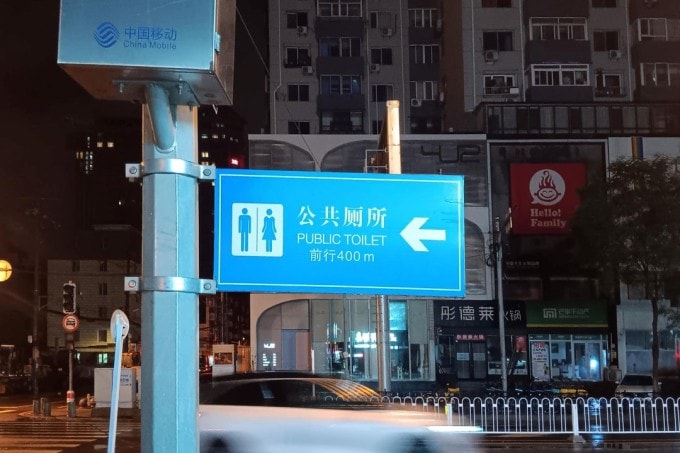
From a public hygiene perspective, many locals are hesitant to use toilet seats due to concerns about direct contact in crowded areas. Squat toilets are considered safer as they eliminate the need to touch the device. Medically, this posture is also believed to support better digestion, helping to reduce constipation.
Classification of sanitation systems for tourists
Based on the experience of tour guide Anh Kiet, who has visited China more than 10 times, the sanitation system there can be divided into three main groups:
- Group 1:In major cities like Beijing, Shanghai, and Suzhou, 100% of shopping malls and 3-5 star hotels have modern, clean toilets.
- Group 2:Scenic areas, rest stops, or on the outskirts of the city center. Approximately 50-70% still maintain squat toilets.
- Group 3:In remote, small towns with few international visitors, the rate of squat toilets can reach up to 90%, sometimes in the form of long pits with basic hygiene standards.

Situations to be aware of and practical experiences.
Mr. Pham Anh Vu, Deputy General Director of Viet Travel, said that first-time tourists often encounter difficulties with signs written in Chinese characters without illustrations. In addition, a notable feature is that large rolls of paper are usually placed in the common area outside instead of inside each individual cabin. If tourists are not prepared before entering, calling for assistance will be very inconvenient.
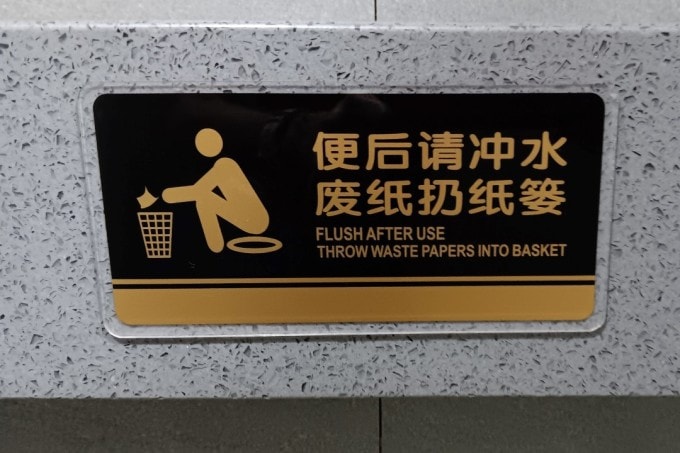
To ensure a smooth trip, travelers should note the following points:
- Always carry tissues and hand sanitizer when leaving the hotel.
- Prioritize using restrooms at large restaurants or shopping malls along your journey.
- Be prepared for crowded tourist areas or remote regions where hygiene standards may be lower than expected.
- Ask the tour guide for the location of toilets with seats if you are traveling with elderly people.
Despite cultural differences, most tourists embrace the principle of "when in Rome, do as the Romans do" in order to focus on enjoying the unique landscapes and cultural values of China.


