
A village head in his 30s in Nghe An 'thinks differently, acts differently', transforming hillsides into a 'gold mine' worth hundreds of millions of dong.
Instead of following traditional farming methods or relying on government support, young village head Quang Van Thanh in Muong Piet (Thong Thu commune, Nghe An province) has thought and acted differently. By stratifying hilly land according to terrain and selecting crops and livestock suitable for each altitude, he has created an effective integrated economic model…
.jpg)
Arriving in Muong Piet village on a sunny day, we followed a winding road through the vast pine forest to meet Quang Van Thanh, born in 1986. He was neat-looking, spoke clearly, and, most importantly, his eyes always shone with faith in the forest and the land. He led us to the hill – the area he calls the "production stratification zone," which he has been diligently developing for over 10 years.
“When I first started cultivating the land, everyone told me I was reckless. With such steep slopes, what could I possibly grow that would bear fruit? But I thought differently. On sloping land, I divided it into layers. I planted trees that preferred sunlight and good drainage higher up. The foothills retained more water, so I used that for growing crops for seeds, while the valleys were used for rice. Each area had its own specific crop, each layer had its own purpose, there was no overlap, and no land was left fallow,” Thanh explained.
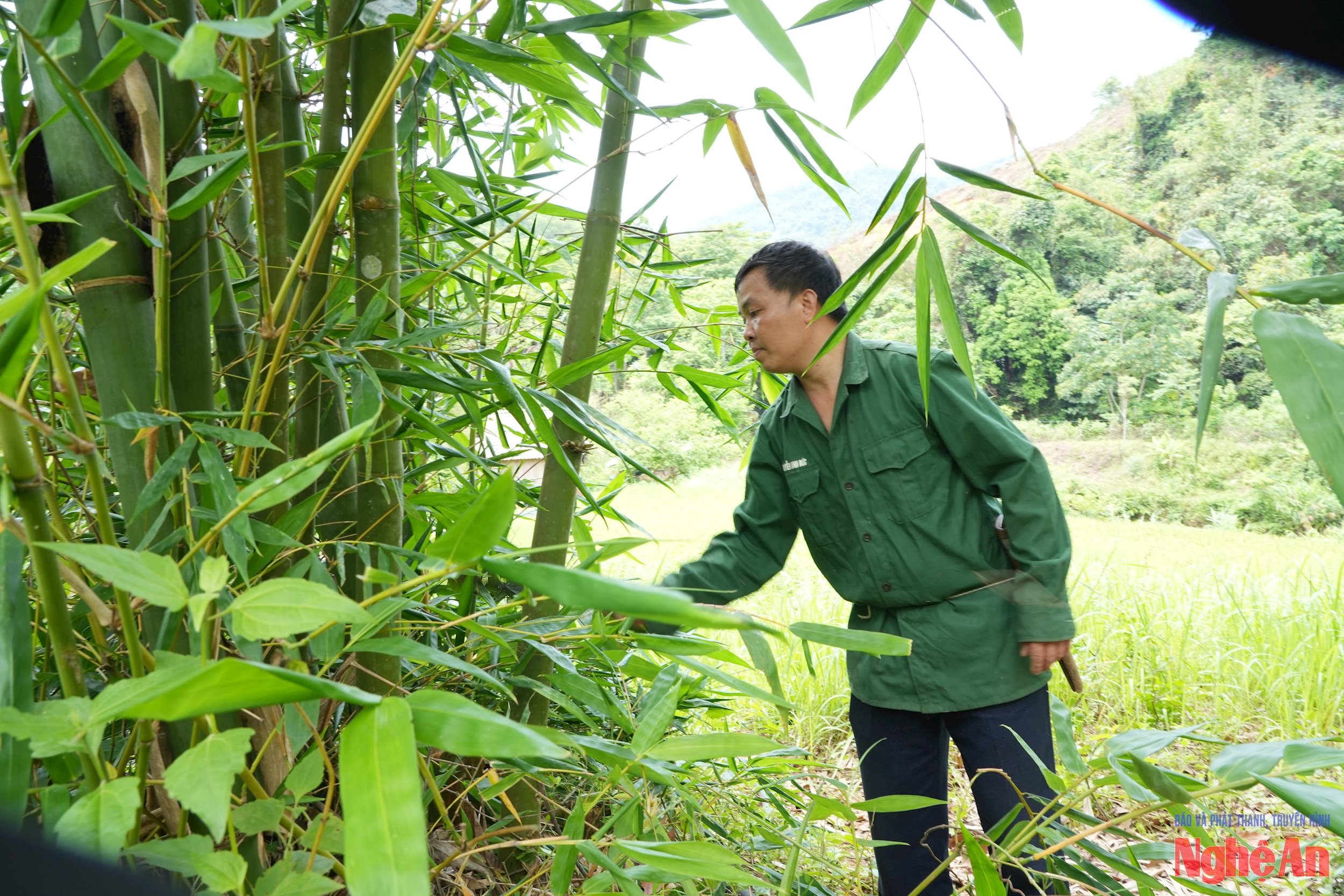
Mr. Thanh's idea of "tiered production" is not just a production solution, but also a very scientific approach to ecological agriculture. On an area of more than 6 hectares of hilly forest land, he divided it into five distinct tiers. In the highest tier, which is airy, bright, and retains less water, he planted 400 bamboo shoots. "Each year I harvest about 4.5 tons of bamboo shoots, selling them for 20-25 million VND. They are easy to care for, not picky about soil, and have few pests and diseases," he shared.
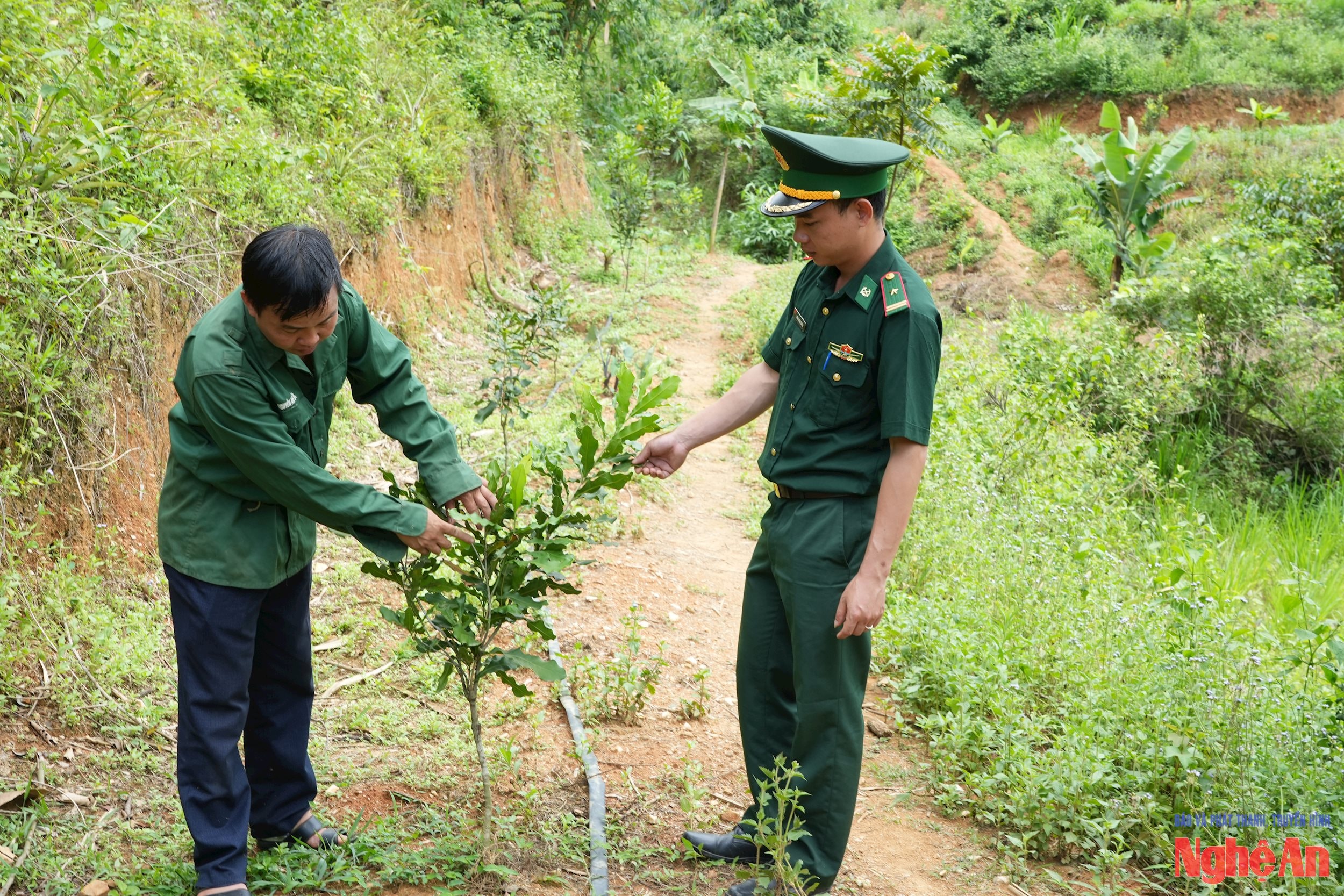
On the second level, at the foot of the hill, where the soil retains moisture better, Mr. Thanh planted 300 macadamia trees. He is the second household in the village to boldly introduce this high-economic-value crop to the hilly land of Thong Thu. The first macadamia trees are sprouting, promising a bountiful harvest in the next few years.
Descending to the third level, which he transformed into a small valley, he said, "We mainly grow rice for our own consumption; we never buy it from outside. Having clean rice to eat means we can raise clean pigs and chickens as well," he explained.
The fourth level consists of two fish ponds, providing a stable income each year from selling fish to local people. The ponds are adjacent to the livestock area, where Mr. Thanh raises native black pigs, free-range chickens, and grass-fed goats in an integrated model that maximizes the use of by-products to regenerate feed sources.
.jpg)
And on the outermost layer, the lowest level bordering the production forest land, he planted over 1 hectare of acacia trees for timber. “I plant perennial trees interspersed to generate short-term income to support long-term growth. Every few years I harvest bamboo shoots and raise chickens and ducks. Then, after 5-7 years, the acacia trees are ready for harvest. The cycle continues like that,” Thanh explained.
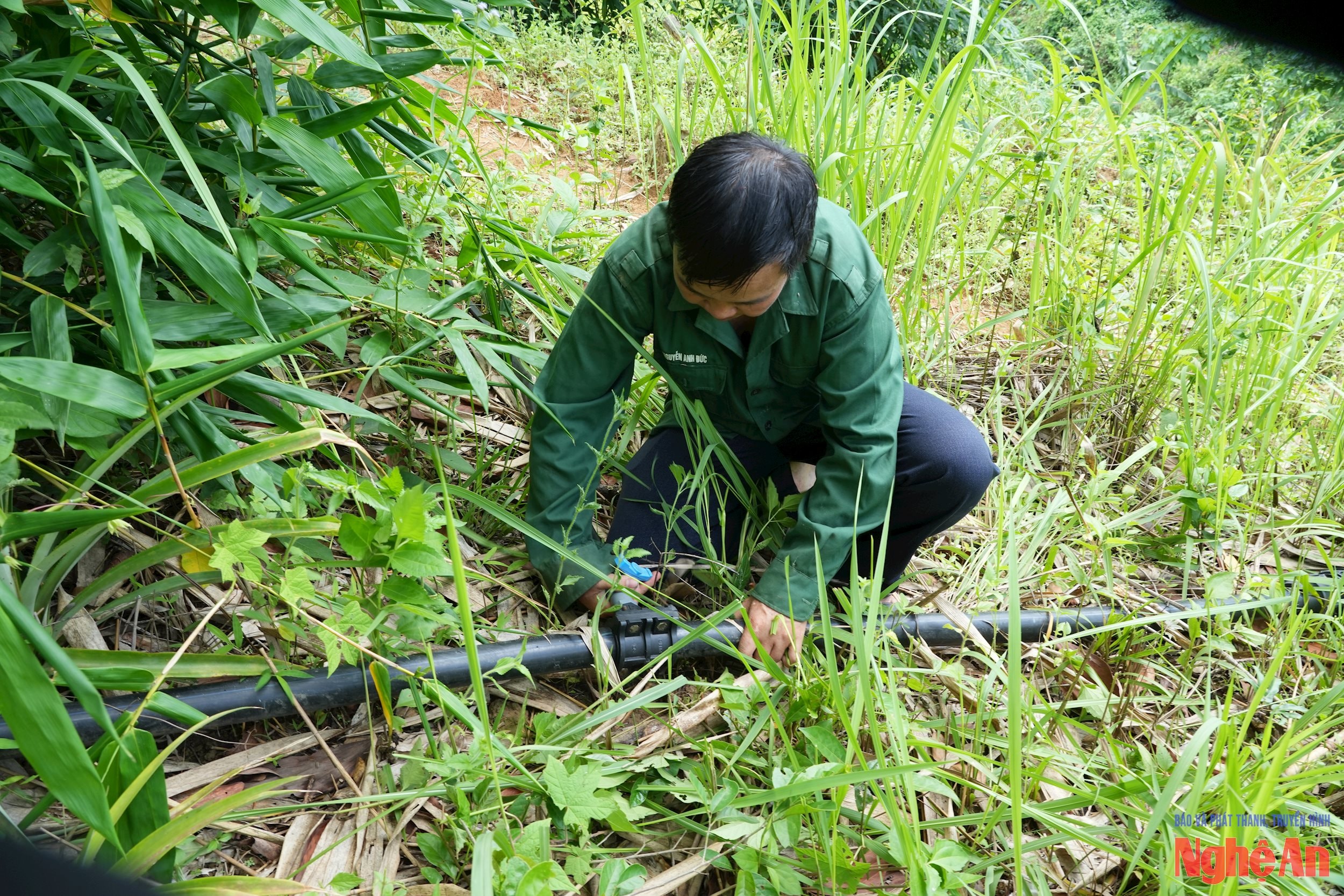
Not content with just farming, he also installed a system of pipes to bring water from the upstream stream for irrigation and daily use. When asked why he invested so much effort, he said: "With water, plants can survive, and the soil can be preserved. Digging ponds and channeling water is also a way to prevent forest fires, retain moisture, and limit erosion."
This "tiered" approach sounds simple, but implementing it in practice in the hilly areas of Thong Thu is not easy at all. It requires strength, technical skills, and above all, faith. And most importantly, it requires vision—knowing which plants are suitable for the soil, which animals are easy to raise, and what the market needs… to place them in the right places.
“When I started, many people were skeptical. But now they see that the land is habitable, the forest is preserved, there is enough rice, fish, and meat to eat, and they have a steady income… so they come to learn. I’m happy that people are starting to think differently and do things differently,” Thanh said, his eyes shining with joy.

Each year, from that tiered, integrated economic model, he earns over 100 million VND, a considerable sum for people in mountainous areas. But for him, the greatest success is not the number, but the change in people's mindset about farming.
We left Muong Piet village as the sun had set behind the hills. On the terraced slopes, shimmering with the green light of the forest, we caught a glimpse of the young village chief busily clearing weeds under a macadamia tree. His words still echoed in my mind: "We were born in the forest, we must learn to live with the forest, protect the land and water for our children and grandchildren."


