
Head of the Central Organizing Committee: The Central Committee allows localities to pilot new organizational models.
A new regulation in the implementation of the Party Charter stipulates that the Central Committee allows localities to pilot certain new organizational models and approaches within the framework of the Party Charter, and they must report to the Politburo for approval before implementation.
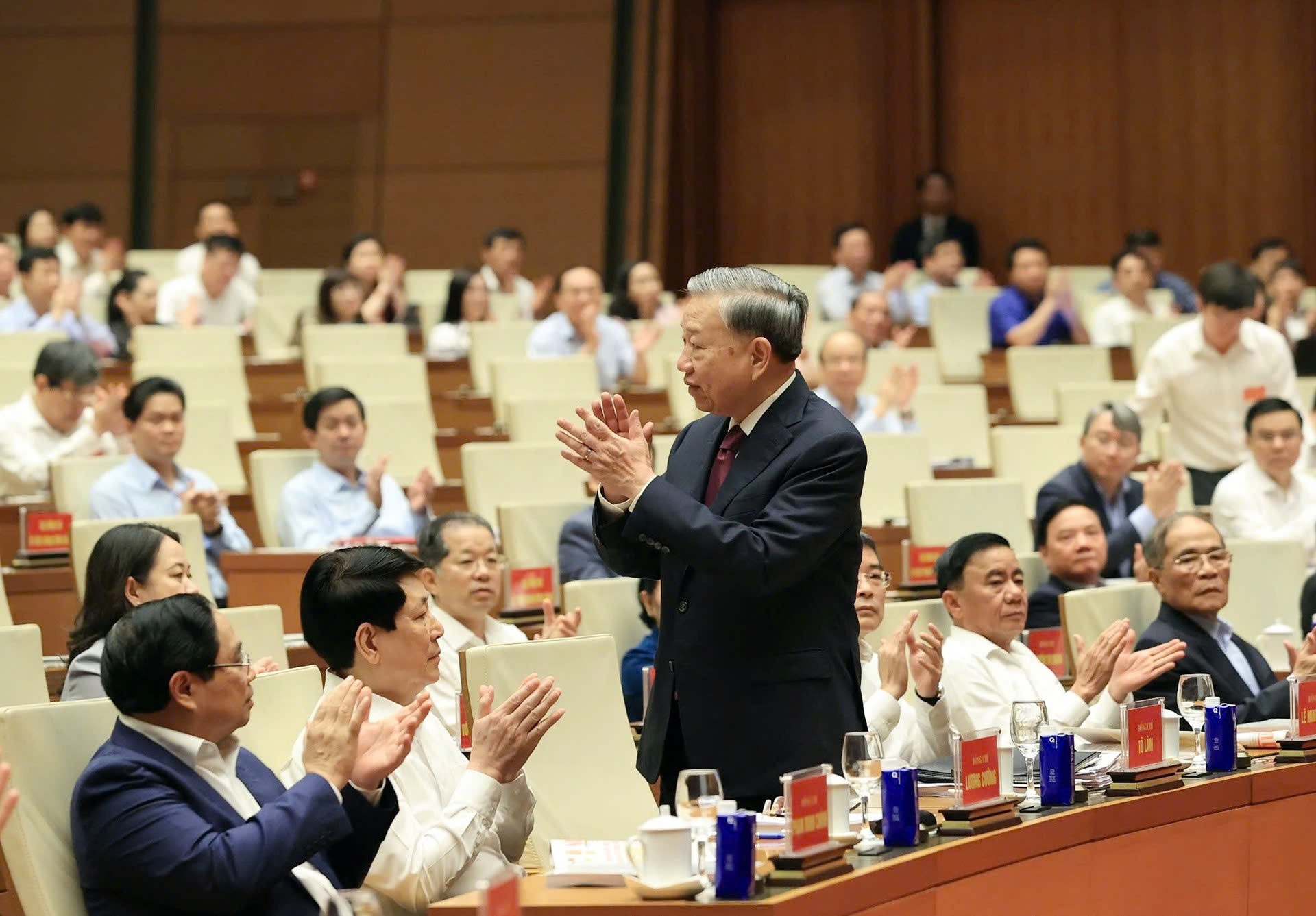
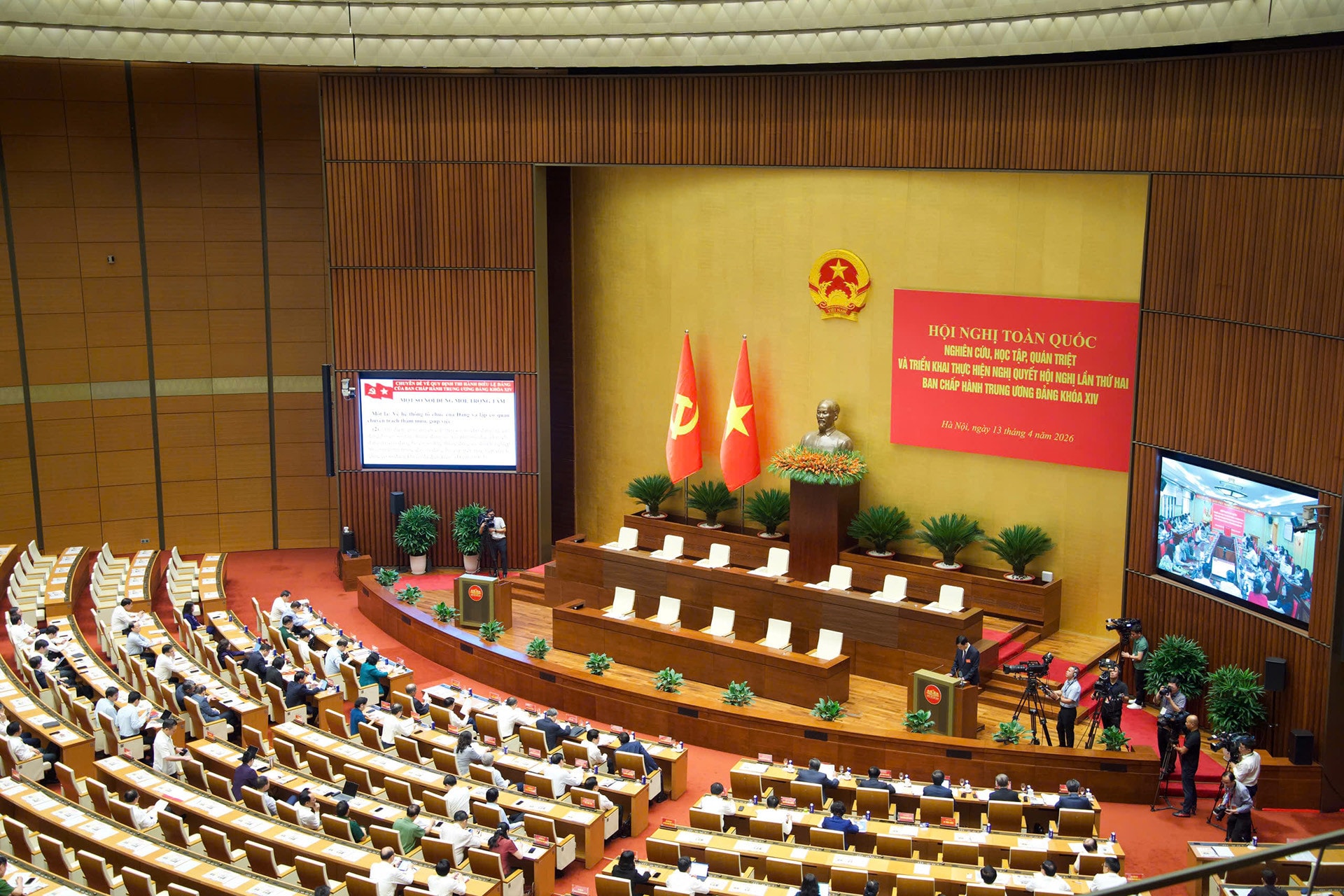
This morning, the Secretariat of the Central Committee chaired a national conference to study, understand, and implement the Resolution of the Second Plenum of the 14th Central Committee of the Communist Party of Vietnam. Leaders and former leaders of the Party and State attended the conference at various locations.
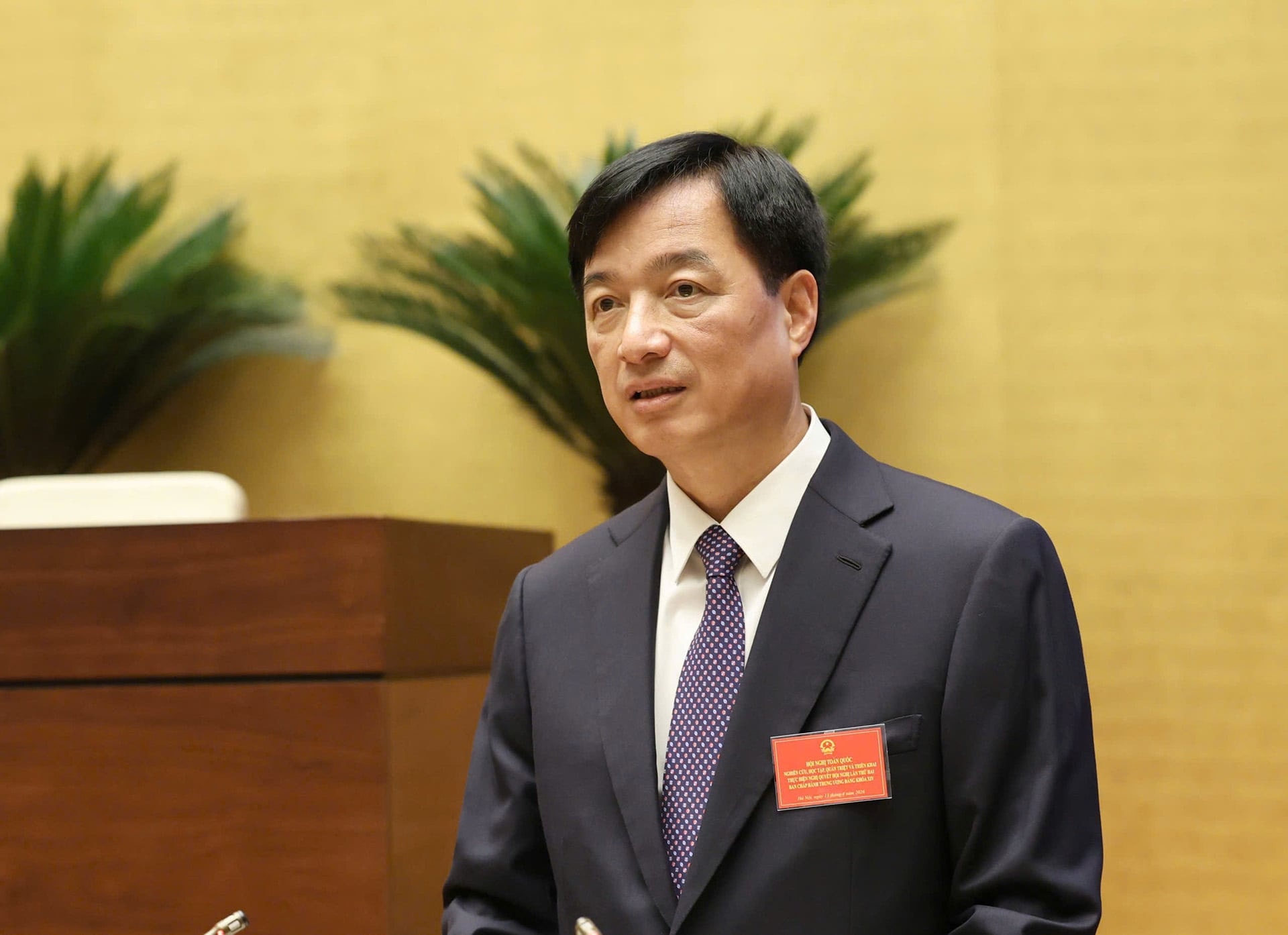
Presenting a thematic report on regulations for the implementation of the Party Charter, Central Committee Secretary and Head of the Central Organization Department Nguyen Duy Ngoc stated that on April 8th, on behalf of the Central Committee of the Party, General Secretary and President To Lam signed and promulgated Regulation No. 20 on the implementation of the Party Charter (replacing Regulation No. 294).
Pilot program to establish grassroots Party committees for non-state-owned enterprises at the commune level.
Aboutreorganize the Party's organizational system and establish specialized agencies to provide advice and support.The Head of the Central Organizing Committee stated that the Central Committee has added some regulations within its authority and implemented pilot programs for some new content.
The Central Committee is piloting the establishment of grassroots Party committees in non-state-owned enterprises at the commune, ward, and special zone levels. Comrade Nguyen Duy Ngoc informed that, in recent times, Party development work in non-state-owned enterprises in many localities has achieved positive results, with the establishment of many grassroots Party organizations in these enterprises directly under the commune-level Party committees.
In many places, there is a very large number of Party organizations (over 250), which makes it difficult for the commune-level Party committees to lead, direct, inspect, and supervise.
The Central Committee's decision to allow the establishment of block-level Party committees aims to reduce the number of Party organizations directly under the commune-level Party committees, thereby creating favorable conditions for commune-level Party committees to focus on leadership and direction, and improve the effectiveness of implementing the Party's policies and resolutions in their localities.
The Central Committee also piloted the delegation of authority from the higher level to the Party Committee of the grassroots Party organization directly under the Party Committee of the commune, ward, or special zone, and to the Party Committee of the grassroots Party organization directly under the Party Committee of State-owned enterprises, which were previously the direct higher-level Party Committee of the grassroots Party organization, when the conditions are met.
The Head of the Central Organizing Committee stated that the addition of the aforementioned pilot regulations on delegating authority aims to strengthen decentralization and delegation of power, reduce administrative procedures, shorten work processing times, and enhance flexibility and timeliness in leadership and direction.
AboutAssigning and appointing Party committee membersThe Central Committee has supplemented and amended several important contents to meet practical requirements in personnel work and ensure the continuous leadership of the Party organization.
Regulations "In cases where a Party branch lacks a secretary, deputy secretary, or committee member, the immediate superior Party committee shall consider and appoint a replacement."
The Head of the Central Organization Department stated that, based on practical experience in some agencies, units, and enterprises where there are organizational and personnel changes (such as transfers, rotations, retirements, resignations, etc.), the Party branches no longer have enough Party committee members to maintain operations.
Therefore, the Central Committee has added regulations granting authority to the immediate superior Party committee to consider and appoint. This is necessary and timely to ensure continuity and uninterrupted leadership and guidance of the Party organization.
Regulations "If necessary, the immediate superior Party committee may… appoint a Party member who is the head of an agency, unit, or organization to hold the position of secretary of the Party committee (branch) of that agency, unit, or organization.This aims to concretize the policy of strengthening the direct and comprehensive leadership of the Party over agencies and units, while ensuring consistent implementation of the model where the Party committee secretary is also the head of the agency or unit.
The Head of the Central Organizing Committee emphasized that in places where this model is implemented well, there will be high unity in leadership and management, reducing overlapping and dispersed responsibilities, and contributing to improved efficiency in fulfilling political tasks.
Regulations "A pilot program is being implemented whereby, when appointing personnel to the Party Committee, Standing Committee, and leadership positions at the directly subordinate levels, the higher-level Party Committee simultaneously appoints individuals to the Party Committee, Standing Committee, Party Secretary, Deputy Party Secretary, Chairman, and Deputy Chairman of the Party Committee's Inspection Committee, according to the structure of the lower levels."
The Head of the Central Organization Department stated that the personnel restructuring process in recent times has shown that the same personnel have to go through many procedures and formalities for each level and each concurrent position according to the structure, leading to delays and affecting leadership, direction, and management.
Therefore, the addition of this content aims to innovate the personnel work process, facilitate the consolidation of Party committee personnel, ensure consistency, reduce administrative procedures and intermediate steps, increase the proactive role of higher levels, while still upholding the Party's principles and regulations in personnel work.
Pilot testing of several new organizational models and approaches.
AboutPromote decentralization and delegation of authority in handling tasks to the Standing Committee of the Party Committee.The Central Committee has added the regulation "The Central Committee assigned the Politburo and the Secretariat to pilot regulations on the composition of the standing committee of Party committees and to decentralize and delegate authority to the standing committees of Party committees in the following: Central Party agencies; Government; National Assembly; Vietnam Fatherland Front, central mass organizations; Party committees at the level directly above grassroots Party organizations in ministries, sectors, agencies, and organizations at the central level; provincial-level Party agencies; and provincial People's Committees to perform specific tasks of the Party committee and its standing committee to implement resolutions and directives of the Party committee and its standing committee at the same level and higher-level Party committees."
The Head of the Central Organization Department informed that, in the context of the enormous workload of newly established Party committees at the central and provincial levels, as well as Party committees of ministries and sectors, the nature of the work is diverse, complex, comprehensive, interconnected, and covers many fields… some tasks require quick and timely handling.
If all discussions and decisions are concentrated at the Party Committee and Standing Committee levels, following a full process, it will lead to overload, prolong processing times, and reduce the proactiveness and flexibility in leadership and guidance; at the same time, the Party Committee and Standing Committee will have to carry out a great deal of Party affairs.
Therefore, delegating authority to the standing collective helps shorten processing time, improve the efficiency of leadership, direction, and management, and ensure the rapid and timely implementation of Party resolutions and directives, in line with the requirements of administrative reform.
At the same time, the Central Committee allowed localities to pilot some new organizational models and approaches within the framework of the Party Charter, and they had to report to the Politburo for approval before implementation.
This regulation reflects the Party's innovative leadership thinking towards flexibility, proactiveness, and practicality; it encourages and facilitates local Party committees and leaders to think boldly, act decisively, and confidently propose and experiment with new models suitable to the specific characteristics and circumstances of their localities for the common good.
Requiring reports and consultations with the Politburo before implementation both encourages innovation and ensures unified leadership, strict control, and adherence to Party principles; preventing arbitrary, uncontrolled, or inappropriate implementation that violates Party principles and regulations.
Comrade Nguyen Duy Ngoc clearly stated that this mechanism both encourages innovation and creativity while ensuring strict control over direction, maintaining discipline and order throughout the system; at the same time, it creates an important basis for summarizing practical experiences and improving institutions.


