
Truong Chinh 12A in the reusable missile race
Both attempts to recover the first stages of the Long March 12A and Zhuque 3 rockets failed, demonstrating that China remains about a decade behind the US in reusable rockets and low-orbit satellite networks.
Two failed first-stage recovery tests in December involving the Long March 12A and Zhuque 3 demonstrate that China's reusable rocket program is still in its experimental phase, while the US has mastered this technology for about 10 years with the Falcon 9 and more recently the New Glenn. However, simultaneously, China is accelerating the construction of satellite infrastructure and large-scale manufacturing facilities to close the gap in space and low-orbit telecommunications.
Truong Chinh 12A: State efforts with methane fuel
The Long March 12A is the first reusable rocket developed by the Chinese state, designed by the Shanghai Academy of Aerospace Technology, under the China Aerospace Science and Technology Corporation. The test launch took place at the Jiuquan Satellite Launch Center in northwestern China on the morning of December 23.
This rocket is 62 meters tall and capable of delivering 12 tons of cargo to low Earth orbit. The Long March 12A was developed from the Long March 12, which used kerosene (a petroleum-based fuel), but has been upgraded to use methane and liquid oxygen. Using methane in combination with liquid oxygen is considered a new direction in launch technology, suitable for multiple reuse.
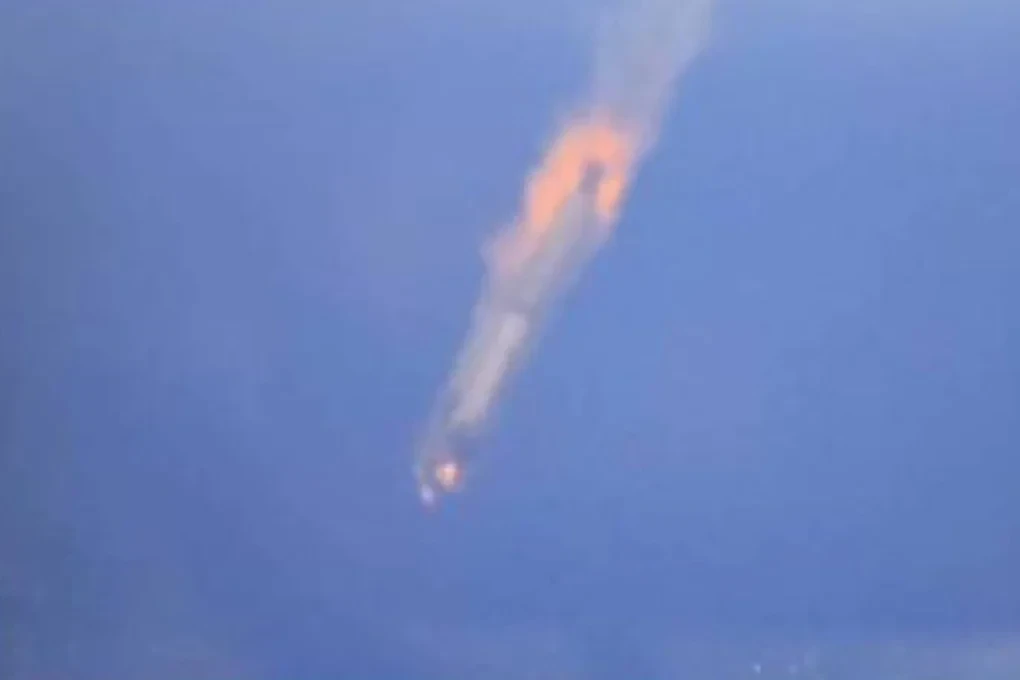
Despite carrying a payload into orbit, the primary objective of the Long March 12A was to recover the first stage for reuse. However, this test launch failed to recover the first stage. Prior to this, in January, a vertical takeoff and landing test of the Long March 12A was conducted, but the results were not widely publicized, indicating that the program is still in the technological development phase.
Vermilion Bird 3 and Heavenly Dragon 3: The Role of the Private Sector
Besides the state-owned enterprise-led program, China's private sector is also actively participating in the reusable rocket race. On December 3rd, Beijing-based LandSpace launched its first reusable rocket, Zhuque-3.
During its maiden flight, Vermilion Bird 3 successfully launched the second stage into orbit, but the first stage failed to land safely for reuse due to a fire during descent at the intended landing site. LandSpace stated that an anomaly during the landing phase is under investigation, indicating the company is working to identify and rectify the technical fault.
Awaiting its first launch at the Jiuquan Satellite Launch Center is the Tianlong 3, a reusable rocket developed by Space Pioneer (based in Beijing). However, the first flight is not expected to include a first-stage recovery test, suggesting a cautious approach prioritizing the successful placement of the payload into orbit before proceeding to the recovery phase.
A 10-year gap with the US in missile reuse.
Both private and state-owned Chinese companies are currently aiming to develop rockets that can be launched into orbit and returned for reuse. However, to date, only the United States has achieved the feat of successfully launching a rocket's first stage into orbit, returning it safely, and reusing it.
SpaceX is a pioneer in this field. The American company achieved the milestone of successfully recovering the first stage of a reusable rocket about 10 years ago with the Falcon 9, creating a significant time gap between the US and other countries in reusable launch technology.
The Falcon 9 is a reusable medium-sized rocket developed and operated by SpaceX, used to launch satellites, spacecraft, and cargo into Earth orbit. It was the world's first rocket to routinely recover and reuse its first stage, ushering in an era of low-cost, high-frequency space launches.
In November, New Glenn became the second rocket to achieve first-stage recovery. New Glenn was designed by Blue Origin, a privately held company founded by Jeff Bezos and based in Washington state. Blue Origin is completely separate from Amazon legally, financially, and operationally, reflecting the model of independent commercial space development in the US.
Reusable rockets and the need for low-orbit satellite networks.
Rockets capable of launching and returning for reuse are attracting significant interest for three main reasons: reduced costs of putting satellites into orbit, increased launch frequency, and support for large-scale space projects, particularly low-orbit internet satellite constellations.
China is planning to deploy multiple low-orbit internet satellite networks, each comprising tens of thousands of satellites, including the Guowang and Qianfan projects, which are expected to have up to 10,000 satellites and compete with SpaceX's Starlink. Lowering launch costs using reusable rockets is key to maintaining a high launch frequency for these networks.
Wenchang Satellite Factory and the Thousand Sails Program
Along with missile development, China is investing heavily in satellite manufacturing infrastructure. A 60,000 m² complex in Wenchang City (Hainan Province) is touted as Asia's largest satellite manufacturing plant, capable of producing 1,000 satellites annually with a highly automated production line.
This is the only facility in China that combines both satellite assembly and direct integration into the Long March rocket before launch at the Wenchang launch site. Having the satellite factory right next to the launch site reduces transportation costs, minimizes technical risks, and shortens the time needed to prepare the satellite for orbit, giving it an advantage that even the US, according to the source, does not possess.
This factory is believed to primarily serve the Thousand Sails network, which is expected to have 15,000 satellites in orbit by 2030. According to expert Jonathan McDowell at the Harvard-Smithsonian Center for Astrophysics, Thousand Sails currently has only deployed about 108 satellites, but with accelerated production capacity, China expects to close the significant gap with Starlink in the next few years.
Besides Thousand Sails, China is also pursuing three other massive low-orbit satellite projects: Guowang, Honghu, and Qianfan. These programs are considered of national strategic importance, with each network potentially comprising tens of thousands of satellites, aiming to build a Chinese-controlled "super-internet in space."
Starlink, Amazon Kuiper, and the military implications of the LEO network.
Meanwhile, Elon Musk's Starlink is currently the world's largest low-orbit satellite internet network, with nearly 9,000 operational satellites providing service in over 125 countries and territories. Under a license approved by the U.S. Federal Communications Commission (FCC), Starlink can expand to between 12,000 and 42,000 satellites.
The United States is currently the only country that has successfully deployed a large-scale, commercially viable low-orbit satellite internet network. Starlink provides high-speed, low-latency internet to millions of users in diverse environments, from remote areas and deserts to war zones.
Starlink has proven its worth in the Ukraine conflict, being used for battlefield communications, drone guidance, artillery coordination, and humanitarian aid support, all relying on low-orbit satellites. This demonstrates how a private company like SpaceX can influence the battlefield, while also highlighting the significant advantage in information warfare and electronic warfare when controlling a low-orbit satellite network.
Besides Starlink, the US also has the Amazon Kuiper satellite internet project, which is expected to begin commercial deployment in 2026. Amazon Kuiper launched its first batch of 27 satellites into low Earth orbit on April 28th using a United Launch Alliance Atlas V rocket. According to recent announcements, Amazon has launched more than 150 Kuiper satellites into low Earth orbit.
Amazon aims to build a network of approximately 3,232–3,236 Kuiper satellites to provide global internet coverage and has ordered more than 80 launches from various rocket suppliers, including United Launch Alliance, Blue Origin, and Arianespace. This demonstrates the model of combining diverse launch contractors and large-scale LEO networks that the US is actively exploiting.
Assessment: China accelerates but the US still leads.
From a technical and infrastructure perspective, China is simultaneously pursuing two pillars: developing reusable rockets such as the Long March 12A, Zhuque 3, and Tianlong 3, and building large-scale satellite factories and LEO networks like Thousand Sails, Guowang, Honghu, and Qianfan. The two failed first-stage recovery attempts in December show that China's reusable rocket technology is still in its development phase, while the US has over a decade of operating reusable rockets with the Falcon 9 and the addition of the New Glenn.
However, the heavy investment in satellite production and integration with launch sites shows that China is preparing the infrastructure so that when reusable rocket technology matures, they can quickly increase launch frequency and deploy large-scale LEO networks to compete with Starlink and Amazon Kuiper. Currently, based on published data, the US still holds a clear advantage in both proven reusable launch technology and in operating low-orbit satellite internet networks serving both civilian and military purposes.


