
The school is new, but does the name need to be... new?
Following the reorganization and merger of over 600 schools across all four levels, from preschool to high school, many localities in Nghe An have proceeded to rename schools and classes. This may seem like a simple task, but it is related to the history, traditions, and identity of each school, as well as the sentiments of staff, teachers, students, and parents.
Each school name is a history lesson.
The new school year has arrived for parents, students, and teachers in Kim Lien commune, bringing with it the merger of many new schools and changes in many of their names. What is truly significant is that, even though many schools have lost their old names, local residents still feel a sense of familiarity and closeness, as many of these names are associated with the birthplace of President Ho Chi Minh.
Specifically, Hoang Tru Kindergarten is the new name formed by merging Nam Giang, Nam Cat, and Hoang Tru Kindergartens; Lang Sen Kindergarten was established by merging Lang Sen and Hung Tien Kindergartens; Hoang Thi Loan Primary School was renamed by merging Nam Giang, Nam Cat, and Hoang Tru Primary Schools; Kim Lien Primary School was established by merging Lang Sen and Hung Tien Primary Schools; Nguyen Sinh Sac Secondary School was established by merging Long Lam and Tan Dan Secondary Schools; and Kim Lien Secondary School was established by merging Kim Lien, Nam Giang, and Nam Cat Secondary Schools.
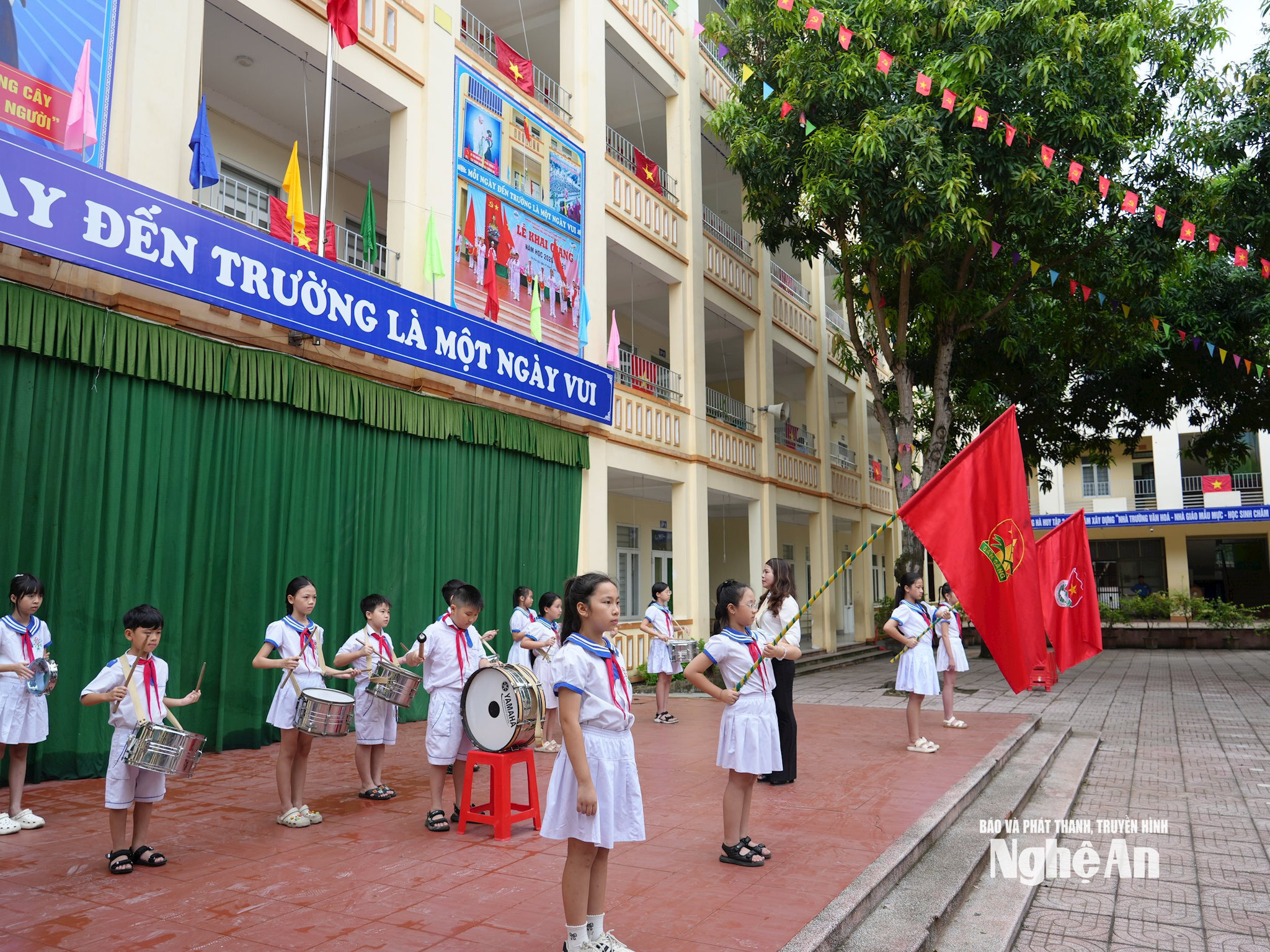
According to Mr. Le Trung Hoa, Chairman of the Kim Lien Commune People's Committee, the naming of the school will take place later.mergerThis is not just an administrative requirement, but also relates to the history, traditions, and sentiments of the locality. Therefore, before finalizing the official names, the commune held discussions and solicited opinions from school leaders, and also organized two conferences to consider and weigh the options. Based on that, the school names were selected and submitted to the Standing Committee of the Commune Party Committee for consideration and decision.
The Chairman of the People's Committee of Kim Lien commune stated that, given the special nature of this area – the birthplace and childhood home of President Ho Chi Minh – the selection of the school's name after the reorganization was carefully considered by the local authorities, taking into account its connection with the history, culture, and traditions of the homeland.
We hope that each school name we choose will carry a story. When students say the name of their school, they gain a history lesson. From there, they gradually develop a love for their homeland, pride, and an awareness of cherishing and preserving traditional values.
Mr. Le Trung Hoa - Chairman of the People's Committee of Kim Lien Commune
Not only in Kim Lien commune, but many localities also carefully consider naming schools after reorganization, aiming to preserve the cultural and historical values associated with the area. In Cua Lo ward, the new school names chosen are quite familiar, connected to well-known landmarks, and continue the legacy of names that have become hallmarks of the locality.
Accordingly, at the preschool level, the ward established Hai Hoa Preschool by merging Nghi Hai Preschool and Nghi Hoa Preschool; Tan Thuy Preschool by merging Nghi Tan Preschool, Nghi Thuy Preschool, and Thu Thuy Preschool... Notably, at the secondary school level, the locality established Nguyen Su Hoi Secondary School by rearranging and merging Nghi Tan Secondary School and Nghi Thuy Secondary School.
For the high school level, although the schools were merged into a single-level school, the local authorities had already sought the province's opinion before implementation to establish Le Thi Bach Cat High School based on the merger of Cua Lo 2 High School and Le Thi Bach Cat Junior High School.
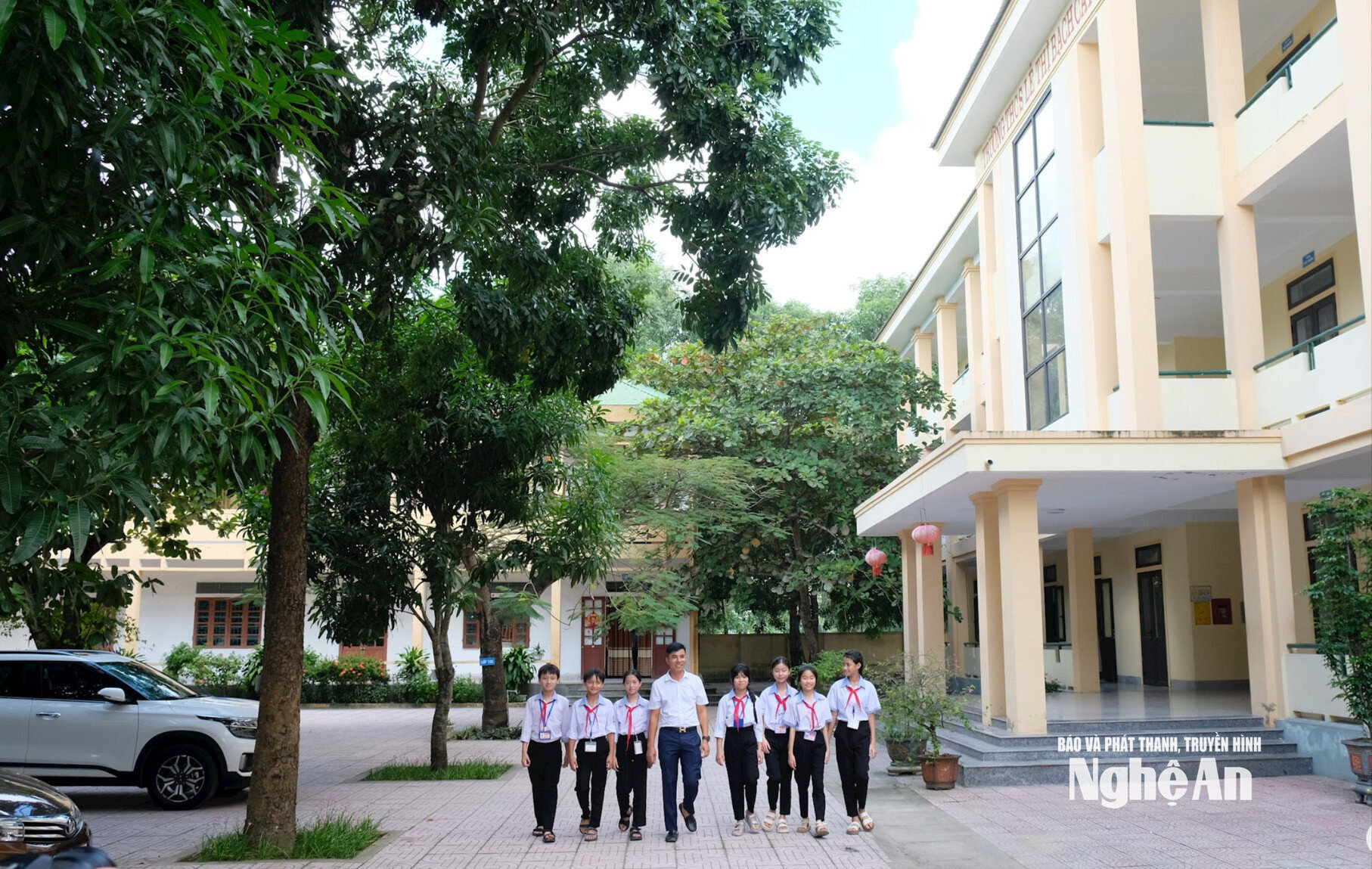
According to Mr. Phung Duc Nhan, Vice Chairman of the People's Committee of Cua Lo Ward, during the reorganization process, the locality focused on selecting names that were both appropriate to the new scale and area, and inherited the names of schools and places that had become familiar to the people. In particular, continuing to use the names of prominent figures associated with the Cua Lo area not only contributes to preserving historical imprints built up over many generations, but also carries profound educational significance.
Through the names of the schools, students have more opportunities to learn about the people who contributed to attracting settlers, reclaiming land, establishing villages, and building the Cua Lo region, as well as the brave sons and daughters of the homeland who dedicated and sacrificed themselves for the country...
Mr. Phung Duc Nhan - Vice Chairman of the People's Committee of Cua Lo Ward,
"Convenient," but not ideal.
Just two days after the school's name was changed, the People's Committee of Vinh Phu Ward issued a new decision, retaining the name Ha Huy Tap 2 Primary School. This decision quickly received widespread support and approval from parents, students, and generations of teachers at the school. This is because it's not only a familiar name associated with General Secretary Ha Huy Tap, who made significant contributions to the Vietnamese revolution, but it's also the name of Ha Huy Tap Ward before the administrative reorganization, aiming to preserve a landmark that has been closely linked to the lives of local people for many years.
In recent days, after localities completed the reorganization and merger of schools throughout the province, the issue of naming new schools has received public attention. Besides schools whose names were chosen based on local landmarks, historical figures, and traditions, some new school names have also caused parents, teachers, and generations of students to feel concerned and regretful.
In the Vinh area, after reorganization, a series of schools were renamed according to the new administrative place names, followed by sequential numbers such as Thanh Vinh 1, Thanh Vinh 2, Thanh Vinh 3, Thanh Vinh 4 or Truong Vinh 1, Truong Vinh 2, Vinh Loc 1, Vinh Loc 2, Vinh Loc 3... at various levels from preschool to junior high school. This naming method has the advantage of facilitating local identification, but at the same time, it has resulted in some school names that have been familiar to the people for generations no longer being maintained.
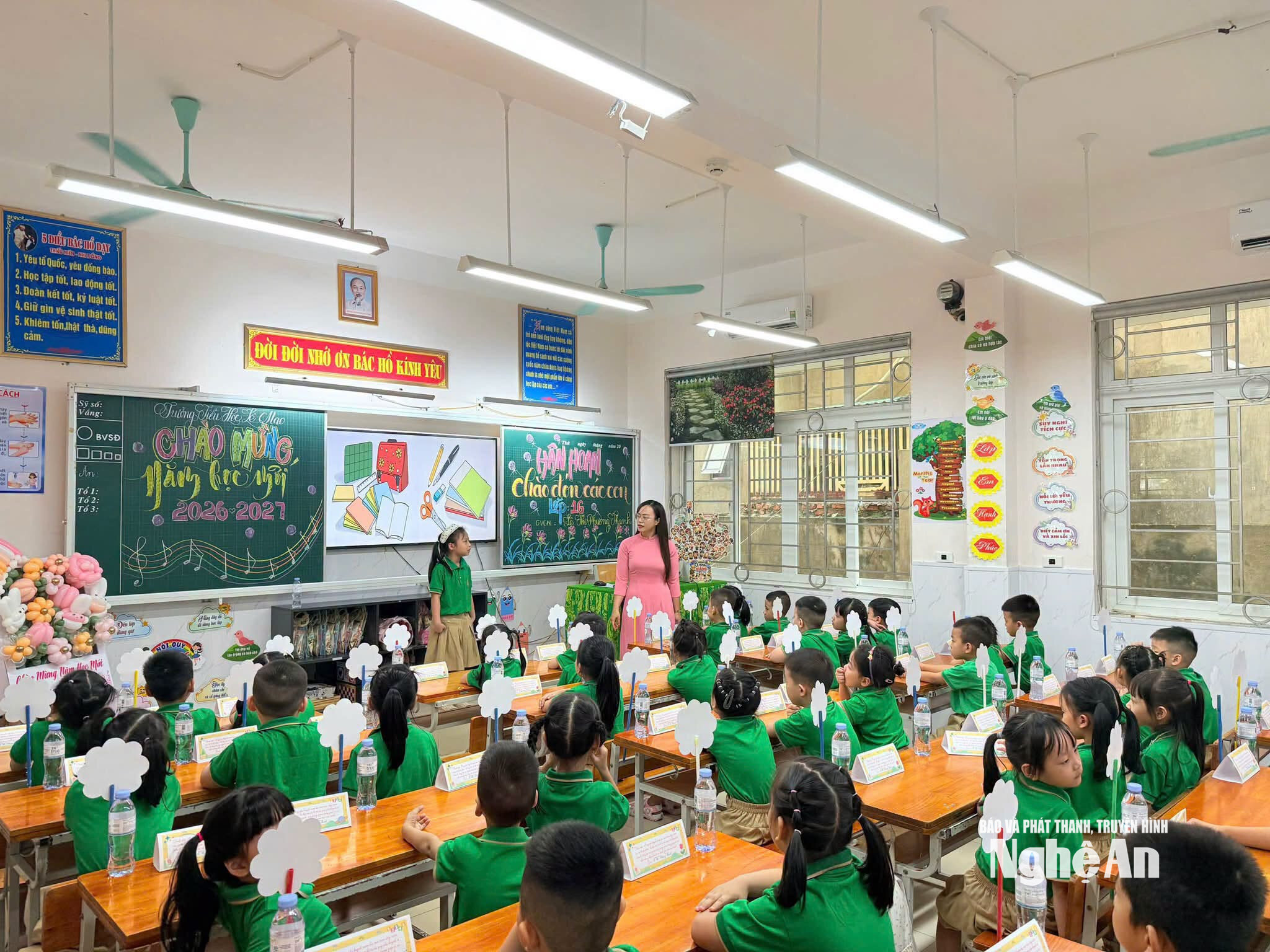
Notably, some schools did not undergo mergers but still changed their names. For example, in Thanh Vinh ward, school names such as Le Mao Primary School and Le Loi Primary School, which were originally associated with the history and development of the schools and the locality, and named after historical figures, famous people, and those who contributed to the homeland and the country, have now been replaced with new names and "digitized".
Following the school reorganization and mergers, many familiar school names were no longer maintained, leaving teachers with a sense of regret. According to many history teachers, naming schools after mergers shouldn't be done mechanically based on ward or commune names or numerical order, because each school name holds a layer of memory, history, and cultural value for the locality. Where possible, priority should be given to names with a long history, associated with prominent figures, landmarks, historical events, or traditions of the region. In that case, the school name not only helps identify an educational institution but can also become a "destination" for history education, fostering students' understanding and pride in their homeland.
.jpeg)
Regarding the naming of schools after mergers, the Department of Education and Training has already issued guidelines, emphasizing the avoidance of mechanically naming schools in sequential order or arbitrarily combining the names of old schools, thus losing the meaning of traditional names. However, the "digitalized" and mechanical way schools are named in some localities today has left many feeling disappointed and raised questions about education and connectivity. Not to mention, a school name is also a "cultural landmark," a place that preserves memories and tells stories about the land and its people to future generations of students.


