
Truong Sa - A place of amazing nature
(Baonghean.vn) - The Spratly Islands have a tropical monsoon climate. They are characterized by diurnal tides, with one high tide followed by one low tide. The islands are situated on submerged coral reefs. The soil is formed from loose humus, bird droppings, etc., and the islands lack fresh water. The geography and climate of the Spratly Islands create a very unique ecosystem, combined with the sea, coral reefs, and continental shelf, making the natural environment of the Spratly Islands incredibly diverse and fascinating.
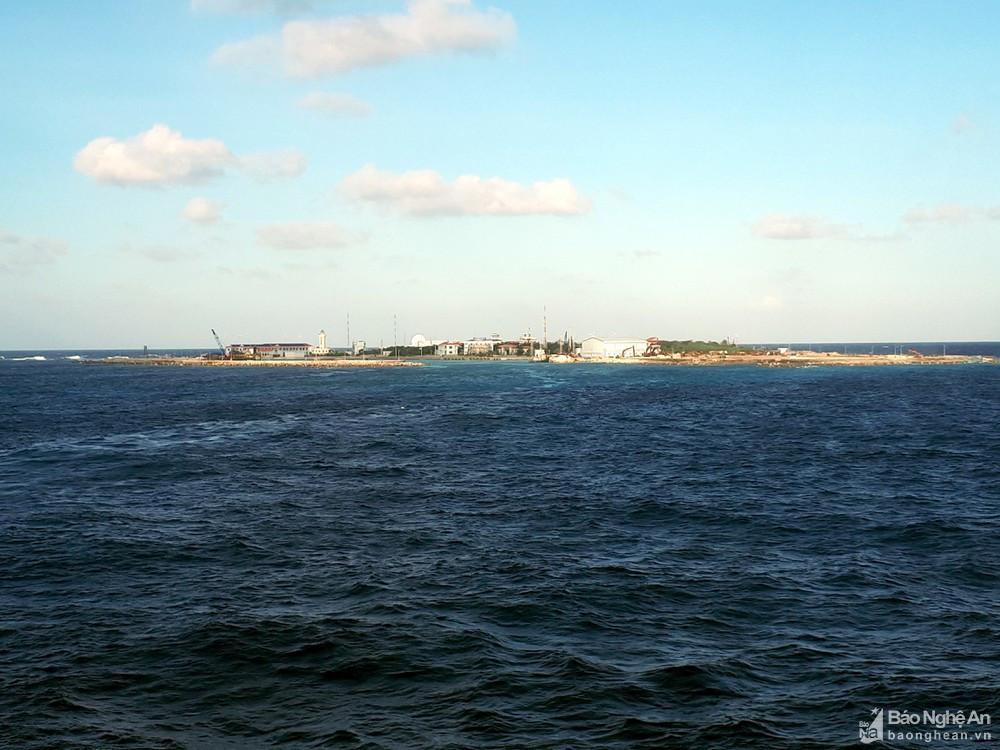 |
| Truong Sa Lon Island, viewed from the sea, is known as the "capital" of the Truong Sa archipelago. Photo: Tien Hung |
The majestic Truong Sa archipelago perhaps begins with its geology and topography; one of the most fascinating features is probably Thuyen Chai Reef. Seen from afar, the underwater coral reef, a vibrant green color, resembles a fishing boat—perhaps fishermen named it Thuyen Chai Reef after their traditional tool. However, satellite images show Thuyen Chai Reef more like a bow with its string drawn. Running in an east-southwest direction, this coral reef is about 3 nautical miles wide and 17 nautical miles long. When the tide recedes, the coral formations rise 20 to 40 cm above the water. In the middle of Thuyen Chai Reef is a large, deep "lake," covering more than twenty square kilometers. When the tide goes down, three sandbanks about half a meter high are revealed, but when the tide rises, they flood, reaching a depth of 1 meter. Naval engineers detonated explosives to blast away coral reefs, creating a 300-meter-long, 20-meter-wide channel to allow boats from the open sea outside the coral reef to enter the lagoon and avoid storms.
The engineering divers of Brigade 131, working on fortified structures in the Spratly Islands, have explored the seabed many times. Sometimes, the deep sea captivates them, as if they've wandered into the palace of the Sea King. Giant, colorful coral reefs, with their soft, cave-like spaces between branches, provide a habitat for various aquatic species. Long-finned fish swim gracefully alongside sea turtles and octopuses perched on their tentacles, resembling frail old women... In the future, the Spratly Islands will become a tourist destination, and the seabed will be a paradise for those who love adventure, exploration, and discovery.
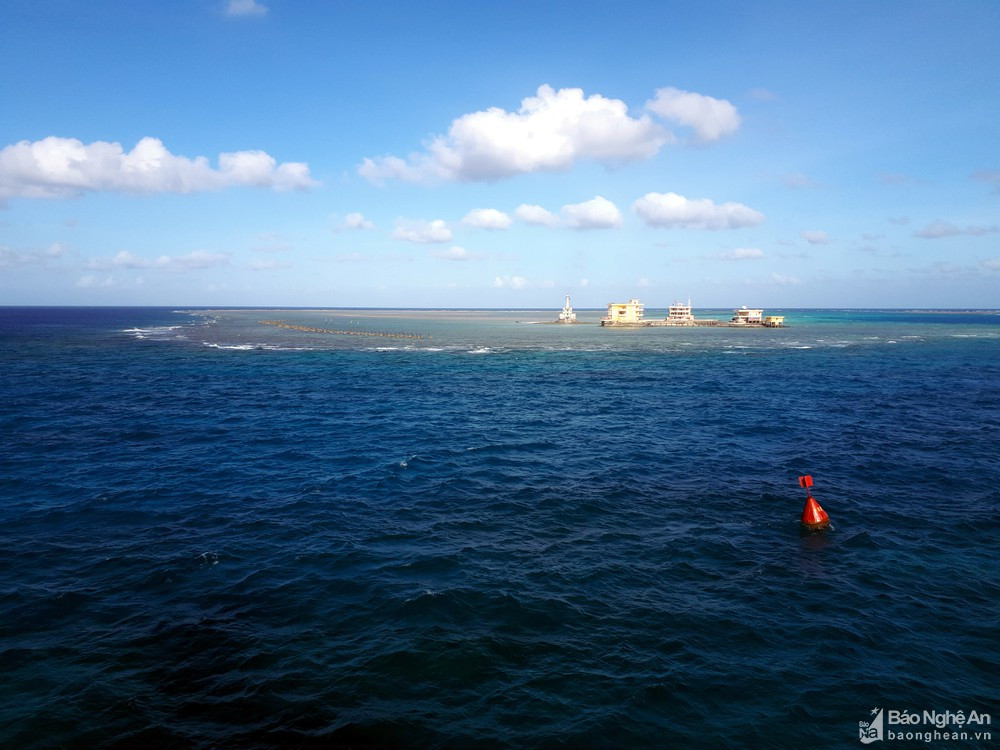 |
| Large coral reefs are gradually revealed after the tide recedes on Da Tay B Island. Photo: Tien Hung |
When I arrived at Truong Sa Dong, I sat resting by the concrete breakwater in the afternoon and saw many ancient trees washed ashore by the waves. Some trees still had their roots intact, their branches densely packed, their trunks so large that a person couldn't wrap their arms around them. Some had a diameter almost as tall as a person's head and were over 10 meters long. No one knew where these trees came from. Perhaps storms and floods in Central Vietnam carried them along the Perfume River, the Han River, the Ba River... out to sea? Or maybe their homeland was in some forest in the Philippines or Indonesia, or even from East Timor. There were also huge oil or gasoline drums, about 5 meters in diameter, washed ashore from somewhere. I suspected they came from a shipwreck. The Truong Sa sea is truly mysterious, fascinating, and has connections with the mainland formed by nature that are difficult to explain.
Due to the diurnal tidal regime, with the tide rising and falling, the landscape of the Spratly Islands is constantly changing, fresh and pristine. Even the presence of coral reefs or isolated rocks, sometimes submerged and sometimes exposed, is incredibly vibrant. Following the cyclical pattern of the diurnal tide, this month the coral reefs and isolated rocks appear in the early morning, next month at noon, the month after that at dusk, and the month after that... waking up in the middle of the night and looking out the window, you see a vast expanse of exposed coral reefs, only to see the submerged islands again at dawn, leaving only water everywhere.
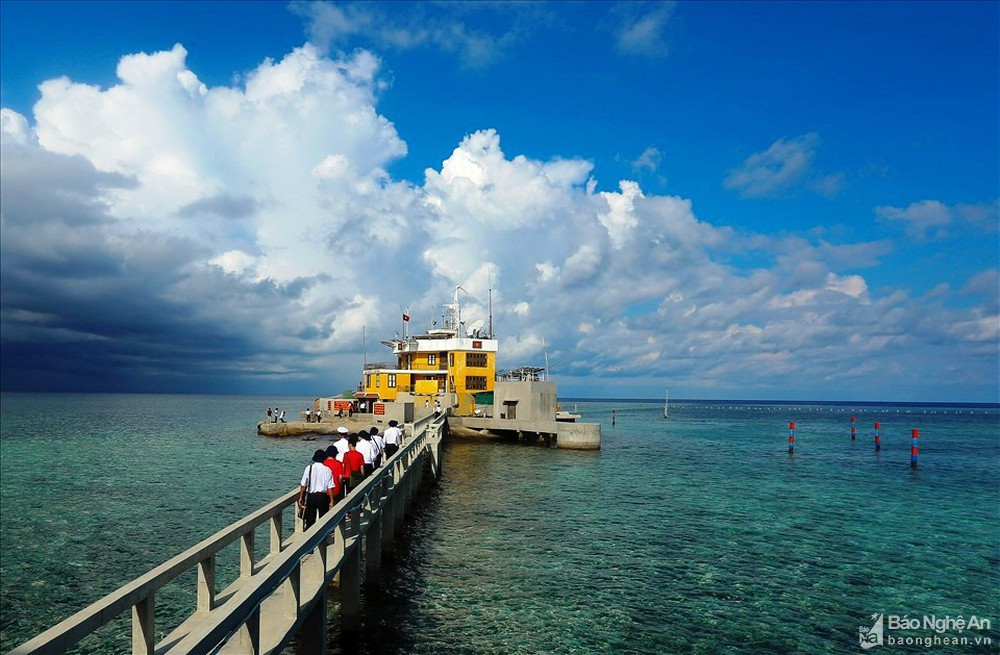 |
| Submerged island. Photo: Mai Thắng |
The first island to see the sunrise is Fairy Island. But, whether on a submerged island or any offshore platform, the sunrise and sunset are clearly visible. The sun in the Spratly Islands is bigger than the sun on the mainland; that's undeniable. Throughout our sea voyage, we repeatedly saw the sun, like a blazing red silkworm cocoon, slowly setting or slowly rising above the sea – meaning we witnessed its appearance and disappearance firsthand.
Perhaps the strangest thing about the Spratly Islands is... waterspouts. The sky is calm, the sea is still, and suddenly a column of white water rises vertically, sometimes twisting or turning like a giant drill bit, slowly moving across the surface. Sometimes the waterspout passes right in front of you, sometimes straight ahead, or sometimes diagonally before disappearing towards the horizon. If a waterspout heads towards an island, you'd better hide in a bunker, otherwise it will suck up everything – pots, pans, vegetables, weapons, chickens, ducks, and even people – into the air and throw them far away. The soldiers patrolling the islands in their boats are terrified at the sight of waterspouts; all they can do is speed back to the dock, anchor, and then flee to the island for cover.
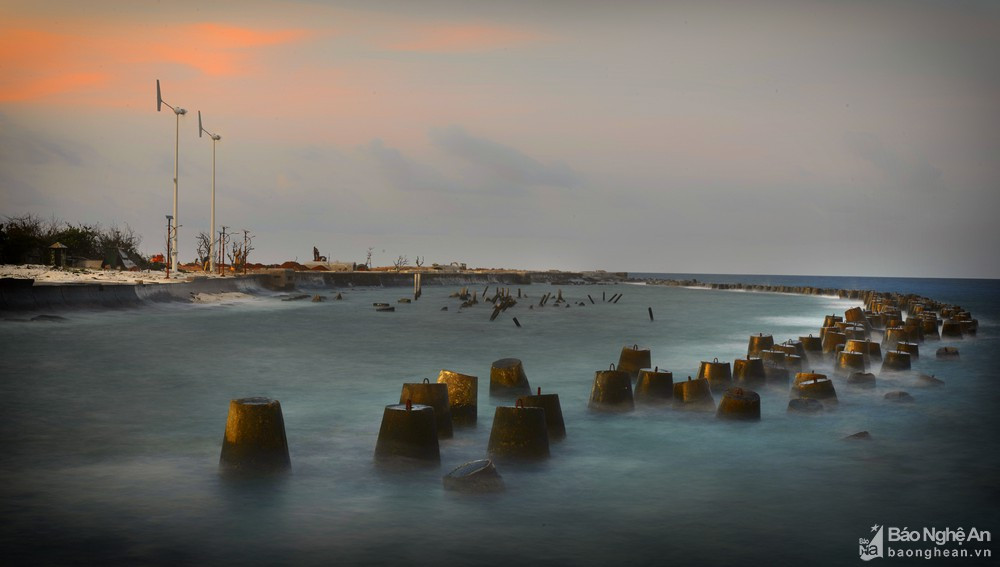 |
| The sunset casts a brilliant glow over Truong Sa Island. Photo: Quang Dung |
In the Spratly Islands, the most magnificent thing is... the rainbow. A rainbow is a physical phenomenon where sunlight is dispersed as it refracts and reflects through countless raindrops. Red, pink, green, blue, indigo, violet... brilliantly form a giant curved arc. Rainbows always appear after rain, and in the Spratly Islands, the weather is unpredictable, so it's common for the soldiers to witness the shimmering beauty of a rainbow several times a day. Sometimes, two rainbows overlap. During my trip, I and other people from the mainland saw the shimmering seven-colored rainbow on the sea surface several times; but the most spectacular was seeing a rainbow on the submerged island of Nui Le. Shortly after the ship left the island, it started to rain, then stopped after a short while. Yet, a brilliant, shimmering rainbow stretched across the sky, connecting outpost A to outpost B. The two submerged islands, far apart and dimly visible on the horizon, suddenly became the base of the seven-colored rainbow.
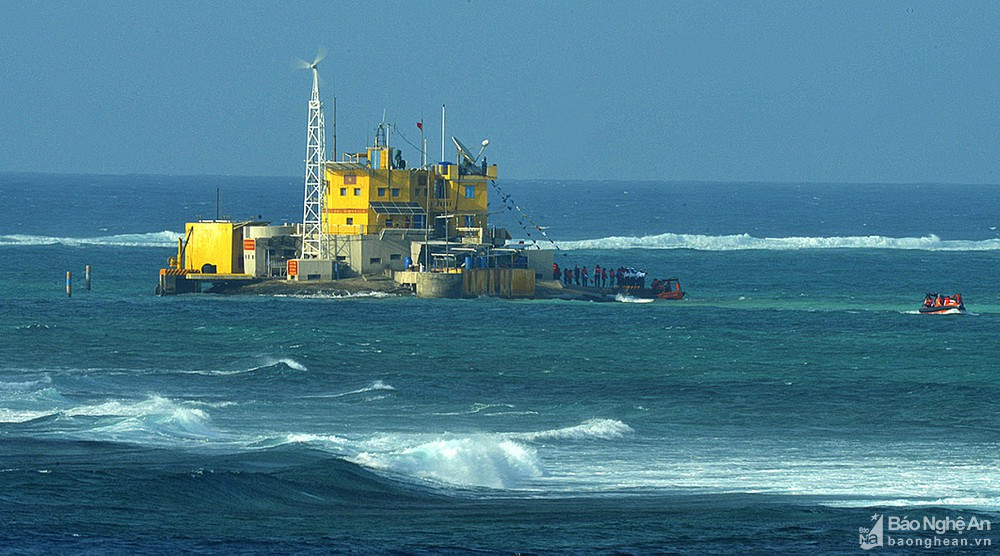 |
| Da Nam Island, a coral reef belonging to the Song Tu group in the Spratly Islands. Photo: Quang Dung |
The islands of Da Lon, Co Lin, Da Dong... surrounding the main island - on the outer edge of the coral reef - are teeming with valuable fish species: tuna, mackerel, tuna, sea cucumbers... When the tide recedes, the coral belt is completely exposed, allowing one to walk around the island. This submerged coral reef also has many valuable fish: tuna, grouper, snapper, lobster, sea turtles. At Tien Nu, there are enormous sea scallops. When I arrived at the island, I only saw a bare concrete "fortress island" and a tall island house with no greenery. I was wishing I could see a snail or a sea scallop the size of my little finger when a naval soldier driving a boat said, "Wait a moment." After saying that, the soldier immediately waded into the water and, after about five minutes of searching, pulled up a sea scallop shell the size of a hat, much to the astonishment of the people from the mainland. After searching a little longer, the young soldier pulled up another one, but it was chipped off by half a hand. People passed around the giant clam shell, dripping with saltwater, admiring it. The inside of the shell was smooth and glossy, ivory white, while the outside was rough and bumpy; they were a rare aquatic species, facing extinction.
Around the world, giant clams weighing nearly 300kg have been caught, yielding five pearls the size of goose eggs. In the Spratly Islands, almost every island has giant clams, and Sinh Ton Island even has giant clams. The Vietnamese Red Book records two specimens of giant clams, half a meter wide and nearly a meter long, caught on Sinh Ton Island. Island soldiers wading in the coral reefs are terrified of stepping on the mouth of a giant clam or mussel, as it might suddenly snap shut, crushing their shoes or sandals down to the bone. The only way to free their feet is to use a machete or crowbar.
The Spratly Islands also have a type of giant green turtle. These green turtles are actually large sea turtles. (There are also three turtles in the lagoon of the submerged Toc Tan island..., but they are made of concrete. Each weighs... 3 tons, used to anchor ships). During the breeding season, the green turtles crawl onto the sandy beaches of the islands to lay their eggs, then use their front legs to pile up sand, covering the tracks and also creating a warm temperature for incubation. When the time comes, the baby turtles break out of their shells. The soldiers on Truong Sa Dong island patrol early in the morning, and sometimes they catch one and together flip it over. Only by catching it this way can it not escape; it just keeps thrashing about with all four legs in the air. Otherwise, pulling, holding, or even sitting on the turtle's shell will only drag the person down into the sea.
In the Spratly Islands, the most vibrant thing is the birds. Since prehistoric times, every migratory season, they flock in large numbers to the equatorial tropics to escape the cold. The Spratly Islands serve as a resting place for them both on their way there and back. They are densely packed. Countless birds with dark gray feathers, seemingly obscuring the sun. Another flock, then another... and they completely block out the sun, darkening the entire sea and islands. They are not afraid of people; the soldiers on the islands seem accustomed to the noisy commotion of the birds, and endure the suffering caused by their squabbling and squabbling. Of course, preparations must also be made after the migratory flocks have left, cleaning up the dead birds and disinfecting the bird droppings that cover the rooftops, boat landings, island bases, fortifications, and water tanks.
The seagulls, in their normal flight, flutter gracefully in the sky, occasionally swooping down to catch fish, a beautiful and romantic sight. Some seagulls have gray backs, beaks, and legs, but white bellies; others have pure white feathers with reddish-pink legs and beaks. They are called... storm-predicting birds, and are very friendly to the sailors and island guards. When storms arrive, they know to fly to the island to escape the wind and rain. However, annoyingly, they sneak into meeting rooms, bedrooms, food cupboards, blankets, beds, and even the ship's cockpit. Yet, no one dares to chase them away or pluck their feathers for meat. At night, as the island guards doze off, they also nod off, only to be back in their dazzling white fluttering in the morning sun. How lively!
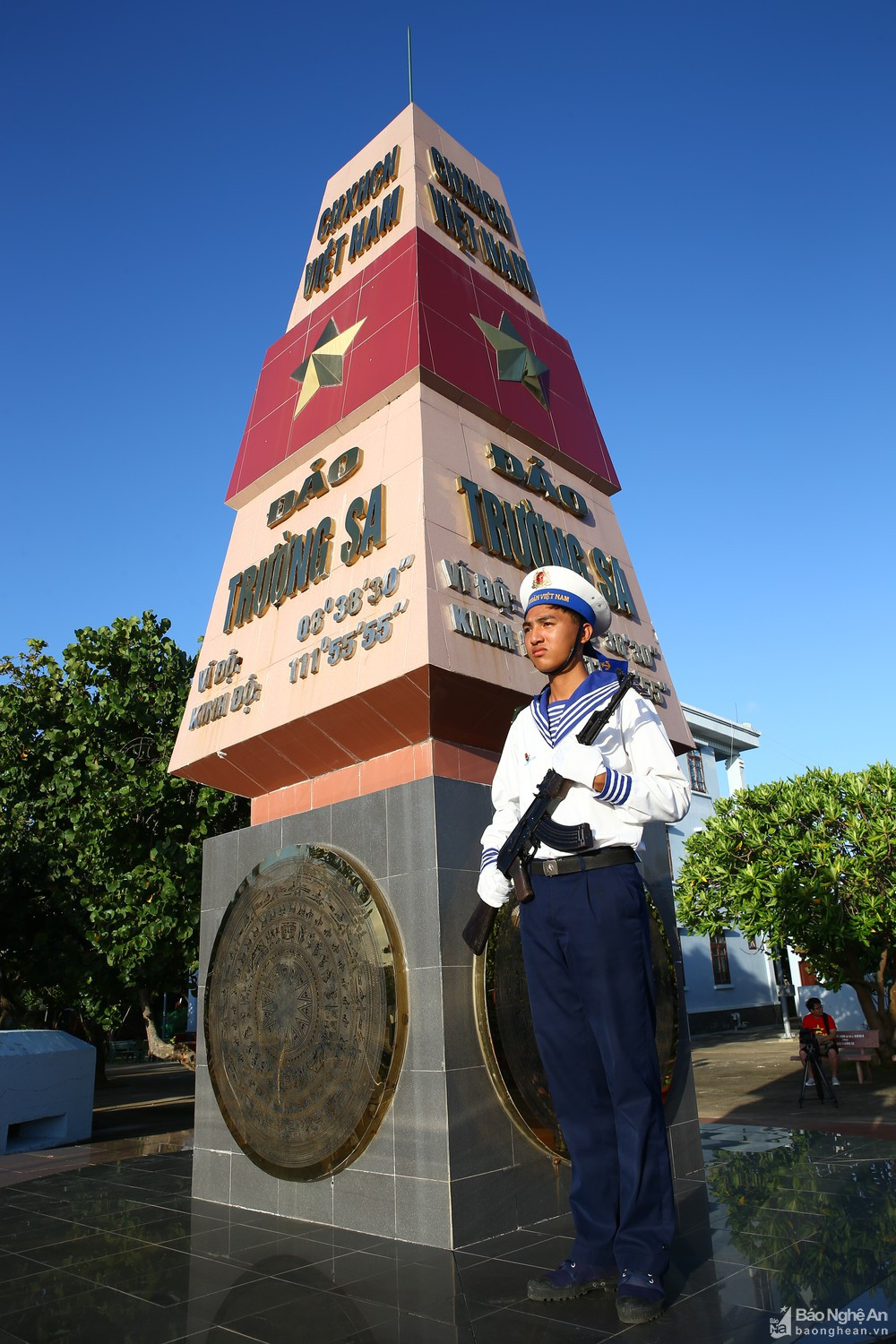 |
| The Spratly Islands are sacred land of the Fatherland, an indispensable part of Vietnam's flesh and blood. Photo: Tien Hung |
Every island has concrete breakwaters and concrete markers. The soldiers often tie targets to them... for shooting practice. Suddenly, one morning, while marching to the beach for training, they were surprised to find seabirds, resembling herons on the mainland, perched precariously on top of all the barriers and markers. The targets were no longer the targets, but these strange birds. Of course, the "black dot on the back of the fly" refers to the bird's breastbone, ensuring the bullet would penetrate its head without tearing the flesh. But, it was just for aiming practice; the soldiers didn't have enough ammunition to shoot the birds that had come to befriend them. I kept imagining, thinking about it: what would life be like for these soldiers living alone on submerged islands, above-water islands, and offshore platforms, confined to their homes, surrounded only by men and boys? If it weren't for the vibrant marine life that created such a fascinating and romantic natural environment, what would their lives be like?


