
Short story: Mrs. Nghiep's buffalo
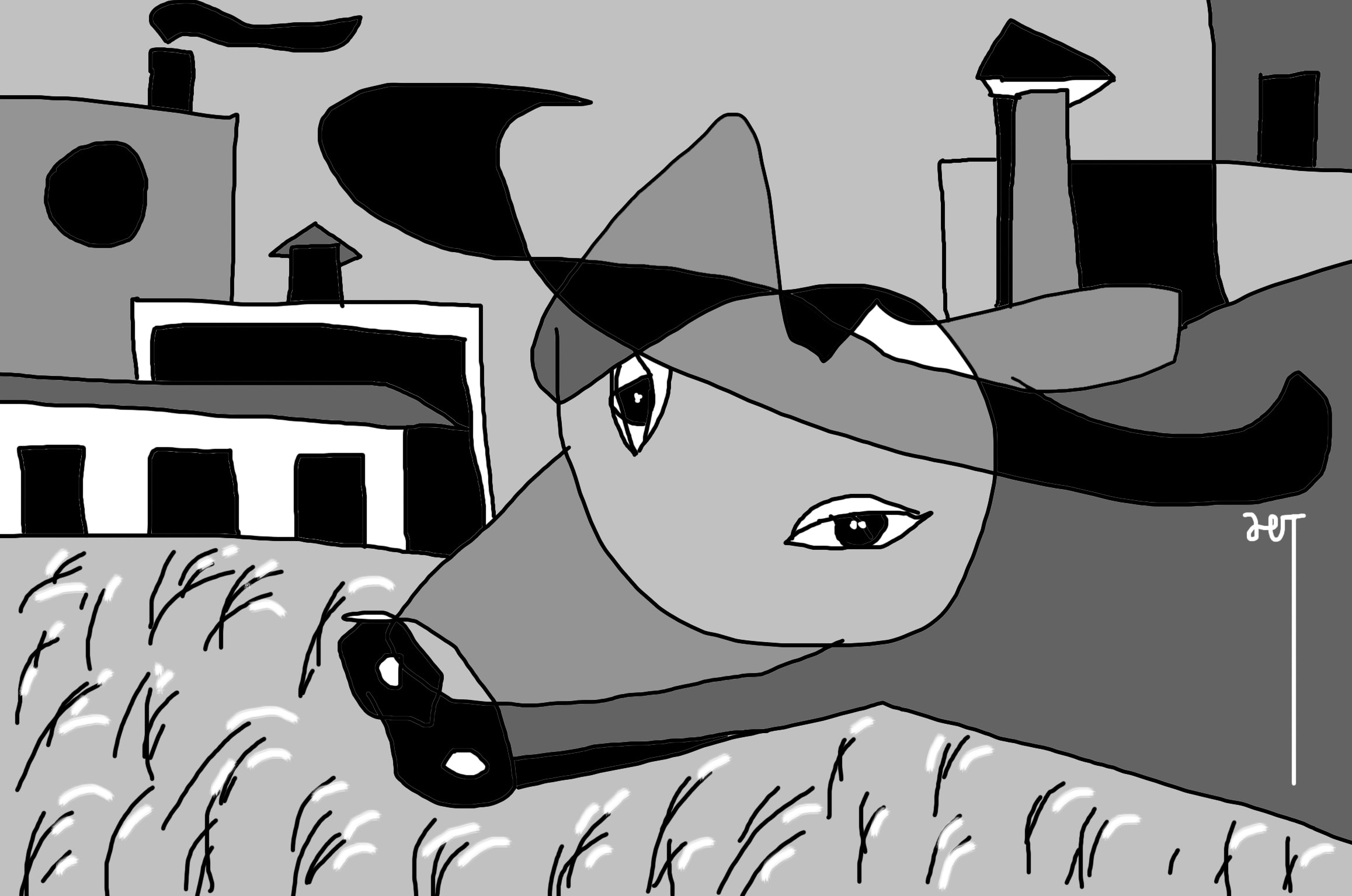
The golden rice paddies blurred. Suddenly, her buffalo appeared out of nowhere, standing right in front of her and staring at her, leaving her astonished. Then, unexpectedly, the buffalo turned and bolted straight into the middle of the field.
Mrs. Nghiep sat slumped on the doorstep, her nearly two-year-old grandson, nestled in a swaddle, wriggling and trying to crawl out. She clicked her tongue and sighed, her face etched with worry. Times have changed. In the old days, people only wished for more land to cultivate; any extra land they acquired was a cause for joy. But now, even after pleading and coaxing, no one would take their land.
Lately, Mrs. Nghiep has been having a strange dream. In the dream, she sees her buffalo, which she sold last year. It stands in the middle of a lush green rice field, looking at her, its eyes oozing red, blood-like water. Then, suddenly, it lunges, lies down in the field, its body growing larger and larger, completely filling her rice pad. The buffalo thrashes around, destroying the rice crop. At times, it stands up, its body covered in mud, with clumps of rice stuck to its horns, glaring as if it wants to pounce on her, to throw her up in the air with its horns...
***
Nghiep and Dien fell in love during the nights they irrigated the rice paddies. Those were enchanting moonlit nights. The soft moonlight, like silk, spread across the dew-drenched banks. Young men and women stood in pairs on the canal bank, holding buckets with their hands, bending down and raising them in rhythm with the irrigating. The moonlight shimmered on the canal, the water splashing and spilling into the rice paddies as the buckets scooped up the water. The sound of the irrigating filled the air. There was conversation, teasing, matchmaking, and giggles. Everything was lively and joyful. And strangely, they paired up men and women so skillfully, never leaving anyone out.
Then they became a family. When they moved out on their own, they only had a house with woven bamboo walls and mud plaster, a thatched roof, and nothing of value inside. Lying together at night, the young couple would yearn for a buffalo.
Finally, after years of hard work, saving, and borrowing, the couple had acquired the buffalo they had always wanted. The buffalo stood there, by the jackfruit tree at the end of the field, and they felt as if they were dreaming. Nghiep rushed down to the edge of the field, selecting the freshest green grass to cut and bring back for the buffalo to eat. Watching the buffalo happily munching on the grass brought tears of joy to their eyes. That's the life of a farmer; having a buffalo is like having the whole harvest at your fingertips, seeing the granaries overflowing with rice.
Nghiệp and his wife cherished their buffalo very much. Every time the buffalo wallowed in the pond and came ashore, they would carefully remove all the leeches clinging to it. Whenever Nghiệp went to work in the fields, he would always cut a heavy load of grass, carrying it back for the buffalo to eat. They even dedicated a plot of land near their house to growing elephant grass. Nghiệp diligently went to get banana trees, chopped them up, and mixed them with corn and rice bran for the buffalo to eat during the dry season when fresh grass was scarce. On summer evenings when mosquitoes swarmed the buffalo shed, Nghiệp would burn soapberry fruits to create smoke to drive them away, while Điền would use an electric fly swatter to swat them, making a loud, crackling sound. Hearing that sound, Điền would laugh heartily.
That buffalo helped Mrs. Nghiep and her husband so much. The small house they lived in was built with money from that buffalo. Every time they sold a calf, they earned a considerable sum, which, combined with money from plowing for hire and raising pigs and chickens, allowed them to build the house. Then, the weddings of their eldest son and his younger daughter were also paid for with money from selling buffaloes.
Over time, the buffalo grew old, and Mrs. Nghiep and her husband had to reluctantly sell it. They had no choice; it was too old and weak to keep it pulling the plow. It was the buffalo that had been with them from their early days of poverty until they had more than enough. Yet they still had to sell it. As the buffalo was being loaded onto a truck and taken away, Mrs. Nghiep couldn't bear to watch. She sobbed, tears streaming down her face.
The old buffalo was sold, and Mrs. Nghiep and Mr. Dien kept its calf as a draft animal. It worked for several years before the village began to change; tractors and harrows appeared. People started hiring machines to work their fields. This wasn't surprising, as young people in the village became factory workers, while the rest worked as laborers, construction workers, and laborers. Many people Mr. Dien's age worked as laborers, earning a good wage. In a month, they only needed to spend a few days working to get their fields ready. As a result, buffaloes became surplus, and people started selling them. Some families even raised entire herds of buffalo solely for meat, which became a trade.
Initially, Mrs. Nghiep was determined to keep the buffalo. Mr. Dien and the children persuaded her repeatedly, and she eventually relented. On the day she sold the buffalo, she saw it looking at her as if pleading, with two streams of muddy water trickling from the corners of its eyes. Turning away, her heart ached.
***
Mrs. Nghiep breathed a sigh of relief when she finally found someone to work in the fields. It was over, and she felt like a huge weight had been lifted off her shoulders. She remembered a time when her children, seeing her struggling to find someone to help, told her, "Why don't you just leave the fields uncultivated? It's best to return them to the commune." She was angry, but said nothing. Let them be. They had their own way of thinking, and she had her own reasons. Admittedly, farming didn't bring in much money these days; hiring people to plant, plow, and harvest, plus the cost of seeds, fertilizer, and pesticides, could easily lead to significant losses. But farmers had to keep their land; if they didn't need it now, they might need it later.
Mr. Dien also worked as a laborer for the construction workers during this period. Sometimes he would go all the way down to the city to work, only returning late at night. During those times, it was just the grandmother and her granddaughter at home; the older grandchildren ate lunch at school, so the grandmother didn't have to worry about cooking or preparing meals, and lunch was always just a quick affair.
These past few days, the weather has been changing, and Mrs. Nghiep feels aches and pains all over her body, her knees aching so much she can't sleep. She lies there lost in thought, regretting and longing to work in the fields. She remembers the old days when everything was done by hand, and how she and her husband had toiled in the fields for so many years. Now, with everything so convenient, they're abandoning farming. The more she thinks about it, the more she misses the fields and the rice paddies. Suddenly, a buffalo appears before her eyes—her own buffalo! It stands still, staring at her intently, its eyes brimming with red, blood-like tears. She approaches, intending to scratch its head, but it suddenly turns and runs straight into the fields. Mrs. Nghiep runs after it, calling out to it, but it runs even faster, then rushes into the ripening rice paddies, trampling them to pieces. The rice stalks are crushed and mixed with mud, the grains scattered on the grassy banks, causing Mrs. Nghiep to cry out in distress and alarm. Every time she dreamt of a buffalo and then woke up, Mrs. Nghiep would wander off into her thoughts until she heard the flapping wings of a chicken that had escaped from its coop, at which point she would suddenly realize that dawn was approaching.
- Mrs. Nghiep! Please open the gate for me.
Who is it? Wait a minute.
The call startled her, and she looked towards the gate. Mrs. Nghiep recognized the woman from the village below; she was working in the rice fields for her family. It had become a tradition that after drying the rice, the woman would bring her several dozen kilograms of rice to feed her chickens. She always told her that she wouldn't take anything, that she should keep whatever rice she harvested to eat, but the woman still felt obligated to bring it.
Grandma! I want to tell you something, please forgive me.
- Yes, go ahead and speak. We're all villagers, so let's be relaxed.
The woman hesitated for a moment before telling Mrs. Nghiep that she wanted to return the land to her next season. She explained that she had stayed home to farm and look after her children when they were young, but now that they could take care of themselves, she wanted to become a factory worker. Mrs. Nghiep sighed. "Who really cares about farming anymore? At best, they'd try to cultivate their own land..."
***
Since the beginning of this year, people in the village had heard rumors that an investor would be building an industrial park on their village's farmland. People whispered and gossiped about this, making Mrs. Nghiep feel anxious and worried. Then, the news that everyone had been interested in finally came true. A representative from the investor came to the commune committee hall to discuss and gather opinions from the villagers. In less than a day, the agreements between the parties were finalized.
Today is Sunday, and the children, seeing their parents off, clung to them, unwilling to let go. Mrs. Nghiep had a day off, leisurely strolling through the fields. She stood there, lost in thought. The golden rice paddies blurred before her eyes. Suddenly, her buffalo appeared right in front of her, staring at her in astonishment. Then, unexpectedly, the buffalo turned and dashed off into the middle of the field. Mrs. Nghiep stood there, watching its retreating figure. Her eyes welled up with tears; she could vaguely see the tin roofs of the factories, the dazzling high-pressure lamps, and the bustling scene of workers leaving work. In her ears, she suddenly heard the cheerful words of her daughter-in-law and son, which she had overheard last night: "So, we're going to work in our village's industrial zone soon, aren't we, dear?" Mrs. Nghiep suddenly smiled. She should be as happy as they were. Life was changing, progressing every day, and soon, future generations wouldn't have to work in the mud. Then she blamed herself for being old-fashioned; who else would still be clinging to memories of things that would soon become a thing of the past? Mrs. Nghiep laughed again, but her laughter choked her throat, and tears welled up, wetting her cheeks. Ah, she must still be thinking of the buffalo!


