
Unscrupulous media and the injustice suffered by Vietnamese fish sauce.
When fish sauces accused of being 'contaminated with arsenic' are removed from supermarket shelves, leaving only industrially produced fish sauce, it signals that industrial fish sauce producers are poised to reap trillions of dong thanks to an invisible hand that has 'struck a blow,' pushing the traditional fish sauce industry into difficulty and plunging millions of fishermen into hardship.
The story about arsenic contamination in fish sauce, as reported by the Vietnam Association for Standards and Consumer Protection (Vinastas), shows signs that the Minister of Information and Communications, Truong Minh Tuan, believes indicate unscrupulous collusion in corporate communication, and even violations of the law.
Fortunately, unlike previous media scenarios, the statement from the head of the Ministry of Information and Communications is the strongest voice to help people in their confusion gain an accurate and fair understanding of the safety of traditional fish sauce. Legitimate producers can be confident that unscrupulous media practices will be exposed.
Suspicions of "dirty" media practices.
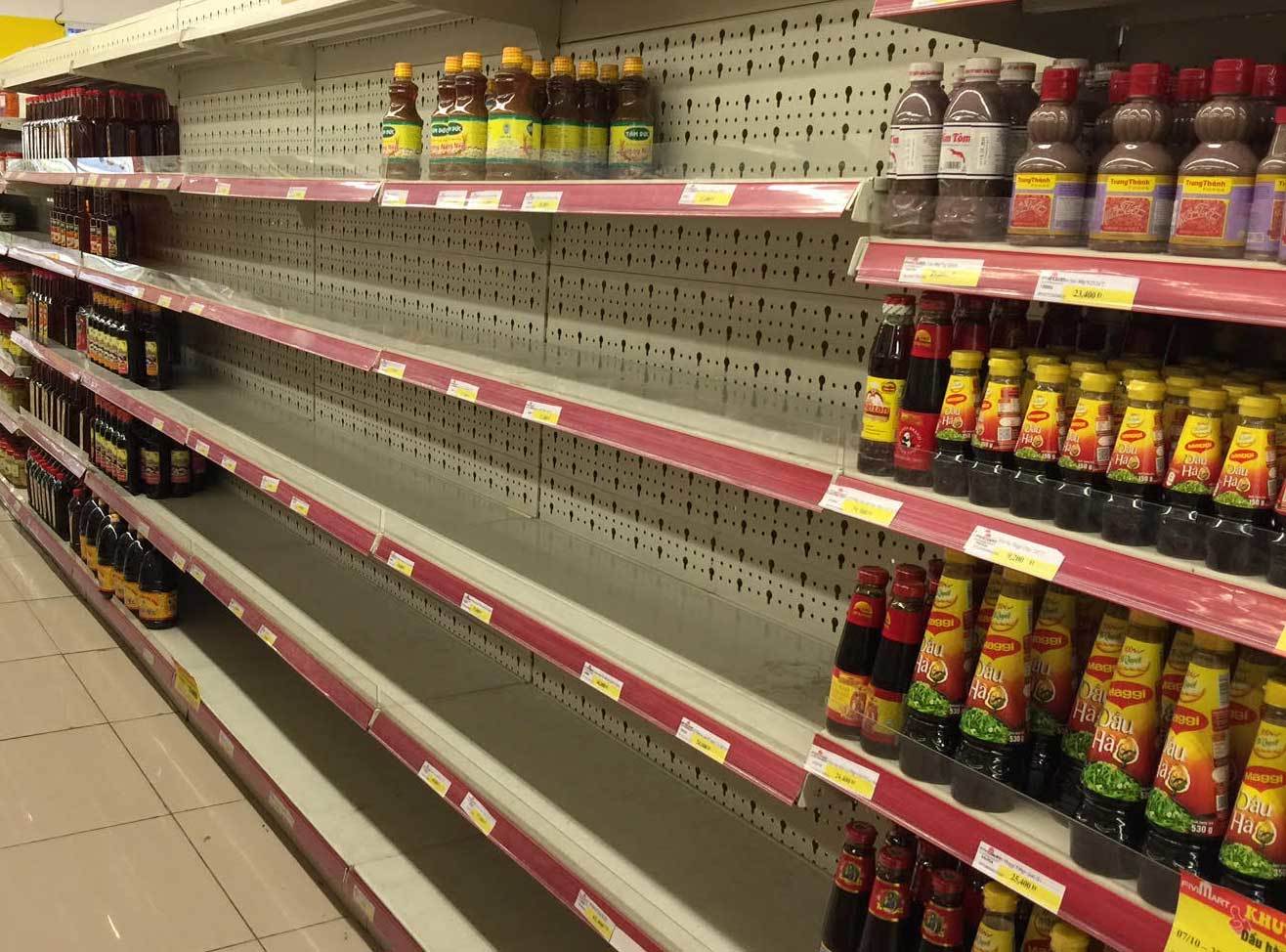 |
Fivimart supermarket chain has temporarily suspended sales of many types of traditional fish sauce. |
In early October 2016, information emerged stating that industrially produced fish sauce is made from more than 20 ingredients, including: water, salt, sugar, anchovy extract, sweeteners, flavor enhancers, salmon flavor, coloring agents, preservatives, etc.
A few days later, on October 11th, an industrial fish sauce manufacturer issued a statement announcing that it had sent a letter to state management agencies requesting a comprehensive inspection of the fish sauce industry. In the letter, they requested that the inspection agency focus on compliance with regulations regarding the limits of heavy metals in fish sauce, especially arsenic.
Four days later, Vinastas announced that it had collected 150 fish sauce samples from the market for survey and testing. Specifically, the testing focused on arsenic content in fish sauce to inform consumers and to recommend appropriate management measures to relevant state agencies.
On October 17th, Vinastas held a press conference to announce the results of its testing, showing that 67% of the fish sauce samples tested contained arsenic levels exceeding the maximum permissible limit. Notably, most of the arsenic-contaminated fish sauces were traditional, high-protein varieties. According to Vinastas' results, industrially produced fish sauces all had arsenic levels within the permissible limits.
That information spread like wildfire. While consumers were panicking, the supermarket added fuel to the fire by removing all traditional fish sauce from its shelves, pushing people's fears to an all-time high.
 |
And immediately, an industrial fish sauce producer launched an advertising campaign claiming that their product met the safety limit for arsenic.
At this point, the community has somewhat realized that a media narrative has been revealed, which many consider to be a dishonest one.
Deception and misrepresentation
In fact, the issue of fish sauce being contaminated with arsenic exceeding permissible limits is being exposed by experts.
In fact, Vinastas' survey results only detected organic arsenic in fish sauce. To date, there is no scientific evidence to suggest that organic arsenic is toxic or harmful to human health. Inorganic arsenic is the toxic metal. Vinastas conducted a second analysis but found absolutely no samples of fish sauce containing inorganic arsenic.
However, the general information that fish sauce is contaminated with arsenic has created a crisis of consumer confidence regarding the safety of fish sauce.
Whether Vinastas's general announcement was intentional or unintentional is unclear, but one thing is certain: it could lead consumers to boycott traditional fish sauce and instead use industrially produced fish sauce.
It's probably unnecessary to say who benefits and who loses in this story.
 |
According to Minister of Information and Communications Truong Minh Tuan, Vietnamese standards only regulate the arsenic content of inorganic arsenic, and this regulation applies only to dipping sauces, not fish sauce. The Minister himself questioned why Vinastas was being vague when claiming that arsenic in fish sauce exceeded the limit. This question is entirely valid because, according to Vietnamese standards, there is absolutely no basis to support the claim that 67% of fish sauce samples contained arsenic exceeding the limit.
There simply aren't any regulations about that.
It seems that for some reason, Vinastas has set its own regulations limiting the amount of organic arsenic – a non-toxic substance that naturally occurs in seafood, so the higher the protein content, the higher the amount of organic arsenic.
Vinastas' deceptive practices have contributed to the plight of traditional fish sauce producers, allowing industrially produced fish sauce to gain a dominant position.
Perhaps the leaders of Vinastas couldn't be so naive as to be unable to distinguish between harmless organic arsenic and other harmful compounds when releasing irresponsible information to consumers and traditional fish sauce producers. Especially since Vinastas' survey is backed by a sponsor whose identity Vinastas is still protecting. They still haven't dared to publicly reveal who paid for their fish sauce testing and the release of that misleading information.
Was there collusion to create a scam based on consumer fear by spreading false information for profit?
Public opinion can certainly suspect that "dirty hands" have colluded to create a media crisis aimed at plunging the traditional fish sauce industry into ruin. Simply put, if there wasn't something shady going on, there would be no reason to hide the names of the sponsors. Furthermore, how can one explain the honesty, objectivity, and public goodwill of a survey conducted with money from an anonymous source?
Vinastas must apologize to consumers and traditional fish sauce producers. But that's not enough. An investigation is needed into whether or not there was collusion by unscrupulous individuals behind this malicious media campaign. Those responsible must be held accountable. Only then will the injustice against Vietnamese fish sauce be rectified, and consumer anxieties cease.
Furthermore, those who caused this fish sauce war must be removed from the market. Because, you can't expect dirty hands to produce clean fish sauce.
According to Vietnamnet.vn
| RELATED NEWS |
|---|


