
From the parliamentary arena to cultural life
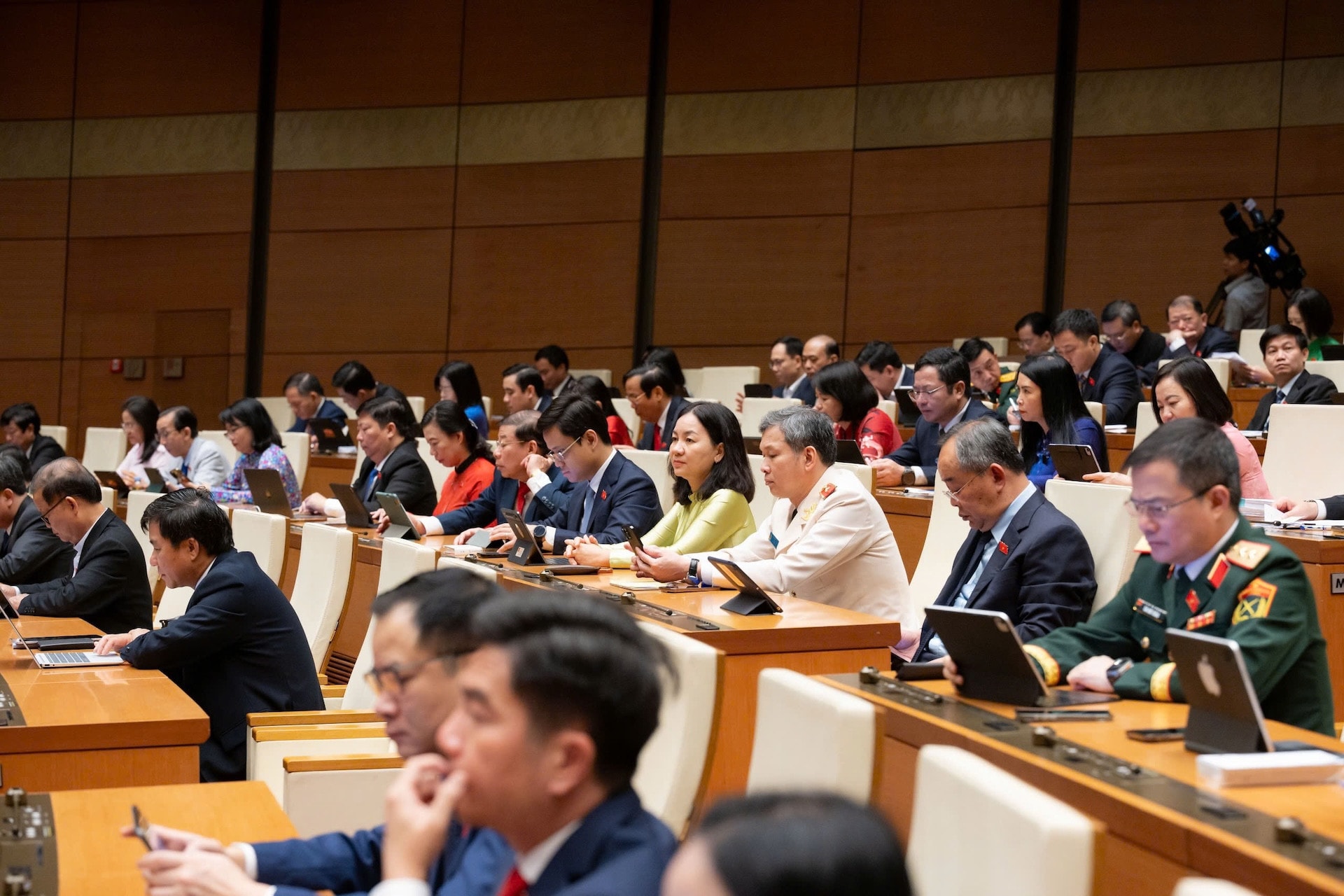
On April 24, 2026, the National Assembly passed a Resolution on the Development of Vietnamese Culture with 95.40% of the votes in favor.
This is a significant legislative milestone, demonstrating a high level of consensus on unlocking resources, improving institutions, and creating conditions for culture to become a driving force for national development in the new era.
The National Assembly's adoption of the Resolution on the Development of Vietnamese Culture with a very high approval rate is a significant event not only for the cultural sector but also for the overall development of the country. After many years, culture has been affirmed as the spiritual foundation of society, as a goal, driving force, and endogenous resource for development. This Resolution has concretized these views with clearer and more implementable mechanisms and policies.
The greatest value of this document lies in moving culture from awareness to institution, from principles to policies, and from expectations to conditions for implementation. Cultural development cannot rely solely on the dedication of artists, artisans, cultural officials, or the creative community; culture needs resources, mechanisms, infrastructure, human resources, a market, and a suitable legal environment.
One notable development is the establishment of November 24th as Vietnam Culture Day, a day when workers are entitled to a paid day off. This should not be seen merely as a new holiday, but rather as a genuine cultural festival for the entire society. With proper preparation, Vietnam Culture Day could become an opportunity for people to visit museums, libraries, theaters, historical sites, and creative spaces; for schools to organize heritage education activities; for local communities to showcase their identity; and for children and young people to engage with culture in a more vibrant way.
A groundbreaking point is the Resolution stipulating that the State guarantees annual spending on culture at least 2% of the total State budget expenditure, gradually increasing according to development requirements. This is a very important resource commitment. For a long time, many cultural sectors have faced difficulties due to a lack of funding: grassroots cultural institutions have not operated effectively; heritage preservation has been limited; traditional arts have struggled to attract the public; cultural personnel have not received adequate compensation; and the cultural industry, despite its potential, lacks the conditions for development.
However, the issue is not just about increasing spending, but about spending effectively. The 2% resources need to be used strategically, focusing on tasks with long-term impact: preserving heritage, developing grassroots cultural institutions, supporting traditional arts, digitizing cultural data, training human resources, commissioning high-value works, expanding access to culture for children, workers, people in remote areas, border regions, islands, and ethnic minority communities. If resources are allocated transparently and with specific evaluation criteria, this will be a crucial foundation for creating real change.
The resolution also opens up new opportunities for the cultural industry. The formation of cultural creative industrial clusters and complexes, along with preferential tax policies, support for access to land and business premises, development of digital infrastructure, and high-tech solutions for culture, are essential mechanisms. Vietnam has great potential in heritage, history, art, cuisine, tourism, design, film, music, games, and digital content, but this potential only becomes valuable when organized within a creative ecosystem.
Cultural creative industrial clusters or complexes, if properly implemented, will connect artists, businesses, investors, technology, universities, and the public; they will be places where cultural ideas are tested, produced, distributed, and commercialized. However, it is necessary to avoid labeling purely commercial projects as "creative." Creative spaces must have creative activities, creative products, a creative community, and make a genuine contribution to cultural life.
Another important aspect is digital transformation and the development of digital cultural infrastructure. The resolution sets out the task of building a national database on culture, digital cultural infrastructure, and a shared digital platform; digitizing cultural heritage sites that have been ranked at the national and special national levels; supporting businesses in applying advanced technologies to digital content production; and protecting copyright, cultural security, and digital cultural sovereignty. This is a suitable direction in the context where the digital space has become a new cultural environment, where values are created and disseminated, but can also be infringed upon, distorted, or commercialized without control.
Digital transformation of culture is not just about digitizing artifacts or creating databases. More importantly, it's about giving Vietnamese heritage, art, folk knowledge, community memory, and cultural values new life in education, tourism, media, content industry, and digital creativity. If done well, cultural data can become a resource for films, games, applied arts, design, digital museums, digital libraries, and modern cultural products.
The resolution also pays considerable attention to human resources in culture, arts, and sports. Policies on special recruitment for talented individuals, preferential allowances for professions, training and performance, retraining after retirement, training high-quality human resources for the cultural industry, digital transformation, curation, and appraisal of cultural and artistic works and heritage are all essential points. Because culture, ultimately, begins with people. Without artisans, artists, creators, researchers, managers, technology experts, and the practicing community, all cultural policies will lack the implementing subjects.
The mechanism of commissioning and contracting out funding for cultural creative activities using state budget is also a noteworthy step forward. Literary and artistic creation has its own unique characteristics and cannot operate entirely according to rigid administrative models. A mechanism of contracting out funding to the final product, through independent professional evaluation by a council of experts, if implemented transparently, will create conditions for the State to commission high-value works and projects while respecting the autonomy and creativity of artists.
Another new development is the policy of promoting and developing Vietnam's cultural industry market. Support for Vietnamese Culture Weeks, art exchanges, Vietnamese language teaching, the replication of Vietnamese neighborhood models, Vietnamese villages, cultural clubs, traditional martial arts, and Vietnamese cuisine abroad; support for businesses to introduce and export cultural products; support for displaying Vietnamese heritage at prestigious museums worldwide; and tax refunds for filming activities in Vietnam that contribute to promoting the country, its people, and tourism demonstrate a new perspective on national soft power.
In today's world, a nation's image is built not only through official diplomacy or economic indicators, but also through films, music, cuisine, fashion, tourism, museums, festivals, games, books, and creative products. Vietnam has many compelling stories. The key is to tell them with quality, in the language of the times, with technology, with copyright, and with professional organizational capabilities.
However, the resolution that has been passed is only the beginning. The journey from the parliamentary chamber to real life is a long one requiring significant effort. There is a need for specific guidelines, clear criteria, effective coordination mechanisms, transparent resource allocation, accountability for implementation by local authorities, and regular oversight from the National Assembly, People's Councils, the Fatherland Front, the press, and the people.
It is especially important to avoid the formalization of policies: Vietnamese Culture Day should not be just a holiday; the 2% expenditure rate should not be merely a budget figure; creative zones should not become disguised real estate projects; the digitization of heritage should not be limited to fragmented projects; and cultural and artistic funds should not become a system of favoritism and corruption. The new spirit of the Resolution demands a new approach to implementation: more transparent, more flexible, and more focused on output and social impact.
Looking back at the moment of 9:28 AM on April 24, 2026, the most noteworthy aspect is not only the 95.40% approval rate, but also the policy signal that the National Assembly sent to society: culture has been placed in a more deserving position on the national development agenda. From now on, talking about culture is not just about preservation, festivals, or movements, but also about resources, human resources, creative industries, digital transformation, copyright, markets, soft power, and the quality of life of the people.
A resolution cannot change everything immediately, but it can open a path forward. The resolution on the development of Vietnamese culture is one such path. It reminds us that national development is not just about economic growth, infrastructure construction, or technology application, but also about building human resources, preserving memories, nurturing identity, fostering creativity, and ensuring that every citizen lives in a healthier, richer, and more humane cultural environment.
In this new era of development, Vietnamese culture needs to continue to move forward with the nation with a new mindset: simultaneously preserving and innovating; conserving and developing; being proud of the past while proactively creating new values for the future. The responsibility after the vote is to ensure that the resolution, once adopted in the parliament, truly enters into daily life, becoming an inner strength of the Vietnamese people and a sustainable driving force for the nation.


